



































































Catalog
Accessories
18 products




Satisfait ou remboursé
14 jours
Retour 14 jours
Frais de retour à votre charge
SAV expert FR
Conseil horticole
Paiement en 3, 4 ou 10 fois
Sans frais par CB

Product successfully added to your shopping cart
Ça pousse dans le bon sens

18 products
Hydroponic accessories are the small details that make all the difference in your setup. Air pumps, adjustable drippers, inert substrates, pH meters... each element plays a crucial role in keeping your plants perfectly healthy. A hydroponic grow is an ecosystem where every component must work in harmony.
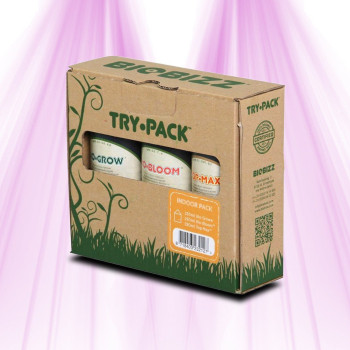
In hydroponics, your plants depend entirely on you for their nutrition and oxygenation. A pump that fails, a pH that drifts, clogged drippers... and your entire cycle can go awry. The right accessories help you avoid these headaches and ensure consistent growth. The Biobizz Try Pack Hydro - Fertilizer for hydroponic cultivation perfectly illustrates this approach: specially formulated nutrients that integrate seamlessly into a hydro system.
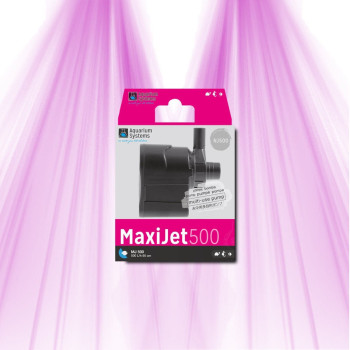
Root oxygenation remains the critical point. An undersized air pump and your roots suffocate in the nutrient solution. Conversely, an overly powerful pump can create unnecessary turbulence. For small setups, the Maxijet 500 Water Pump offers the right balance between flow rate and power consumption. Inert substrates like expanded clay or coco fiber maintain water balance while allowing roots to breathe.
It all starts with the size of your setup. For a 20L DWC system, a 5W air pump is more than enough. Beyond 100L, you'll need at least 15-20W. Adjustable drippers allow you to adjust the flow rate between 0 and 8L/h according to the needs of each plant. Opt for models with an anti-siphon system to prevent accidental reservoir drainage.
For substrates, expanded clay (8-16mm) is suitable for ebb and flow systems, while coco fiber excels in drip systems. Digital pH meters with automatic temperature compensation help you avoid measurement errors. Plan for monthly calibration with pH 4 and pH 7 buffer solutions.
For a 20-50L system, a 5-8W pump with a flow rate of 300-500L/h is ample. Between 50-150L, go for a minimum of 15W with 800-1200L/h. Beyond 150L, opt for a 25W pump or more with multiple outlets. The important thing is to have approximately 1W of power for every 10L of nutrient solution. Remember that immersion depth reduces efficiency: a pump rated at 500L/h will only deliver 300-350L/h at 50cm depth.
First, drill a 4mm hole in your main tube with a heated punch to prevent cracks. Insert the dripper by gently forcing it until the collar is flush. Adjust the flow by turning the knob: clockwise to close, counter-clockwise to open. Test each dripper individually before commissioning. For uniform watering, all drippers must be at the same height relative to the pump, otherwise the lower ones will deliver more than the higher ones due to hydrostatic pressure.
Expanded clay (8-16mm) is completely inert, does not alter pH, and can be reused indefinitely after rinsing. It is perfect for ebb and flow and DWC systems because it retains only 15-20% water. Coco fiber retains 8-10 times its weight in water, making it the ideal substrate for drip systems. However, it can slightly acidify the solution (pH -0.2 to -0.3) and must be replaced after each cycle. Expanded clay requires a longer initial rinse to remove dust, but it is a long-term investment.
Disassemble the pump every 2-3 weeks to clean the impeller and body. Use a soft brush and lukewarm water, never detergents that would leave toxic residues. Check that the shaft rotates freely without snagging. Limescale deposits dissolve with 10% diluted white vinegar; let it sit for 30 minutes then rinse thoroughly. Replace O-rings as soon as they harden or crack. A well-maintained pump can operate for 2-3 years without problems, compared to 6-8 months if neglected.
To start, a waterproof digital pH meter with automatic temperature compensation will do (accuracy ±0.1 pH). Models costing 50-80€ are largely sufficient for amateur use. For EC, a basic conductimeter is enough, with ±2% accuracy being acceptable. Combined pH/EC/temperature monitors are convenient but more fragile. Calibrate the pH meter monthly with pH 4.0 and pH 7.0 buffer solutions. For EC, use a 1413 µS/cm calibration solution. Always store the pH probe in a storage solution, never in distilled water, which would destroy it.
Help & advice
About Accessories — click a question to see the answer.
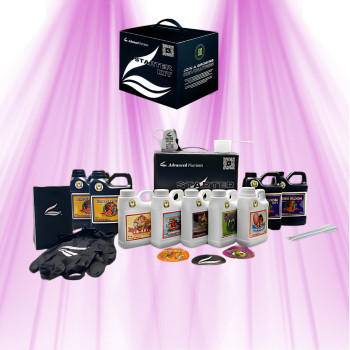
For beginners, I recommend starting with the essentials: a good pH and EC measurement system, reliable pumps, and a suitable substrate. Opt for complete kits that simplify installation and reduce the risk of errors. I also explain the basics of hydroponics for beginners in this article.
Air pumps are crucial for oxygenating the nutrient solution. They diffuse air into the water via diffusers, allowing roots to breathe and efficiently absorb nutrients. Without good oxygenation, your plants risk asphyxiation and poor development. This is an element I often see neglected, but it makes a real difference.
That's an excellent question, and the distinction is fundamental. An air pump, as its name suggests, injects air into the nutrient solution to oxygenate it, which is vital for the roots. A water pump, on the other hand, is responsible for circulating the nutrient solution throughout the system, for example, to irrigate plants or maintain a constant level in a reservoir. Both are often necessary for an efficient hydroponic system.
A pH meter is an indispensable tool for the health of your plants. To use it, simply immerse it in your nutrient solution and read the displayed value. I recommend calibrating it regularly with buffer solutions to ensure its accuracy. If the pH is not within the correct range (generally between 5.5 and 6.5), you will need to adjust it with pH Up or pH Down solutions.
The choice of substrate largely depends on your hydroponic system. I often recommend rockwool for its water and air retention capacity, or expanded clay pebbles for their excellent aeration and reusability. Coco fiber is also a popular option for its good buffering capacity. The important thing is to choose an inert substrate that does not alter the pH of your nutrient solution.
For successful indoor hydroponic cultivation, I consider several accessories to be absolutely essential. In addition to the hydroponic system itself, you will need a pH meter and an EC meter to monitor the nutrient solution, pumps (air and water) suitable for the size of your setup, a high-performance LED lighting system, and a ventilation system. These elements are the foundation of a stable environment for your plants.
Cannot find your answer? 01 88 33 45 52 or by message.


