


































Aller au contenu principal
Boxes to soundproof extractor
2 produits

Boxes to soundproof extractor

Extractor Silencing Boxes: The Anti-Noise Solution for Your Indoor Grow

Extractor silencing boxes radically transform the acoustics of your grow setup. These sound-insulating enclosures significantly reduce the noise pollution generated by your extraction fans, allowing for discreet cultivation even in an apartment or occupied home.

Specifical...

Extractor Silencing Boxes: The Anti-Noise Solution for Your Indoor Grow

Extractor silencing boxes radically transform the acoustics of your grow setup. These sound-insulating enclosures significantly reduce the noise pollution generated by your extraction fans, allowing for discreet cultivation even in an apartment or occupied home.

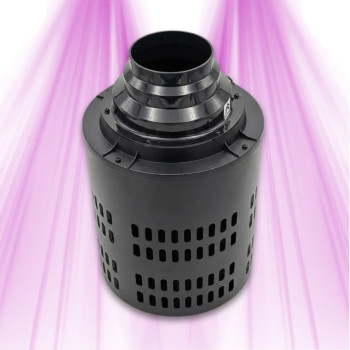
Specifically designed for indoor grow extractors, these boxes combine sound insulation with maintained ventilation performance. Say goodbye to the constant hum that gives away your setup!

Why choose a sound-insulating box for your extractor

The main advantage of a sound-insulating box is the drastic reduction in noise levels. We're generally talking about a 15 to 25 dB decrease, which means halving the perceived noise. Your 950 m³/h extractor, which rumbled at 65 dB, easily drops below 45 dB.

Sound insulation is achieved through a double wall with absorbent materials inside. Most models use high-density acoustic foam or mineral wool to capture vibrations and resonances. The internal design prevents air turbulence that would create parasitic whistling.

Another crucial point: these boxes preserve your extractor's airflow. The inlet and outlet ducts are sized to maintain pressure and avoid any performance loss. Your air exchange remains optimal.

How to choose the right sound-insulating box

The diameter is the first criterion: your box must exactly match the diameter of your extractor. Standard sizes range from 100mm to 315mm, with 125mm, 150mm, and 200mm dominating the indoor grow market.

Then, check compatibility with your extractor's power. A model designed for 400 m³/h will not be suitable for a 950 m³/h extractor. The turbulence created would cancel out the sound-insulating effect. Respect the maximum flow rates indicated by the manufacturer.

Space requirements also matter. Carefully measure the available space, as these boxes add 40 to 60 cm to your setup. Some compact models optimize space without sacrificing acoustic efficiency.

Finally, look at ease of maintenance. The best boxes open easily to clean the interior and replace acoustic filters if necessary.

Frequently Asked Questions

What diameter box should I choose for my 125mm extractor?

For a 125mm extractor, you absolutely must choose a 125mm diameter box. Using a larger diameter would create air leaks and turbulence that would cancel out the sound-insulating effect. Connections must be perfectly sealed to maintain acoustic efficiency. Check that your box includes the necessary clamps for a hermetic mounting on 125mm ducts.

Does this box really reduce noise enough for a grow tent in a living area?

Yes, a quality sound-insulating box reduces the sound level by 15 to 25 dB, which halves the perceived noise. An extractor running at 60 dB drops below 40 dB, which is the level of a whispered conversation. This reduction is generally sufficient for a discreet setup in an occupied dwelling. However, efficiency also depends on the quality of your extractor and the insulation of your grow space.

How to install the IsoBox without creating air turbulence?

Installation must follow a few simple rules: connect the extractor directly to the box without bends or reductions, use smooth ducts rather than spiral ducts for the first few meters, and maintain straight lengths of at least 50 cm before and after the box. Tighten all clamps firmly to prevent air leaks. Correct installation preserves 95% of your extractor's original flow rate.

Do I need to disassemble the entire box to clean the inside?

Most modern boxes open easily with clips or service screws. Annual cleaning is usually sufficient: vacuum accumulated dust from the acoustic foams and check the condition of the insulating materials. Avoid water, which could degrade the foams. If the acoustic materials are very dirty, some models allow them to be replaced without changing the entire box.

Is this box compatible with a powerful extractor up to 170W and 950 m³/h?

This depends entirely on the specifications of the chosen box. It is essential to check the maximum supported flow rate indicated by the manufacturer. An undersized box would create significant restriction and cause the performance of your 950 m³/h extractor to drop. For this power, opt for models designed for at least 1000 m³/h. The wattage (170W) indicates consumption, but it is the flow rate that determines compatibility with the box.

Showing 1 - 2 of 2 items
What is the purpose of soundproofing boxes for extractors?
   

As an expert, I can tell you that soundproofing boxes for extractors are indispensable allies for any indoor grower concerned with discretion. Their primary role is to drastically reduce the noise emitted by your air extractor, transforming a potential noise nuisance into a gentle hum. This allows you to maintain a discreet grow, whether you are in an apartment or a house where silence is appreciated.

How to choose a soundproofing box for an extractor?
   

To choose your box well, I advise you to look at several criteria. First, compatibility with the diameter of your extractor is paramount. Then, the quality of the insulating materials used will directly influence the effectiveness of the soundproofing. I often recommend choosing robust boxes with good sound insulation thickness. Also, consider the size of the box in relation to the available space in your grow room.

How to install a soundproofing box for an extractor?
   

Installing a soundproofing box is generally quite simple. I suggest you place your extractor inside the box, ensuring that the inlet and outlet ducts are well connected to the designated openings. It is crucial to ensure good sealing to maximize soundproofing efficiency. In some cases, adding hose clamps at the duct junctions can further improve noise reduction.

What power of box should I choose for my extractor?
   

In fact, there is no such thing as 'box power'. What you need to consider is the size and airflow of your extractor. A box must be adapted to the diameter of your extractor (for example, a 125 mm box for a 125 mm extractor). The effectiveness of the soundproofing will then depend on the design and materials of the box, not on any 'power' it would emit.

What is the difference between different soundproofing boxes for extractors?
   

The main differences between boxes lie in their manufacturing materials, insulation thickness, and internal design. Some use high-density acoustic foam, others use chipboard panels with specific coatings. More efficient models often incorporate baffles or internal labyrinths to better trap sound. I often see that wooden boxes are generally more effective than plastic models for maximum soundproofing.

How do I know if a box is suitable for my extractor?
   

To know if a box is suitable, I advise you to first check the diameter of the box openings. It must match the diameter of your ducts and your extractor (for example, 125 mm, 150 mm, 200 mm). Also, make sure that the internal dimensions of the box are sufficient to accommodate your extractor model without hindering airflow. If I had to choose, I would always take a slightly larger box to facilitate installation and maintenance.

What mistakes should be avoided with soundproofing boxes for extractors?
   

A common mistake is to neglect the sealing of the connections. A box is effective if sound cannot escape through the gaps. I recommend tightening the duct clamps well and checking for any air (and therefore noise) leaks. Another mistake is choosing an undersized box, which can lead to extractor overheating. Also, consider ease of access for maintaining your extractor.

What is the best soundproofing box for an extractor?
   

The 'best' box really depends on your specific needs and budget. In general, I find that thick wooden boxes with quality internal sound insulation offer the best performance. They are robust and absorb sound very effectively. If you have space or budget constraints, some plastic or fabric boxes can offer a noticeable improvement, but with less sound reduction. The important thing is to opt for a well-designed product adapted to the size of your extractor.

For what use should a soundproofing box be used in indoor cultivation?
   

I use and recommend soundproofing boxes primarily to make your indoor grow space discreet. This is essential if you are growing in an apartment, a room, or any area where the constant noise of the extractor could be disturbing to you or those around you. They are perfect for growers looking for a quiet and professional setup, without compromising the efficiency of their ventilation system. It's an investment that greatly improves the overall comfort of your setup.

Blog navigation

Latest posts

VIVOSUN Grow Cam 6mm 2K QHD WiFi Grow Camera

Tired of anxiety when you're away from your grow? The VIVOSUN Grow Cam 6mm 2K QHD WiFi Grow Camera lets you keep an...

Read more
STOP à la Tourbe ! Découvrez les 4 Meilleurs Substrats Écologiques pour une Culture Indoor Explosive

Le monde du jardinage connaît une transformation silencieuse mais profonde. Face à l'urgence climatique et à la prise...

Read more
Master Pack PRO Advanced Nutrients: Created by GrowLED for demanding growers!

When you're starting out or looking to optimize your indoor growing, the hardest part is often choosing the right...

Read more