



































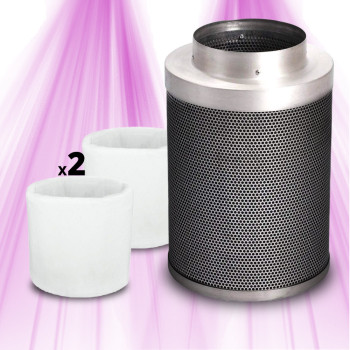


































Bullfilter Eco - Activated Carbon Filters for Indoor Growing
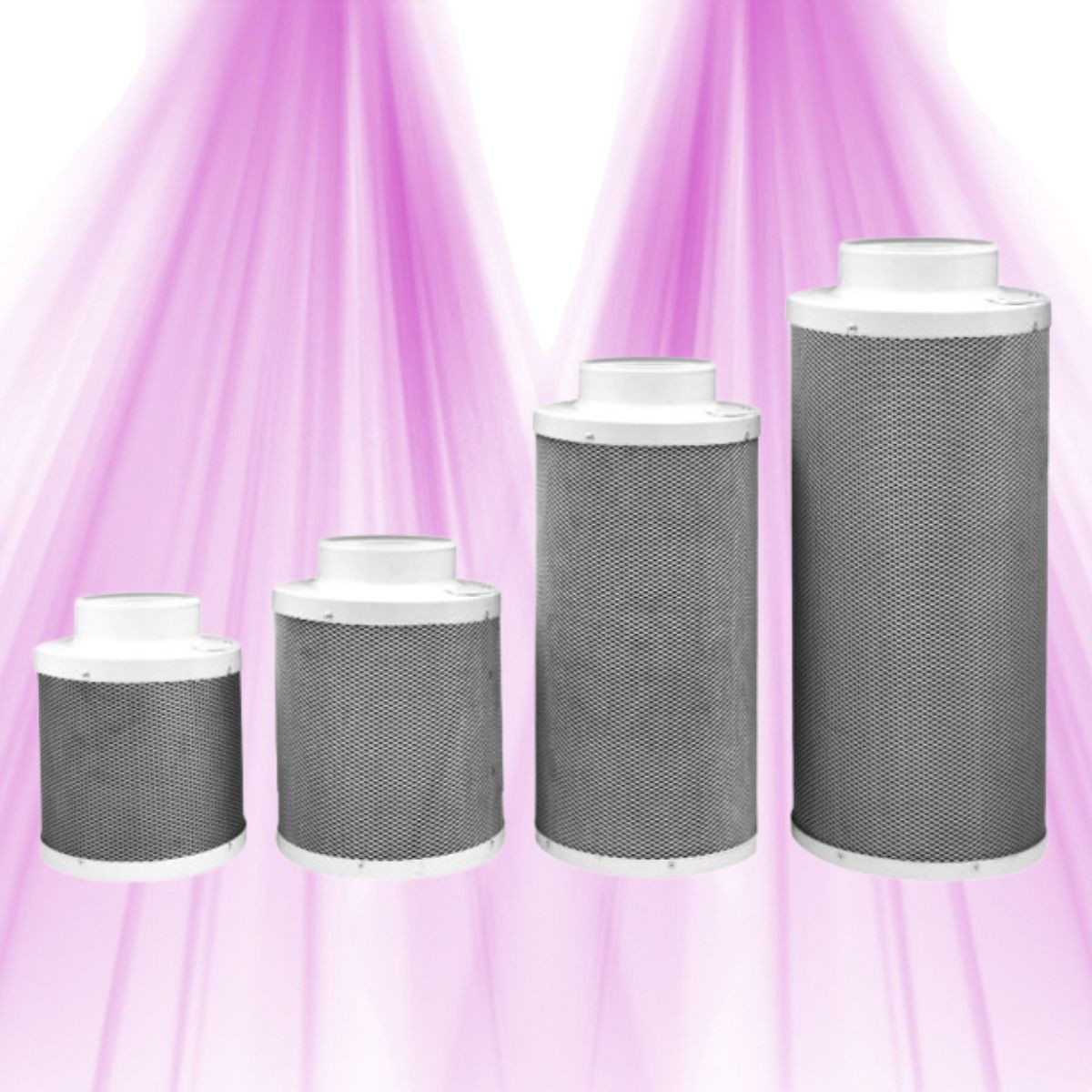
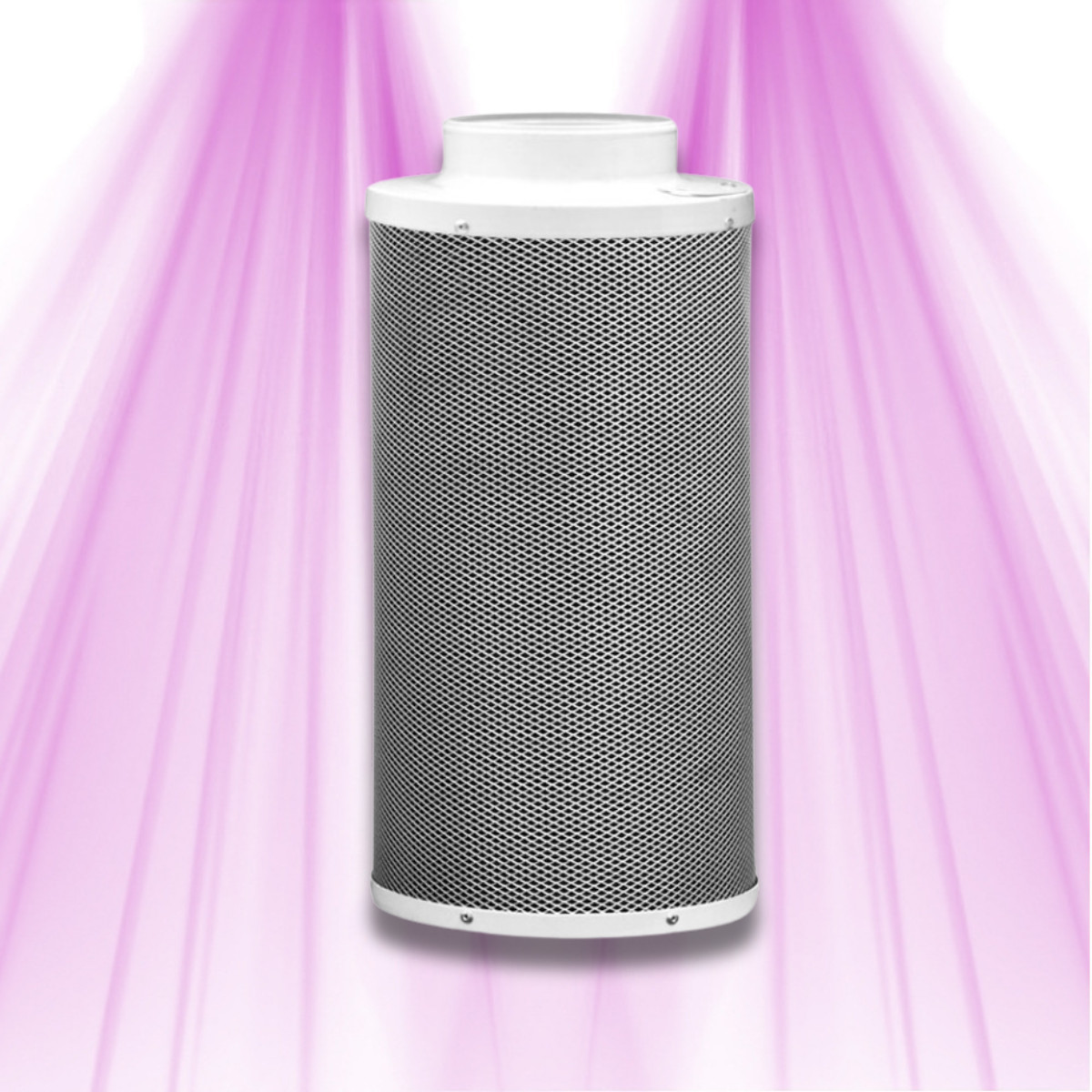
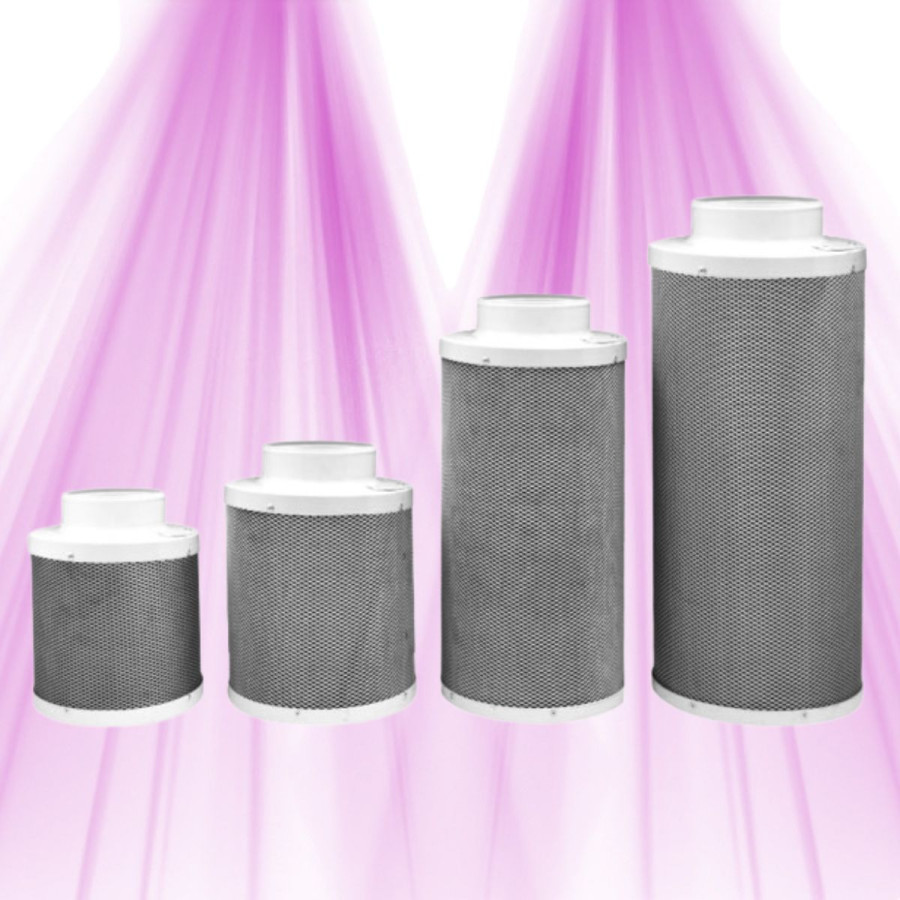
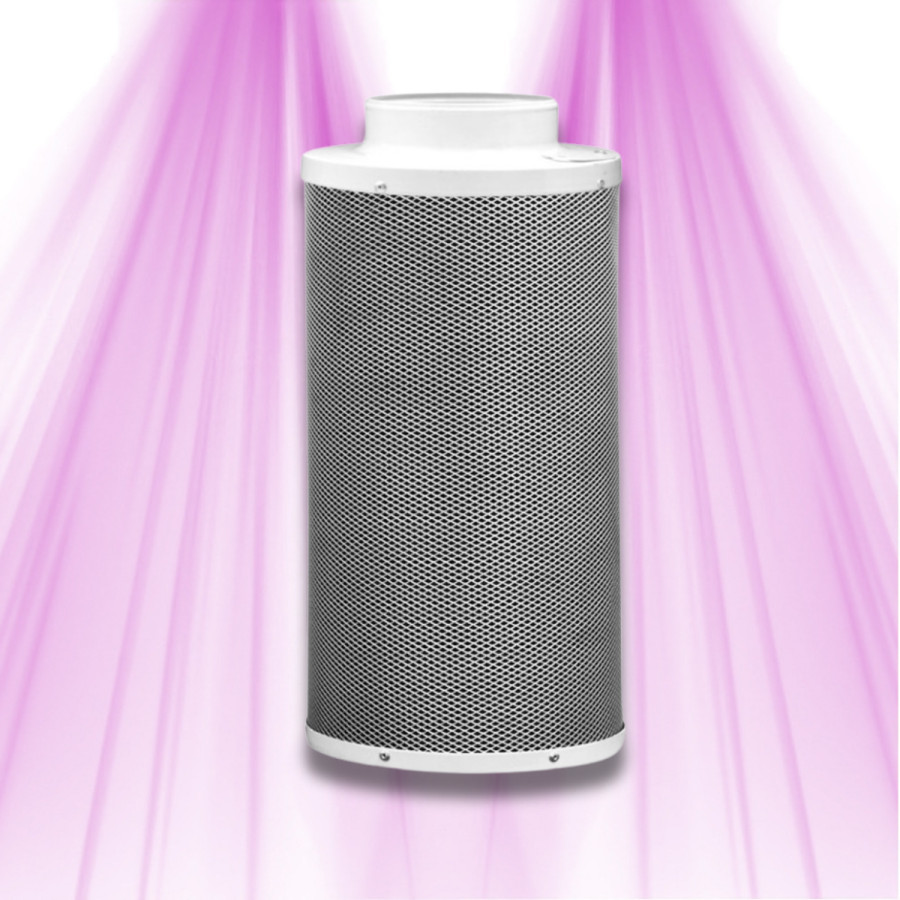
- Range suitable for all spaces, from small to large.
- Compatible with most extraction systems.
- Pre-filter included to extend durability.
- Quick installation and easy handling.
- Premium activated carbon for optimum efficiency.
 Bullfilter Eco - Activated Carbon… 73,99 €
Product presentation
Features detailed
| Material | Charbon actif |
|---|---|
| Diameter (mm) | 125mm / 150mm |
Reviews customers
Soyez le premier à donner votre avis !
Partagez votre expérience avec ce produit.
Your questions
Technical question: Does this Bullfilter Eco 125mm filter really ensure reliable odor elimination for at least a year under heavy use, or should we expect more frequent replacements in real-world conditions?
In practice, it is recommended to regularly check the condition of the filter and to plan for a replacement when effectiveness decreases. This filter is recognized for its durability, but under very intensive conditions, a replacement more frequent than every 12 months may be necessary to maintain optimal odor elimination.
What performance difference is observed between the 125mm 250m³/h and 125mm 400m³/h models in a micro cultivation space of 60x60?
For a micro cultivation space of 60x60 cm, the Bullfilter Eco 125 mm 250 m³/h is generally sufficient. It ensures good air renewal and effective odor control in a low to medium odor environment.
In contrast, the 125 mm 400 m³/h model offers a higher air flow rate, thus faster filtration and more frequent air renewal. This choice is particularly interesting if your crop is dense or produces strong odors, as it ensures better purification performance. Its installation remains just as easy, with a slightly higher but still reasonable consumption.
In summary, for a 60x60 space, 250 m³/h is sufficient in most cases, but 400 m³/h provides a welcome technical margin for more demanding conditions.
What is the optimal air flow rate in m3/h to maximize filtration without reducing the pressure in a 125mm extractor with this Bullfilter Eco filter?
For the Bullfilter Eco filter in 125 mm, the optimal air flow rate is between 201 and 400 m³/h. This setting allows for maximizing filtration while maintaining sufficient pressure in your 125 mm extractor, ensuring stable and efficient performance.
Make sure to install the filter upstream of the extractor and keep humidity below 70% to preserve the filtration quality.
What is the noise level generated by the Bullfilter Eco 150mm 500m³/h filter during continuous operation in an average grow room?
The Bullfilter Eco 150mm 500m³/h filter generates little noise by itself, as it is a passive element. The perceived noise level in a grow room mainly depends on the fan associated with this filter. Indeed, it is the motor of the ventilation system that produces the sound, while the carbon filter mainly acts on air purification without significant noise addition.
For continuous operation in an average room, choosing a quiet and well-sized fan will ensure a minimal sound environment while maintaining good air circulation and filtration.
What is the difference in noise level between the 125mm - 400m3h model and the 150mm - 500m3h model as I am looking to limit noise while having good ventilation capacity?
Regarding the difference in noise level between the Bullfilter Eco 125mm - 400m³/h and the 150mm - 500m³/h, precise data is not available, but generally speaking, a larger filter and a higher flow rate require a more powerful fan, which may slightly increase the noise.
To limit noise while maintaining good ventilation capacity, it's best to opt for a quiet fan suitable for your filter diameter and to install the system in an optimized location to reduce sound transmission. This way, you achieve a good balance between performance and acoustic comfort.
What is the exact difference between the model 125mm 250m3/h and the 125mm 400m3/h in terms of noise level and electricity consumption?
The Bullfilter Eco models 125mm 250m³/h and 125mm 400m³/h differ mainly in their air flow rate: 250 m³/h for the first one, suited for medium spaces, and 400 m³/h for the second one, designed for larger environments.
Regarding the noise level, the charcoal filter itself is silent. The noise mainly depends on the fan used: a higher flow rate (400 m³/h) requires a more powerful fan, which may lead to slightly more noise than the 250 m³/h model, although no precise measurements are available.
As for electricity consumption, the filter itself does not consume electricity. This depends on the associated fan. A fan for 400 m³/h consumes about 30 W, resulting in an estimated annual cost of around 50-55 € for continuous operation. The 250 m³/h model involves a less powerful fan with lower consumption, with no precise value communicated.
In summary, the choice between these two models depends on the air flow rate needs and the trade-off between noise level and consumption related to the associated fan.
Active charcoal filter eco 125mm 250m3h effective in a micro space 60x60 with extraction 200m3h?
For your cultivation space of 60x60 cm with an extraction of 200 m³/h, the Bullfilter Eco 125 mm - 250 m³/h is perfectly suited. This filter is designed for flows between 201 and 400 m³/h, which aligns very well with your extraction, ensuring effective odor filtration while maintaining good pressure for stable operation.
Its ability to eliminate up to 99.99% of odors thanks to its high-quality activated carbon makes it a reliable choice for a micro space. Additionally, since your extraction is slightly lower than the filter's nominal capacity, you avoid premature wear and optimize its efficiency.
Don't forget to install the filter inside the tent, upstream of the extractor, maintain a humidity level below 70%, and regularly clean the pre-filter to preserve performance.
Bullfilter Eco 125mm or 150mm, what is the real performance difference between the two for an indoor space of 1m³?
For an indoor space of about 1 m³, the main difference between the Bullfilter Eco 125 mm and 150 mm filters lies in their airflow capacity. The 125 mm model, with an optimal flow rate of around 250 m³/h, is perfectly suited to this volume: it ensures good air renewal and effective odor control in a small growing space.
The Bullfilter Eco 150 mm offers a higher flow rate, up to 500 m³/h, and is better suited for larger spaces or more intensive grow operations where odors are more concentrated. Thus, for your 1 m³ setup, it would be oversized and less economical.
In summary: prefer the 125 mm filter, it combines efficiency, ease of installation, and ideal performance for a small indoor space.
What size of eco filter do you recommend for an indoor box of 1m³ with a standard extractor for a first cultivation?
For an indoor box of approximately 1 m³ with a standard extractor during the first cultivation, we recommend a Bullfilter Eco activated carbon filter with a diameter of 125 mm and an airflow rate between 250 and 400 m³/h. The 250 m³/h model provides effective filtration and good air renewal, suitable for a space of about 1 m³.
If you anticipate a denser or more odorous cultivation, the 400 m³/h model offers better performance and a comfortable technical margin while remaining compatible with a classic extractor.
Just make sure to position the filter upstream of the extractor and keep humidity below 70% to ensure optimal efficiency.
Compatibility with variable frequency extractions? Can this Bullfilter Eco 125mm 250m3h filter be connected to an extractor with a frequency inverter without losing efficiency or risk of degradation?
The Bullfilter Eco 125 mm 250 m³/h activated carbon filter is perfectly compatible with an extractor equipped with a frequency inverter. It operates optimally for an air flow rate between 201 and 400 m³/h, ensuring good filtration efficiency without risk of degradation.
By modulating the speed of the extractor using the inverter, one simply needs to ensure that the flow rate remains within this range. If the flow rate drops too low, below 201 m³/h, filtration will be less effective. Conversely, a flow rate that is too high may prematurely damage the filter, although this is rare within the recommended limits.
The filter acts as a passive element and does not lose efficiency based on frequency; it is the motor that ensures the movement of air. Make sure to install the filter upstream of the extractor to guarantee its best performance.
What is the maximum pressure drop of the Bullfilter Eco 150mm 500m³/h filter and its impact on the choice of exhaust fan for a grow room of 1.2m by 1.2m under powerful LED lighting?
The maximum pressure drop of the Bullfilter Eco 150mm 500 m³/h filter is generally estimated to be between 100 and 200 Pa, although this value is not specifically stated by the manufacturer. This air resistance is moderate and depends on the quality and condition of the activated carbon.
For a grow room of 1.2m x 1.2m under powerful LED lighting, a fan capable of maintaining a real flow rate of 500 m³/h considering this pressure drop is required. Therefore, it is recommended to choose an extractor with a slightly higher nominal capacity (around 550 to 600 m³/h at 150 Pa), ensuring good air renewal, effective heat management, and optimal odor control, even when the filter begins to saturate.
Undersizing the fan may reduce the flow rate, which would affect plant health and overall performance of the grow under LED lighting.
What is the approximate noise level of the Bullfilter Eco 125mm during continuous operation, and should additional sound treatment be considered for indoor cultivation?
The Bullfilter Eco 125mm is a passive component and produces almost no noise itself. The perceived noise level comes primarily from the fan required to ensure a flow rate of 400 m³/h.
By choosing a suitable quiet fan, such as a 125 mm extraction model with noise around 30-35 dB(A) at three meters (like the Winflex TP Quiet), the system remains relatively discreet.
For indoor cultivation, it is highly recommended to optimize the installation: anti-vibration supports, adequate positioning, or even additional acoustic treatment (insulating panels or housing). This will effectively limit noise disturbances while maintaining good air extraction.
This approach guarantees a good balance between performance and sound comfort in your indoor environment.
What is the level of pressure loss (Pa) generated by the Bullfilter Eco 150mm - 500m3/h filter at full load and what impact does this have on the electrical efficiency of my extraction system?
The Bullfilter Eco 150 mm - 500 m³/h filter generates a moderate pressure loss related to its resistance to air flow, although no precise value in Pascal is published. This resistance is compatible with suitable 150 mm fans capable of maintaining a flow rate of 500 m³/h.
Regarding electrical consumption, the filter itself does not consume energy as it is passive. However, the pressure loss requires the fan to slightly increase its effort to maintain a constant flow rate, which may increase electrical consumption. A well-calibrated system with a properly sized and quiet fan will limit this impact and optimize overall efficiency.
To ensure optimal performance and avoid overconsumption, it is recommended to keep the filter in good conditions (controlled humidity and regular cleaning of the pre-filter).
What is the exact noise level of the Bullfilter Eco 150mm 500m³/h filter and its impact on comfort in a compact indoor growing installation?
The Bullfilter Eco 150mm 500m³/h activated carbon filter is a passive element that generates virtually no noise. In reality, the noise level in an indoor installation mainly depends on the fan used to achieve this high flow rate. A powerful fan suitable for a 150mm diameter can slightly increase the overall noise.
To minimize the noise impact in a compact grow setup, it is recommended to choose a quiet fan, to optimize the placement and mounting of the installation to limit vibrations, and to use a pre-filter to preserve the filter performance and avoid additional work for the fan.
In summary, acoustic comfort depends much more on the fan and the installation than on the filter itself, which remains silent.
What is the difference in noise between the different Bullfilter Eco models and what impact can this have on a discreet growing space?
For a discreet growing space, noise can quickly become a bothersome factor. Therefore, it is recommended to select a silent fan appropriate for the airflow and the diameter of the filter, and to install the system in a way that limits sound propagation. This approach ensures effective filtration without compromising acoustic comfort or the discretion of the installation.
Viewed recently


