BlueLAB Spare Parts and Accessories for Hydroponics
BlueLAB parts and accessories are essential for keeping your pH and EC testers in perfect working order. Whether you need to replace a faulty probe, precisely calibrate your devices, or clean your equipment, these components ensure reliable measurements in your hydroponic system. BlueLAB offers a complete range of spare parts specifically designed for their testers, extending their lifespan and ensuring consistent accuracy.
Why choose BlueLAB parts and accessories
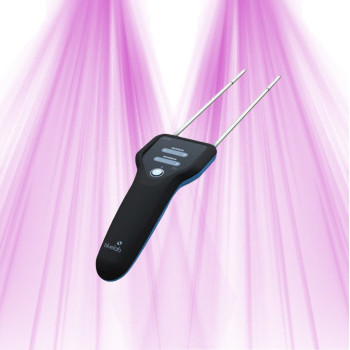
The accuracy of measurements in hydroponics directly depends on the condition of your probes and the quality of your calibration. BlueLAB parts are manufactured to the same standards as the original devices, ensuring perfect compatibility. The BlueLab - Combo EC/PH + Temperature Tester, for example, requires regular probe maintenance to maintain its ±0.1 pH accuracy. BlueLAB calibration solutions are formulated to exact concentrations (pH 4.0 - 7.0 - 10.0 and EC 2.77 mS/cm), allowing for perfect calibration of your instruments.
The advantage of BlueLAB accessories also lies in their ease of use. Unlike generic solutions, each kit is designed for simple and quick installation. The EC Calibration and Cleaning Kit - Bluelab contains everything needed to keep your EC probes in optimal condition, with specific cleaning solutions that dissolve limescale deposits without damaging the electrodes.
How to choose your BlueLAB parts and accessories
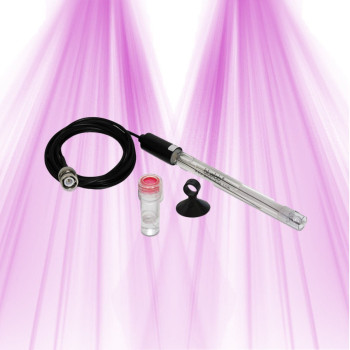
The choice of parts primarily depends on your existing equipment and your maintenance needs. For pH testers, first check if the problem is with the probe or the calibration. A pH probe generally has a lifespan of 12 to 18 months with intensive use. If your tester takes more than 60 seconds to stabilize or displays erratic values, it's often a sign that the probe needs to be replaced. The Bluelab pH Tester - Digital and Waterproof uses a replaceable probe that can be changed in seconds.
For EC probes, maintenance is crucial as they are more sensitive to mineral deposits. A fouled EC probe can give readings up to 30% lower than reality. BlueLAB cleaning kits contain specific solutions that dissolve residues without altering the conductivity of the electrodes. Also consider storage solutions: a pH probe should always be stored in a pH 4.0 storage solution, never in distilled water, which would irreparably damage the electrode.
Frequently Asked Questions
Which BlueLAB part should I choose for my pH tester that no longer calibrates?
If your BlueLAB pH tester no longer calibrates correctly, the problem usually comes from the pH probe reaching the end of its life. A worn probe takes more than 2 minutes to stabilize and never reaches the reference values during calibration. First, replace the pH probe, then perform a full calibration with pH 4.0 and 7.0 solutions. If the problem persists after changing the probe, check that the calibration solutions are not expired (2-year shelf life unopened, 3 months after opening).
How do I use the BlueLAB maintenance kit to clean my EC probe?
Cleaning a BlueLAB EC probe is done in three steps with the maintenance kit. First, rinse the probe with distilled water to remove organic residues. Then, soak the probe in the EC cleaning solution for 10 to 15 minutes to dissolve limescale and mineral deposits. Finally, rinse thoroughly with distilled water and calibrate with the EC 2.77 mS/cm solution. This procedure should be repeated every 2 weeks in intensive hydroponic cultivation to maintain measurement accuracy.
Is this BlueLAB maintenance kit compatible with probes from other brands?
BlueLAB cleaning and calibration solutions are compatible with most pH and EC probes on the market, as they comply with international concentration standards. However, connectors and mechanical parts are specifically designed for BlueLAB devices. pH 4.0, 7.0, and 10.0 solutions can be used to calibrate Hanna, Milwaukee, or Adwa testers. For EC probes, the 2.77 mS/cm solution is a recognized standard. Be careful with storage solutions, which may vary depending on the manufacturer.
How to install and calibrate a BlueLAB pH probe step by step?
Installing a new BlueLAB pH probe begins by unscrewing the old probe counter-clockwise. Screw in the new probe by hand without forcing it, until it is firmly in place. Before first use, soak the probe for 30 minutes in pH 4.0 storage solution. For calibration, rinse the probe with distilled water, immerse it in pH 7.0 solution and wait for stabilization (flashing CAL symbol). Confirm, rinse, then repeat with pH 4.0 solution. A successful calibration shows a slope between 95% and 105%.
How often should I maintain my BlueLAB probes in indoor hydroponics?
In indoor hydroponics, BlueLAB probe maintenance must follow a precise schedule to ensure reliable measurements. Clean EC probes every 2 weeks with the specific cleaning solution, and calibrate them monthly. pH probes require weekly calibration and cleaning as soon as response times exceed 60 seconds. Replace pH probes every 12 to 18 months depending on intensity of use, and EC probes every 2 to 3 years. Always store pH probes in their storage solution between uses to extend their lifespan.