

































Aller au contenu principal
23 produits

Environmental Control

Environmental Control: Master Temperature, Humidity, and Ventilation

Environmental control is the foundation of successful indoor growing. Temperature, humidity, and air exchange: these three parameters determine the health of your green plants. Without a stable environment, even the best varieties struggle to thrive. That's why investing in ap...

Environmental Control: Master Temperature, Humidity, and Ventilation

Environmental control is the foundation of successful indoor growing. Temperature, humidity, and air exchange: these three parameters determine the health of your green plants. Without a stable environment, even the best varieties struggle to thrive. That's why investing in appropriate environmental control equipment makes all the difference between a crop that merely survives and one that truly flourishes.

Why Choose the Right Environmental Control Equipment

The difference between a beginner grower and an experienced one? Environmental mastery. Your green plants need a stable temperature between 18 and 24°C depending on the species, relative humidity between 40 and 60%, and constant air exchange to prevent mold and provide fresh CO2.Modern digital hygrometers display temperature and humidity in real-time with an accuracy of ±1°C and ±3% humidity. No more guesswork! Extractor fans with flow rates from 100 to 800 m³/h depending on the size of your space ensure optimal air exchange. Coupled with activated carbon filters, they also eliminate unwanted odors.Automatic environmental controllers manage fans, heaters, and humidifiers according to your settings. No need for constant monitoring: the system self-regulates. Some models even include remote probes to measure conditions directly at plant level.

How to Choose Your Environmental Control Equipment

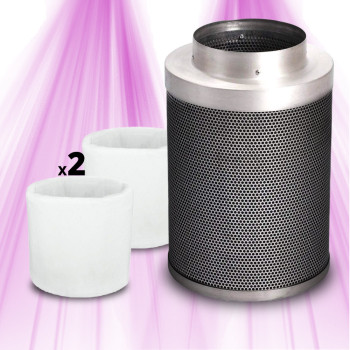
The size of your space determines the choice of equipment. For a 60x60cm tent, a 100-150 m³/h extractor is sufficient. For 120x120cm, count on 300-400 m³/h. The rule: renew the air volume 40 to 60 times per hour.Your hygrometer should display min/max values over 24 hours to detect nocturnal variations. Models with a wired probe allow measurement at the heart of the canopy, where it truly matters. Avoid needle hygrometers, which are too inaccurate.For ventilation, opt for extractors with an integrated dimmer. Noise matters: a maximum of 35 dB for domestic use. Acoustic ducts further reduce noise pollution. For filtration, a carbon filter should have 1.5 times the flow rate of the extractor to be effective.Dehumidifiers and humidifiers are chosen based on capacity: 10-12L/day for 20m², 20-25L/day for 40m². Models with an integrated hygrostat automatically stop at the desired threshold.

Frequently Asked Questions

Which environmental controller should I choose for a 1m² tent with green plants?

For 1m², a simple temperature/humidity controller with 2 relays is more than enough. It will control your extractor and a small auxiliary heater if necessary. Look for a model with adjustable hysteresis (difference between on/off thresholds) to avoid untimely starts. GSE or Cli-Mate controllers offer good value for money with an LCD screen and intuitive programming. Expect to pay 80-120€ for a reliable model that will last for years.

How do I install an extractor fan with a carbon filter in my indoor grow?

The extractor should always be placed at the top of the space, where hot air accumulates. First, fix the carbon filter to the ceiling with dedicated straps or supports. Connect the extractor directly to the filter, then the exhaust duct to the outside. Intake (incoming air) should be at the bottom, diametrically opposite. Use rigid aluminum or PVC ducts to limit pressure losses. Correct installation ensures optimal flow and effective filtration.

Which hygrometer/thermometer is most reliable for monitoring humidity and temperature?

Digital hygrometers with remote probes are the most accurate. Testo or TFA models offer an accuracy of ±0.5°C for temperature and ±2% for humidity. Absolutely avoid round needle hygrometers, which are completely unreliable. A good digital hygrometer costs 15-30€ and displays min/max values, essential for detecting nocturnal peaks. Some models offer audible alerts if thresholds are exceeded, which is very practical for quick reactions.

Do I need a dehumidifier or a humidifier depending on the season for environmental control?

This depends on your region and your setup. In winter, heating dries the air: a humidifier maintains 50-60% humidity. In summer or in case of overwatering, humidity rises: a dehumidifier prevents mold and fungi. The ideal is a combined system with a hygrostat that automatically switches between the two modes. In a naturally humid cellar, opt for a dehumidifier. In a dry attic, choose a humidifier.

How do I regularly maintain carbon filters and fans to prevent breakdowns?

Carbon filters should be changed every 12-18 months depending on usage. A saturated filter loses its effectiveness and restricts airflow. Dust the external pre-filter every 2-3 months with a vacuum cleaner. For fans, clean the blades every 6 months with a damp cloth and check the fastenings. Grease the bearings if necessary (a few drops of fine oil). Regular maintenance extends lifespan and maintains performance. Always keep a spare filter in stock.
Showing 13 - 23 of 23 items
What humidity level for my indoor plants?
   

The ideal humidity level varies considerably depending on your plants' development stage. Generally, young seedlings and cuttings prefer high humidity (60-80%), while plants in vegetative growth thrive around 50-70%. During flowering, I reduce humidity to 40-50% to prevent mold. A humidifier or dehumidifier may be necessary to adjust these levels.

How to choose a ventilation system for indoor cultivation?
   

Choosing a ventilation system depends on the size of your grow space. You need to calculate the air volume to be renewed to ensure a complete air change every 1 to 3 minutes. I recommend a powerful air extractor for evacuating hot and stale air, and a fan to circulate the air inside and strengthen your plants' stems. Don't forget carbon filters if you're growing odorous plants.

What mistake to avoid for environmental control?
   

The most common mistake I see is not regularly monitoring parameters. An unstable environment is much worse than a non-optimal but constant one. Also, avoid undersizing your equipment: an extractor that's too weak or insufficient heating will definitely cause you problems. Neglecting air circulation is also a common mistake that can lead to fungal issues.

What is a hygrometer used for in indoor cultivation?
   

A hygrometer is an essential tool used to measure the relative humidity level in your grow space. Without it, it's impossible to know if the air is too dry or too humid for your plants. I consider it a minimal but crucial investment for adjusting the use of your humidifier or dehumidifier and preventing many humidity-related problems.

What is the difference between an extractor and a fan?
   

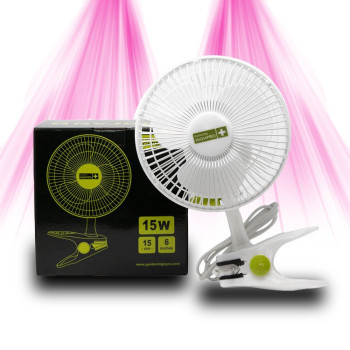
That's an excellent question! The primary role of an air extractor is to renew the air in your grow space by expelling hot, stale, or humid air to the outside, and drawing in fresh air. The fan, on the other hand, circulates the air within the space, which helps to homogenize temperature and humidity, and to strengthen plant stems by simulating natural wind. They are complementary and not interchangeable.

How do I know if my environment is suitable for my plants?
   

To know if your environment is suitable, I advise you to carefully monitor your plants. Yellowing leaves, burnt tips, slowed growth, or the appearance of mold are signs that something is wrong. In parallel, a thermometer/hygrometer will give you precise figures to adjust your equipment. Don't hesitate to refer to the specific needs of each species you are cultivating.

How to renew the air in a grow cabinet?
   

In a grow cabinet, air renewal is essential. I always install an air extractor at the top of the cabinet to expel hot air, as heat rises. A passive air intake (an opening at the bottom) or active air intake (an intake fan) is necessary to bring in fresh air. The goal is to create a constant airflow that prevents the accumulation of heat and CO2, and ensures a supply of fresh air essential for photosynthesis. You can learn more about setup in this article.

Blog navigation

Latest posts

What Wattage LED Grow Light Should a Beginner Choose?

What wattage LED grow light should a beginner pick? Real watts, W/m², PPFD and a 60x60 setup explained in the GrowLED...

Read more
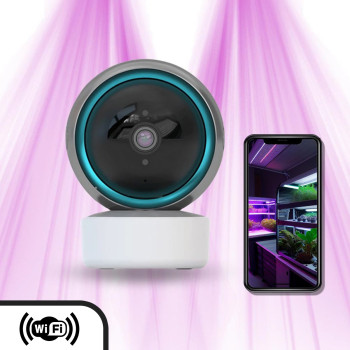
VIVOSUN Grow Cam 6mm 2K QHD WiFi Grow Camera

Tired of anxiety when you're away from your grow? The VIVOSUN Grow Cam 6mm 2K QHD WiFi Grow Camera lets you keep an...

Read more
STOP à la Tourbe ! Découvrez les 4 Meilleurs Substrats Écologiques pour une Culture Indoor Explosive

Le monde du jardinage connaît une transformation silencieuse mais profonde. Face à l'urgence climatique et à la prise...

Read more