










































































Achat vérifié
J'ai eu de la chance de découvrir ce site où j'ai trouvé un extracteur simple à installer et fiable. Le double débit répond bien à mes besoins, calme en journée et plus puissant la nuit, sans bruit gênant.

Product successfully added to your shopping cart
Ça pousse dans le bon sens

 Enlarge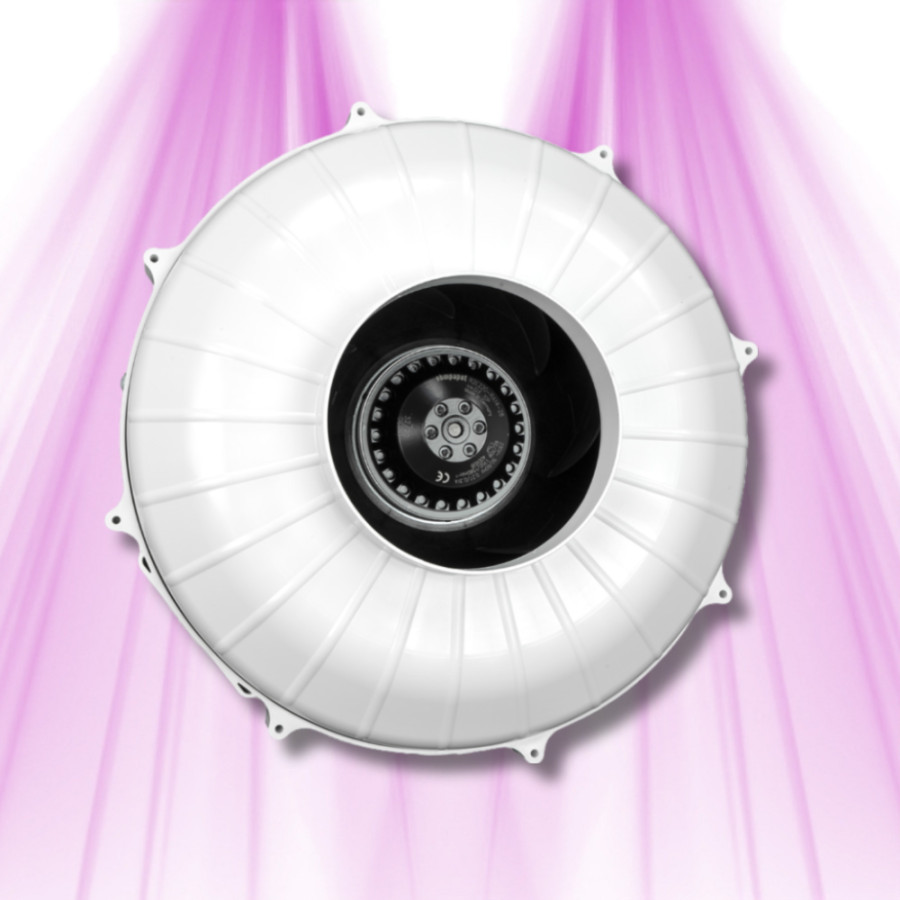
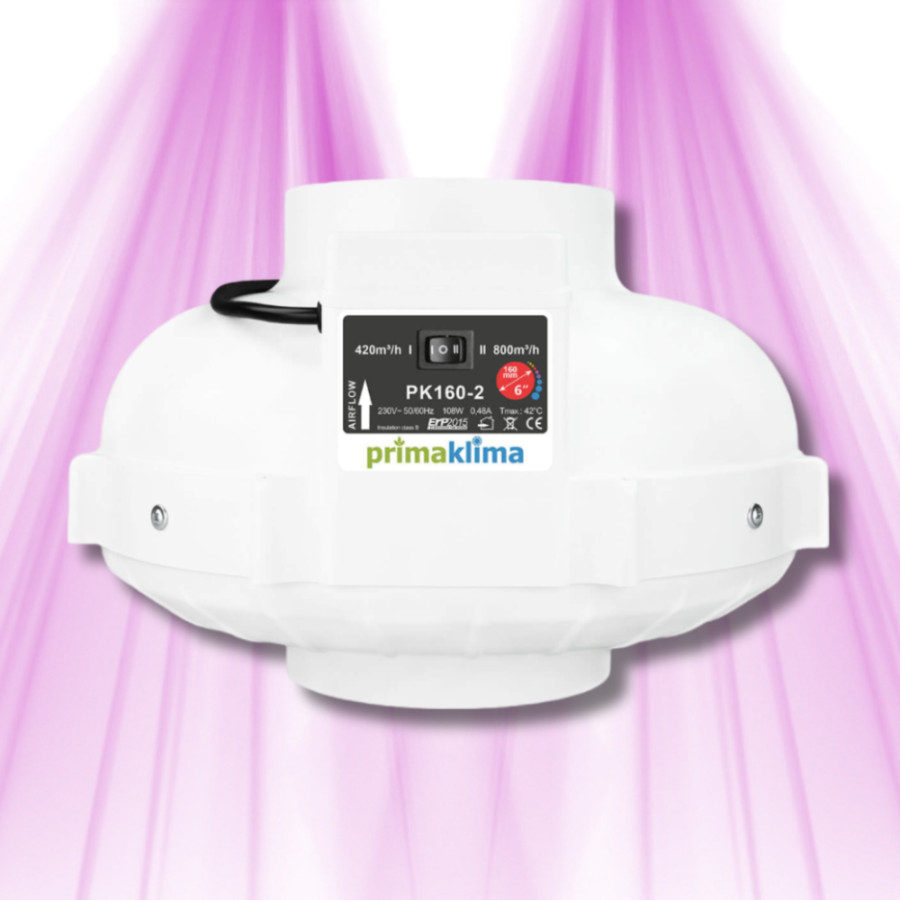
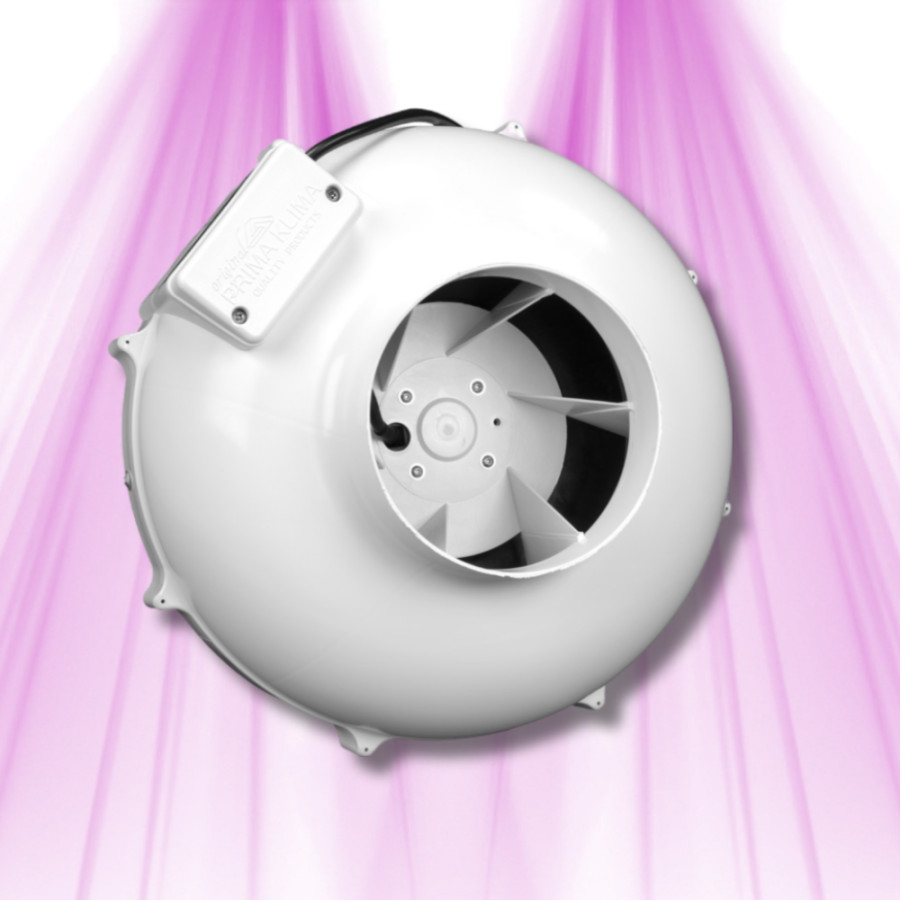
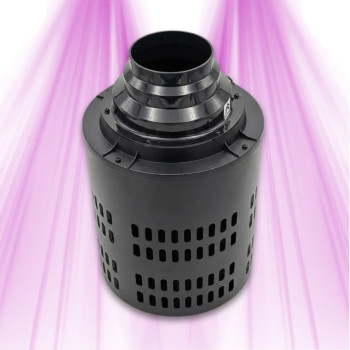
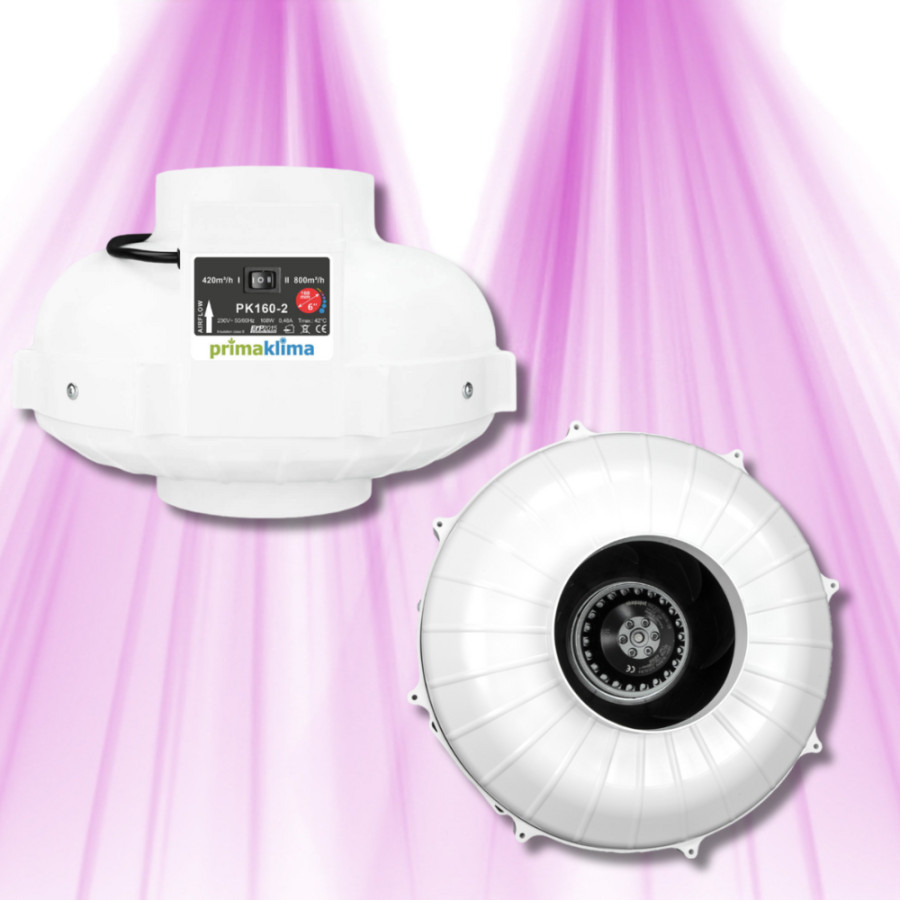
Prima Klima Extractor Ø160mm – 800m³/h – 2 speeds

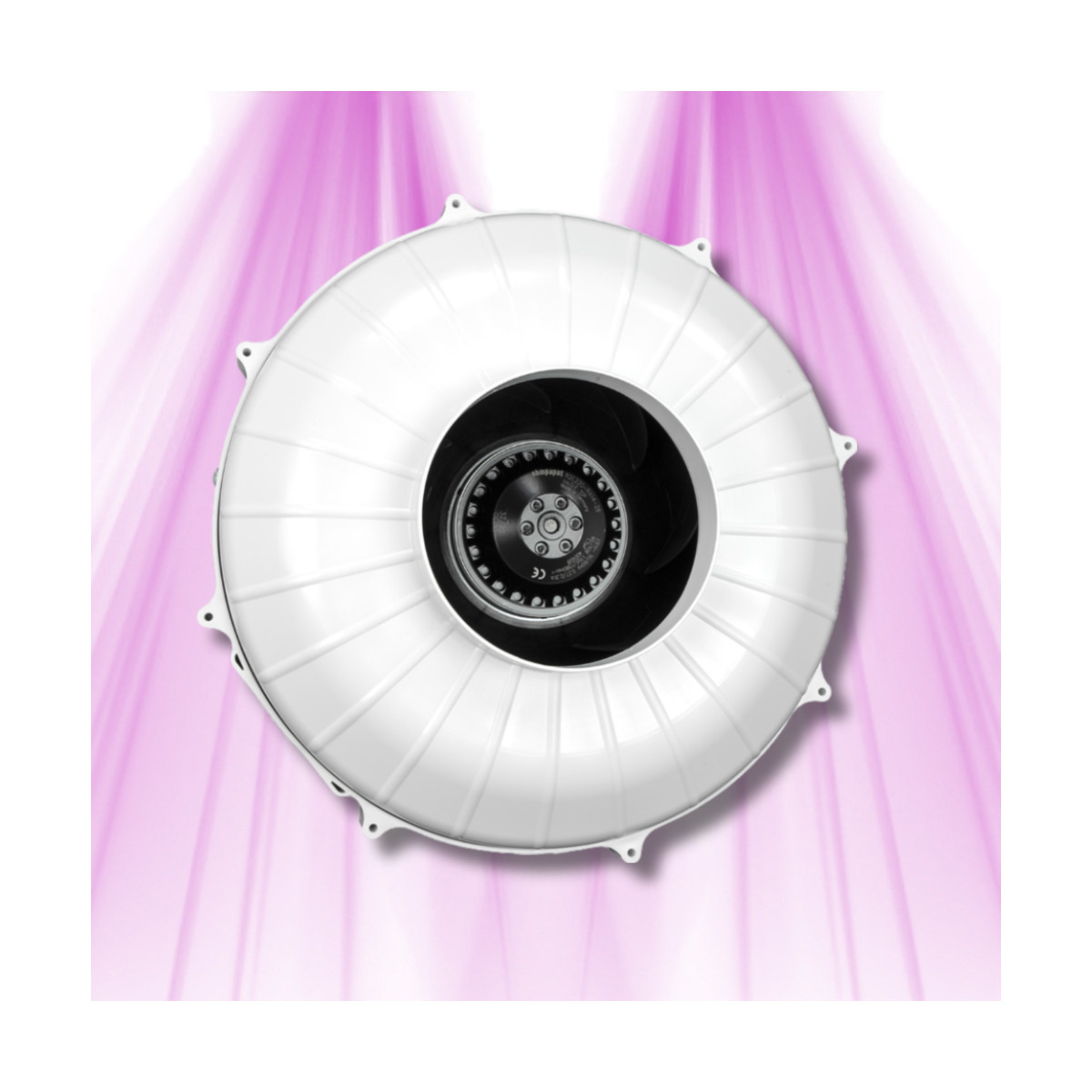
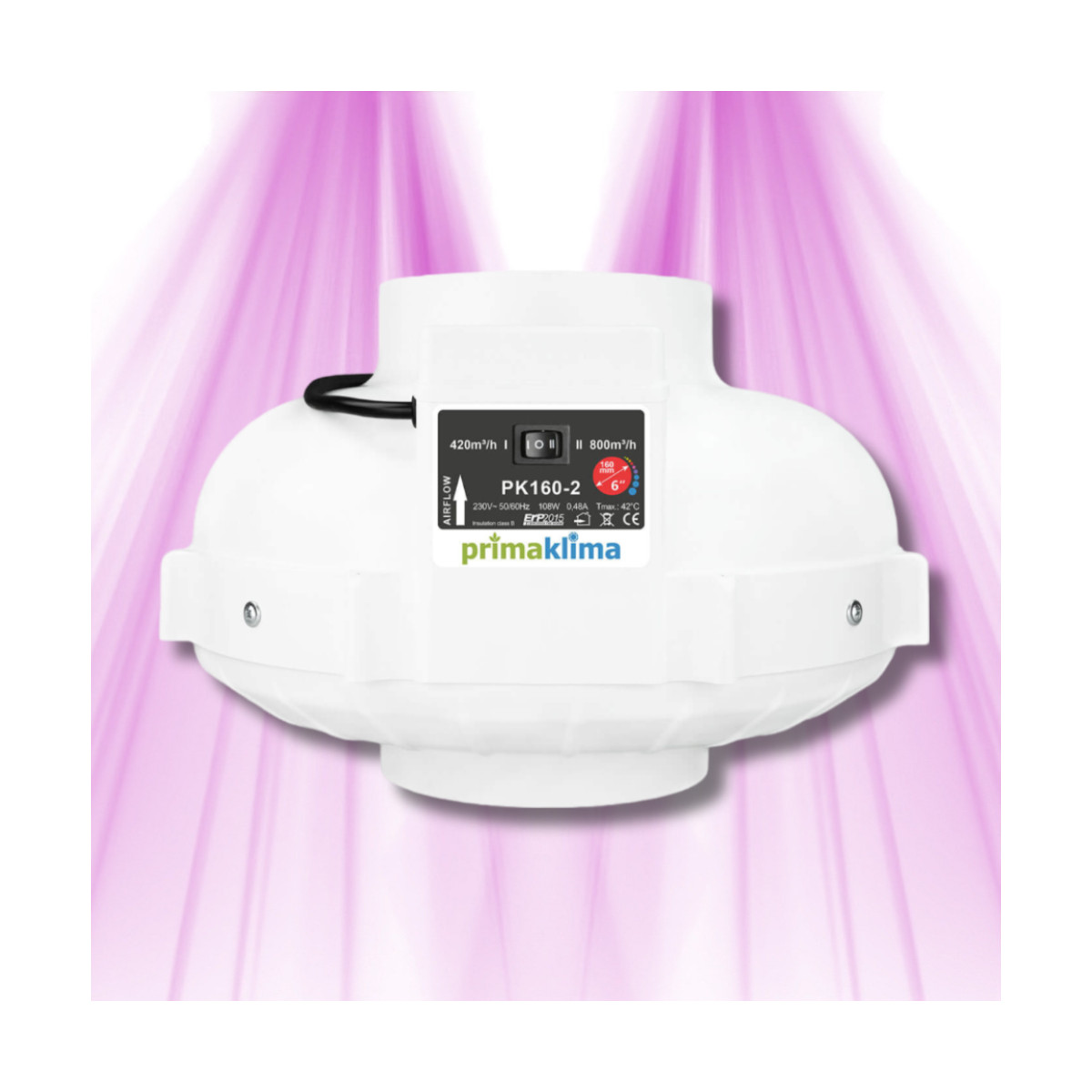
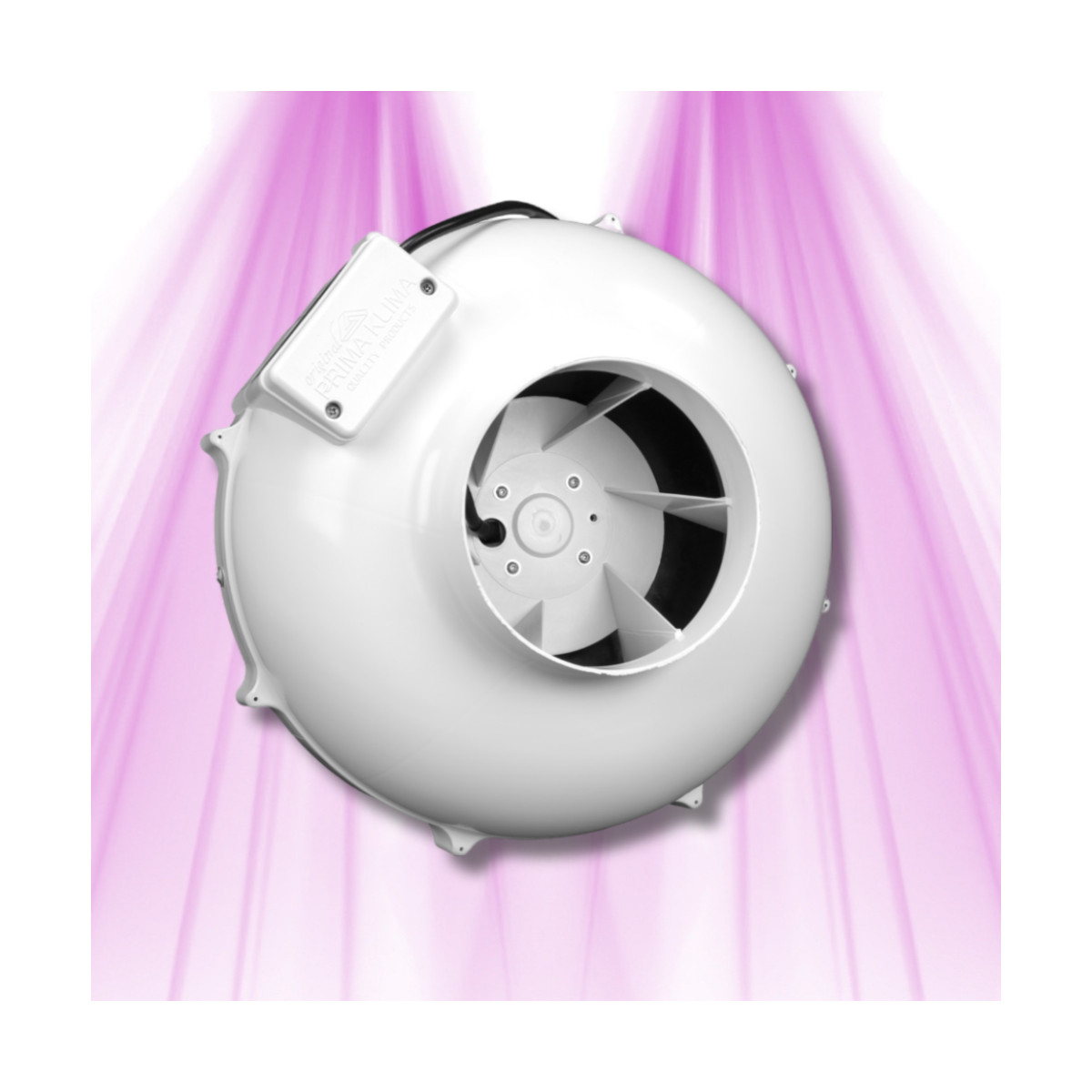
Discover the Prima Klima extractor diameter 160mm, perfect for controlling the environment of your indoor culture!
Product not compatible with a dimmer
Prima Klima Extractor Ø160mm – 800m³/h – 2 speeds
Our team will reply within 24 business hours.
Ref:
Quote · Lighting study · Administrative Payment Order
Step 3 · Ventilation & climat · 10 min, gratuit
When you start growing indoors, air quality is essential to ensure the optimal growth of your plants. The Primaklima PK160-2 Two-speed air extractor presents itself as the ideal choice to meet these requirements. Let's discover together the exceptional characteristics that make it an essential ally for any passionate grower.
ebm-papst AC motor: The extractor is equipped with a high-quality AC motor from ebm-papst, ensuring reliable and efficient performance. This motor is known for its durability and stability, guaranteeing optimal operation of the extractor.
Impeller with backwards curved blades: Thanks to its impeller with backwards curved blades, this extractor offers maximum efficiency in the evacuation of stale air. The optimal aerodynamics of the shape guarantee a constant and regular air flow.
Impact-resistant housing: The entire housing is made of impact-resistant and flame-retardant polyamide (nylon). This robust construction ensures maximum protection of the extractor under varied conditions of use.
Durable, Maintenance-Free Ball Bearings: Built-in ball bearings ensure smooth motor operation and extended life. Benefit from a reliable and efficient extractor without having to worry about frequent maintenance operations.
Integrated connection and control system: The connection and control system is integrated into the housing, simplifying installation and offering appreciable ease of use. You have full control over airflow without unnecessary complications.
Optimal efficiency: Thanks to its quality motor, its optimized impeller, and its durable housing, this extractor offers maximum efficiency in the evacuation of stale air, ensuring a healthy growing environment.
Exceptional durability: The high-quality materials used in the construction guarantee an extended lifespan, allowing you to enjoy the benefits of this extractor for a long time without compromise.
Simplified installation and use: With its integrated connection and control system, the extractor is easy to install and use, providing a pleasant user experience even for beginners.
Speed Flexibility: The two-speed feature allows you to adjust the airflow according to the specific needs of your grow space, providing increased flexibility.
Adaptability: Available in a 115 V version and with alternative connection cables, this extractor easily adapts to various electrical configurations, offering appreciable versatility.
What is the maximum air capacity that this extractor can evacuate?
What is the electrical power of this extractor?
What are the advantages of the ebm-papst AC motor?
How is the construction of the housing of this extractor characterized?
What are the advantages of the two-speed function?
To learn more about managing odors when growing indoors, check out our informative article on how to deal with odors . Opt for the Primaklima PK160-2 Two-speed extractor and ensure the flourishing growth of your plants with complete peace of mind.
| Plug & Play | Yes |
|---|---|
| Speed management | 420 - 800 m3/h |
| Type of extractor | 2 Speeds |
| Marque | Prima Klima |
| Matière | Polyamide |
| Puissance consommée (W) | 108-110 |
| Poids (kg) | 3.7 kg |
| Diamètre (mm) | 160 mm |
| Débit (m³/h) | 420 / 800m3h |
| Type de moteur | AC |
| Isolation phonique | Non |
| Dimensions (mm) | 340x232 |
| Debit d'air (m3/h) | 420/800 |
J'ai eu de la chance de découvrir ce site où j'ai trouvé un extracteur simple à installer et fiable. Le double débit répond bien à mes besoins, calme en journée et plus puissant la nuit, sans bruit gênant.
Installation rapide, je n'ai pas eu de problème à raccorder ce modèle. Il est assez silencieux et énergivore raisonnable. Un petit regret pour l'absence de vitesse réglable, mais le double mode me suffit. Bon investissement !
Silencieux et puissant, ça fait le taf sans prise de tête.
Franchement bluffé par la qualité. Livraison rapide. Vraiment pas déçu.
Très bon produit. Fonctionne bien, livraison rapide. Vraiment satisfait de mon achat.
Très bon produit. Fonctionne bien, livraison rapide. Vraiment satisfait de mon achat.
Excellent investissement. Ce produit fonctionne mieux que ce que j'espérais. Les résultats sont visibles rapidement et les performances sont impressionnantes. Livraison sans problème, bien protégé. Service client réactif et courtois. Je suis très satisfait et je le recommande à tous mes amis.
Excellent choix. Ce produit fonctionne mieux que prévu. Les résultats sont visibles rapidement. Livraison rapide et soignée. Le service client a été très courtois et réactif. La qualité de fabrication est impressionnante. Je suis très satisfait et je vais certainement en racheter.
Très efficace et économique. Livraison rapide. Je recommande sans hésiter.
Super produit, très efficace. Livraison en bon état. Je recommande vivement.
Aucun avis ne correspond à ce filtre.
This integration is therefore possible but requires a specific installation and some expertise in home automation and electronics to adapt speed control and sensor readings.
The Prima Klima PK160-2 offers two speeds with air flow rates of 420 m³/h at low speed and 800 m³/h at high speed. The power consumption at high speed reaches about 108 W, while at low speed it is about half, around 50-60 W.
In a 1x1 m grow space (approximately 2 to 2.5 m³), the low speed already ensures effective air exchange every 17-20 minutes, allowing for good humidity control under normal conditions. The high speed, which is noisier and more energy-consuming, speeds up this exchange to about 7-8 minutes, which is useful in cases of high humidity or for quick evacuation.
In summary: the low speed is generally sufficient to manage humidity in this volume, while the high speed meets more demanding needs, at the cost of higher consumption and noise.
For the fan Prima Klima 160 mm – 420/800 m³/h – 2 speeds, the maximum electricity consumption is around 108 W at high speed, while it is necessarily lower at low speed, although the exact figures are not specified. Regarding the noise level, as often with Prima Klima products, it remains relatively contained but increases at high speed compared to low speed. In summary, high speed = more consumption and noise, low speed = quieter and more economical operation.
To make the extractor quieter without compromising airflow, it is advisable to optimize the installation: use silencers or soundproof ducts, install anti-vibration supports, or use suitable flexible ducting. As this model does not have built-in variable speed control, fine-tuning the speed without loss of airflow is difficult.
These solutions help to limit mechanical and aerodynamic noise while maintaining excellent airflow, ideal for your growing environment.
For the Prima Klima 160 mm - 420 / 800 m³/h - 2 speeds extractor, the electrical consumption is approximately 110 W in high speed (800 m³/h). In low speed (420 m³/h), the consumption is not officially indicated, but can be estimated at approximately 55 W.
The energy efficiency, calculated as airflow rate per watt consumed, is:
This slight improvement in efficiency at low speed is typical for extractors, where consumption decreases faster than airflow.
The difference in sound level between the low speed and high speed of the Prima Klima PK160-2 extractor (diameter 160 mm, 420 / 800 m³/h) is not explicitly specified in decibels by the manufacturer. However, based on a similar model, it is estimated that the high speed generates approximately 74 dB, a noise level comparable to that of an electric kettle.
At low speed, the sound level is significantly lower, with a typical reduction of between 5 and 15 dB. This means that the low speed is perfectly suited for indoor installation where acoustic discretion is essential, offering quiet and environmentally friendly operation.
This dual speed adjustment will therefore allow you to effectively manage the performance of the fan while limiting noise according to your needs.
For home automation control, a complex external solution would need to be considered, but this is neither planned nor recommended. If you are looking for ventilation with remote control or native home automation integration, we can advise you on suitable systems.
The electrical installation of the Prima Klima 160 mm 2-speed extractor is designed to be simple, even for a beginner. Its ebm-papst motor integrates the control and connection within the housing, and speed adjustment is easily done via a two-position switch, thus avoiding the use of a complex dimmer.
The connection is made to a standard 230 V power supply using regular cables, which facilitates installation. However, it is important to adhere to basic electrical safety rules. The provided documentation is clear, and it is advisable to follow it rigorously or seek advice if needed.
In summary: this model remains accessible to beginners thanks to its plug-and-play system and simple control, while ensuring robust and reliable quality.
To effectively manage the speed change of the Prima Klima PK160-2 extractor (160 mm, 420/800 m³/h) during a double growing cycle, it is ideal to use the low speed (420 m³/h) during the growth phase to ensure gentle air renewal and avoid any stress related to excessive airflow. During flowering, when ventilation needs increase to control humidity and CO₂ levels, gradually switch to high speed (800 m³/h).
This transition should be smooth, ideally over 10 to 20 minutes, to avoid shocking the plants. Synchronize this management with your light cycle: high speed during intense lighting, and low speed at night. Finally, using humidity, temperature, and CO₂ sensors will allow you to dynamically adjust ventilation according to actual needs, ensuring a stable and healthy environment for your crops.
The Prima Klima Extraction – diameter 160 mm – 420/800 m³/h – 2 speeds does not integrate a native home automation system to automate ventilation according to real-time temperature and humidity.
However, it is quite possible to control this extractor via an external controller or third-party home automation solution. By connecting temperature and humidity sensors to a controller or relay, you can manage the extractor's speeds according to the measured conditions.
This approach effectively allows integrating this extractor into an automated management system but requires additional installation for precise control. If you are looking for equipment with integrated control, then you should consider specific solutions or suitable horticultural controllers.
For a room of about 2 to 2.5 m³ (a small tent or growing space), low speed is more than sufficient to renew the air every 17 to 20 minutes, ensuring good ventilation without disturbing the tranquility.
High speed is reserved for occasional needs for rapid ventilation (humidity spikes or odors), as it is noisier.
Thus, you can use this extractor without disturbing the room by favoring the low speed while maintaining effective ventilation.
The Prima Klima PK160-2 offers two distinct operating speeds, tailored to the specific needs of your crop. At low speed, the extractor delivers an air flow of approximately 420 m³/h, sufficient to maintain good aeration during the growth phase, while minimizing electrical consumption and noise.
At high speed, the flow increases to 800 m³/h, ideal for the flowering phase or during hot periods, where maximum extraction is needed to avoid excess humidity and temperature. This speed consumes about 108 W, which is more than at low speed, but remains justified by the increased ventilation needs.
In summary, you optimize ventilation by using the low speed for economical and quiet operation during growth, and then the high speed for intensive air renewal during flowering or in hot conditions.
The Prima Klima PK160-2 extractor offers two distinct speeds with clearly differentiated performances:
The high speed nearly doubles the air extraction power but also consumes about twice as much electricity. On the other hand, low speed offers better energy efficiency, as the reduction in consumption is more pronounced than that of the airflow.
This dual speed allows for ventilation adjustments based on specific needs, for example, to limit noise or save energy while maintaining good air circulation.
The Prima Klima PK160 2 speed extractor, with its diameter of 160 mm, is quite suitable for a compact growing area of 80x80 cm, provided that the low speed is favored. Indeed, at this speed, the noise level is reduced by 5 to 15 dB compared to the high speed, making the operation significantly more discreet and compatible with a small closed environment.
At high speed, the extractor reaches about 74 dB, which can be quite loud for such a small closet. To maximize acoustic comfort, it is advisable to use soundproof ducts or other sound insulation devices around your ventilation system.
In summary, for a harmonious installation in an 80x80 cm space, this model is very efficient and sufficiently quiet in low-speed mode.
The yield of the Prima Klima Extractor 160 mm is about 7.41 m³ per watt-hour at full speed (800 m³/h) with an electrical consumption of 108 W. At low speed (420 m³/h), the power consumption drops to around 55 W, further improving energy efficiency.
To optimize its consumption in continuous use, prefer low speed when maximum airflow is not essential. Additionally, using suppressors, appropriate flexible ducts, and anti-vibration supports helps reduce air loss, noise, and electrical consumption without compromising system efficiency.

 Prima Klima Extractor Ø160mm – 800m³/h – 2 speeds 131,89 € 4.9/5 Restock in progress
Prima Klima Extractor Ø160mm – 800m³/h – 2 speeds
* Required fields
Write your review and get a voucher for discount 5%
*valid for 150 daysor Cancel


