







































































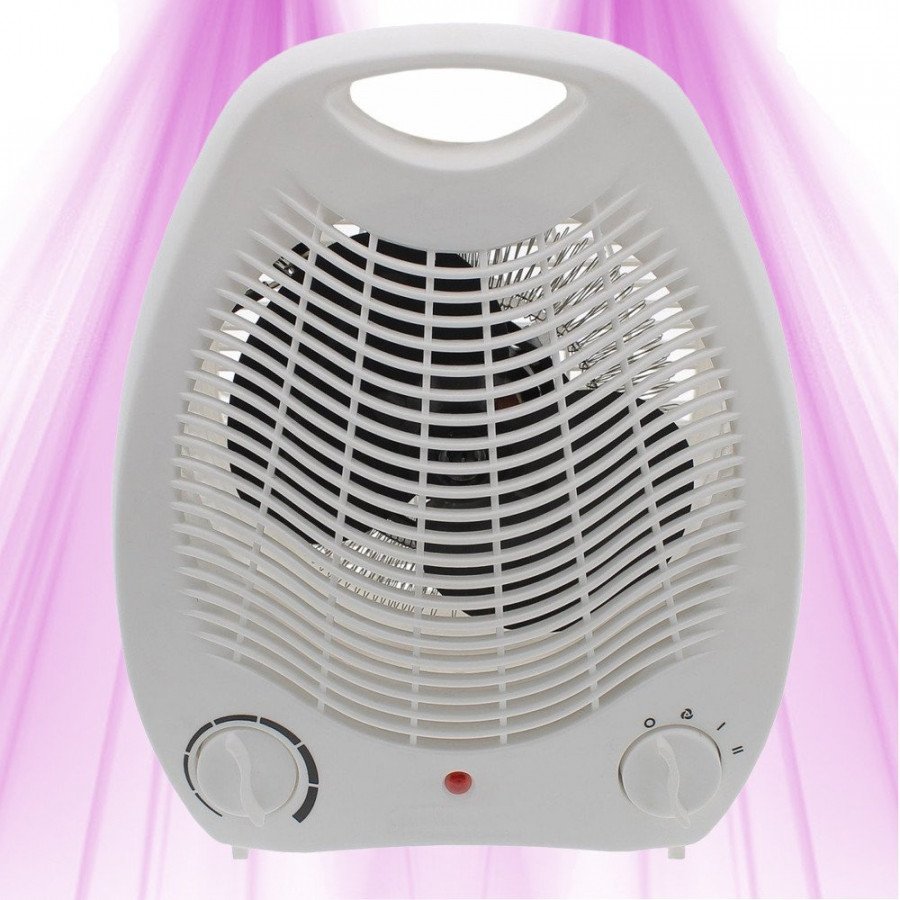
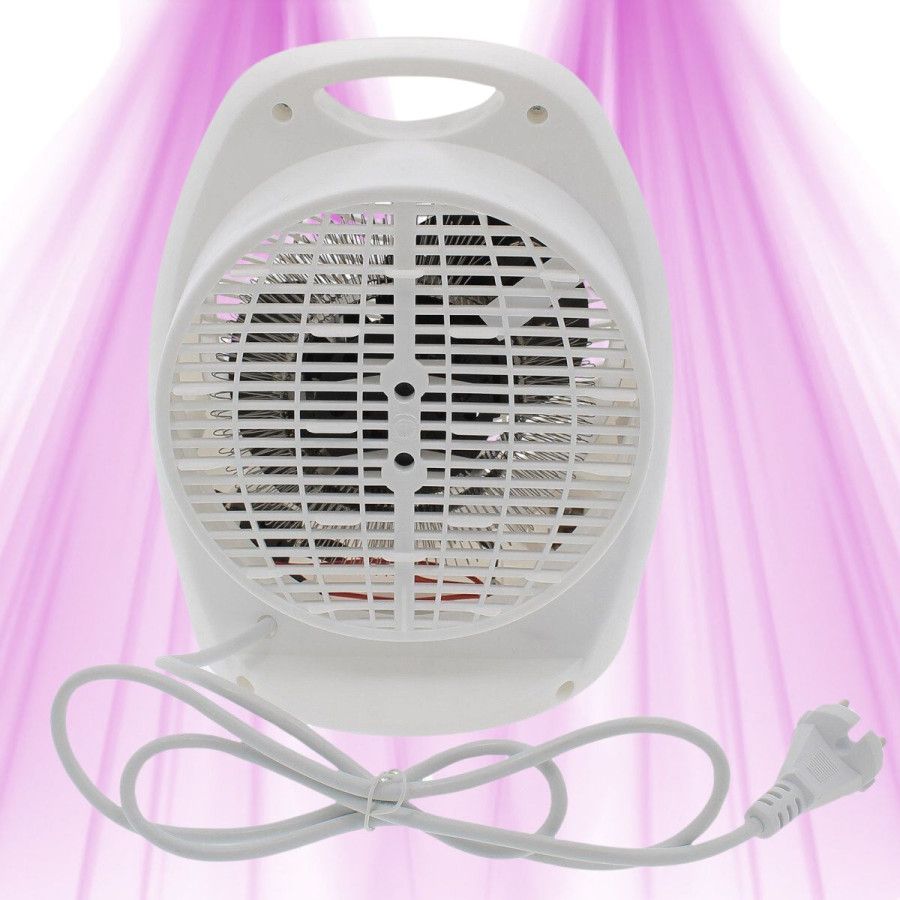
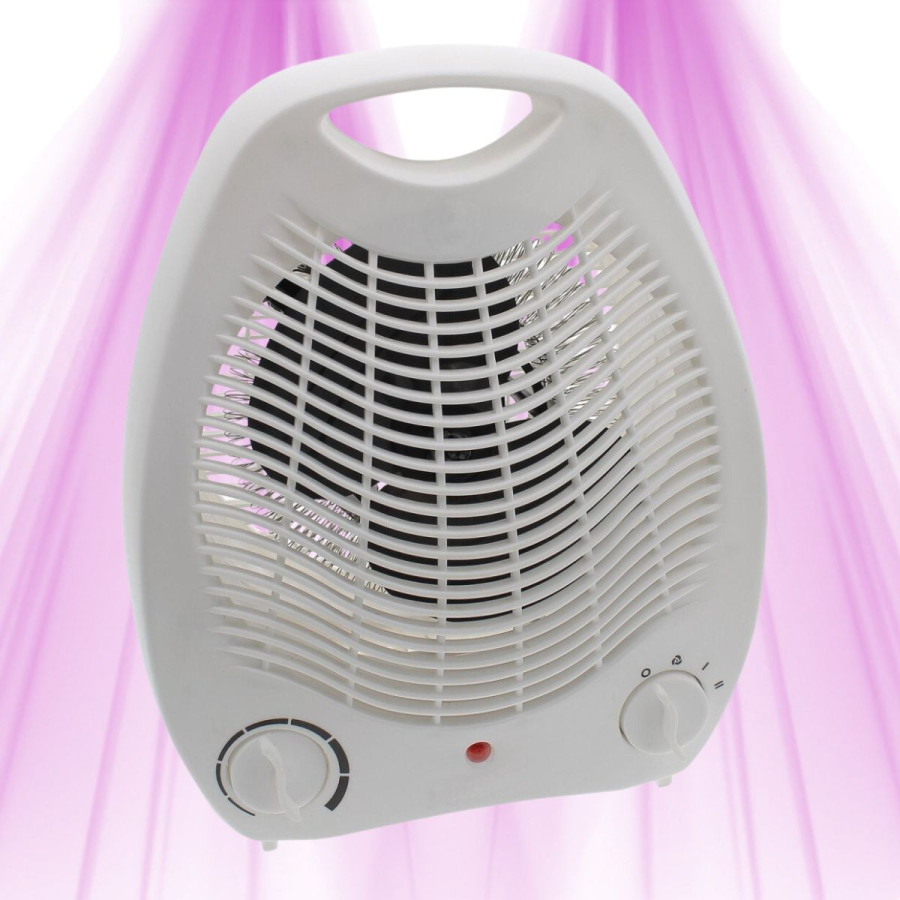
Thermofan heating 2000W - 2 speeds
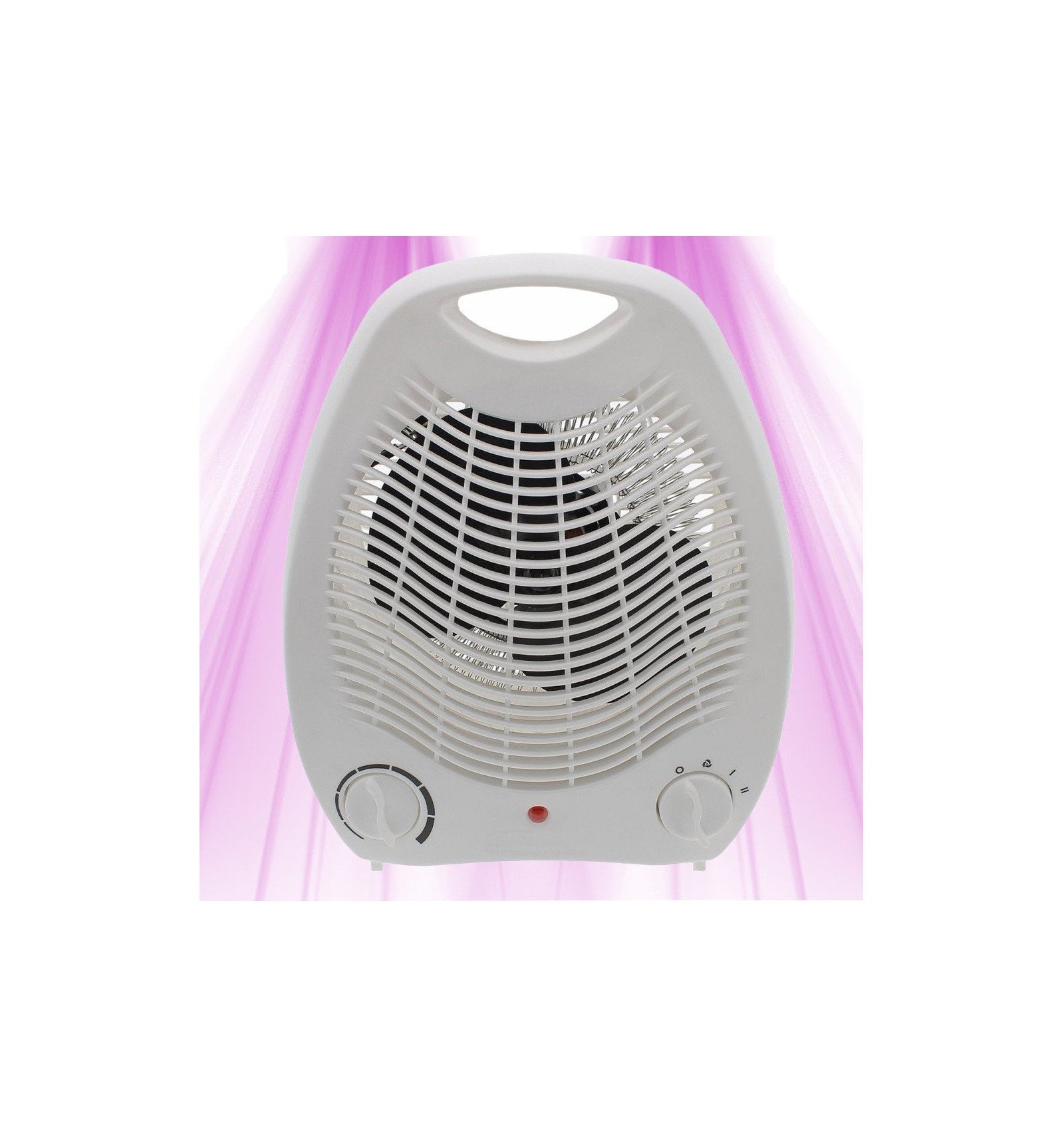
Thermofan heating 2000W - 2 speeds
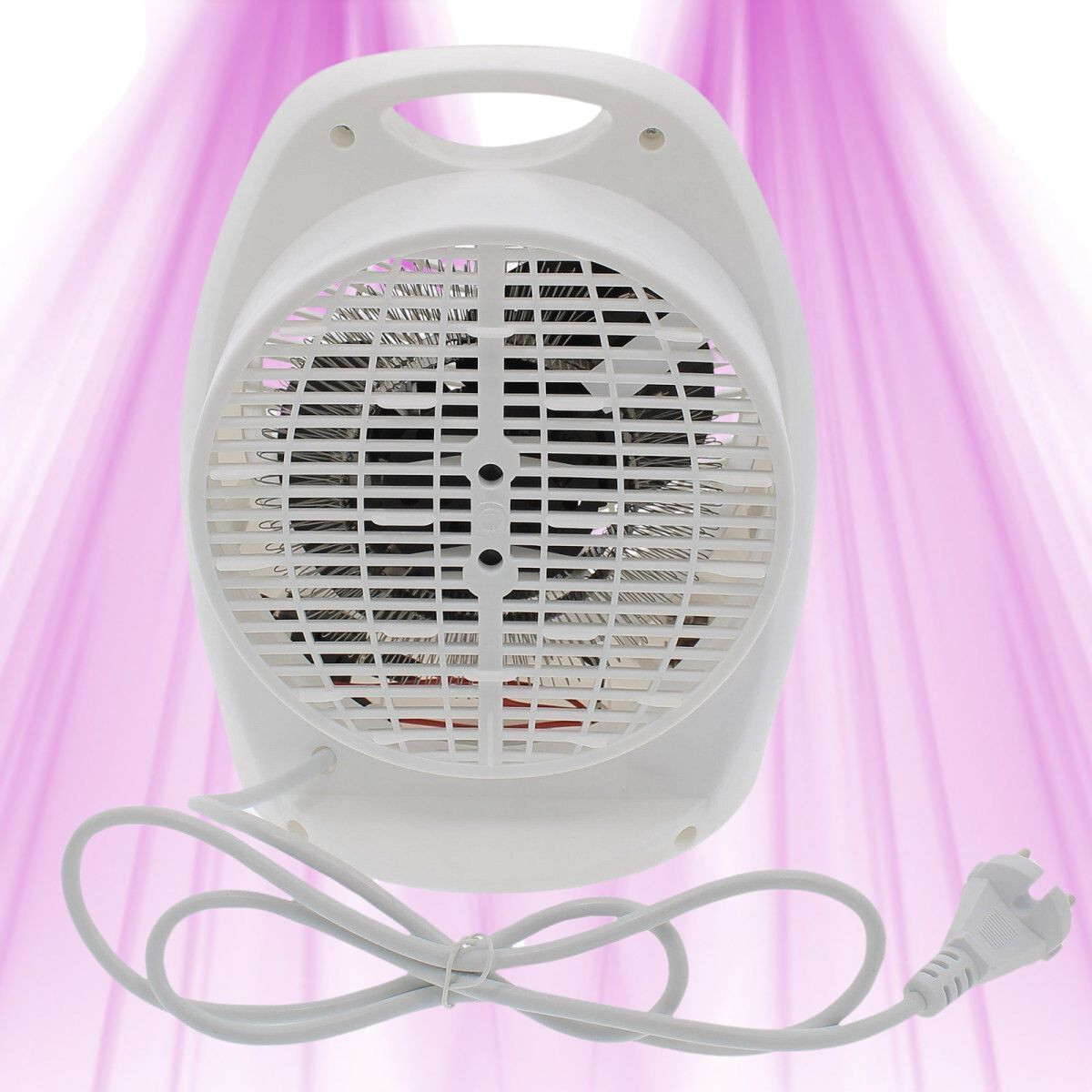
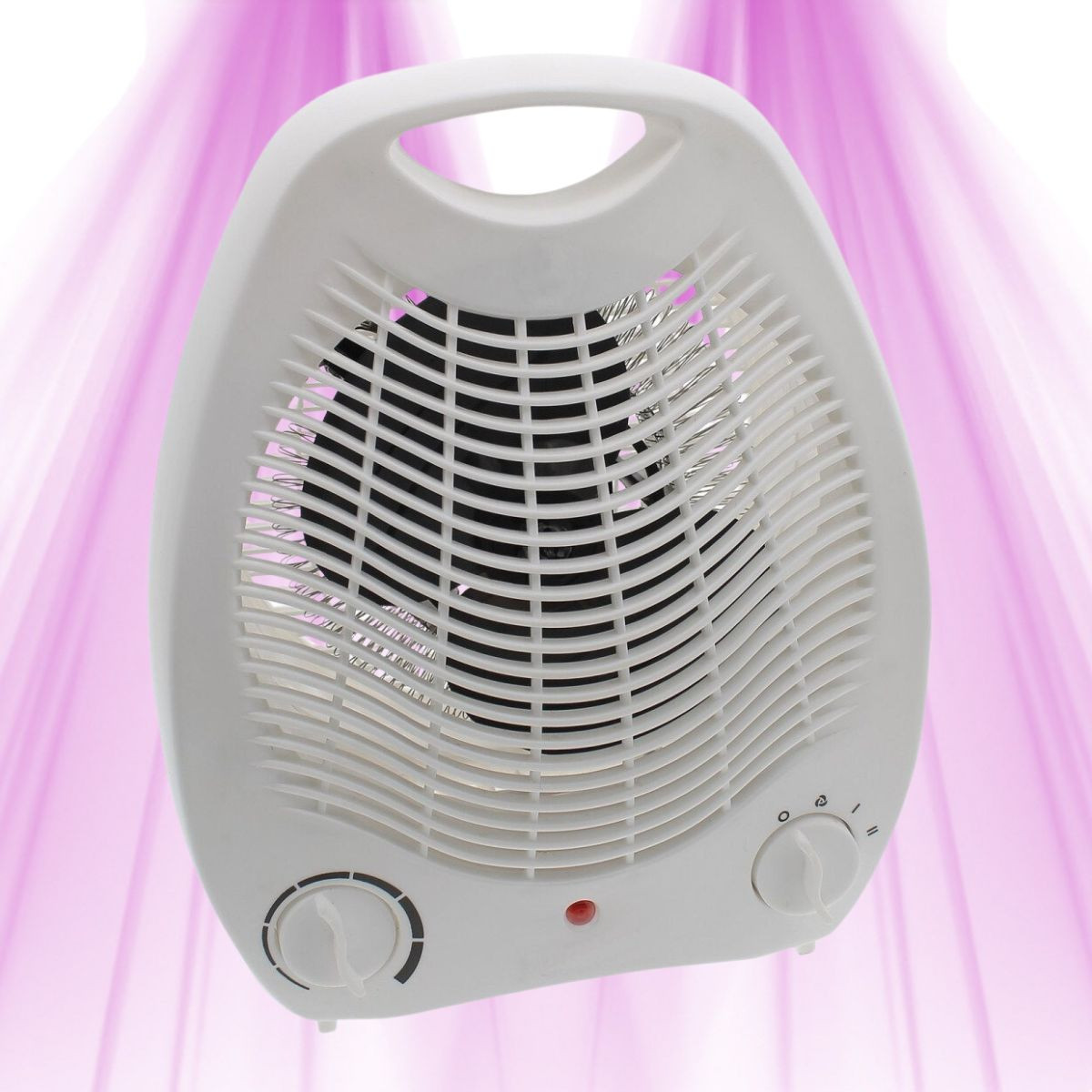
Discover the 2000W two-speed auxiliary heater , ideal for occasional use in isolated spaces . It is equipped with a handle, protection against overheating and a mains cable.
Product presentation
Discover the 2000W 2-speed heating fan . This auxiliary heater is powerful, light and efficient . It measures 2 1.7 x 13.2 x 26.5cm and will warm your rooms in just a few minutes.
This heater has two speeds and a ventilation function that you can control on its front. It also has a thermostat to manage the temperature expelled.
This thermofan is made mainly of white plastic, with molded handle and feet.
It has an automatic cut-off system. IP21 protection rating

Features detailed
| Speed management | 2 |
|---|---|
| Type | Heating |
| Power consumption (W) | 2000 |
| Compatibility | Gaines 100-150 mm (si adapté extraction), filtres à charbon, contrôleurs hygrométriques |
| Recommended dosage | 20-30 m³ |
| Noise level (dB) | Moderate |
Reviews customers
Soyez le premier à donner votre avis !
Partagez votre expérience avec ce produit.
Your questions
What is the electricity consumption of the Thermoventilator 2000W with 2 speeds when it operates at full capacity?
Does the thermostat of this fan heater allow precise adjustment to maintain a stable temperature without significant fluctuations, ideal for not stressing my orchids that are sensitive to cold or sudden heat?
Does this 2000W fan heater have a compatible interface for home automation integration, allowing temperature regulation and speed control via standard protocols (Zigbee, Z-wave, Wifi)?
What is the actual electricity consumption for this 2000W fan heater in average daily use with an active thermostat and its impact on the EDF bill in monthly kWh?
The Thermofan heating 2000W theoretically consumes 2 kWh per hour of operation. In average use, with the active thermostat regulating the temperature, the actual consumption is reduced as the device stops and restarts according to needs.
If you use it for about 6 hours a day, the estimated daily consumption is around 12 kWh. Over a month, this represents approximately 360 kWh, resulting in a cost of about 72 € with an average EDF rate of 0.20 €/kWh.
To optimize consumption, it is recommended to maintain a moderate temperature (around 19°C) and to use the thermostat efficiently to avoid excessive operation.
What is the actual heating power of the 2000W thermoventilated heater in relation to heating 1 and heating 2, and what is its energy efficiency for a room of 20m² without specific insulation?
The 2000W thermoventilated heater with 2 speeds offers two actual heating powers:
- Heating 1 (low speed): approximately 1000 W
- Heating 2 (high speed): approximately 2000 W
This power corresponds to the electrical energy consumed and converted almost entirely into heat, since this type of electric radiator has a thermal efficiency close to 100%.
For a room of 20 m² without specific insulation, the 2000 W model is suitable for supplementary heating with a quick temperature rise in mode 2, but significant thermal losses will reduce the perceived comfort and increase consumption as the device will need to operate for a longer time. In mode 1, the temperature rise will be more gentle and suitable for occasional heat maintenance.
Does this thermal fan support continuous operation to maintain a stable temperature in a greenhouse without the risk of overheating?
The Thermofan heating 2000W - 2 speeds is not specifically indicated for continuous operation. To maintain a stable temperature in a greenhouse without the risk of overheating, it is highly recommended to use this type of device with a thermostat or temperature controller.
A precise temperature control will prevent the device from running continuously in an excessive manner, which could lead to overheating. Also, ensure that this model is suitable for greenhouse use, particularly in terms of ventilation and safety.
For a system designed for regular and safe use in a greenhouse, you may consider our horticultural heating solutions offered on GrowLED.fr, equipped with integrated control functions.
What is the electrical consumption in kWh for 1 hour of use at maximum power of the 2000W fan heater and what is its actual heating efficiency in a 15m² room?
Can this thermoventilator with IP21 operate safely in a greenhouse with high humidity without the risk of failure?
The Thermofan Heating 2000W with a rating of IP21 offers limited protection: it withstands vertically falling water drops, but is not designed for highly humid environments like a greenhouse where water can seep into the device from different angles. Using this model in a high humidity greenhouse therefore poses a real risk of failure, as moisture could damage the electrical components.
For reliable use in humid environments, it is advisable to choose a heater with a higher IP protection, at least IP44, which ensures better resistance to water and dust. If you are looking for a model suitable for your greenhouse, we have several options designed for this type of environment.
Does the thermostatic function effectively maintain the desired temperature without significant fluctuations during daily use?
The thermostatic function of the Thermofan-Heizung 2000 W – 2 speeds uses an integrated variable thermostat that allows you to set and maintain the desired temperature. This system activates and deactivates the heating in cycles, thus avoiding continuous operation and limiting significant temperature fluctuations.
Although there are no precise data on the ultra-fine stability of temperature in daily use, this classic regulation ensures good consistency, with normal variations due to stop and start cycles. Therefore, you can rely on effective maintenance of the defined temperature for your indoor crops.
What is the accuracy of the thermostat for this 2000w thermoventilator, and is it possible to adjust the temperature finely for a differentiated heat management during the growth and flowering phases?
The Thermofan-Heater 2000 W has a basic thermostat allowing for general temperature regulation, but it does not offer very precise or differentiated settings to manage heat distinctly between the growth and flowering phases.
For fine and tailored management to these specific needs, it is better to opt for a heating system with a smart or programmable thermostat, providing more stable and personalized regulation. These solutions allow for precise temperature adjustments for each growth phase, which is essential for optimizing plant development.
Is it possible to integrate this 2000W thermoventilator heater into a home automation system to automate activation according to the ambient temperature detected by an external sensor?
The 2000W Thermoventilator Heater - 2 Speeds cannot be directly integrated into a home automation system. It does not have compatible protocols (Zigbee, Z-wave, Wi-Fi) and operates solely with its internal thermostat, without the ability to be controlled or automated remotely via an external sensor.
For advanced home automation management based on the ambient temperature detected by an external sensor, one would need to choose a heater designed for that purpose or install an external relay module, but the latter solution remains partial.
What is the average electrical consumption in continuous heating mode and what is the actual thermal efficiency for a 20m2 room?
The 2000W Thermoventilator Heater - 2 speeds consumes about 2 kWh per hour in continuous operation at full power. In actual use with a thermostat, consumption is generally lower as the device turns on and off to maintain the temperature, which optimizes consumption.
As for its efficiency, this type of electric resistance heating offers a nearly complete conversion of electricity into heat, resulting in a thermal efficiency close to 100%. Its power of 2000 W is perfectly suitable for effectively heating a 20 m² room, especially if the room is well insulated. The built-in fan ensures quick, effective heat distribution.
In summary, you benefit from efficient heating that can maintain a comfortable temperature in a 20 m² room, with controlled consumption thanks to its smart thermostat.
What is the average time for this 2000W fan heater to reach the target temperature in a 20m² room?
What is the actual electricity consumption in minimum and maximum power mode to optimize efficiency without overheating the room?
The 2000W fan heater consumes approximately 2 kWh in maximum power mode (2000 W) and between 0.5 to 1 kWh in minimum power mode, depending on the setting. To optimize efficiency without risking overheating, it is ideal to use the minimum speed for gentle heating, especially in a well-insulated room of about 20 m².
The integrated thermostat plays a crucial role in maintaining a stable temperature around 19°C, stopping and restarting the heater as needed. This limits actual consumption and avoids thermal discomfort while protecting the device with overheating safety.
Prioritizing minimum speed and thermostatic control is the best way to balance comfort, efficiency, and consumption.
What is the precise electric consumption in low speed versus high speed and what is the temperature difference maintained by the thermostat between these two modes?
The Thermofan heating 2000W consumes approximately 1000 W in low speed mode and 2000 W in high speed mode, directly reflecting the heating power used. In practice, the consumption is lower thanks to the thermostat which operates the device in cycles, adapting the heating to the needs.
Regarding the temperature difference maintained by the thermostat between these two modes, there is no precise data. Generally, this type of thermostat maintains the temperature around the setpoint with a variation of about 1 to 2 °C, without specific distinction between low and high speed. Regulation occurs through on/off cycles to avoid overheating, regardless of the mode chosen.
What is the temperature range that the thermostat can set on this 2000W fan heater and what precision does it offer for optimal control during indoor growth?
The Thermofan heating 2000W - 2 speeds is equipped with a basic thermostat whose exact temperature range is not specified. This thermostat allows for general temperature regulation, sufficient to maintain a heated environment, but it does not offer fine precision or a degree-by-degree setting.
For indoor growth where strict temperature control is essential, this type of thermostat provides functional but limited management. It is ideal for simple ambient regulation, without sharp demands on thermal precision.
What is the average power consumption in Wh to maintain a stable temperature with this 2000W fan heater in thermostat mode for a 15m² room?
This estimate corresponds to intermittent use where the heater alternates between on and off to keep a moderate temperature, often around 19°C. The actual consumption is therefore less than the nominal power of 2000 W, as the device does not heat continuously.
In summary, expect an average electricity consumption of about 1 to 1.4 kWh per hour of effective operation, which varies depending on insulation and outside temperature.
Can we integrate this 2000W 2-speed fan heater into a home automation system for remote control and real-time monitoring of ambient temperature?
The 2000W 2-speed fan heater cannot be directly integrated into a home automation system for remote control or real-time monitoring. It operates with a basic internal thermostat, without an interface compatible with home automation protocols like Zigbee, Z-Wave, or Wi-Fi.
For advanced home automation management, an external module would need to be added, but this solution remains limited. For precise remote control and monitoring, it is better to opt for a heater equipped with a native smart thermostat suitable for home automation.
How will this thermal fan manage temperature and humidity in a greenhouse to avoid heat spikes and protect plants?
The 2000W thermal fan heater uses a built-in thermostat that regulates temperature in on and off cycles, thereby avoiding harmful heat spikes for plants. This simple regulation ensures a stable temperature, although it is not ultra-precise for specific growth phases.
Regarding humidity, the forced air system promotes the circulation of warm air, which helps to evaporate excess moisture and reduces the risk of condensation and mold. The fan function efficiently distributes heat throughout the greenhouse, thus improving the overall environment.
Finally, this thermal fan is secured with an overheat protection and is suitable for humid environments thanks to its IP24 rating. However, it does not allow for remote control or advanced automation.
Is the thermostat adjustable precisely or only in steps on this 2000W 2-speed fan heater?
What is the average electricity consumption in continuous heating mode with this 2000 W fan heater?
The Thermofan heater 2000 W consumes a maximum of 2 kWh per hour in continuous operation at full power. In practice, thanks to its built-in thermostat, it does not heat continuously without interruption: the heating turns on and off to maintain the desired temperature, thus reducing actual consumption.
For example, with about 6 hours of daily use in regulated heating mode, the average consumption is around 12 kWh per day, which represents a moderate consumption for a device of this power.
To optimize consumption, it is advisable to use the thermostat wisely and maintain a reasonable room temperature, around 19°C.
Is the thermostat really reliable and accurate to avoid overheating, and does the automatic shut-off system work flawlessly after several months of intensive use?
The thermostat of the 2000W Thermoventilator Heater - 2 Speeds allows you to set and maintain the desired temperature by activating the heating in cycles, which prevents continuous operation and limits large fluctuations. However, it is a basic thermostat, so its accuracy is limited and it does not guarantee ultra-fine regulation to completely avoid overheating.
Regarding the automatic shut-off, on a well-designed product with thermal protection, this mechanism remains reliable even after several months of intensive use. Nevertheless, a slight drift may sometimes appear on some entry-level models.
For more stable and personalized management, it is advisable to consider a heating system with a smart or programmable thermostat, which offers more precise regulation for your indoor crops.
What electrical power does it really consume in low-speed mode to optimize efficiency without overheating the room?
The Thermofan heater 2000 W in low-speed mode consumes less than its nominal power of 2000 W, thanks to its thermostat that automatically regulates the heat according to the ambient temperature. Although the exact consumption in low speed is not specified, it can be estimated to be between 900 and 1200 W, similar to comparable devices.
To optimize efficiency without the risk of overheating, it is recommended to use the low-speed mode continuously and allow the thermostat to manage the on and off cycles. This allows for a gentle and efficient distribution of heat while limiting actual consumption.
Viewed recently


