


































































Biobizz
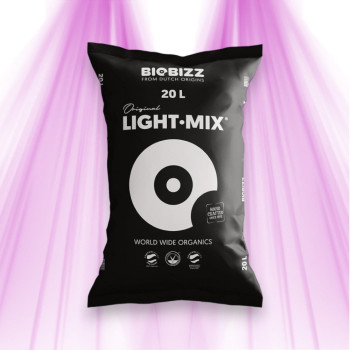
BioBizz Light-Mix 20 L – light potting soil
Available in 3 models
In stock · Shipped within 24 h
17,90 €

Product successfully added to your shopping cart
Ça pousse dans le bon sens

12 products
Winterization accessories are essential for maintaining optimal conditions in your grow space during the colder months. When temperatures drop, your plants suffer, and your yield plummets. These specialized pieces of equipment allow you to precisely control the temperature, humidity, and insulation of your setup.
Temperature is a critical factor in indoor growing. Below 18°C, growth slows drastically, and your plants become vulnerable to diseases. Tubular heaters maintain gentle, even warmth, perfect for spaces from 1 to 4m². Fan heaters provide a rapid temperature increase over 10-15m³. For larger volumes, propane gas heaters remain the most economical solution.
Thermal insulation plays an equally crucial role. A poorly insulated grow tent can lose 5 to 8°C compared to the outside. Reflective insulation films reduce these losses by at least 60%. Coupled with a precise digital thermostat (±0.5°C), you maintain total control over your environment.
Heating power is calculated according to volume: allow 100W per m³ for standard insulation, 150W per m³ if your space is in a garage or cellar. A 2000W heater is sufficient for 15-20m³ with good insulation. Always check that your electrical installation can handle the load.
For thermostats, prioritize models with a remote probe. Place the probe at canopy level, not near the heater. Mechanical thermostats are reliable but less precise (±2°C) than digital ones. Models with a timer prevent overly frequent on/off cycles that prematurely wear out your equipment.
Relative humidity naturally increases with heating. Plan for a hygrometer to monitor and adjust if necessary. Between 50-60% humidity, your plants will stay healthy all winter.
Calculate 100 to 150W per m³ depending on insulation. For a 1.2x1.2x2m box (2.88m³), a 300-400W heater is more than enough. If your space is in an uninsulated garage, increase to 150W/m³. Don't forget that your grow lights already provide heat: a 240W actual LED heats like a 200W radiator, approximately.
Condensation occurs when warm air meets cold surfaces. Insulate the walls of your grow tent with reflective films. Maintain continuous ventilation even in winter: at least 30% of the normal flow rate. An extractor with a dimmer allows you to fine-tune. Air must circulate without creating direct cold drafts on the plants.
It is not recommended for several reasons. Household heaters are not designed for the high humidity of grow environments. They lack precision and often create hot spots. Horticultural heaters include at least IP44 protection and suitable thermostats. An oil-filled radiator can be a temporary solution, but avoid fan heaters that dry out the air.
Absolutely, even if your plants tolerate cold better at night. During flowering, a day/night difference of more than 10°C stresses plants and promotes hermaphroditism. Maintain a minimum of 18-20°C at night. Program your heater to turn on 1 hour before the lights turn off. This gentle transition avoids thermal shock.
Insulation remains the best investment: reflective films, weatherstripping, double walls if possible. Schedule your light cycles during off-peak electricity hours when possible. Recover heat from your extractor with an air-to-air exchanger. Finally, group your grow spaces to share heat: two adjacent boxes will warm each other.
Available in 3 models
Available in 2 models
Available in 2 models
Help & advice
About Winter Accessories — click a question to see the answer.
To choose your winterization accessories well, I advise you to start by evaluating the specific needs of your crop. Consider the size of your space, the minimum temperatures you encounter, and your plants' requirements. A good thermostat, suitable heating, and effective insulation are the basics.
Winterization accessories are essential for maintaining a stable and optimal environment for your plants when outdoor temperatures drop. They primarily serve to regulate temperature, control humidity, and reinforce the insulation of your growing space, thus preventing thermal stress and yield losses.
In practice, active winterization involves using electrical equipment such as heaters or dehumidifiers to actively control the climate. Passive winterization, on the other hand, relies on non-energy-consuming solutions like insulation or thermal blankets. I often recommend a combination of both for maximum efficiency.
Installation depends on the accessory, but the golden rule is safety and efficiency. For heating, make sure it is well positioned for homogeneous heat distribution and away from any flammable materials. For insulation, I advise you to properly seal openings and check for thermal bridges. Don't forget to test your setup before leaving your plants.
The most common mistake I see is underestimating the importance of insulation, which leads to excessive energy consumption for heating. Another mistake is neglecting humidity, which can drop drastically in winter. Also, remember to regularly check your equipment to avoid unexpected breakdowns.
To insulate an indoor greenhouse, I strongly recommend using a thermal cover or insulating bubble wrap for the walls, and possibly a heating mat for the floor if the temperature there is too low. Good insulation of openings is also crucial to prevent heat loss.
The choice of heating power depends on several factors: the size of your growing space, the existing insulation level, and the minimum temperature you wish to maintain. Generally, I recommend calculating approximately 100 to 150 watts per square meter for a well-insulated space, but it is always preferable to slightly oversize to have a margin of maneuver. Remember that a good thermostat is essential to regulate this power.
Fortunately, LED lights are generally very resistant to cold and even perform better at lower temperatures, as this extends their lifespan. The main concern would be excessive humidity that could cause short circuits. I invite you to consult this article for more details on lighting during winterization.
In winter, indoor air can become very dry, which is detrimental to some plants. To maintain humidity, I recommend using an air humidifier, ideally with a hygrostat for precise control. Saucers filled with water or clay pebbles under pots can also help, but their effectiveness is more limited.
Cannot find your answer? 01 88 33 45 52 or by message.