




































































Achat vérifié
Cette lampe est compacte et fonctionne silencieusement sans troubler l'ambiance. Son design robuste promet une belle durabilité. Très satisfait de cet achat.

Product successfully added to your shopping cart
Ça pousse dans le bon sens

 Enlarge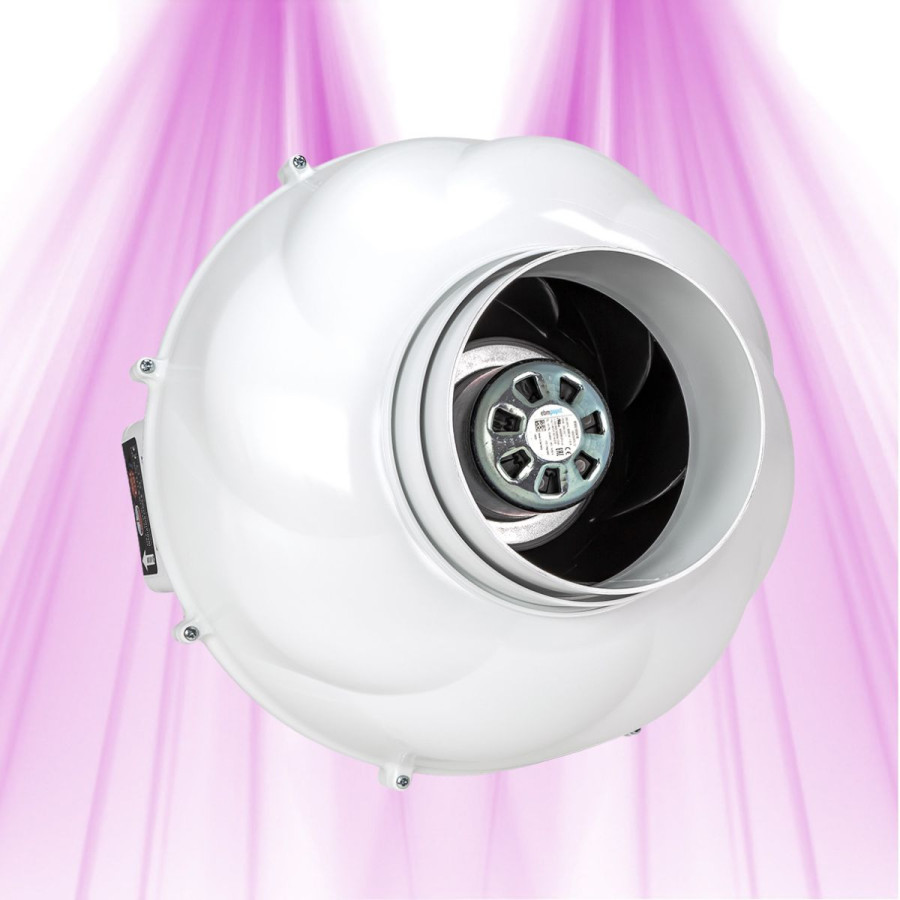
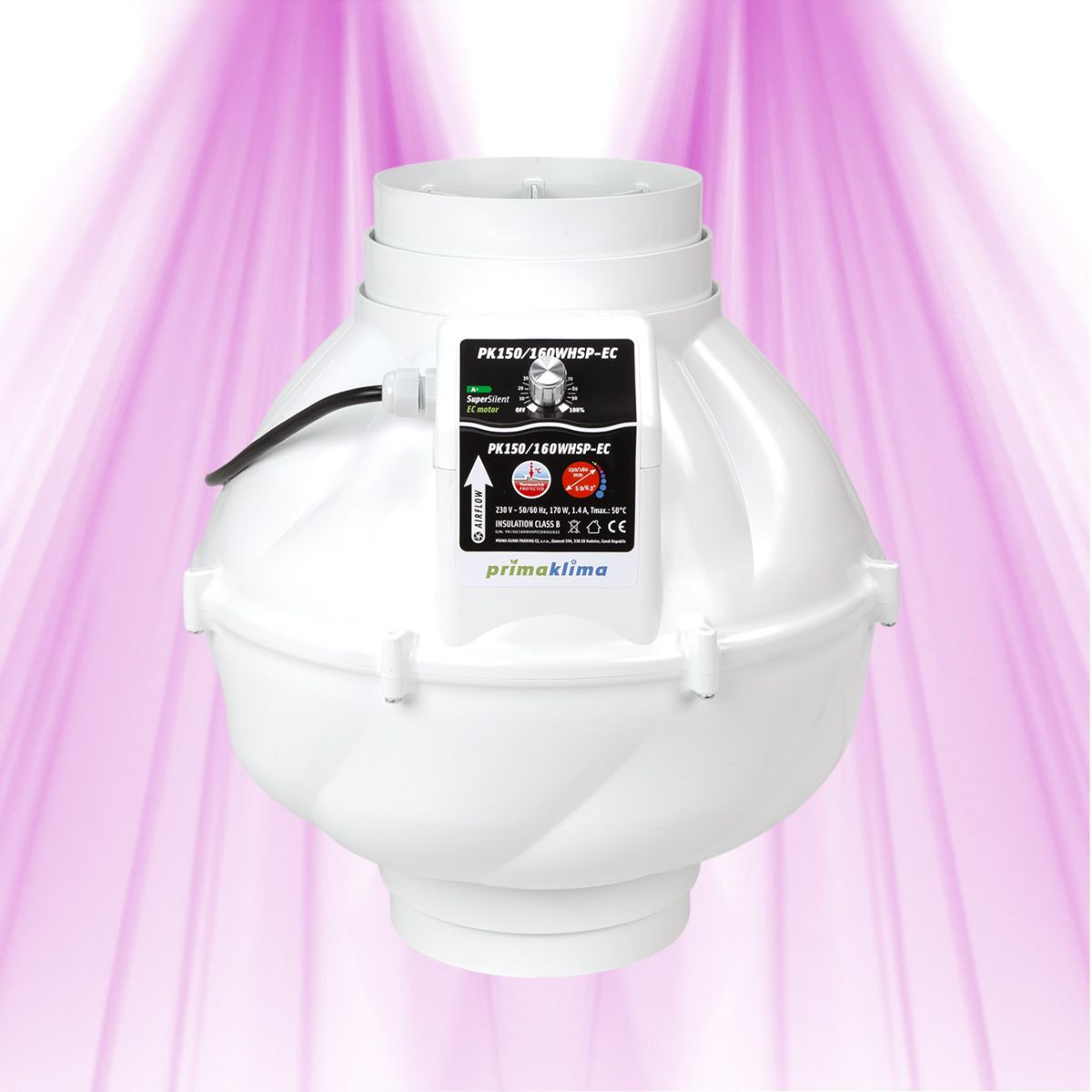
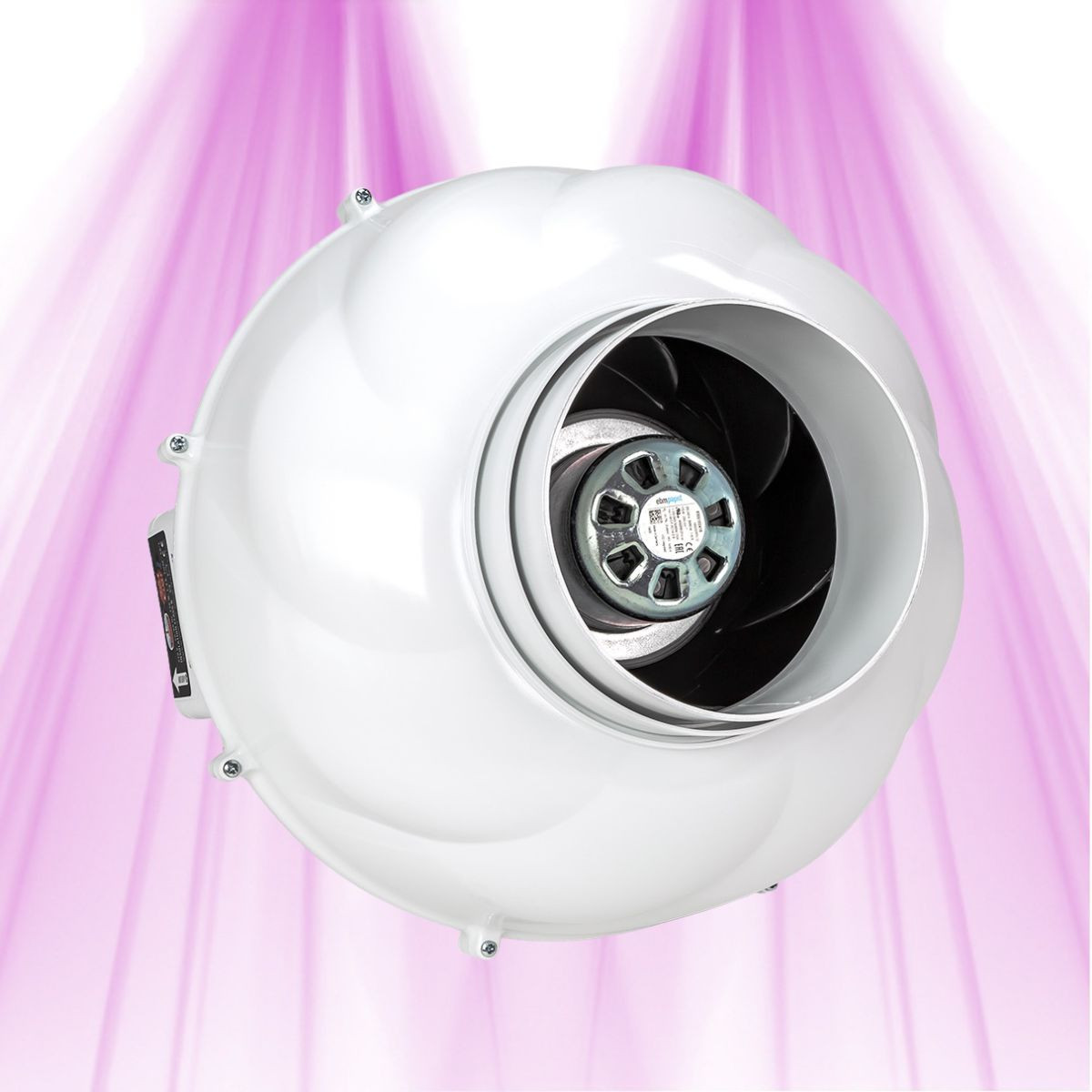
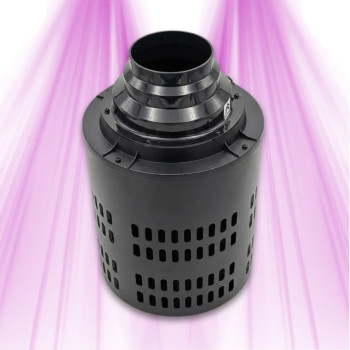
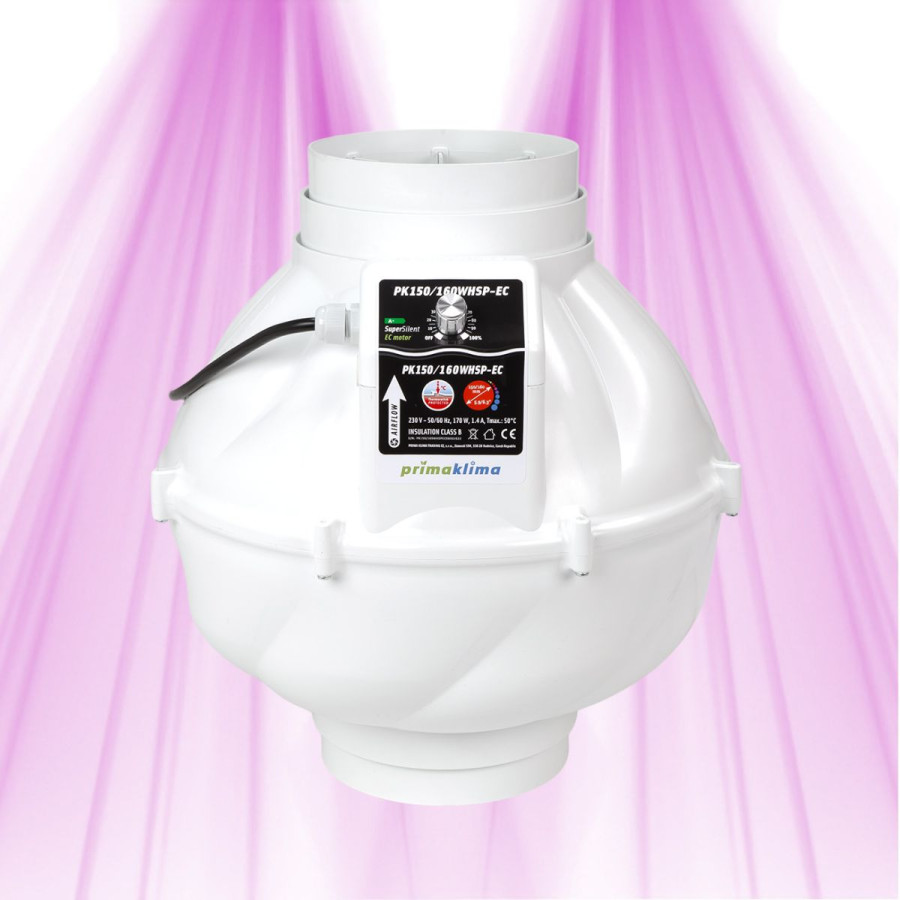
Prima Klima Silent Extractor WHSP EC Ø150/160mm – 1400m³/h
Our team will reply within 24 business hours.
Ref:
Quote · Lighting study · Administrative Payment Order
Step 3 · Ventilation & climat · 10 min, gratuit
THE Prima Klima Whisperblower EC 150/160 1400 m³/h This represents the pinnacle of extraction technology for serious indoor growers. This premium extraction fan embodies a decade of German-Czech innovation, combining cutting-edge engineering from the German manufacturer. EBM-Papst with the specialized horticultural expertise of Prima Klima.
The result? A ventilation system that offers impressive power 1400 m³/h while operating at surprisingly low noise levels — up to 2.5 times quieter than traditional AC fans.
Technology EC (Electronically Commutated) in the heart of Prima Klima The EC 150/160 is fundamentally different from older AC motors. Unlike conventional asynchronous motors that operate in on/off mode, the EC motor is a direct current motor. without brushes, equipped with permanent magnets and integrated switched electronics.
The EC motor in this model uses a technique called electronic switching. Instead of wearable mechanical brushes (as in traditional motors), the onboard electronics detect the rotor's position and automatically synchronize the current to optimize efficiency every nanosecond. This approach offers several critical advantages:
| Setting | Value | Implications |
|---|---|---|
| Maximum flow rate | 1400 m³/h | Grow room capacity of 140-350 m³ depending on heat load |
| Flanges | Double 150/160 mm | Compatible with standard 150mm and 160mm ducting |
| Power consumption | 170 W | Extremely low consumption for this flow rate; energy savings achieved |
| Input voltage | 230V AC, 50/60 Hz | Compatible with Europe, Africa, and Asia; 1.4 A current |
| Maximum temperature | 50°C | Safe for mounting against heated filter housings |
| Dimensions | 334 x 367 mm (W x H) | Compact size allows for installation in small spaces |
| Net weight | 3.85 kg (5.50 kg packaged) | Easy transport and installation; no need for structural reinforcements |
| Pressure curve | 0-650 Pa | Capable of overcoming pressure drops in carbon filtration |
The flow rate of 1400 m³/h allows for complete air renewal in a ~233 m³ grow room (length 6m × width 5m × height 8m) in just 10 minutes — which corresponds to an air cycle of 6 complete changes per hour, a professional standard for aggressive ventilation.
One of the most common mistakes in indoor growing? Choosing a fan based solely on its nominal airflow. Growers forget that the actual airflow drops drastically once a carbon filter and ducting are added.
Volume = Length (m) × Width (m) × Usable Height (m)
Carbon filtering and ducting reduce your effective flow rate by 30-50%. If you are using a quality filter (4mm carbon granules): apply a reduction coefficient of 0.65, which means dividing the required flow rate by 0.65.
For this configuration, the Prima Klima EC 150/160 1400 m³/h would be excessive (a smaller model would be preferable). However, for a professional installation of 6m × 6m × 2.8m (100.8 m³), the EC 150/160 1400 m³/h offers just the required capacity.
One of the major strengths of this model is its exceptional silence. Indoor growers near residential areas know this well: a noisy fan can quickly become a social or legal problem.
The Whisperblower EC 150/160 technical brochure provides sound pressure level measurements in decibels (dB) at various flow rates. While the complete specification is not detailed in the provided leaflet, the 150/160 EC models offer a sound pressure level reduction factor of 2.5 times less noise compared to equivalent AC fans.
The anti-vibration system of the PA6 UL94 polyamide housing (reinforced aerospace-grade plastic) and the integrated silent fixings minimize the transmission of vibrations to the ducting system.
THE Prima Klima EC 150/160 1400 m³/h is a central hub solution that connects to three essential elements:
Prima Klima recommends a suction extraction configuration (the fan "pulls" air through the filter). This provides:
Reverse configuration (fan pushes air): reserved for small installations or pure blowing.
Prima Klima offers three versions of the EC 150/160:
| Model | Control | Use Cases | Key advantage |
|---|---|---|---|
| PK150/160WHSP-A | Monolithic (fixed speed) | Basic installation, single flow rate | Reduced cost, maximum reliability |
| PK150/160WHSP-EC | Electronic dimmer 0-10V | Manual speed selection | Flexible energy savings, reduced noise under partial load |
| PK150/160WHSP-ECTC | Onboard thermocontroller | Automatic temperature regulation | This one is the "pro-grade": it works on its own without external equipment |
The EC-TC model incorporates an analog thermostat that automatically reduces the fan speed if the temperature drops. Imagine:
This represents a significant electricity saving: instead of running 24/7 at full power, the speed adjusts. In an environment where nighttime cooling is less critical (low external temperature), this can reduce consumption by 30-50%.
THE Prima Klima EC 150/160 consumes 170 W at nominal flow rate (1400 m³/h). Let's break this down:
| Technology | Power | Annual consumption | Annual cost | EC savings/year |
|---|---|---|---|---|
| AC standard | 300 W | 1.971 kWh | €354 | — |
| Prima Klima EC 150/160 | 170 W | 1.120 kWh | €201 | €153 (43%) |
Over an average lifespan of 7 years: approximately €1,070 saved on the electricity bill alone. The initial extra cost of an EC (approximately €200-€300 more than a standard AC) is recouped within 2-3 years of use.
A novice grower might think that the fan is just there to "remove the heat." It's much more nuanced than that:
For an installation of 150-200m³, the Prima Klima EC 1400 m³/h is ample, allowing 8-9 complete air changes per hour — beyond professional standards.
THE Prima Klima The EC 150/160 comes with a wall/ceiling mounting bracket. Its net weight of 3.85 kg (5.5 kg packaged) ensures stable installation even in vertical configurations.
Unlike AC motors with brushes (which require replacement every 2-3 years), the EC 150/160 is virtually maintenance-free:
| Criteria | AC standard 1400m³/h | Prima Klima EC 150/160 | Another competing EC |
|---|---|---|---|
| Power consumption | 280-320 W | 170 W | 190-220 W |
| Noise (dB) | 68-72 | ~52-58 | 55-62 |
| Engine lifespan | 3-5 years | 12 years old | 8-10 years old |
| Initial cost | €180-250 | €450-550 | €380-480 |
| Cost over 7 years (including electricity) | ~€1,500 | ~€1,200 | ~€1,300 |
| Engine | AC asynchronous brushed | EC EBM-Papst brushless | Generic EC or other |
| Onboard drive | No (external) | TC-version integrated | Optional |
Summary: THE Prima Klima EC is the premium choice for those who prioritize long-term energy efficiency, quiet operation, and reliability. Its initial higher cost is quickly recouped.
A: Technically yes, but it's inefficient. For small rooms (<20 m³), opt for the PK125 (max 530 m³/h). The EC 1400 will excel in spaces >100 m³. However, its EC-TC variant allows for intelligent speed reduction—even in small spaces, it can run slowly, hence its appeal.
A: Purchase a 150mm or 160mm filter with a capacity of ≥1400 m³/h. Opt for 4mm pellets (fine granules) rather than powder — better balance between performance and pressure drop. Filters Prima Klima Combidec specified at 1400+ m³/h are optimal.
A: No. Unlike multi-speed AC fans that make noise when switching between speeds, EC fans offer continuous and silent reduction. At 50% speed (700 m³/h), the noise level is approximately 45 dB (similar to the sound of a low-volume conversation).
A: You can, but it will deplete your room of CO₂ if it's not sealed. Ideally, combine the exhaust with a controlled fresh air intake (partially open window, independent supply ductwork). Otherwise, you're wasting injected CO₂.
A: Estimate: Carbon filter (~100 Pa drop) + 5m duct (~80 Pa) = total ~180 Pa resistance. Looking at the pressure curve of the EC 150/160, at 180 Pa, the fan delivers approximately 1200 m³/h effective airflow — a 14% reduction is acceptable and justifies this choice rather than a smaller one.
A: Yes, it's designed for that. However, running it 24/7 accelerates filter wear and increases your electricity bill. Better yet: install a timer or thermostat (TC version) for optimal operation (18-20 hours/day on average).
A: 230V cable supplied. Connect to a dedicated 16A circuit breaker. Not suitable for three-phase configuration. The EC-TC version can be controlled via a temperature probe (wired, minimum 1m), or an external dimmer (0-10V if needed in the future).
THE Prima Klima The Whisperblower EC 150/160 1400 m³/h is not a "low-cost" solution. It's an investment for a serious professional who understands that controlling the indoor climate means controlling yields, plant quality, and energy efficiency.
For whom ? Professional growers or serious amateurs with 100+ m³ to ventilate, proximity to urban areas (critical silence), or expensive electricity (thermostat temperature = fast ROI).
| Speed management | Adjusted speed (EC) |
|---|---|
| Type of extractor | EC |
| Diameter (mm) | 150/160 mm |
| Flow rate (m³/h) | 1400 m³/h |
| Motor type | EC |
| Noise level (dB) | 50 |
Cette lampe est compacte et fonctionne silencieusement sans troubler l'ambiance. Son design robuste promet une belle durabilité. Très satisfait de cet achat.
Le carton était simple mais efficace, rien à redire. L'installation est rapide, franchement ça souffle bien sans faire trop de bruit, c’est hyper appréciable. Je sens l’air tout de suite plus frais, ça change vraiment l’ambiance sans être envahissant. Bon rapport qualité/prix pour ce genre de matos.
Super produit, très efficace. Livraison en bon état. Je recommande vivement.
Excellent rapport qualité-prix. Fonctionne comme prévu. Très content de mon achat.
Super qualité de fabrication. J'ai reçu le produit bien emballé, sans aucun dommage. Fonctionne parfaitement depuis le premier jour. Les résultats dépassent mes attentes. Consommation énergétique raisonnable. Service client réactif et courtois. Vraiment pas déçu. Je vais certainement en racheter.
Aucun avis ne correspond à ce filtre.
The Prima Klima WHSP EC Ø150/160 mm extractor is designed to be quiet, helping to minimize mechanical stress on plants. However, this model does not feature an integrated precise airflow adjustment. For crops with very specific ventilation needs, external flow control or a variator may be necessary to finely adjust the extraction intensity.
If you are looking for a solution with dynamic adjustment capability and quiet operation, models like the Whisperblower EC-TC offer better modulation due to their efficient EC motor, with optimized pressure and noise.
In summary, the Prima Klima WHSP EC is an excellent base, but for very precise control, an additional control system is recommended.
The EC motor of the Prima Klima WHSP EC Ø150/160mm Extractor, with a flow rate of up to 1400 m³/h, indeed allows for precise speed control. This electronic technology gives you the option to adjust the air flow according to the size of your compact growing room, ensuring optimal and energy-efficient ventilation while maintaining quiet operation.
The Prima Klima WHSP EC - Ø150/160mm extractor is known for its silent operation thanks to its EC motor, which reduces noise and energy consumption. With a capacity of up to 1400 m³/h, it provides very powerful ventilation, probably too much for a 60x60 cm micro-culture.
However, thanks to its digital controller, it is possible to finely adjust the fan speed between 0 and 100%, allowing you to adapt the air flow to the specific needs and thus limit the noise. By setting the flow to a moderate level, this extractor can be used effectively without disturbing the ambient calm of your micro-culture.
For such a small space, it might be worthwhile to consider an extractor with an appropriately sized capacity to avoid over-sizing, but your choice remains very efficient and quiet if well adjusted.
The Prima Klima WHSP EC Ø150/160mm extractor is equipped with a high-end EC motor that allows for maintaining a constant flow rate between 1200 and 1400 m³/h thanks to precise speed control. Its consumption remains moderate, around 170 W, even at high speeds, due to the energy efficiency of EC technology.
Moreover, this model is designed to be quiet: its motor does not produce rumbling, and the structure optimizes airflow management, limiting noise. It is therefore perfectly suited for powerful, stable, and discreet extraction within the desired flow range.
Regarding regulation, this extractor generally features an integrated or optional speed control system, allowing for easy adjustment of the airflow based on the size of your growing space, thus providing perfectly tailored ventilation to your needs.
The maximum flow rate of 1400 m³/h indicated for the Prima Klima WHSP EC extractor corresponds to the theoretical capacity in free outlet, meaning without any resistance in the ventilation circuit.
The figure of 950 m³/h mentioned sometimes in the description likely corresponds to a measured flow rate under real conditions, with ducts, bends, or filters that create static pressure and reduce the effective air flow. This difference is typical for any extractor and is not an inconsistency but a physical reality.
In summary, 1400 m³/h is the optimal flow rate announced by the manufacturer, whereas 950 m³/h illustrates a value closer to what you will achieve in use with a complete installation.
The Prima Klima WHSP EC-Absaugung – Ø150/160 mm fan does not have native compatibility with Zigbee or Z-Wave home automation systems for direct control of flow or speed remotely.
However, its speed can be adjusted via an appropriate external controller, although this is not included. For advanced home automation management, one would need to consider adding a third-party interface compatible with Zigbee or Z-Wave, as the product does not offer this function as standard.
To ensure optimal operation without overheating under LED lighting, it is essential to provide good ventilation around the extractor and to monitor environmental conditions (temperature, humidity). Using an external controller can help manage these parameters and avoid thermal stress.
In summary, this powerful and energy-efficient EC motor can keep pace indoors, provided there is a well-thought-out installation to facilitate cooling.
Using a lower flow rate helps ensure adequate air renewal while limiting noise, energy consumption, and protecting plants from too strong drafts. This adjusted flow rate is therefore optimal for compact micro-culture, ensuring efficiency and cultural comfort.
The Prima Klima WHSP EC – Ø150/160 mm extractor is perfectly compatible with an external speed controller, allowing you to precisely adjust the airflow according to the size of your indoor box. Thanks to its EC motor, you can modify the speed via a dedicated electronic control, such as a digital controller that automatically adjusts ventilation based on temperature or humidity.
Note that the external controller (not included) must be purchased separately to benefit from this feature. This system offers silent and adjustable airflow management, ideal for optimizing growing conditions and the sound comfort of your setup.
The Prima Klima WHSP EC extractor with its 170 W EC motor is specifically designed to operate continuously up to 50°C without risk of overheating. Its EC technology ensures excellent energy efficiency and allows for speed adjustment according to the needs of the crop, thereby controlling the emitted heat while optimizing yield. This fan is therefore perfectly suited for intense growing conditions with electronic control, ensuring performance and durability in a stable environment.
The installation of the Prima Klima WHSP EC fan is quite accessible for a beginner, provided that the supplied manual is followed closely, detailing each step to ensure safe and effective setup.
Regarding speed management, this model is designed to be compatible with dedicated controllers such as the PK-EC-Digital or the ECTC 1M Digital fan controller. Thanks to its RJEC connector, it can be directly connected to a controller, allowing for precise automatic speed adjustment based on temperature, optimizing comfort and energy consumption.
In summary, this is a straightforward technical solution to effectively manage ventilation in indoor cultivation.
The Prima Klima WHSP EC Ø150/160mm extractor maintains stable efficiency when connected to a frequency converter. Thanks to its EC (Electronically Commutated) motor, the speed can be modulated without significant loss of performance, allowing you to precisely adjust the ventilation.
This technology optimizes energy consumption while reducing noise, as lower speeds result in less vibration and quieter operation, without compromising air flow or pressure.
In summary, using a converter with this extractor is ideal for controlling air renewal while limiting noise levels, a real asset for efficient and discreet indoor cultivation.
The Prima Klima WHSP EC Ø150/160mm extractor is perfectly compatible with an external speed control system. Thanks to its efficient EC motor, it allows fine speed modulation from 0 to 100%, providing precise airflow adjustment up to 1400m³/h, tailored to the specific needs of your indoor cultivation. This option ensures optimal ventilation while reducing noise and energy consumption.
For personalized management, it is possible to control this extractor via an external digital controller, ideal for confined cultivation or integrating ventilation into a home automation system.
The Prima Klima WHSP EC Ø150/160mm extractor remains quite effective at reducing odors even when the speed is reduced. Its high-quality EC motor allows for precise speed adjustment, ensuring quiet operation without sacrificing the air flow necessary for renewal and odor control.
By lowering the speed, the noise significantly decreases, which limits disturbances in ventilation, while still maintaining sufficient extraction. For very fine flow regulation, an external dimmer can be considered, but overall, this extractor is recognized for its perfect balance between performance, silence, and odor control, making it ideal for indoor crops sensitive to noise.
Regarding the maximum air flow of 1400 m³/h, this is a theoretical measurement obtained in the laboratory without constraints in the circuit. In real conditions, with filters and bends, the flow is generally around 950 m³/h, which remains excellent for this type of extractor.
The sound reduction is indeed real and perceivable on-site. Thanks to the EC ebm-papst motor and the optimized design, this extractor produces less noise disturbance than classic models, not just a marketing argument.
Finally, the ebm-papst motor comes with a reliable warranty including thermal protection that safeguards against overheating. Customer service is accessible in Europe, ensuring serious support in case of failure, confirming the robustness and professional quality of this equipment.
The flow rate at 950 m³/h, on the other hand, incorporates the actual constraints of your installation (ducting, filters, elbows), which generate static pressure and decrease the effective air flow. This value is therefore more representative of growing conditions.
In summary, actual efficiency always depends on the installation environment, and this phenomenon is classic for all air extractors. The Prima Klima WHSP EC remains efficient and silent thanks to its EC motor, which ensures a good compromise between power and consumption.

 Prima Klima Silent Extractor WHSP EC Ø150/160mm – 1400m³/h 369,90 € 5.0/5 Restock in progress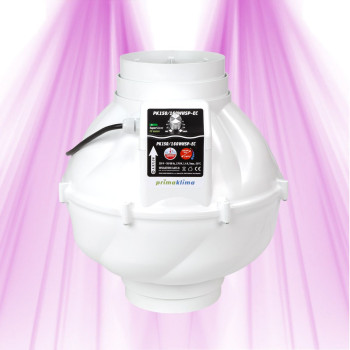
Prima Klima Silent Extractor WHSP EC Ø150/160mm – 1400m³/h
* Required fields
Write your review and get a voucher for discount 5%
*valid for 150 daysor Cancel


