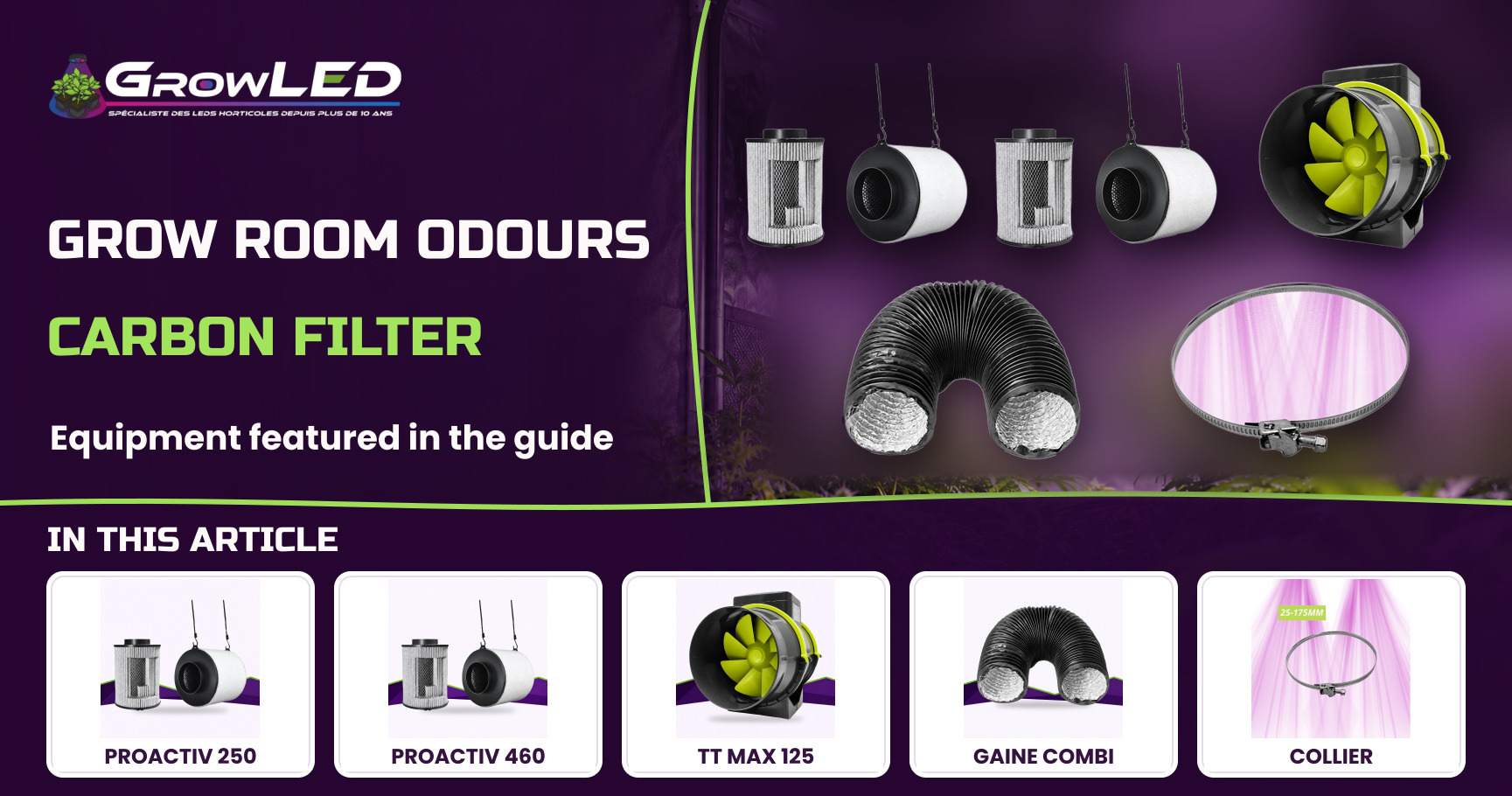

































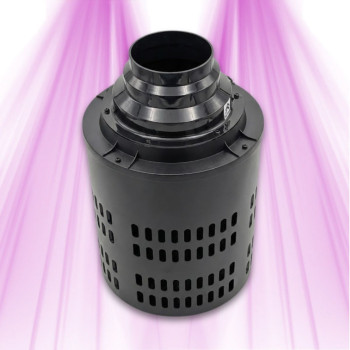
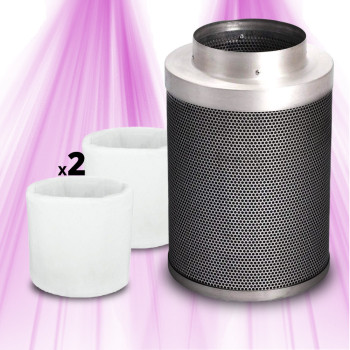


































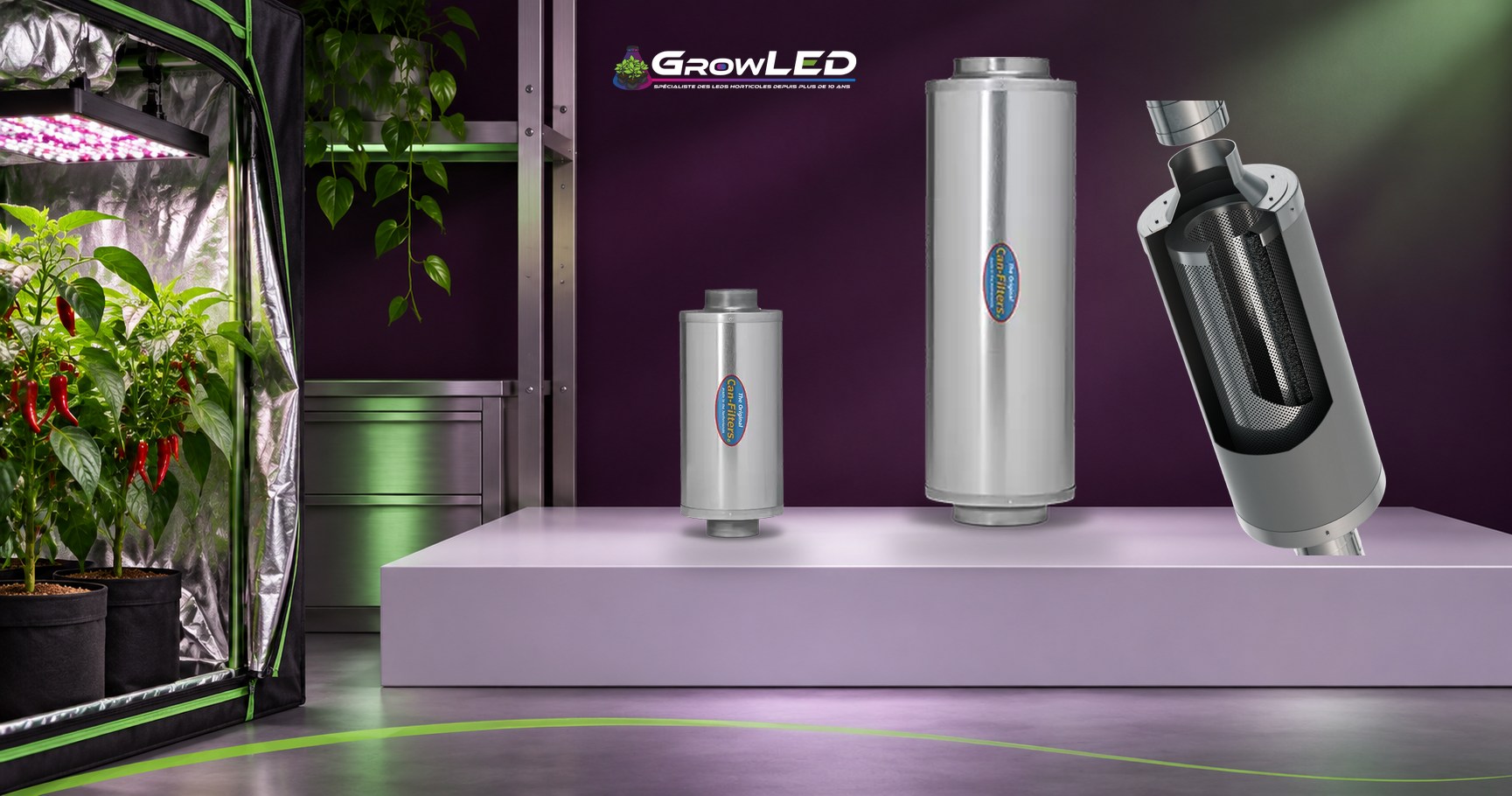
An inline carbon filter fits directly into a ventilation system, between two ducts. Its casing has an inlet and an outlet: air passes through the activated carbon before continuing along the duct run. This lets you treat odours with the filter outside the grow room, or add a second filtration stage after the extractor fan.
The Can In-Line range available from GrowLED includes nine configurations, from 600 to 3,000 m³/h. Here is how it works, which carbon it uses and how to pair it with a fan — including the layout conventional filter → boxed extractor fan → inline filter.
- Inline means two connections, allowing the filter to fit within a duct run.
- The carbon treats odour molecules; the extractor fan moves the air.
- Two filters in series mean two carbon beds to pass through, with greater pressure loss.
What is an inline carbon filter?
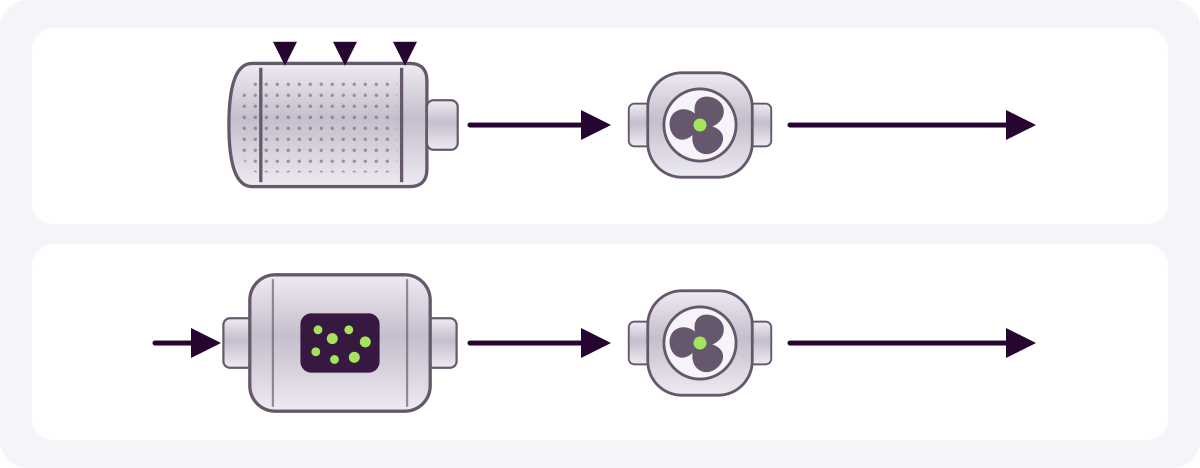
A conventional filter is generally a filtering cylinder at the end of the intake side of the duct run. Air enters through its outer surface, passes through the carbon and reaches the connection leading to the extractor fan. An inline filter has two connections: it receives air from one duct and sends it into another after filtration.
This format mainly gives you more freedom when planning the layout: moving the filter out of the grow room frees up space below the lighting, improves access and allows filtration on the exhaust side. The Can In-Line from Can-Filters is a Can-Lite filter housed in a closed metal casing, suitable for pull-through or push-through operation. See the official Can In-Line overview.
Inline describes how the filter connects, not a special type of carbon. The filter has no motor. It therefore cannot exchange the air on its own, replace a dehumidifier or air conditioner, or act as a silencer. Returning filtered air to the same room is recirculation; this alone does not remove heat or humidity to the outside.
Activated carbon: understanding adsorption and CKG 48
Molecules attach to internal surfaces
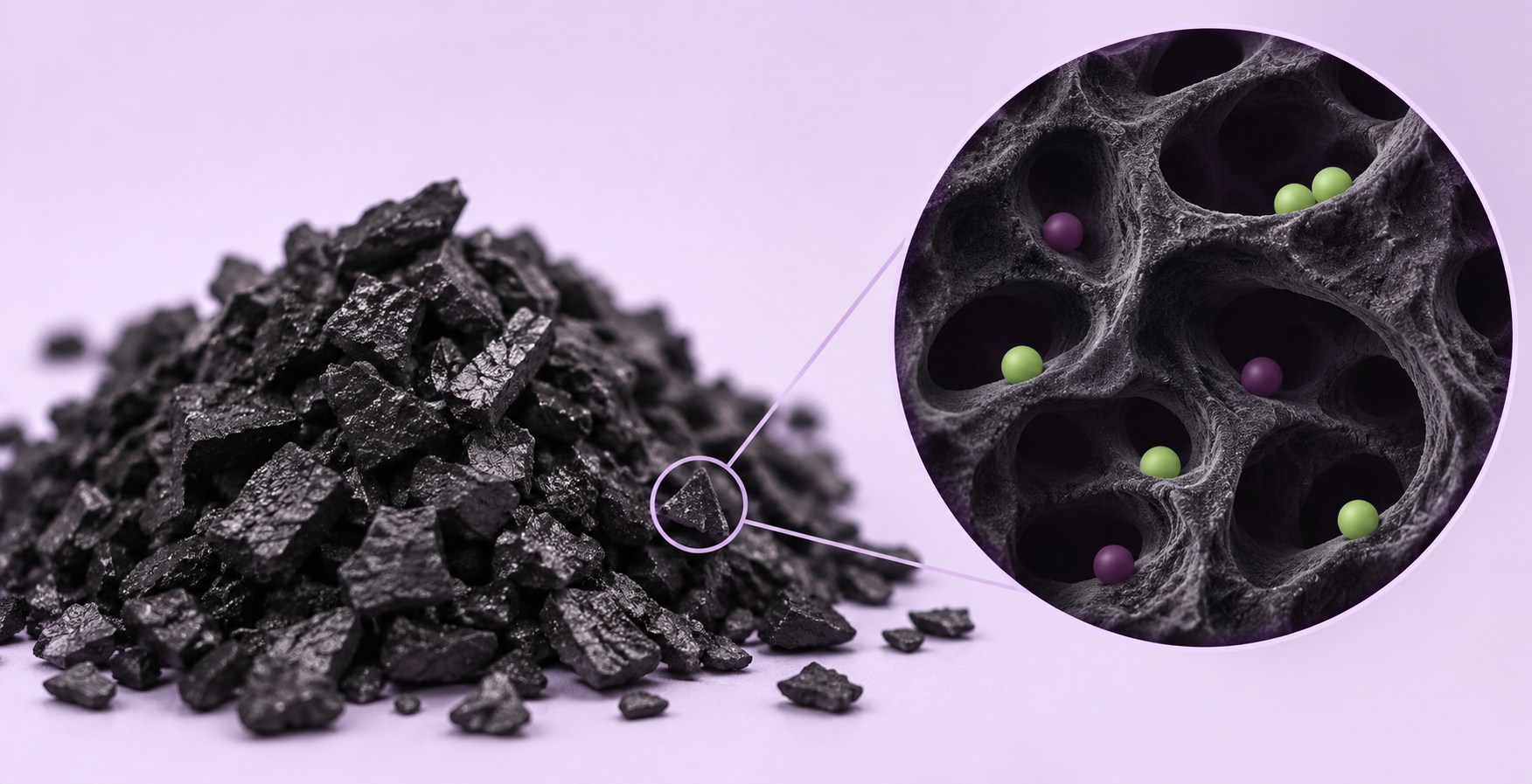
Odours are carried by molecules dispersed in the air. Activated carbon has a network of cavities and internal surfaces to which some of these molecules can attach: this is adsorption. It differs from a sponge absorbing a liquid. Carbon does not simply mask an odour with a fragrance; it retains some of the compounds it is suited to treating.
This capacity is finite. Performance depends on factors including the compounds involved, their concentration, airflow and ambient conditions. Over time, the compound being treated may begin to reappear at the outlet: this is known as bed breakthrough. Carbon is therefore neither a universal trap for every gas nor a material whose capacity remains constant indefinitely. EPA: principles of carbon adsorbers.
Can-Lite media with CKG 48 lightweight activated carbon
Can-Filters states that the Can In-Line contains a Can-Lite filter. For this family, the manufacturer identifies CKG 48 lightweight activated carbon and describes a micro-mesoporous structure in its documentation. The Can In-Line has a 50 mm carbon bed. See the Can-Lite range and the Can-Lite media datasheet.
The pores in carbon are much smaller than its visible particles. In standard terminology, micropores are smaller than approximately 2 nm, while mesopores are in the region of 2 to 50 nm. These categories describe cavities within the material, not the spaces between particles. They are not a published measurement of the pore-size distribution of CKG 48. IUPAC definition of microporosity · IUPAC, microporous carbon.
It is also important to distinguish the different indicators: BET surface area characterises the specific surface area measured under test conditions; the iodine number and CTC activity assess carbon using particular substances and protocols. None of these figures translates directly into a “percentage of all odours removed”. The documents consulted do not provide such values specifically for these Can In-Line filters: the identified media, 50 mm bed and stated practical airflow are more useful reference points. ASTM D3467: scope of the CTC test · ASTM D4607, iodine number.
Why airflow and humidity matter
With the same filter, a higher airflow reduces the time available for molecules to transfer to the carbon. Practical airflow is therefore the reference to use for normal operation; the maximum technical capacity should not automatically become your target setting. Can-Filters sizing advice.
Humidity can reduce the capacity available for odour compounds. Can-Filters gives a limit of 70% RH for the range and advises against extended periods at or above this level; avoid condensation too. The published maximum filter temperature of 80°C does not define suitable growing conditions or the permissible temperature for the motor, ducts or controller. Each component retains its own limits. Manufacturer FAQ: temperature and humidity.
Can In-Line 600 operating limits.
Inside the Can In-Line: air must pass through the bed
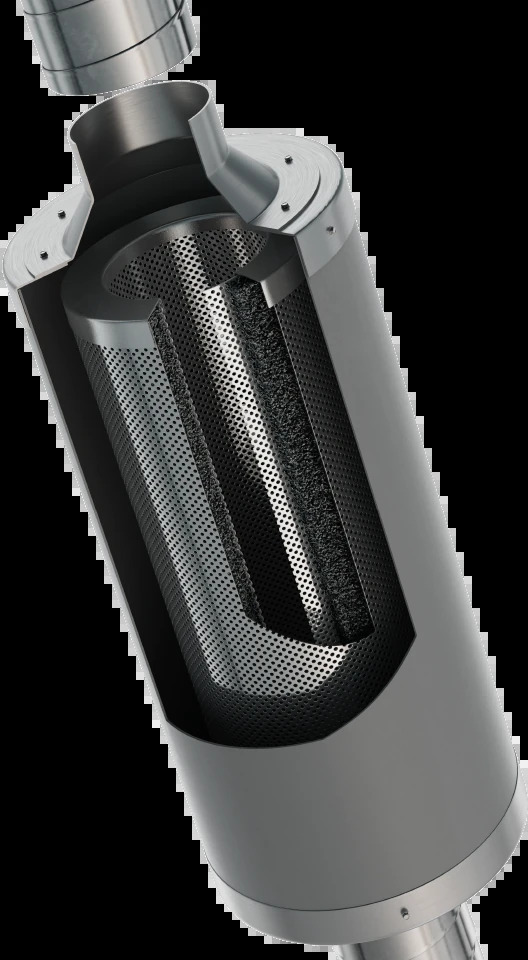
The official cutaway distinguishes the outer casing, filter cylinder, carbon and perforated core. Air is directed between these spaces so that it passes through the carbon bed before reaching the other connection. Its path includes a radial passage through the annular media bed; this is not an open tunnel that lets air travel straight through untreated.
The two connections explain why the filter is easy to incorporate into a duct run. They do not, on their own, define its effectiveness: the amount and distribution of media, air velocity and absence of bypass paths still matter. Installation must also ensure that the external duct system is airtight.
The five families contain 2.2, 5.1, 7.6, 12.2 and 14.3 kg of carbon respectively. These media weights are not the weights of the complete units: the casing and other components add to the total. Model-specific figures appear in the table below.
Pull-through or push-through: two layouts with one inline filter
Can-Filters permits both modes for the Can In-Line. The choice depends on available space, maintenance access and the position of the exhaust outlet. In the examples below, arrows indicate airflow direction; always observe the extractor fan’s own airflow direction.
A. Filter before the fan: pull-through
Ventilated space → Can In-Line → extractor fan → outdoor exhaust. The fan draws air through the filter. A duct allows the Can In-Line to sit outside the grow room. Connections upstream of the impeller are normally under negative pressure in this simple circuit: a leak can draw in surrounding air and alter the intended airflow path.
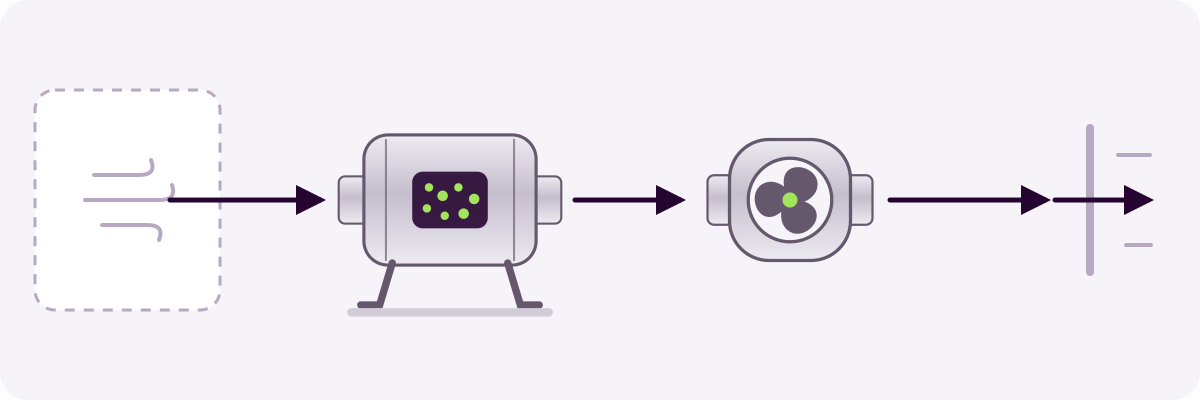
B. Filter after the fan: push-through
Ventilated space → extractor fan → Can In-Line → outdoor exhaust. Here, the fan pushes air into the filter. The connection between its outlet and the Can In-Line carries untreated air and is normally under positive pressure: a leak can release odours. Give this section particular care and make it airtight.
In both layouts, dust protection must be upstream of the carbon in the actual direction of airflow. The brand’s general FAQ explains this principle, but is not a disassembly procedure for the Can In-Line: follow the component instructions and provide suitable duct prefiltration if required. Can-Filters advice on pull-through and push-through operation.
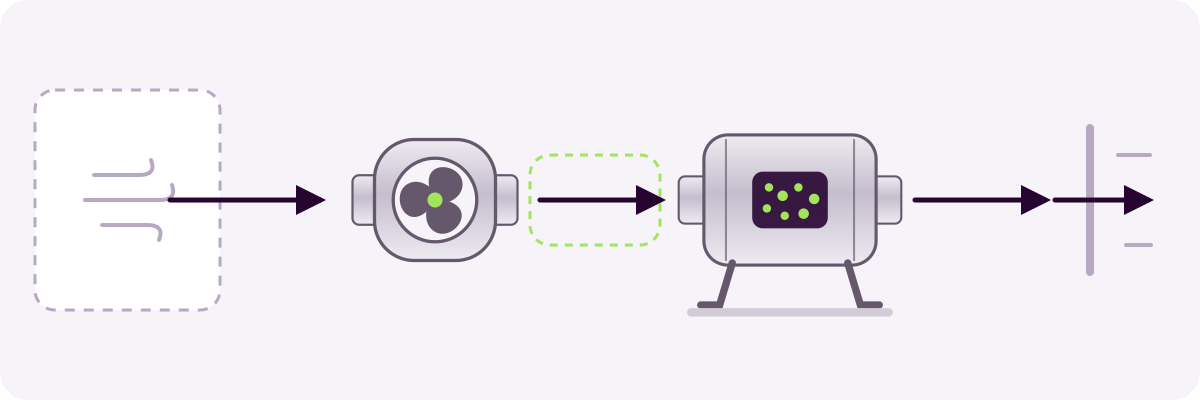
Dual filtration: conventional filter, boxed extractor fan and inline filter
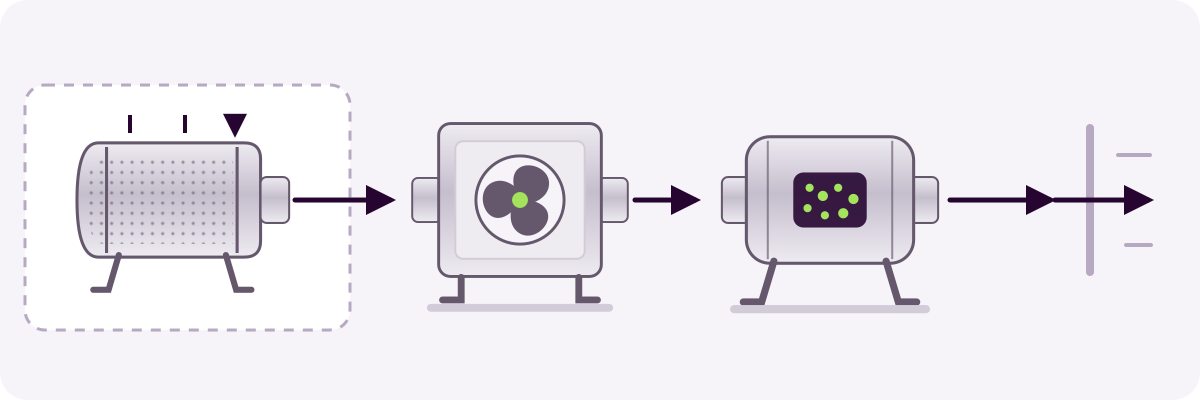
Yes, you can keep a conventional carbon filter and add a Can In-Line after a boxed extractor fan. The manufacturer explicitly presents the Can In-Line as a possible second filter. The layout is:
Conventional filter inside the grow room → boxed extractor fan with motor → Can In-Line → outdoor exhaust.
The first filter operates in pull-through mode. The boxed fan moves the air; the second filter operates in push-through mode. Here, “boxed extractor” means equipment that actually contains a fan. An empty soundproofing enclosure produces no airflow. A sound-insulated extractor such as a Q-Max or Iso-Max can provide the fan function in this circuit, provided it is correctly sized.
The purpose of the second bed is to further treat what remains after the first. Beds in series are also used in industrial adsorption, where the second stage can retain some breakthrough from the first. This helps explain its polishing role without attributing the performance of an industrial installation to the Can In-Line. Dual-filtration use confirmed by Can-Filters.
What two filters actually change
- Airflow capacities do not add up. Two 600 m³/h filters in series do not provide 1,200 m³/h of filtration: the same airflow passes through both.
- Resistances add up. The fan must overcome pressure losses across both filters, plus those from ducts, bends and outlets.
- The smaller stage remains a limiting factor. Each filter must accommodate the actual selected airflow; the second does not allow you to exceed the first filter’s capacity.
- Service life does not automatically double. The first filter still needs maintenance and replacement when required. The second cannot fix leaks or excessive humidity.
A second stage makes sense when additional treatment is needed and the system can accommodate it. Getting one filter correctly sized, installed and maintained is often the best starting point. The number of filters alone cannot provide a universal “zero odour” guarantee.
Back to topChoosing airflow: consider pressure, not just m³/h
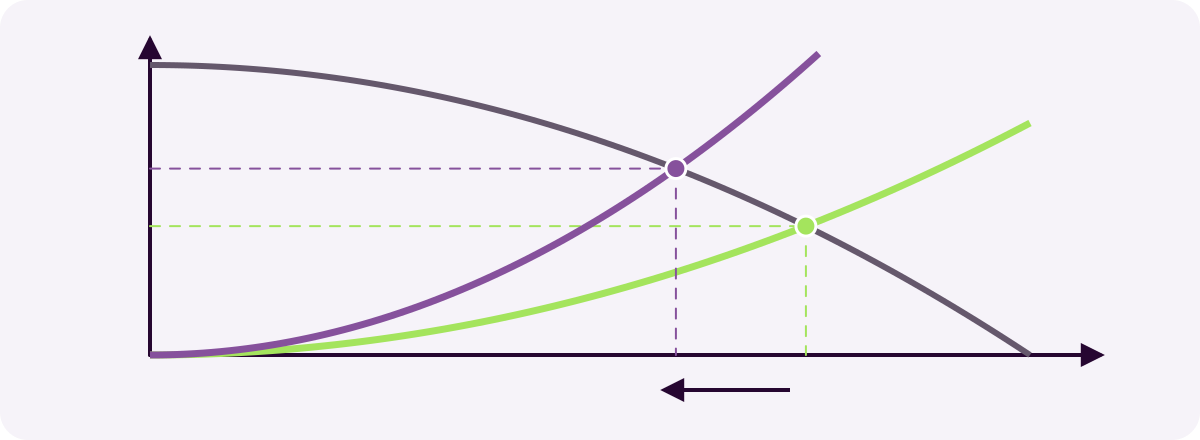
An extractor fan’s advertised figure often describes its free-air flow. Once you add a filter, duct or bend, the fan encounters resistance: pressure losses, commonly expressed in pascals (Pa). Installed airflow depends on the point where the fan’s airflow/pressure curve meets the system resistance curve.
At the same speed, adding a second filter increases resistance and generally shifts the operating point towards a lower airflow. To maintain your target flow, you must check what the fan can actually deliver rather than apply a fixed percentage “loss per filter”. Greenheck: fan selection and the operating point.
A method with four reference points
- Define the air-exchange requirement. The volume of the space gives an initial basis; heat, humidity, air inlets and how you manage the crop affect useful airflow. One fixed number of air changes cannot suit every room.
- Select the filters’ practical capacity. Aim for an actual airflow compatible with every stage. Also respect the technical upper limits, while distinguishing them from the recommended normal operating setting.
- Check the fan curve against the complete system. Add the pressure losses of components in series at the same airflow. If filter-specific pressure-loss data are unavailable, have the sizing checked and measure installed airflow.
- Check connection diameters and clearance. A Ø250 mm flange alone guarantees no particular airflow. A reducer adds a transition and may increase resistance; the body diameter tells you how much space the filter needs.
Example calculation using hypothetical values
Imagine a target of 600 m³/h of actual airflow. At that same flow, assume 80 Pa for the conventional filter, 90 Pa for the inline filter and 50 Pa for ducts and accessories. The requirement would be approximately 220 Pa at 600 m³/h. You would therefore need to locate this point on the fan curve.
These figures only illustrate how pressure losses add up: they are not measured Can In-Line resistance values. A fan rated at 600 m³/h at 0 Pa is not proven to deliver 600 m³/h at 220 Pa. Likewise, “60%” on a controller does not automatically mean 60% of maximum airflow.
The Can In-Line range at GrowLED: nine configurations
The selection covers five practical capacities and nine airflow/diameter combinations. Match the stated connection diameter to your ducts and equipment; the metal body is wider. All the families below have a 50 mm carbon bed.
Media specifications and capacities are documented in the Can-Filters datasheets for the 600, 1,000, 1,500, 2,500 and 3,000 models.
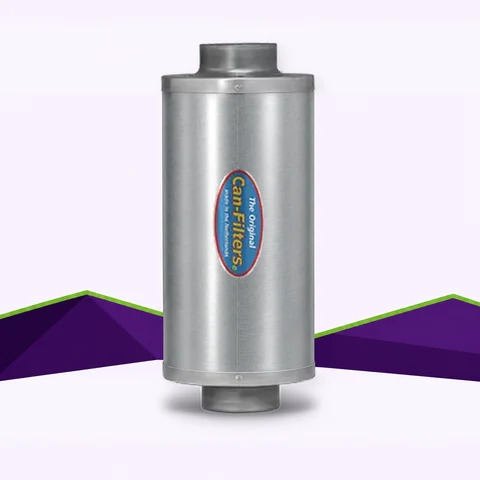
600 m³/h
The entry point to the range, with Ø125 or Ø150 connections. 2.2 kg of carbon.
View configurations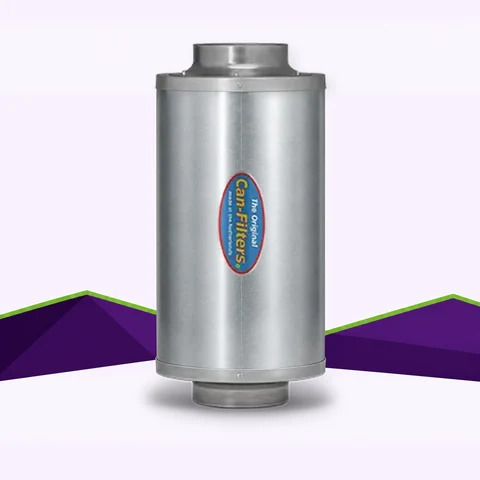
1 000 m³/h
Two connection options: Ø200 or Ø250. 5.1 kg of carbon; check the length for your chosen version.
View configurations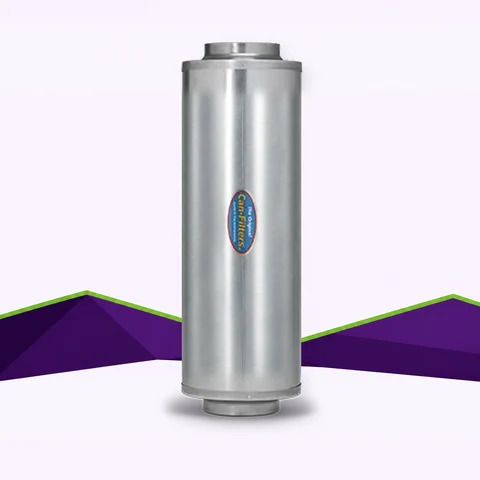
1 500 m³/h
Practical airflow of 1,500 m³/h, with Ø200 or Ø250 connections. 7.6 kg of carbon.
View configurations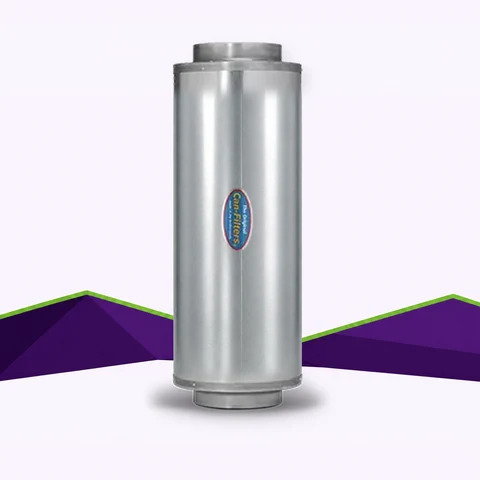
2 500 m³/h
For larger duct systems, with Ø250 or Ø315 connections. 12.2 kg of carbon.
View configurations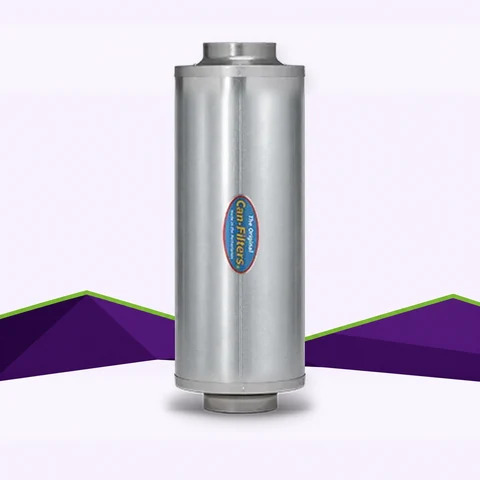
3 000 m³/h
The highest capacity in this selection, with Ø315 connections. 14.3 kg of carbon.
View configurationsRepresentative family images, not shown to scale. Check diameters and accessories on the product page for your chosen configuration.
| Practical airflow | Connection | Technical upper limit | Body Ø | Length | Total weight | Carbon | French price incl. VAT |
|---|---|---|---|---|---|---|---|
| 600 m³/h | Ø125 mm | 660 m³/h | 315 mm | 605 mm | 10 kg | 2.2 kg | 317.17 € |
| 600 m³/h | Ø150 mm | 660 m³/h | 315 mm | 605 mm | 10 kg | 2.2 kg | 317.17 € |
| 1 000 m³/h | Ø200 mm | 1 100 m³/h | 365 mm | 775 mm | 17 kg | 5.1 kg | 385.07 € |
| 1 000 m³/h | Ø250 mm | 1 100 m³/h | 365 mm | 755 mm | 17 kg | 5.1 kg | 385.07 € |
| 1 500 m³/h | Ø200 mm | 1 650 m³/h | 365 mm | 1025 mm | 24 kg | 7.6 kg | 461.69 € |
| 1 500 m³/h | Ø250 mm | 1 650 m³/h | 365 mm | 1025 mm | 23.9 kg | 7.6 kg | 461.69 € |
| 2 500 m³/h | Ø250 mm | 2 750 m³/h | 415 mm | 1265 mm | 34.5 kg | 12.2 kg | 584.92 € |
| 2 500 m³/h | Ø315 mm | 2 750 m³/h | 415 mm | 1265 mm | 34.5 kg | 12.2 kg | 584.92 € |
| 3 000 m³/h | Ø315 mm | 3 300 m³/h | 465 mm | 1265 mm | 40.5 kg | 14.3 kg | 709.99 € |
Carbon weights are separate from the total weight of the unit.
The 1,000 m³/h Ø250 configuration is listed as 755 mm long in the GrowLED catalogue, compared with 775 mm for Ø200; the manufacturer’s general family datasheet states 775 mm. If space is tight, have the dimensions confirmed before installation. The 1,500 Ø250 weighs 23.9 kg, rounded to 24 kg in the manufacturer’s general overview.
French prices including VAT were checked when preparing this guide and may change. The product page gives the current price and availability for each configuration. The filter is sold separately from the extractor fan, ducts, clamps and supports.
Back to topCan-Filters and Can-Fan: complementary filtration and ventilation
Can-Filters covers the filtration families, including Can-Lite and Can In-Line. Can-Fan covers the fans that move air through those filters. The European Can-Filters website dates the company’s foundation to 1987; that is not the launch date of every range. See the company overview and the Can-Fan range.
Their complementary roles are straightforward: the filter provides the adsorbent media; the fan provides airflow against resistance. You then choose the connection layout, control method and, if needed, an acoustic casing. The shared brand can make documented pairings easier to find, but does not remove the need to check the whole system.
- Max-Fan Pro AC: a compact mixed-flow fan with a built-in speed selector. It can suit installations where a compact unit is sufficient and its speeds meet the requirement.
- Iso-Max: a fan built into a sound-insulated casing. It moves air; it does not contain the carbon bed that treats odours.
- Q-Max AC and Q-Max EC: sound-insulated extractor families. The EC version supports a compatible EC controller; it is not controlled in the same way as a basic AC motor.
Choose the controller carefully: Can-Filters instructs users not to add an external speed controller to the Max-Fan Pro AC and Q-Max AC models described in its documentation. Use their built-in selectors. For Q-Max EC, choose the EC controller specified for the model; do not assume that a universal mains-voltage speed controller is suitable. See Max-Fan Pro, Q-Max AC and Q-Max EC.
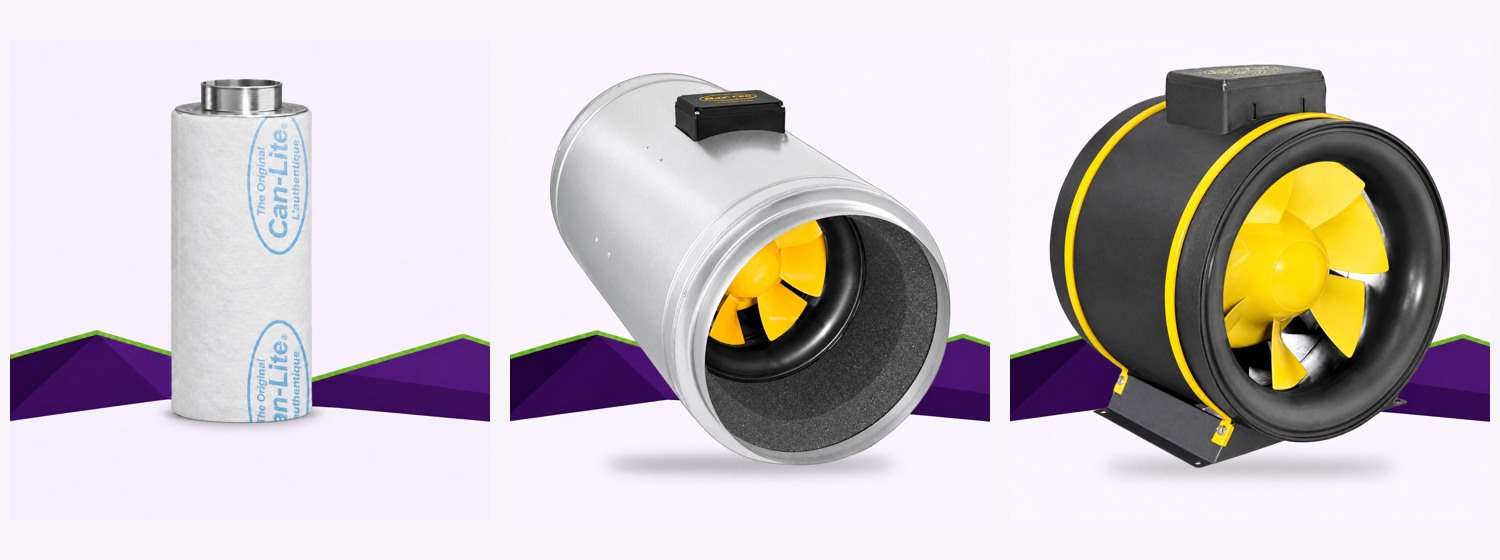
Products to combine according to your installation
Here are examples from the GrowLED catalogue, selected for their function and diameter. They are not a ready-sized kit for two filters. The fan airflows below are nominal free-air figures; check the airflow delivered with your system installed.
The manufacturer specifically pairs the 2,000 m³/h Q-Max EC Ø250 with the Can In-Line 1,500 in its filter selection. This is a documented starting point, not a promise of 1,500 m³/h with any duct length or a second filter. Adjust the setting to keep airflow compatible with every stage. Official Q-Max EC 250/2000 datasheet.
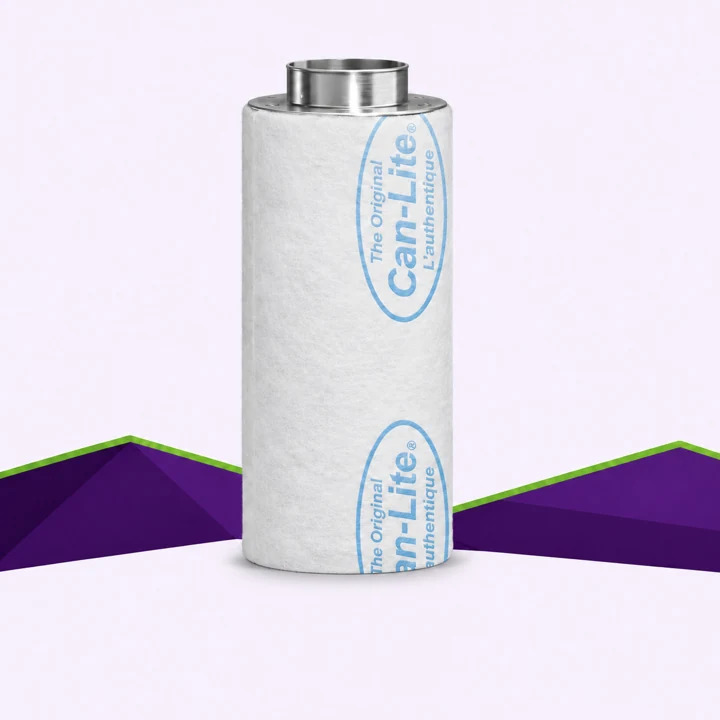
Can-Lite — conventional carbon filter
Install in pull-through mode inside the grow room for a dual-filtration layout. Choose its capacity and flange to suit the system’s actual airflow, then add the inline filter downstream of the fan.
Representative family image; several airflows and diameters on the product page.
View product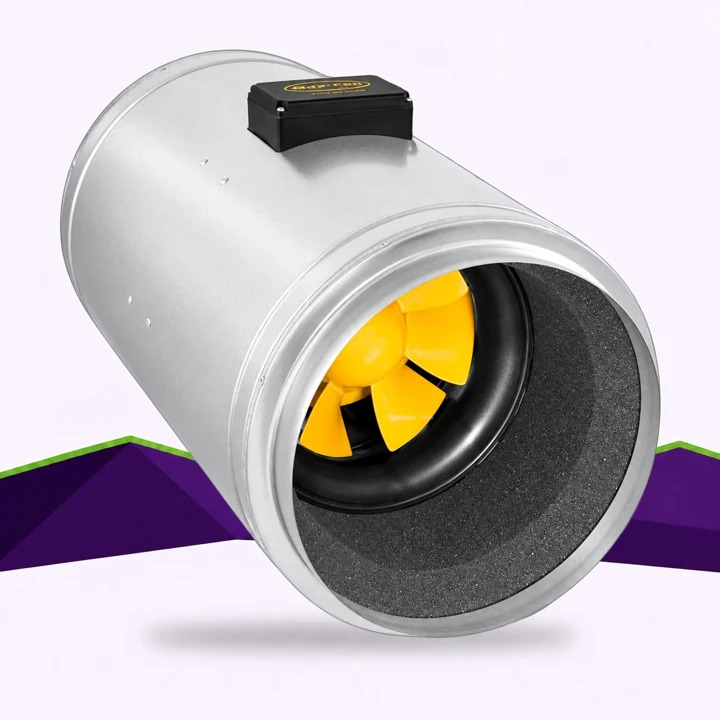
Can-Fan Q-Max EC Ø250 · 2,000 m³/h
A Ø250 connection example for Can In-Line 1,500 or 2,500, depending on the system and target airflow. Requires compatible EC control and verification of the operating point.
Nominal airflow does not guarantee airflow through two filters.
View product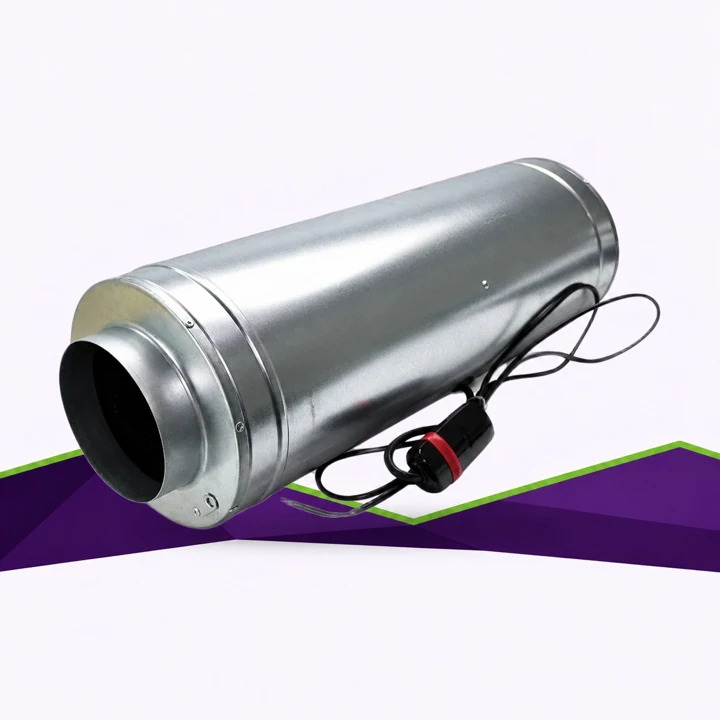
Can-Fan Iso-Max Ø200 · 870 m³/h
Can connect to the Can In-Line 1,000 Ø200. Installed airflow will be lower than the free-air figure; consider it if that airflow meets the room’s actual requirement.
The fan’s acoustic casing does not replace a filter.
View product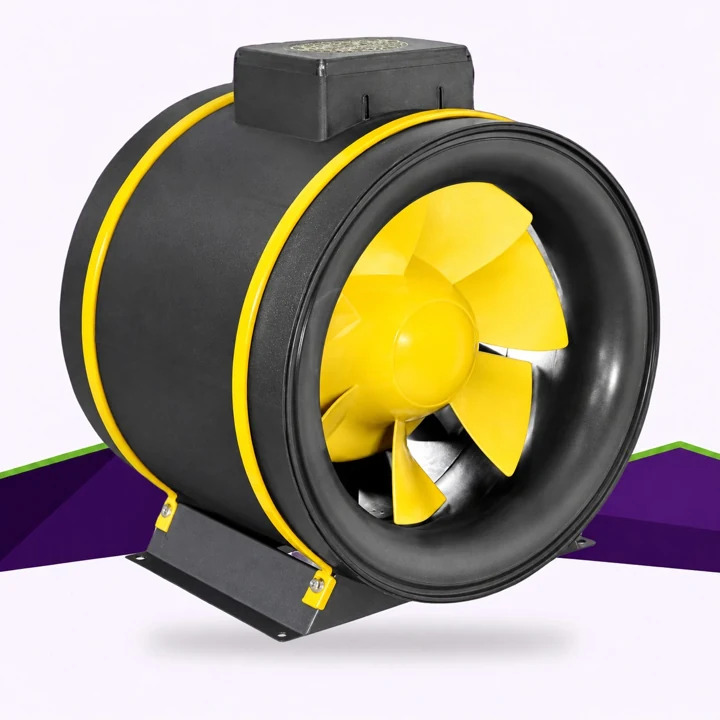
Can-Fan Max-Fan Pro Ø150 · 600 m³/h
The same diameter as the Can In-Line 600 Ø150. Two built-in speeds, 470 and 600 m³/h in free air; measure airflow once the system is connected.
Use the built-in selector; no external speed controller.
View product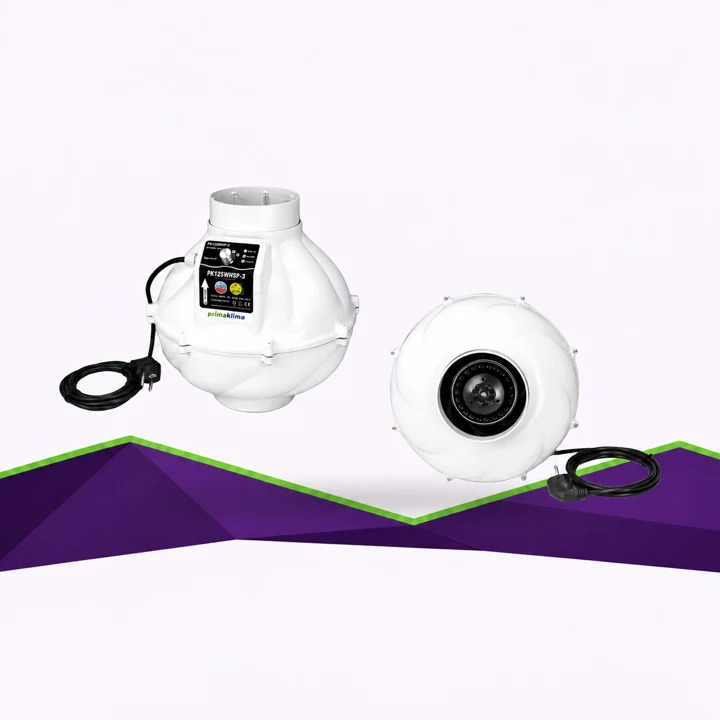
Prima Klima WHSP3 Ø125 · 530 m³/h
A three-speed alternative for the Can In-Line 600 Ø125. Compatibility depends on the connection and sizing; there is no requirement to use the same brand.
Matching these diameters alone does not validate a dual-filtration system.
View productInstalling the system and checking its operation
- Plan the airflow path. Identify the inlet, filter or filters, fan and exhaust. Provide an adequate air supply and access to components requiring maintenance. The exhaust layout must serve your air-exchange objective.
- Provide independent supports. Can In-Line units weigh from 10 to 40.5 kg. Flexible ducts and flanges must not carry this weight: use fixings suitable for the load and the building structure.
- Connect without constrictions. Choose the correct diameters, fit sleeves, seals and clamps, minimise tight bends and avoid crushed ducts. Keep fan inlets and outlets clear as specified in its instructions.
- Protect the carbon from dust. Prefiltration must act before the bed in the chosen airflow direction. Do not dismantle the filter to move internal parts without a manufacturer procedure.
- Adjust, then measure. Check fan direction, support stability, leaks, airflow and humidity. To control escaping odours, the usual aim is slight negative pressure in the grow room, with sufficient make-up air.
- Check again after commissioning. Record the initial setting and airflow; compare subsequent measurements to detect fouling or changes in the system.
Bends and obstructions too close to the impeller can reduce performance beyond ideal test conditions. Follow the fan’s connection instructions. Greenheck: how installation affects a fan.
Maintenance: distinguish fouling, leaks and carbon at the end of its service life
A drop in airflow may come from a dirty prefilter, a pinched duct or a changed setting. Carbon can also lose its treatment capacity while airflow appears normal. Conversely, a new odour does not immediately prove saturation: first check for a leak, a bypass path or excessive humidity.
Maintain prefiltration according to its instructions and inspect the seals. The manufacturer explains that a dirty prefilter increases resistance to airflow. Can-Filters: prefilter maintenance. Check each stage of a dual-filtration layout separately: a downstream filter does not remove the need to monitor the upstream one.
Can-Filters states a service life of at least 18 months for the Can In-Line family under suitable conditions. This advertised reference is not a lifetime guarantee for every grow room: odour load, humidity, dust and airflow affect the result. Prioritise the actual condition of the system over a calendar deadline.
Do not wash the carbon with water or attempt to “regenerate” it in a domestic oven. The brand advises against DIY refilling: factory packing of the bed helps prevent preferential flow paths, which simply pouring in carbon does not reproduce. Follow the replacement procedure intended for the equipment rather than improvising a compatible cartridge. Can-Filters guidance on refilling.

Frequently asked questions
Can an inline filter be the only filter in the system?
Yes. With a suitable extractor fan, the Can In-Line can provide primary filtration in pull-through or push-through mode. A second stage is a layout option, not a requirement.
Can I place it outside the grow room?
Yes, connected to the room by an airtight duct. “Outside the grow room” does not mean the unit can be left exposed to rain: provide a protected, accessible location suitable for its operating conditions.
Can I use a conventional filter, then a boxed extractor, then an inline filter?
Yes, if the enclosure contains an extractor fan sized for the total resistance. The conventional filter goes before the fan, and the inline filter after it. Check actual airflow, airtightness and the capacity of each filter.
Can two 600 m³/h filters treat 1,200 m³/h?
No. In series, the same air passes through each bed. Airflow capacities do not add up; pressure losses do increase. Every stage must accommodate the actual selected airflow.
Must the fan have exactly the same airflow figure as the filter?
No. The fan’s free-air flow and the filter’s practical capacity describe different things. Select the fan using its curve with the complete system connected, then adjust and measure airflow.
Is it also a silencer or a HEPA filter?
No. The Can In-Line is intended to treat odours using activated carbon. Do not attribute a quantified noise reduction, HEPA class, sterilisation or universal gas treatment to it without specific documentation.
Can dual filtration remove humidity?
No. Two carbon beds do not replace the removal of humid air or a dehumidifier. High humidity can instead interfere with odour treatment.
What is included when buying a Can In-Line?
The filter in your chosen configuration. The extractor fan, any controller, ducts, clamps and supports must be selected separately. The examples in this guide are combinations to assess, not an included complete kit.
Need help choosing your layout?
Start with the useful airflow, duct diameter and available space. For dual filtration, also provide details of both proposed filters, the boxed fan or extractor model and the duct route: this allows the complete system to be assessed.