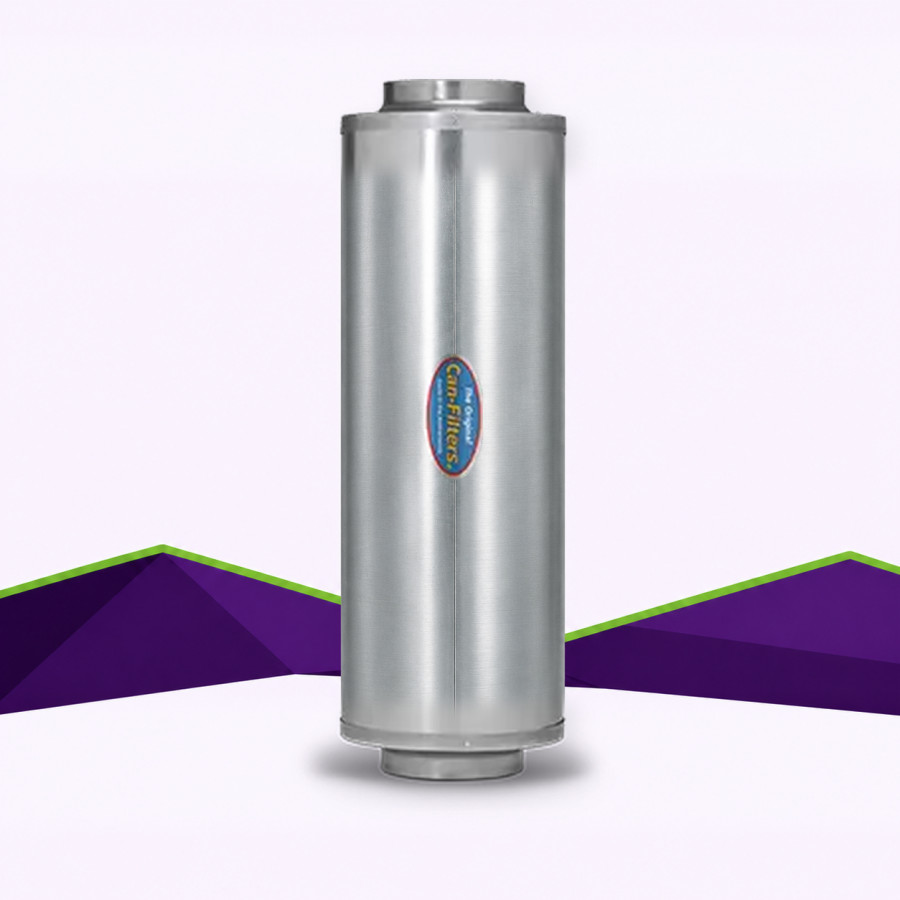
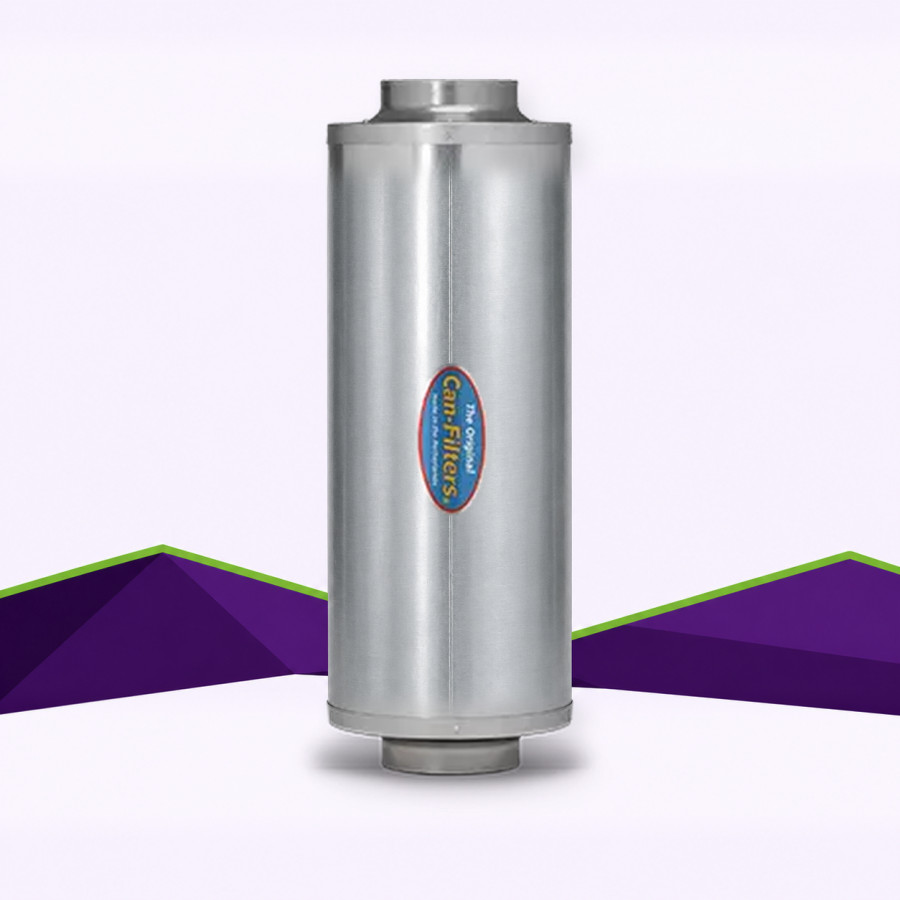
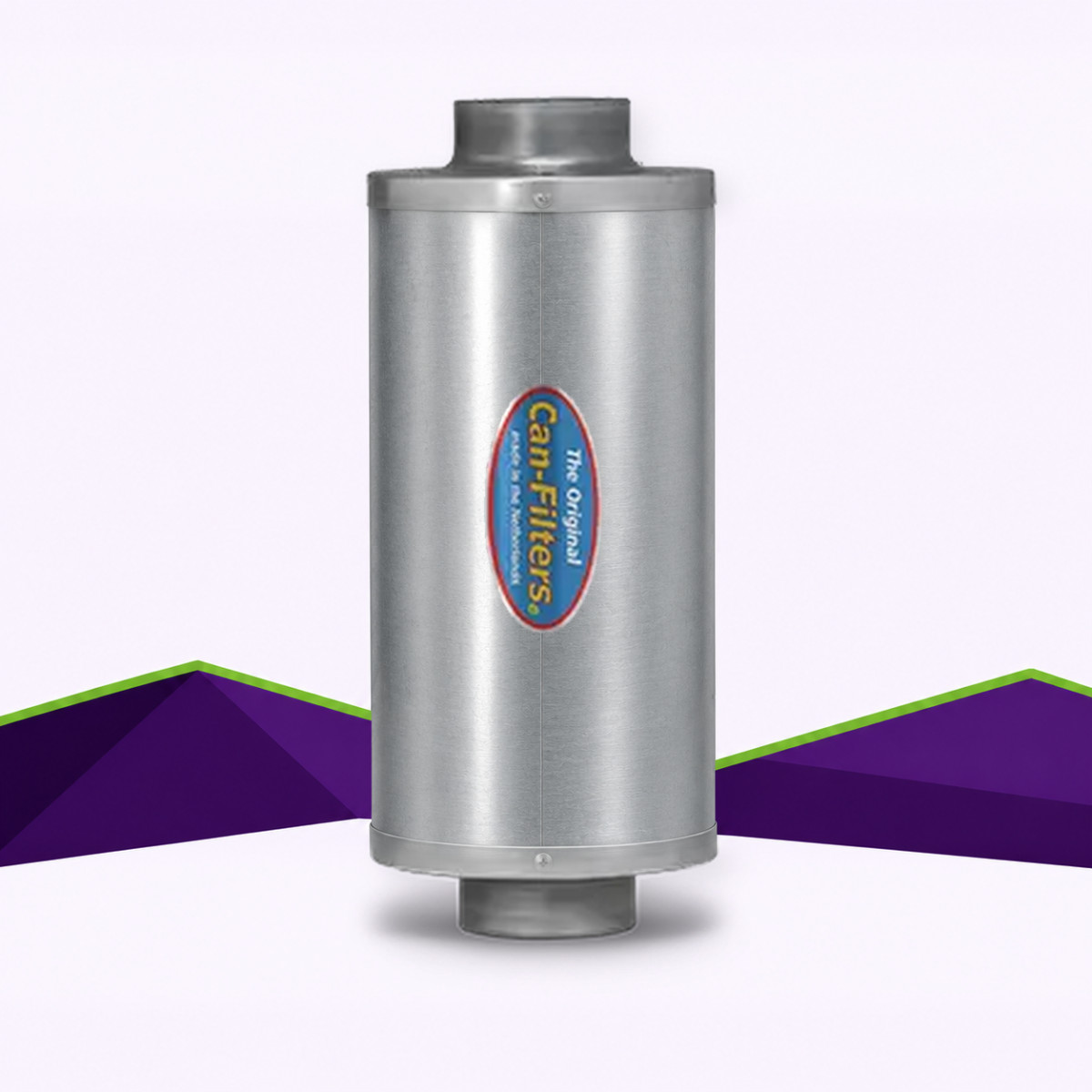
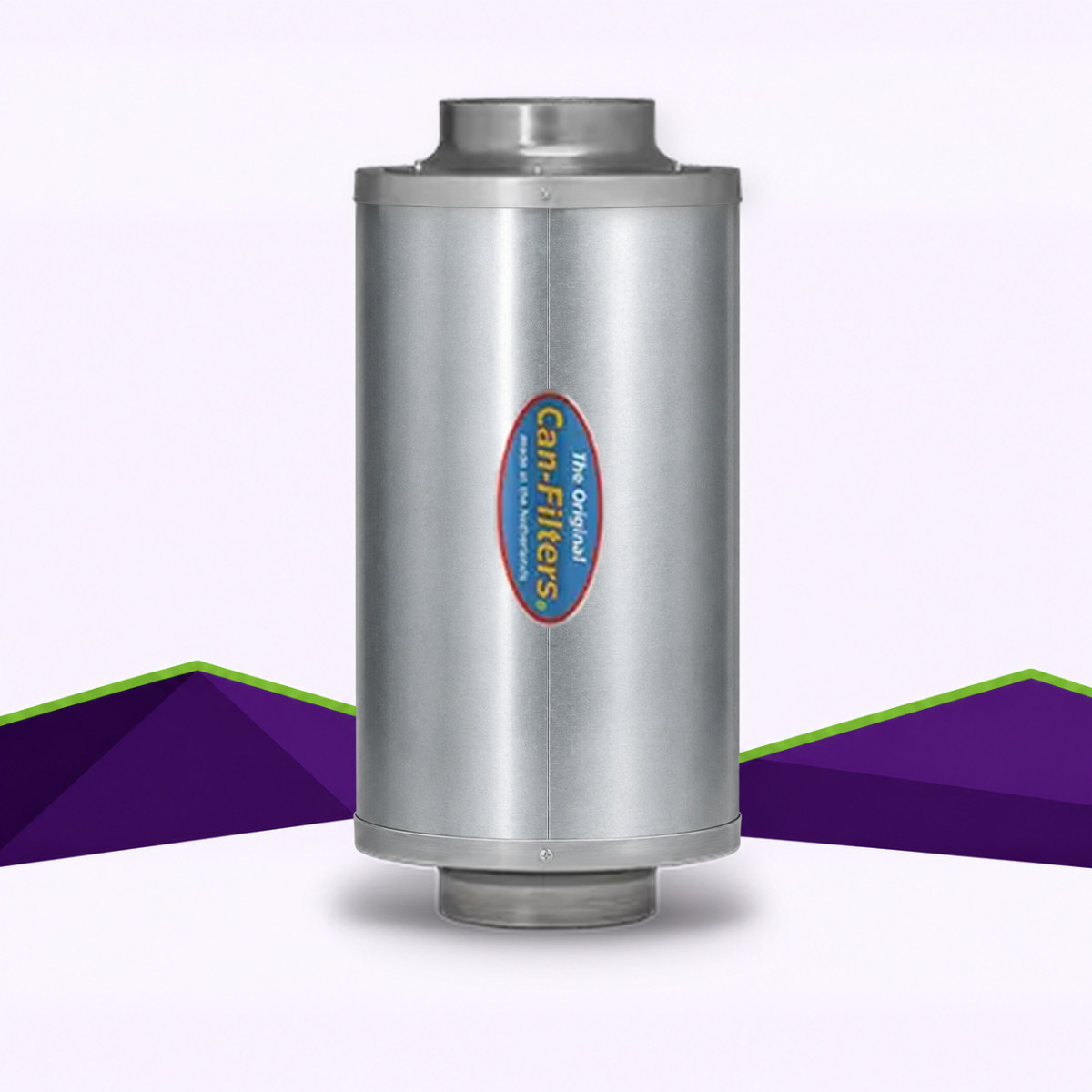
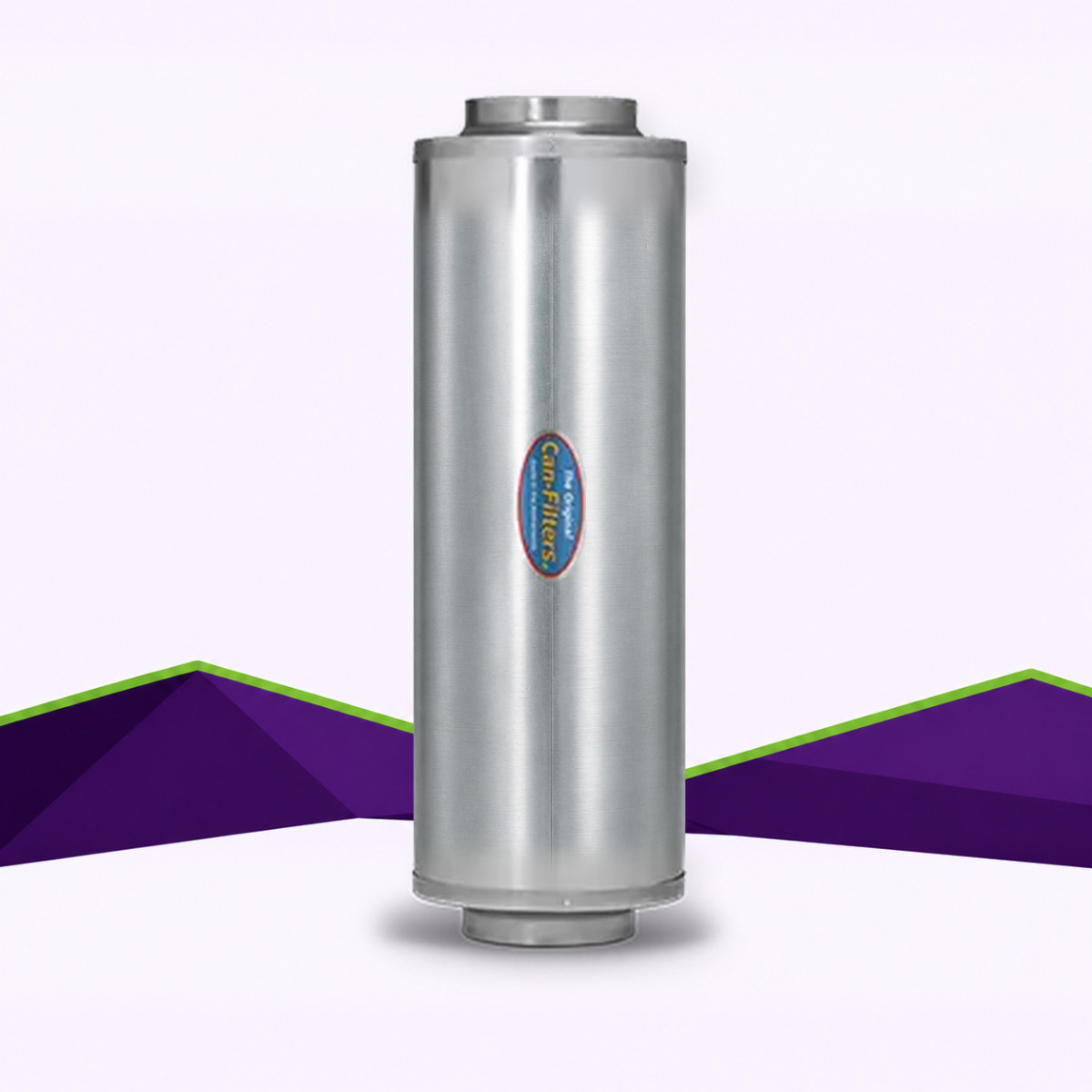
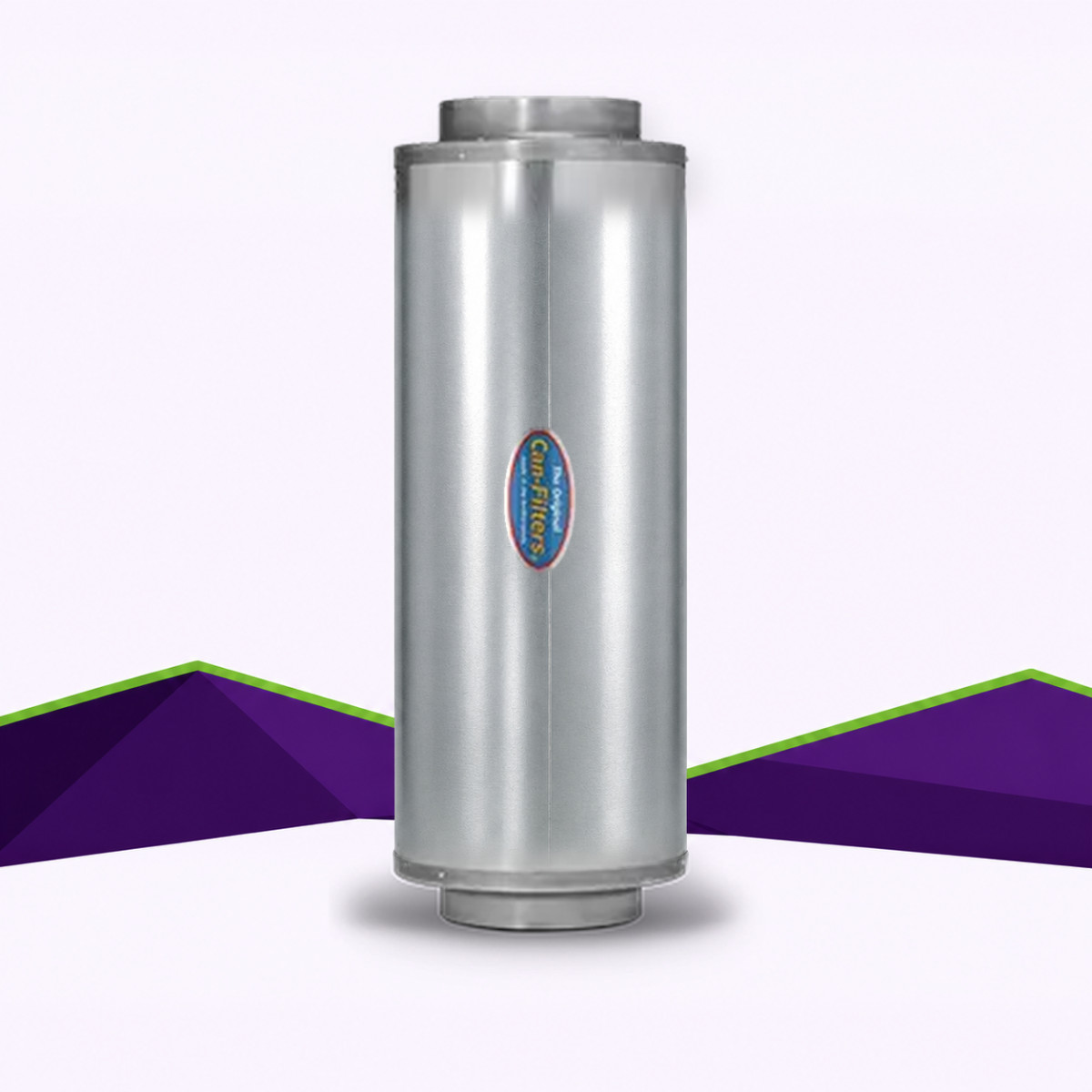
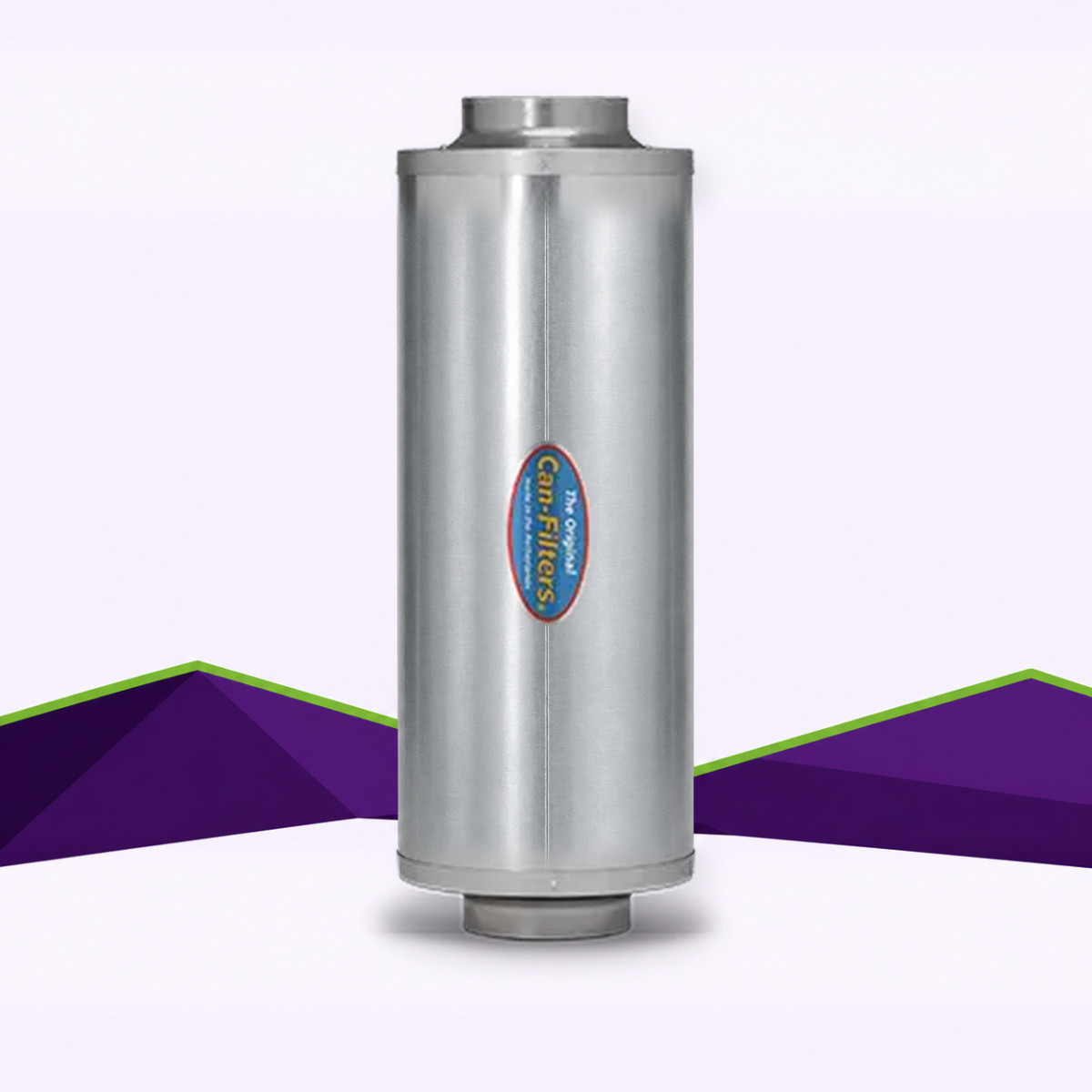
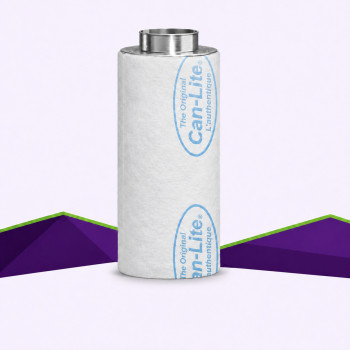
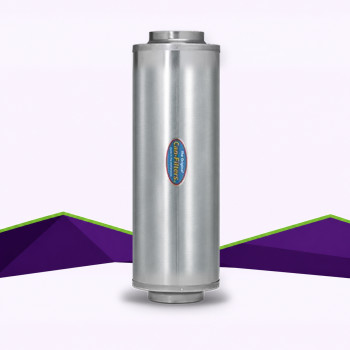
Filter odours while saving space inside your grow room. Can In-Line connects between two ducts. Its closed casing lets you place the filter inside or outside the room, before or after the extractor fan.
9 configurations: practical airflow 600–3,000 m³/h; Ø125–315 mm connections.
Can-Lite activated carbon, 50 mm carbon bed and galvanised steel casing.
Suitable for pull-through or push-through use; extractor fan sold separately.
A question about this product?
Can In-Line — inline carbon filter 600 to 3,000 m³/h
✓
Message sent!
Our team will reply within 24 business hours. Ref:
A conventional carbon filter is often installed inside the grow room and draws air through its outer surface. “Inline” means installed within the duct run. A Can-Lite filter sits inside a metal casing with two ports: air enters one and leaves the other after passing through the carbon. It is not simply an open tube: activated carbon adsorbs some of the molecules responsible for odours.
Why choose this arrangement?
Save room: move the filter along the extraction duct to keep more clearance below the light and around the plants.
Flexible installation: position it before or after the fan to suit the duct layout; Can-Filters allows both operating modes.
Add a second filtration stage: it can complement an existing filter. Two filters increase resistance, so the actual airflow must be checked.
The filter treats odours; it does not move air, cool the room or dehumidify it. The fan provides air exchange. Can In-Line is not a silencer; no quantified noise reduction is claimed here.
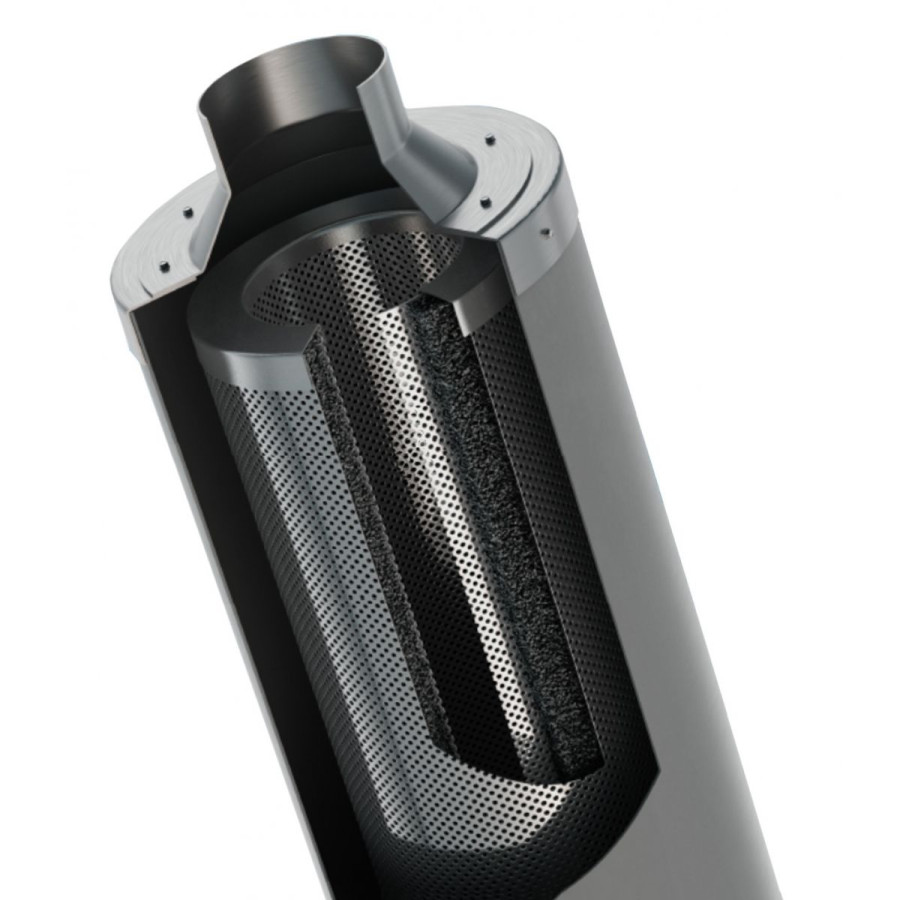
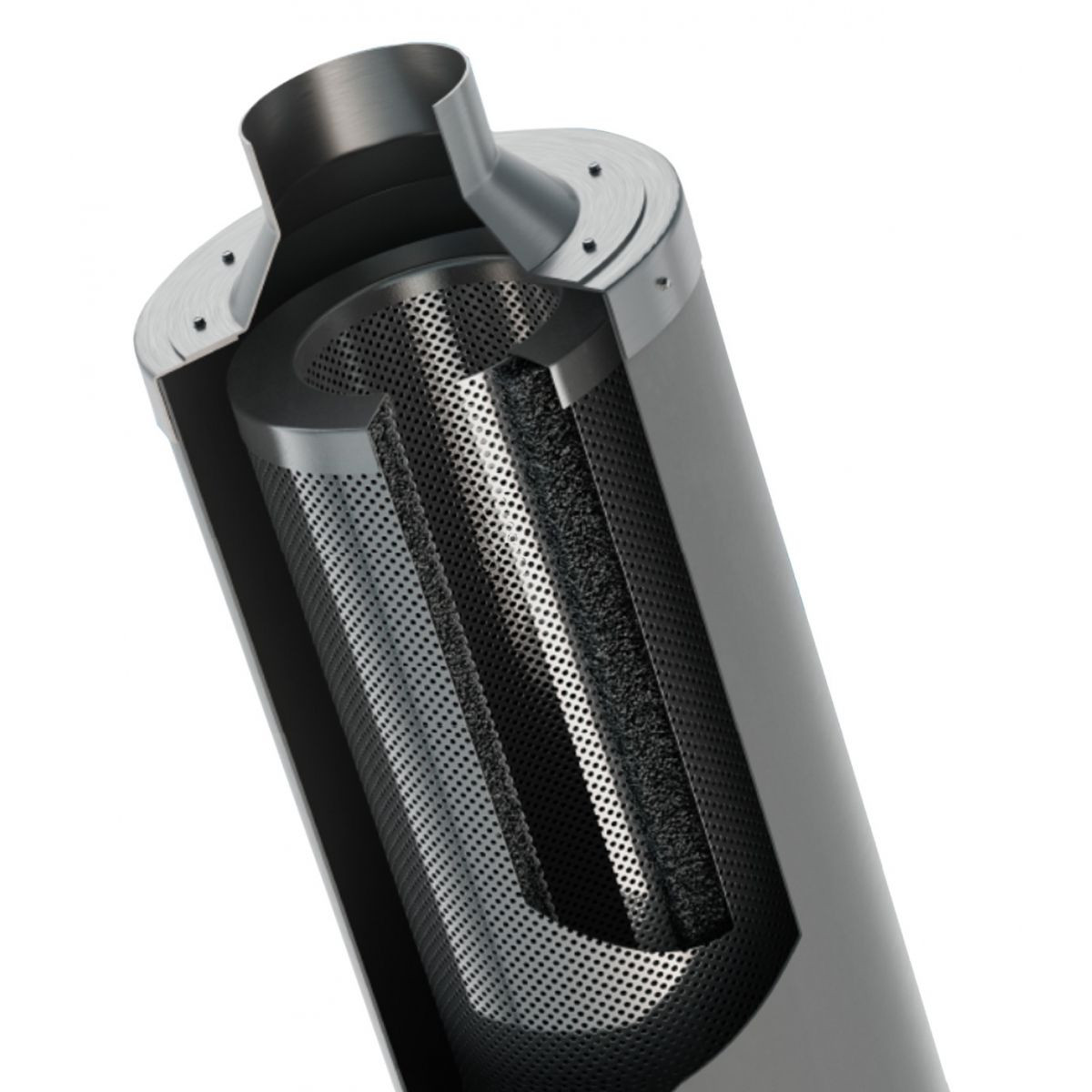
Inside: a carbon bed, not an open passage
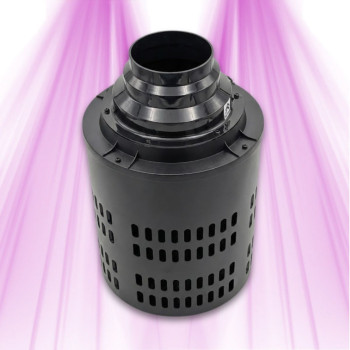
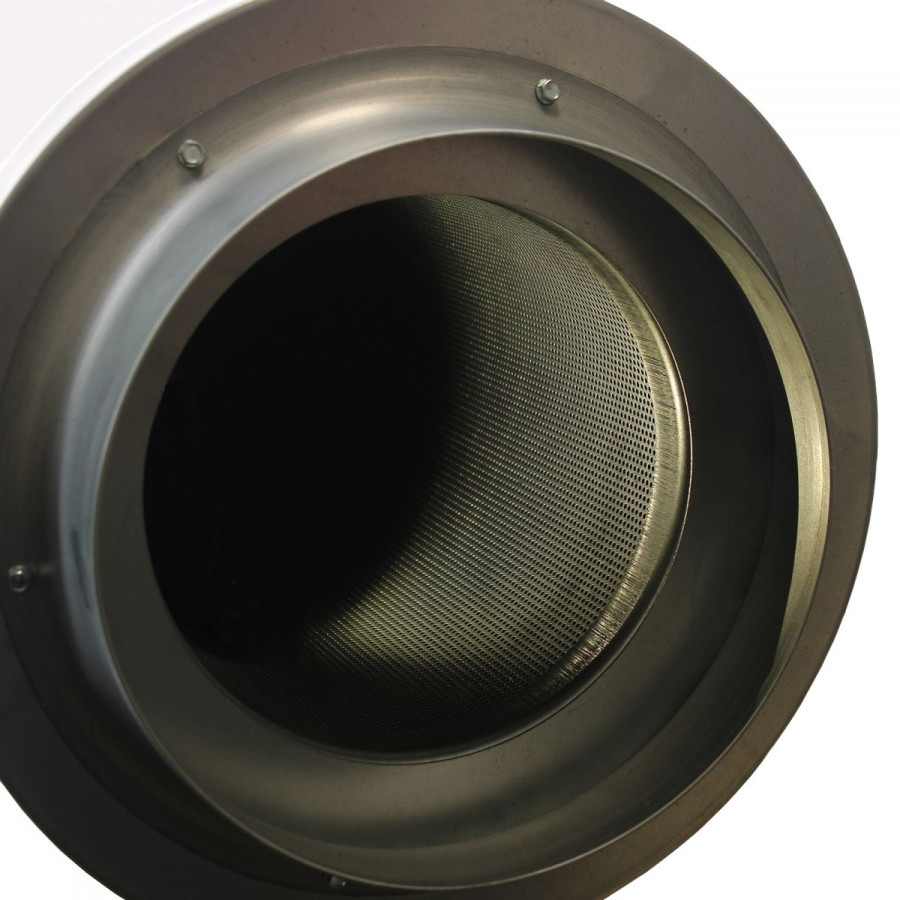
The Can-Filters cutaway shows the inner filter and its 50 mm carbon bed. The closed casing directs air through the filter medium, while the two ports connect to the duct run. This illustrates the construction principle, not the dimensions of a particular version.
Two straightforward installation layouts
1. Pull-through: filter before the fan
Grow room → Can In-Line → Extractor fan → Air outlet
The fan pulls air through the filter. A duct between room and filter allows the filter to sit outside the room.
2. Push-through: filter after the fan
Grow room → Extractor fan → Can In-Line → Air outlet
The fan pushes air into the filter. The closed casing allows filtration on the outlet side, outside the grow room.
Arrows show airflow in these examples. According to Can-Filters, the casing can operate in either direction. Place the equipment inside or outside the room as space allows, and observe the fan airflow direction.
Choosing airflow and connection diameter
Estimate the air exchange you need. Room volume is a starting point; heat, humidity, duct length and bends also affect sizing.
Choose the filter’s practical airflow. This is the main sizing reference. The 600 m³/h model, for example, has a practical capacity of 600 m³/h and a maximum technical capacity of 660 m³/h.
Match the ports. A Ø150 mm filter connects directly to Ø150 mm ducting and a Ø150 mm fan. The outer body diameter is not the port diameter.
Check actual airflow when installed. A fan’s free-air rating drops with system resistance. A more powerful fan may work at a suitable setting, but actual flow through the filter must not exceed its maximum rating.
GrowLED tip: keep ducts short and joints airtight, and size around the practical airflow. A larger filter does not make the fan more powerful. Without a pressure curve for the full system, installed airflow cannot be guaranteed.
The nine available configurations
Practical airflow
Port
Maximum airflow
Body diameter
Length
Weight
600 m³/h
Ø125 mm
660 m³/h
315 mm
605 mm
10 kg
600 m³/h
Ø150 mm
660 m³/h
315 mm
605 mm
10 kg
1000 m³/h
Ø200 mm
1100 m³/h
365 mm
775 mm
17 kg
1000 m³/h
Ø250 mm
1100 m³/h
365 mm
755 mm
17 kg
1500 m³/h
Ø200 mm
1650 m³/h
365 mm
1025 mm
24 kg
1500 m³/h
Ø250 mm
1650 m³/h
365 mm
1025 mm
23.9 kg
2500 m³/h
Ø250 mm
2750 m³/h
415 mm
1265 mm
34.5 kg
2500 m³/h
Ø315 mm
2750 m³/h
415 mm
1265 mm
34.5 kg
3000 m³/h
Ø315 mm
3300 m³/h
465 mm
1265 mm
40.5 kg
The 1,000 m³/h configurations have different listed lengths: 775 mm for Ø200 and 755 mm for Ø250. The general Can-Filters model page gives 775 mm; check clearance for a tight installation. The 1,500 Ø250 version is listed at 23.9 kg; the manufacturer’s general model page rounds this to 24 kg.
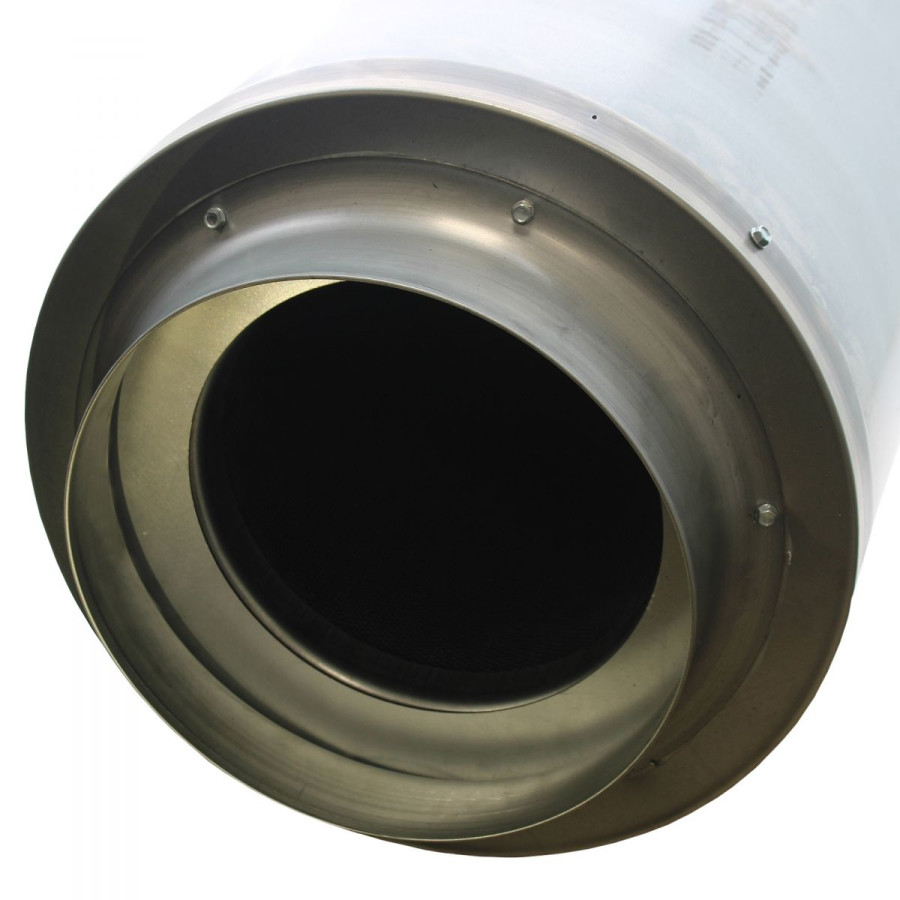
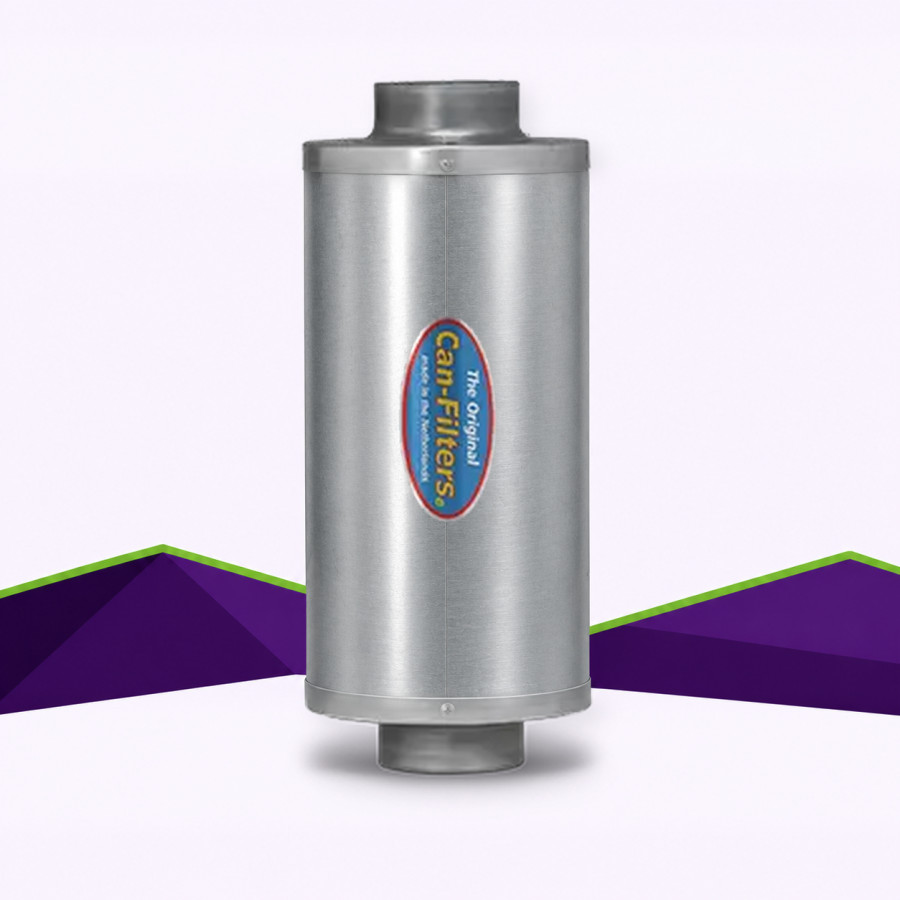
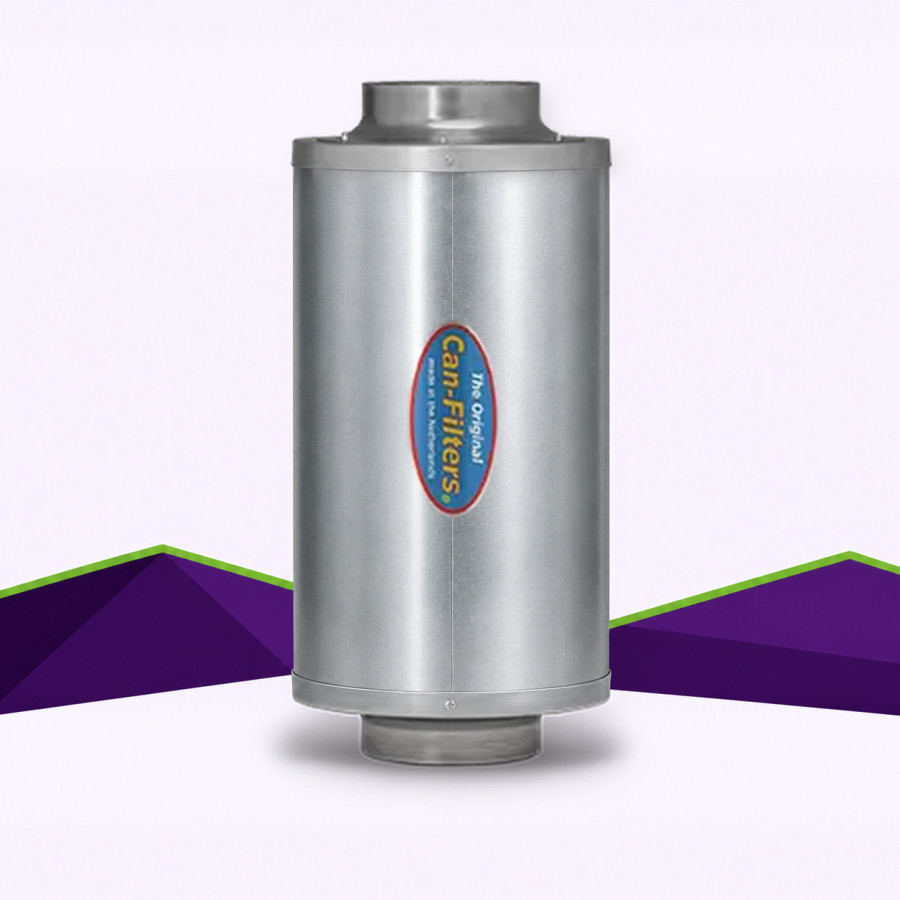
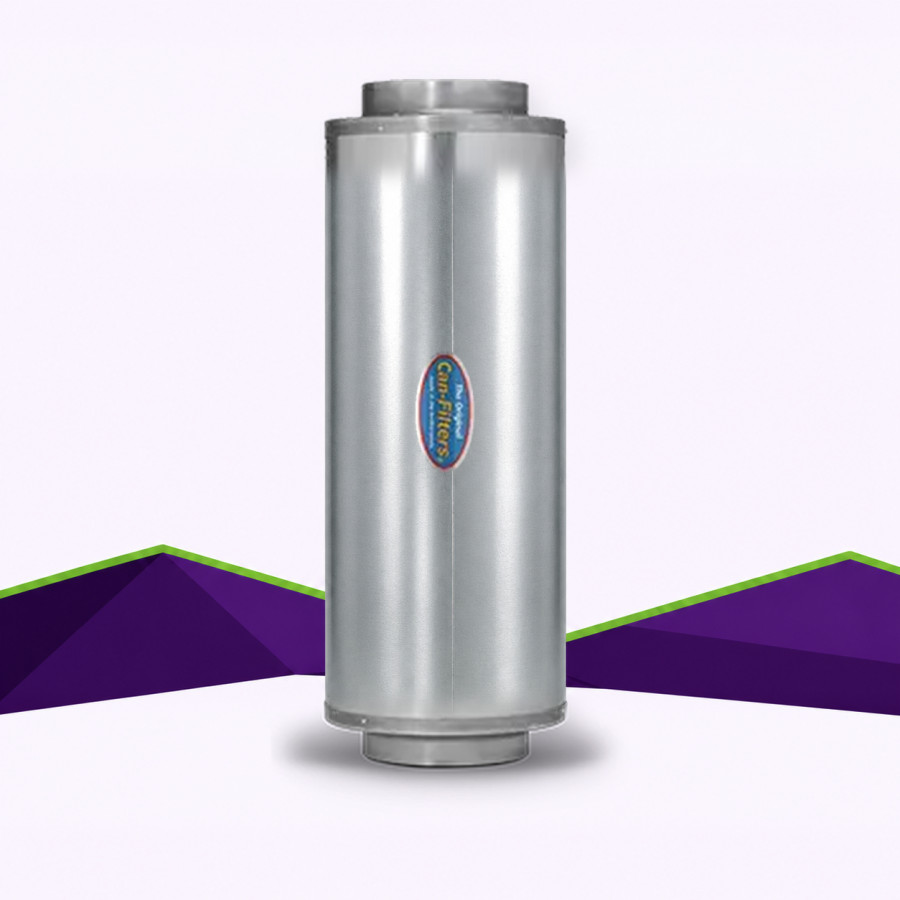
Photos show each airflow model. The connection diameter is the one in your selected configuration; check the table dimensions before installation.
Which GrowLED extractor fans can connect?
These catalogue examples have matching port diameters. Fan airflow figures are nominal free-air ratings, not promised airflow with the filter installed. The pairings are based on diameter and capacity; they do not replace a system operating curve.
Same diameter; nominal airflow no higher than the filter’s practical rating. Check that installed airflow meets your needs.
Prefer Prima Klima? The two-speed PK125 (220/400 m³/h) also connects directly to the 600 Ø125. For the 600 Ø150, the two-speed PK150 (390/760 m³/h) must not simply be run at full speed: its 390 m³/h low speed is below the filter’s practical rating; high-speed use needs suitable sizing and control. A Ø160 outlet does not directly fit a Ø150 port.
Installation, accessories and maintenance
Use ducting of the correct diameter and seal every connection. Ducting, clamps and the fan are not included in this offer.
Support the filter independently with fixings suited to its weight: 10–40.5 kg depending on the version. Do not let duct connections carry its weight.
Observe the Can-Filters limits: up to 70% relative humidity and 80°C maximum temperature. These filter limits are not target growing conditions.
Check joints and accessible prefiltration for dirt. Clean or replace prefiltration as instructed by the manufacturer; do not wash the activated carbon with water.
Can-Filters states a service life of at least 18 months under its intended conditions. This is not a guaranteed lifetime in every installation: humidity, dust, odour load and airflow affect actual life.
Le filtre fait ce qu'il promet, on sent vraiment une nette amélioration de l'air. Montage simple même pour moi, qui suis pas très bricoleur. Le colis était un peu cabossé mais rien de grave. Niveau bruit, c'est raisonnable, pas vraiment dérangeant. Bonne surprise pour le prix.
MI
mich76Achat vérifié
16 juillet 2025
Pas déçu, ce filtre fait bien son taf, assez silencieux pour mon coin. Le carton était costaud, la livraison rapide. Ça filtre à bloc sans faire de bruit gênant.
Aucun avis ne correspond à ce filtre.
Frequently asked questions
Your questions
Can the filter sit outside the tent?
Yes. That is one purpose of the inline casing: connect it to the room with sealed ducting. Keep it protected and accessible for maintenance.
Do I need a Can-Fan extractor?
No. Compatibility depends on connection diameter, actual airflow and the fan’s ability to overcome system resistance. The Prima Klima examples above show possible connections.
Does a 250 mm port guarantee 1,500 m³/h?
No. Diameter defines the connection, while airflow depends on the fan and duct layout. Filters of different capacities may share a port diameter.
Can it replace two conventional filters?
It can act as the main filter or a second stage. Two stages are not always necessary and add pressure losses; check the system before combining them.
What is supplied?
One Can In-Line filter in the selected configuration. Fan, ducting, clamps and mounting supports are supplied separately.
Is the filter a silencer?
No. Its role is odour filtration. Use suitable supports and acoustic ducting to manage fan noise and vibration; no noise rating is guaranteed for the filter itself.