Aller au contenu principal
41 produits

Substrates and pots

Substrates and pots: the foundations of your indoor grow

Substrates and pots form the inseparable duo for any successful indoor grow. Whether you cultivate in soil, coco, or hydroponics, the choice of the right substrate and container directly determines the root health of your plants. Each type of substrate has its own characteristics regardin...

Substrates and pots: the foundations of your indoor grow

Substrates and pots form the inseparable duo for any successful indoor grow. Whether you cultivate in soil, coco, or hydroponics, the choice of the right substrate and container directly determines the root health of your plants. Each type of substrate has its own characteristics regarding water retention, aeration, and pH, while pots influence root development and watering management.

Why choose your substrates and pots carefully

A quality substrate guarantees a vigorous root system. Soil offers a natural approach with its organic nutrients but requires precise pH management between 6.0 and 7.0. Coco fiber, on the other hand, excels in water retention while maintaining excellent aeration – perfect for beginners who tend to overwater. For the more technical growers, rockwool allows for precise control of nutrient inputs with a neutral pH of 5.5 to 6.5.

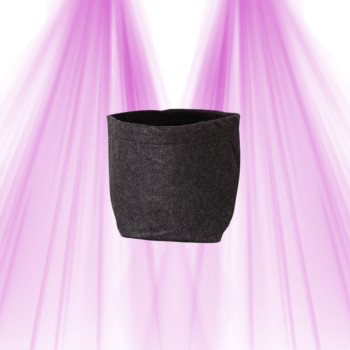
Regarding containers, geotextile pots revolutionize cultivation with their natural "air-pruning." Roots that reach the walls dry out and stimulate the creation of new rootlets, creating a dense and fibrous root system. Classic plastic pots remain practical for their ease of cleaning and durability, especially in hydroponics where watertightness matters.

How to choose the right substrate and pot

For the substrate, everything depends on your level and your goals. Beginner? Start with a pre-enriched potting mix or quality coco. More experienced? Mix perlite, vermiculite, and peat yourself to create your personalized blend. Calculate approximately 20-30 liters of substrate per m² for a standard grow.

For pots, the golden rule: 1 liter of substrate per 10cm of final plant height. An 80cm plant will need a minimum 8-liter pot. Square pots optimize floor space, while round ones promote circular root development. For geotextile pots, choose one size up as they tend to settle slightly over time.

Frequently Asked Questions

Which substrate should I choose between soil, coco fiber, or rockwool for my indoor plants?

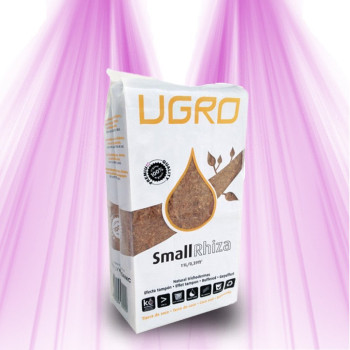
Soil remains the most natural and forgiving choice for beginners, with its organic nutrients that gradually feed the plants. Coco fiber offers an excellent compromise: it retains 8 times its weight in water while maintaining 20% air in its structure, which forgives watering mistakes. Rockwool, more technical, is suitable for experienced growers who master fertigation because it is completely inert and requires constant nutrient input. For a first setup, go for quality coco or a pre-enriched potting mix.

How do I calculate the amount of substrate needed for my pots based on the size of my growing space?

Allow 20 to 30 liters of substrate per m² for a standard grow in 7-11 liter pots. To calculate precisely, multiply the surface area of your space by the number of plants per m² and then by the chosen pot size. For example: a 1.2m x 1.2m (1.44m²) space with 9 plants in 11L pots will require 99 liters of substrate. Always add a 10-15% margin for eventual repotting and natural substrate settling.

Geotextile or plastic pots, which are best for good root aeration?

Geotextile pots win hands down on aeration thanks to their porous structure which allows constant gas exchange. They create an "air-pruning" phenomenon: roots that touch the walls naturally dry out, forcing the plant to develop a denser and more fibrous root system. Plastic pots, less aerated, can cause root circling. However, they remain more practical for hydroponics and automated systems as they are watertight and easy to clean.

How to properly fill and install a pot with substrate without over-compacting?

Fill the pot in thirds, gently tapping the sides to eliminate air pockets without compacting. Leave 2-3cm of space at the top for watering and never compact with your hands – the weight of the substrate and watering will take care of natural settling. For coco, pre-moisten it slightly before filling as it swells by 20-30%. With soil, gently mix with a spoon if you add amendments like perlite. A well-aerated substrate should remain spongy under finger pressure.

Can substrate and pots be reused after a grow, and how to maintain them for the next one?

Pots are easily cleaned with diluted bleach (10%) followed by thorough rinsing. For geotextile pots, a machine wash at 60°C without fabric softener will do the trick. Substrate is trickier: soil depletes nutrients and can accumulate salts, so it's best to compost it. Coco can be used for 2-3 cycles if thoroughly rinsed and re-amended with nutrients. Rockwool rinses easily but loses its structure after 2-3 grows. In all cases, visually inspect for any pests or mold before reuse.

Showing 13 - 24 of 41 items
How to choose the right substrate for my indoor grow?
   

The choice of substrate is crucial and depends on several factors. I recommend first considering the type of cultivation you are planning: if you are a beginner, a good quality potting soil is an excellent base. For more advanced or specific cultivations, substrates like coco fiber or hydroponic mixes offer distinct advantages in terms of aeration and water retention. Don't forget to check the pH and composition to ensure they match your plants' needs.

What is the difference between terracotta pots and plastic pots?
   

In practice, the difference is significant. Terracotta pots are porous, which promotes better root aeration and helps prevent overwatering by allowing water to evaporate more easily. However, this also means they dry out faster, requiring more frequent watering. Plastic pots, on the other hand, retain moisture better, which is practical for thirsty plants or if you cannot water often. They are also lighter and less expensive. I often see growers using both depending on their preferences and the specific needs of their plants.

What pot size should I choose for my indoor grow?
   

Pot size is crucial for root development and thus for your plant's growth. I advise choosing a pot suitable for the plant's current size and its future growth. A pot that is too small will hinder root development, while a pot that is too large can retain too much moisture and promote root rot. As a general rule, progressive repotting should be planned. For growing plants, I recommend increasing the pot size in stages, for example from 1 to 3 liters, then 5, 7, 11 liters, etc., to best support their development.

What is the difference between soil, coco, and hydroponic substrates?
   

These three approaches are very different. Soil substrate is the most traditional and simplest for beginners, offering a good nutrient buffer and some stability. Coco fiber, often classified under diverse substrates, is an inert medium that offers excellent aeration and optimal water retention, but requires constant nutrient input. Hydroponics, on the other hand, is a soilless cultivation where roots are directly immersed in a nutrient solution. It is a very efficient method but requires more technical skill and monitoring. Each has its advantages; I would say the choice depends on your experience level and your objectives.

What is the purpose of an aerated substrate for roots?
   

An aerated substrate is absolutely fundamental for the health of your plants' roots. Roots need oxygen to breathe, absorb nutrients, and develop properly. If the substrate is too compact or waterlogged, oxygen cannot circulate, leading to plant stress, slowed growth, and can even cause root rot. That's why I always recommend substrates that offer good structure and efficient drainage, such as those found in our quality potting soils or mixes based on perlite and coco fiber.

How to calculate the necessary amount of substrate?
   

To calculate the amount of substrate, it's quite simple: you need to know the volume of your pots. If you are using a round pot, the formula is π (pi) x radius² x height. For a square or rectangular pot, it's length x width x height. Once you have the volume of a pot in cm³, divide by 1000 to get the volume in liters. Then multiply by the number of pots. I always advise buying a little more than the calculated amount, for repotting or adjustments. It's a mistake I often see, running out of substrate in the middle of a session!

Fabric pots or rigid pots: which to choose?
   

That's an excellent question, because fabric pots, or textile pots, have gained popularity. The main difference is that fabric pots allow for 'air-pruning': roots that reach the pot wall are naturally pruned by the air, which stimulates the formation of new roots and prevents root circling. This leads to a denser and more efficient root system. Rigid pots, on the other hand, are more durable and easier to clean. If I had to choose for optimal root growth, I would lean towards fabric pots, especially for plants that need a lot of oxygen at the root level.

What pH for the substrate in indoor cultivation?
   

The pH of the substrate is a critical factor that I cannot emphasize enough. It directly influences the availability of nutrients for your plants. For most indoor cultivations, I recommend a pH between 5.8 and 6.5. A pH that is too acidic or too alkaline can block the absorption of certain essential elements, even if they are present in your nutrient solution. It is therefore essential to measure it regularly with a pH tester and adjust if necessary with pH Up or pH Down solutions.

Blog navigation

Latest posts

What Wattage LED Grow Light Should a Beginner Choose?

What wattage LED grow light should a beginner pick? Real watts, W/m², PPFD and a 60x60 setup explained in the GrowLED...

Read more
VIVOSUN Grow Cam 6mm 2K QHD WiFi Grow Camera

Tired of anxiety when you're away from your grow? The VIVOSUN Grow Cam 6mm 2K QHD WiFi Grow Camera lets you keep an...

Read more
STOP à la Tourbe ! Découvrez les 4 Meilleurs Substrats Écologiques pour une Culture Indoor Explosive

Le monde du jardinage connaît une transformation silencieuse mais profonde. Face à l'urgence climatique et à la prise...

Read more