



































































The Pure Factory
Pure LED Pro V2.0 520 W – LED grow light
Available in 2 models
In stock · Shipped within 24 h
799,20 € 999,00 € or 3× 266,40 €

Product successfully added to your shopping cart
Ça pousse dans le bon sens

13 products
Clearance sales are the perfect opportunity to set up or complete your indoor grow setup without breaking the bank. At GrowLED, we regularly clear out top-quality equipment: LED lights, extractors, carbon filters, fertilizers, accessories... New or perfectly functional products that deserve a second chance at unbeatable prices.
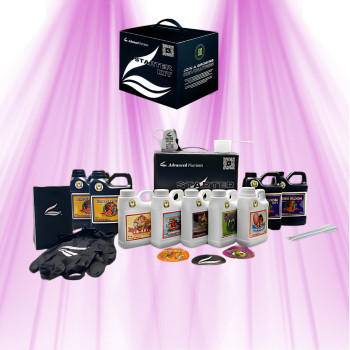
Whether you're new to indoor growing or looking to upgrade an existing setup, our clearance section is packed with great deals. You'll find everything from complete starter kits to specialized equipment for experienced growers.
Frankly, clearance allows you to get professional equipment without spending a fortune. The LED lamps we clear out maintain their original performance: same light spectrum, same energy efficiency, same lifespan. The same goes for extractors and fans – they retain their nominal airflow and original noise level.
The advantage of clearance is also its diversity. You might stumble upon a 600W HPS lamp at half price, a high-end silent extractor at a bargain, or even a complete fertilizer pack for a steal. It's an opportunity to try premium brands you might not have dared to buy at full price.
And from an ecological perspective, giving a second life to perfectly functional equipment is quite consistent when you're growing your own plants. Less waste, more meaning.
First reflex: check that the equipment matches the dimensions of your grow space. A 125mm diameter extractor won't fit a 100mm duct, even if the price is tempting. For lights, carefully calculate the lighting area: a 100W LED covers approximately 60x60cm during flowering.
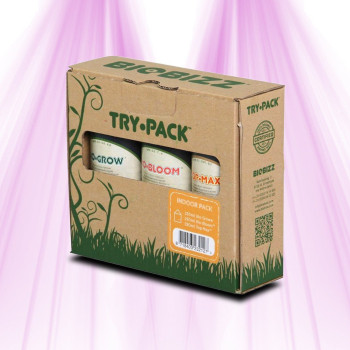
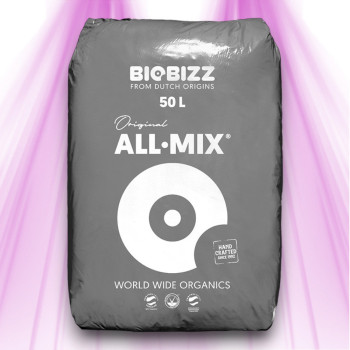
For fertilizers and nutrients, always check the expiration dates. Liquid fertilizers generally keep for 2-3 years under good conditions, but it's best to verify. For organic fertilizers, it's even more important – they can lose effectiveness over time.
Don't hesitate to compare with new prices to gauge the real bargain. Sometimes, a clearance product at -20% is still more expensive than an equivalent from another brand at regular price. The idea is to make smart savings, not impulsive purchases.
Most clearance kits are designed for standard tents like 100x100cm. However, always check the specs of each component: the extractor must have an airflow suitable for your tent's volume (approximately 150-200 m³/h for 1m²), and the light must have sufficient power (150-200W LED for 1m²). The dimensions of the ducts and connectors are generally compatible with the standard outlets of 100x100cm tents.
Installation always follows the same principle: carbon filter inside the tent, connected by a duct to the extractor placed outside. Observe the airflow direction indicated on the filter (arrow). Securely fasten the extractor to prevent vibrations and use airtight clamps on the duct connections. Even clearance items come with their original installation instructions.
LED consumes 2 to 3 times less electricity than HPS for equivalent yield and generates much less heat. A 150W LED easily replaces a 400W HPS. However, HPS has a more penetrating spectrum and is cheaper to purchase. In clearance, LED becomes more accessible and remains the best long-term choice due to its lifespan (50,000h vs. 10,000h for HPS).
That depends on its NPK composition indicated on the label. A growth fertilizer has a high nitrogen (N) ratio, like 20-10-10, while a flowering fertilizer prioritizes phosphorus and potassium, like 10-20-20. Some fertilizers are versatile with a balanced ratio like 10-10-10. Even in clearance, the label remains the reference for intended use and recommended dosage.
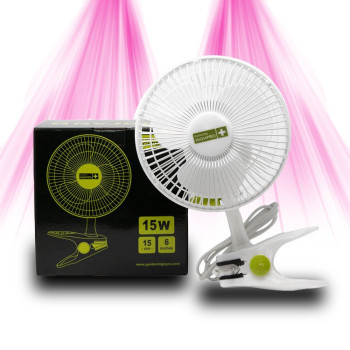
Regularly clean the blades with a damp cloth to prevent dust accumulation that unbalances the rotor. Check that the mounting clip holds securely and doesn't vibrate. Lubricate the bearings every 6 months with a drop of machine oil if the fan becomes noisy. Avoid running it continuously at maximum speed – alternate speeds to preserve the motor. A well-maintained clip-on fan can operate for several years without problems.
Available in 2 models
Available in 2 models
Available in 2 models
Available in 5 models
Available in 2 models
Available in 3 models
Available in 2 models
Available in 4 models
Available in 5 models
Help & advice
About Clearance — click a question to see the answer.
The choice of your LED lamp's wattage is crucial and primarily depends on the size of your grow space. Generally, I recommend about 30 to 50 watts per square foot (0.09 m²) for demanding crops like flowering plants. For a small 60x60 cm tent, for example, a 100 to 150W LED would be a good starting point. You also need to consider the type of plants and their growth stage. Don't hesitate to give me more details about your setup for a more precise recommendation!
Installing an LED lamp is relatively simple. I advise you to start by securely attaching your fixture to the ceiling of your grow room, often with ratchet hangers for easy height adjustment. Then, plug it into a timer to manage day/night cycles. Make sure the power supply is adequate and that cables are not dangling to avoid any risks. Also, consider integrating it into your ventilation system to manage heat, even though LEDs produce less heat than HPS.
The optimal distance between your LED lamp and your plants is a key factor for their development. Generally, I place LEDs between 30 and 60 cm from the plant canopy, but this varies greatly depending on the power and model of your fixture. An LED that is too close can burn leaves, while an LED that is too far away will not provide enough light. The best indicator remains observing your plants: if leaves yellow or curl, the light may be too intense. I recommend always consulting the manufacturer's specifications for your specific model.
The main difference, and the one I observe most often, lies in efficiency and heat management. LEDs are much more energy-efficient and produce significantly less heat than HPS, which simplifies the climate control of your space. LEDs also offer a more customizable light spectrum, allowing you to adapt the light to the specific needs of the plant at each stage. HPS, often cheaper to purchase, are older technologies but remain effective, although they require a more robust ventilation system. For clearance sales, you can sometimes find very good deals on both technologies.
With LEDs, there are a few pitfalls to avoid. The first mistake I often see is underestimating the light intensity: LEDs are very efficient, and a lamp that is too powerful or too close can cause light stress. Another mistake is neglecting the importance of a good environment: even with the best LED, if temperature, humidity, and air circulation are not optimal, your plants will not thrive. Finally, not adapting the light spectrum to different growth phases is a missed opportunity to optimize your yields.
The choice of light spectrum is fundamental. For vegetative growth, I favor a blue-rich spectrum, which promotes compact and robust development. For flowering, a redder spectrum is ideal, as it stimulates the production of flowers and fruits. Many modern horticultural LEDs offer a full spectrum, which covers all plant phases. Some even allow you to adjust the spectrum, which is a major asset for experienced growers. You can often find excellent full spectrum LEDs on clearance.
Cannot find your answer? 01 88 33 45 52 or by message.


