



































































Horticulture Lighting Group
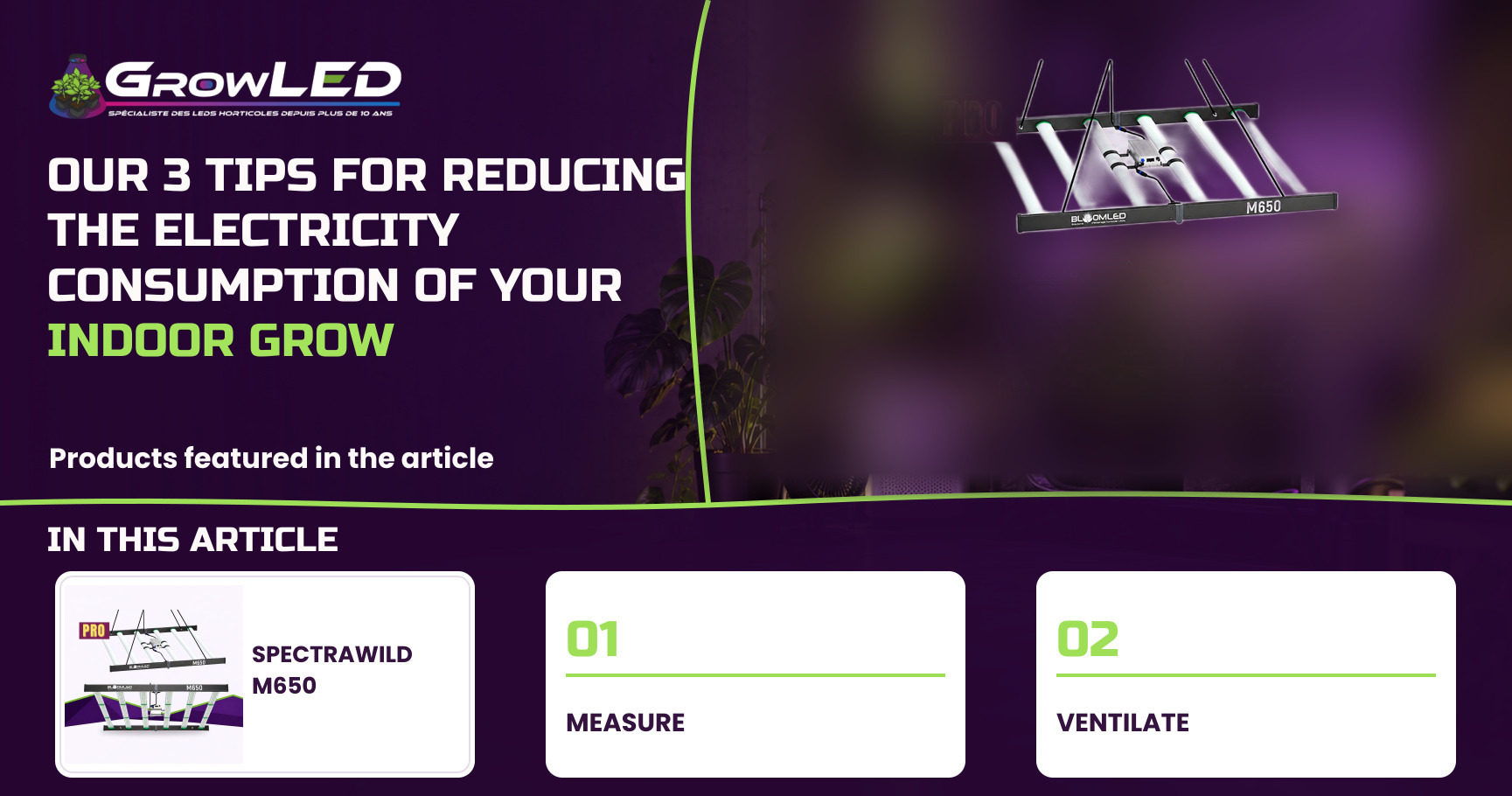
HLG 100 4000K - LED horticultural panel - Samsung LM301H LEDs - Delivered with…
In stock · Shipped within 24 h
241,08 € or 3× 80,36 €

Product successfully added to your shopping cart
Ça pousse dans le bon sens

6 products
The HLG Standard Range from Horticulture Lighting Group is the benchmark in horticultural LED lighting. These panels use the famous Quantum Board technology that has been a game-changer in the world of indoor cultivation. With their high-efficiency white spectrum and formidable energy efficiency, these LED lights offer performance that rivals the best HPS setups, but with much more reasonable power consumption.
Frankly, when you see the results achieved with these panels, you understand why so many growers have made the switch. The light is uniform, heat dissipation is controlled, and plants love this full spectrum that boosts both growth and flowering.
First, let's talk about energy efficiency. HLG panels easily reach 2.5 µmol/J, which places this range among the most efficient on the market. Concretely, this means more useful light for your plants with fewer watts consumed. The HLG 65 V2 - Horticultural LED Lamp - 4000K perfectly illustrates this philosophy: 65W of real power for a light output that would make many 100W panels pale in comparison.
Quantum Board technology is what makes all the difference. Instead of having a few high-power LEDs that heat up like crazy, you have hundreds of medium-power LEDs spread across the entire surface. The result? Homogeneous diffusion, fewer hot spots, and a lifespan that easily exceeds 50,000 hours. The Samsung LM301B diodes used in this range are renowned for their reliability and consistent light output over time.
In terms of spectrum, HLG has opted for 4000K, a neutral white that perfectly covers your plants' needs from germination to harvest. No need to change lamps between growth and flowering, which is a win-win for your wallet and ease of use.
The basic rule is about 30-40W per square foot (0.09 m²) for efficient cultivation. For a 60x60cm space, count between 120 and 160W. For an 80x80cm space, aim for 200-250W. These calculations give you a solid base, but don't forget that the height of your space also plays a role. The higher it is, the more power you can use without risking burning your plants.
The HLG standard range offers different wattages to suit all spaces. Pay close attention to the panel's dimensions relative to your grow tent: ideally, you want to cover about 80% of the floor area for optimal light distribution. A panel that's too small in a large space will create shaded areas. Too large, and you'll lose light on the walls.
Also consider your electrical installation. These panels operate on 220V with quality drivers, but check that your installation can handle the load, especially if you plan on using multiple panels. Most models are dimmable, allowing you to adjust the intensity according to the growth phases.
For efficient indoor cultivation, aim for 30 to 40W per square foot (0.09 m²) of growing surface. Specifically, for a 60x60cm (0.36 m²) grow tent, target 120-160W. For an 80x80cm (0.64 m²) space, opt for 200-250W. For a 100x100cm (1 m²) space, go for 300-400W. These values correspond to actual power consumed, not the HPS equivalent often inflated by manufacturers. Remember that you can always dim if it's too intense, but you cannot add power to an undersized panel.
A horticultural LED uses a spectrum specifically designed for photosynthesis, generally between 400 and 700nm (PAR). Classic LEDs prioritize human visual rendering and waste energy on wavelengths useless to plants. Horticultural LEDs also incorporate more deep red (660-730nm) to boost flowering. In terms of construction, they better withstand the heat and humidity of grow spaces. The drivers are more robust and often dimmable. Finally, energy efficiency is optimized: where a classic LED tops out at 1.5 µmol/J, a good horticultural LED easily reaches 2.5-3 µmol/J.
For HLG range LED panels, start at 45-60cm from seedlings, then gradually move closer to 30-40cm during vegetative growth and 25-35cm during flowering. These distances apply to normal power (not dimmed). If you dim to 50%, you can halve these distances. Always monitor your plants: leaves curling upwards = too close, excessive stretching = too far. A lux meter will help: aim for 200-400 PPFD for young plants, 400-600 PPFD during vegetative growth, and 600-900 PPFD during flowering. The leaf temperature should never exceed 28°C.
During the vegetative growth phase, maintain 18 hours of light and 6 hours of darkness (18/6). Some growers go up to 20/4 or even 24/0, but the cost/benefit ratio becomes questionable beyond 18/6. To trigger flowering, switch to 12 hours of light and 12 hours of total darkness (12/12). This darkness must be perfect: even a small light leak can disrupt the cycle. Regularity is crucial: use a quality timer and strictly adhere to the schedule. During flowering, some growers gradually reduce to 11/13 then 10/14 to simulate late autumn and boost maturation.
Absolutely, and it's quite spectacular. A 600W HPS actually consumes 600W plus 10-15% for the ballast, totaling about 660-690W. To achieve the same light output, a quality LED panel like those in the HLG range will only consume 300-350W. Over a 12-week cycle at 12/12 (504 hours), you save approximately 160kWh, or 25-30€ per cycle depending on your electricity rate. Add to that the reduction in air conditioning costs (LEDs generate 3 times less heat), and the savings climb to 40-50€ per cycle. Over several years, this largely offsets the higher initial investment of LEDs.
Available in 2 models
Available in 2 models