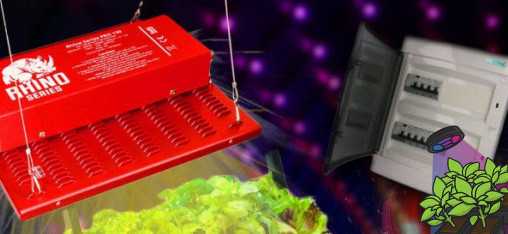
LED Lighting for Seedlings and Cuttings: Start Your Indoor Grows in the Best Conditions
Lighting for seedlings and cuttings is the crucial step for any successful indoor grow. This delicate phase requires specific equipment: an adapted light spectrum, controlled temperature, and optimal humidity. Unlike classic grow lights, seedling lighting prioritizes gentleness and regularity to avoid stressing young plants.
Why Choose Specialized Lighting for Your Seedlings and Cuttings
Young plants have completely different light requirements than adult plants. Lighting that is too powerful will literally burn your seedlings, while an unsuitable spectrum compromises rooting. T5 tubes remain the benchmark with their perfect 6400K spectrum for this phase, but modern full-spectrum LEDs now offer an interesting alternative with approximately 40% reduced consumption.
Temperature plays an equally important role. Frankly, I've seen too many growers fail their cuttings due to negligence on this point. A heating mat keeps the substrate between 20-24°C, the ideal temperature to trigger rooting. This is particularly crucial in winter when ambient temperatures drop.
Propagators with integrated lighting greatly simplify this step. They combine soft light, controlled heat, and humidity maintenance in a single piece of equipment. No more juggling different devices.
How to Choose Your Seedling and Cutting Equipment Well
For lighting, aim for a maximum of 100-200 µmol/m²/s for your seedlings. Beyond that, you risk light stress. 24W T5 tubes perfectly cover a standard 40x60cm tray. If you opt for LED, ensure the spectrum includes blue (400-500nm) and red (600-700nm) in the right proportions.
For heating, a 15-20W mat is more than enough for one tray. Thermostatically controlled models prevent overheating, which can literally cook your nascent roots. Always place a thermometer in the substrate to monitor the actual temperature.
For humidity, aim for 70-80% in your propagator. Too dry and your cuttings will dry out, too humid and it's an open door for fungi. Mini-greenhouses with adjustable ventilation allow you to find the right balance depending on your conditions.
Frequently Asked Questions
Which LED light should I choose for my indoor seedlings and cuttings, T5 or full spectrum?
6400K T5 tubes remain the safest choice for beginners, with their proven spectrum and affordable price. They deliver soft, homogeneous light perfect for this delicate phase. Modern full-spectrum LEDs offer more flexibility with adjustable spectra but are more expensive to purchase. For a beginner, I recommend starting with T5, which is more forgiving of distance or lighting duration errors. LEDs become interesting if you want to optimize consumption in the long term.
How do I install a heating mat under my cutting trays to optimize germination?
Place the heating mat on a flat, stable surface, then place your tray on top without direct contact. Use 2-3cm shims to create an air gap that distributes heat better. Be sure to plug it into a thermostat set between 20-24°C depending on your varieties. Check the substrate temperature with a thermometer, not the ambient air temperature. Even slight overheating can destroy nascent roots in a few hours.
What's the difference between a propagator with light and a simple mini-greenhouse for cuttings?
A propagator with integrated lighting combines everything in one: adapted light, heating, and humidity control in an optimized space. It's more expensive but much more convenient for beginners. A simple mini-greenhouse requires adding lighting and heating separately, which often ends up being more expensive in the long run. However, it offers more flexibility to adapt the equipment to your specific needs. If you're just starting, the all-in-one propagator avoids compatibility errors between equipment.
How to use rooting gel or powder with my indoor plant cuttings?
Cut your cutting at an angle below a node with a clean, disinfected cutter. Immediately dip the base into the gel or roll it in hormone powder for a maximum of 1-2cm. Shake off any excess, as too much hormone paradoxically blocks rooting. Plant immediately in a moist but not soggy substrate, such as rockwool or a peat-perlite mix. Maintain constant humidity without directly watering the stems to prevent rot.
What substrate and humidity maintenance to prevent damping-off under artificial light?
Use a well-draining substrate like a 70/30 peat-perlite mix or coco pellets. Avoid classic heavy soil that retains water and promotes fungi. Water by capillarity by placing water in the saucer rather than on the surface. Maintain 70-80% humidity with gentle ventilation to renew the air. Immediately remove any seedling showing signs of rot to prevent contamination. Damping-off often results from excess humidity combined with poor aeration.