































































01 — Description
Présentation du produit
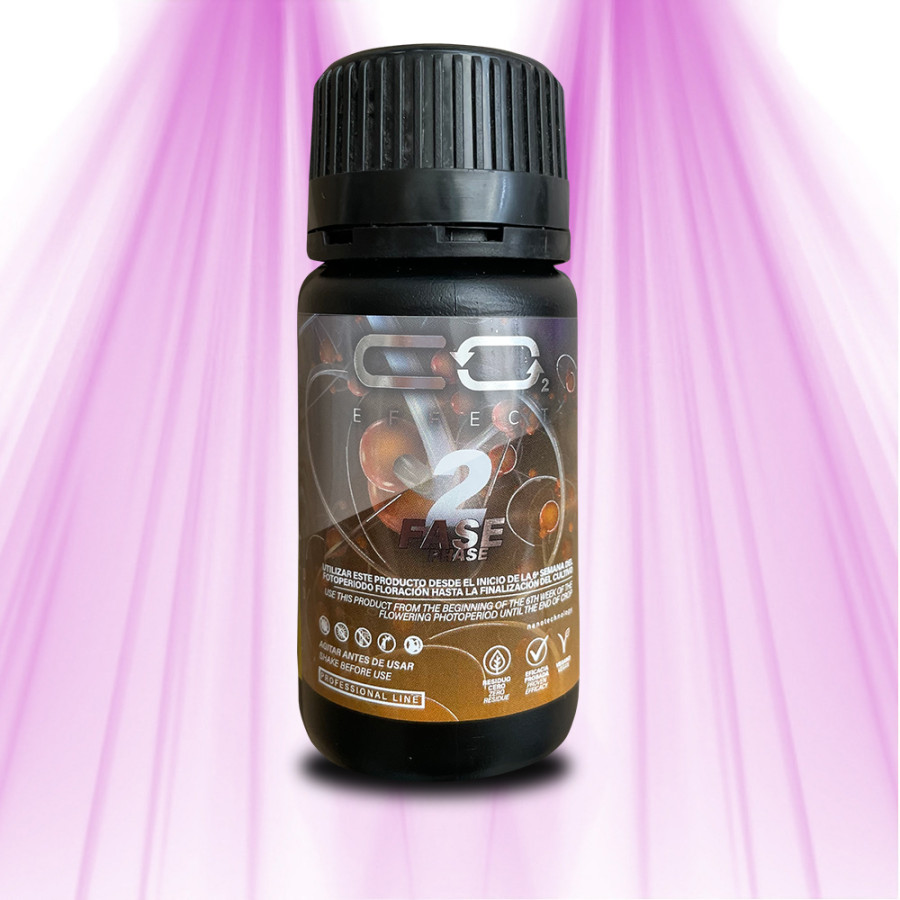
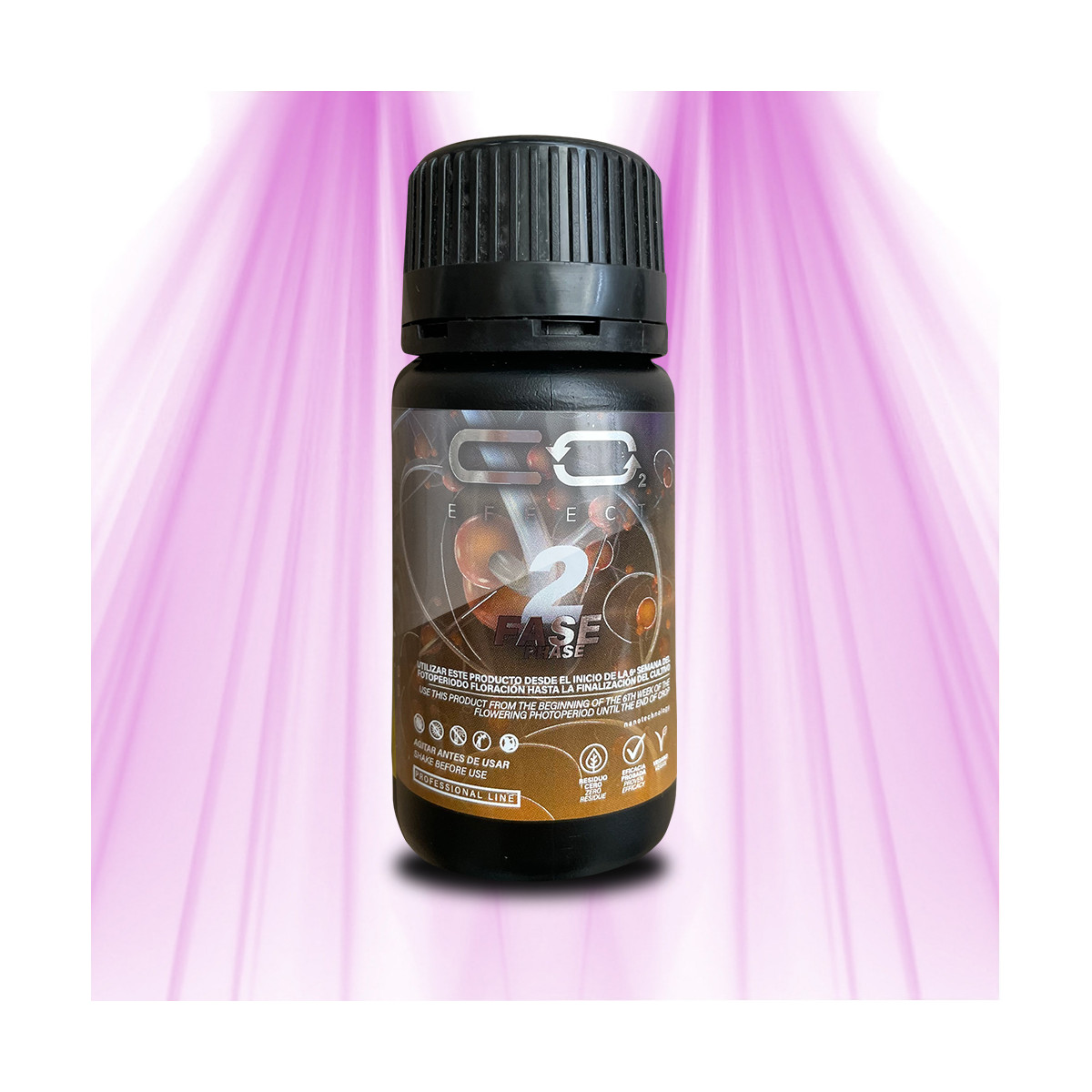
Welcome to a revolutionary era of indoor growing with the Effect Phase 2 CO2 Stimulator. This advancement offers an innovative and effective solution for growers. Our product reinvents traditional carbon fertilization by providing nutrients and energy directly assimilated by your plants.
No need to add CO2 anymore
Does not require stopping the air extraction
No need to increase the temperature
Facilitates humidity control
Presentation of the CO2 Effect Phase 2 Stimulator
The Effect Phase 1 CO2 Stimulator revolutionizes the way plants absorb nutrients, promoting optimal growth. It works at the foliar and root level, ensuring maximum absorption without the need to adjust temperature or humidity.

The advantages of the CO2 Effect Stimulator
- Improved Photosynthesis and Nutrient Absorption : Promotes healthy growth.
- Optimal Climate Control : Maintains a temperature/humidity balance.
- Increased Root Development : Stimulates nutrient absorption.
- Increased Vegetative Vigor : Strengthens growth.
- Improved Flowering and Resin Production : Promotes bud formation.
- Regenerative and Protective Effect : Stimulates tissue regeneration.
- Increased Resistance : Increases the resilience of plants.
Use this booster in soil or hydroponics without problem.
Unique characteristics
- Versatile Application System : Foliar and root use.
- Compatibility with Fertilizers : Works with all ranges of fertilizers.
- Ease of Use : Suitable for all levels of gardening.
- Safety and Efficiency : Respects the environment and plants.
Detailed Instructions for Use
- Prepare a tank with water.
- Add the dose of CO2 Effect Phase 2 according to the week of cultivation.
- Add fertilizer by adjusting the pH between 5.5 and 6.8.
- Perform a weekly foliar treatment until week 5 of flowering.
DOSAGE TABLE FOR THE APPLICATION OF CO₂ EFFECT PHASE 1 AND 2
GROWTH PHOTOPERIOD (18 HOURS OF LIGHT)
- ROOTING: QUANTITY 0.1 ml/liter | EC MAX 0.9 mS PHASE 1
- WEEK 1: QUANTITY 0.2 ml/liter | EC MAX 1.1 mS PHASE 1
- WEEK 2: QUANTITY 0.2 ml/liter | EC MAX 1.4 mS PHASE 1
- WEEK 3: QUANTITY 0.2 ml/liter | EC MAX 1.6 mS PHASE 1
PHOTOPERIOD OF FLOWERING (12 HOURS OF LIGHT)
- WEEK 1: QUANTITY 0.3 ml/liter | EC MAX 1.6 mS PHASE 1
- WEEK 2: QUANTITY 0.5 ml/liter | EC MAX 1.9 mS PHASE 1
- WEEK 3: QUANTITY 0.5 ml/liter | EC MAX 2.2 mS PHASE 1
- WEEK 4: QUANTITY 0.5 ml/liter | EC MAX 2.3 mS PHASE 1
- WEEK 5: QUANTITY 0.5 ml/liter | EC MAX 2.5 mS PHASE 1
- WEEK 4: QUANTITY 0.5 ml/liter | EC MAX 2.8 mS PHASE 1
- WEEK 5: QUANTITY 0.5 ml/liter | EC MAX 2.8 mS PHASE 1
- WEEK 6: QUANTITY 1 ml/liter | EC MAX 2.8 mS PHASE 2
- WEEK 7: QUANTITY 1 ml/liter | EC MAX 2.8 mS PHASE 2
- WEEK 8: QUANTITY 0.5 ml/liter | EC MAX 2.8 mS PHASE 2
- LAST WEEK: QUANTITY 0.5 ml/liter PHASE 2
Manual:
STEP 1: Fill a reservoir with water. STEP 2: Add the recommended dose of CO₂ Effect Phase 1 or Phase 2 depending on the week of cultivation. STEP 3: Integrate fertilizer until you reach the recommended EC for that week, stabilizing the pH between 5.5 and 6.8.
NOTE: Perform a foliar treatment with CO₂ Effect Phase 1 every week until week 5 of flowering.
WARNING: Maximum recommended EC depends on plant tolerance, monitor their response and adjust if necessary.
NOTE: Do periodic root washes.
Questions about this product
- Q: Is CO2 Effect Phase 1 suitable for all indoor plants?
Yes, it benefits a wide range of indoor plants. - Q: How does this product affect my grow environment?
It improves the environment by stabilizing temperature and humidity, essential for healthy growth. - Q: Should I take any special precautions when using this product?
Always follow instructions and ensure pH and EC remain within recommended ranges.
03 — Avis clients
Customer reviews
Comments All reviews
04 — Questions sur ce produit
Product questions
Your questions about this product
- Hello, could you please specify if the Booster CO2 Effect Phase 2 requires a specific adjustment of pH or EC when I use it in hydroponics with organic fertilizers?The Booster CO2 Effect Phase 2 used in hydroponics with organic fertilizers indeed requires a specific adjustment of pH and EC. It is recommended to stabilize the pH between 5.5 and 6.8, and to adjust the EC according to the week of cultivation to respect the limits, generally around 1.6 to 1.9 mS/cm at the beginning. This precise control optimizes nutrient absorption and the effectiveness of the booster.
- Can the CO2 Effect Booster Phase 2 be used throughout the entire flowering period without the risk of overdose or phytotoxicity?It is entirely possible to use the CO2 Effect Booster Phase 2 throughout the entire flowering period, provided that the EC (electrical conductivity) and the pH are closely monitored. It is recommended to maintain a stable pH between 5.5 and 6.8, and to adjust the EC according to the growth phase, generally around 1.6 to 1.9 mS/cm at the beginning.
Be sure to closely observe your plants for any signs of stress or phytotoxicity, and perform regular root washes to limit the risks associated with overdose. This careful management ensures safe and effective use of the booster throughout the flowering period. - What specific impact on the substrate EC and pH rebalancing should we anticipate when integrating CO2 Effect Phase 2 to avoid over-fertilization in the final weeks of flowering?
The integration of the CO2 Effect Booster - Phase 2 at the end of flowering strongly stimulates photosynthesis, which increases nutrient absorption and can quickly raise the substrate EC. This rise in EC signals a risk of over-fertilization if excess nutrients accumulate. Therefore, it is essential to regularly monitor the EC and adjust the fertilizer doses accordingly, reducing them if necessary.
Furthermore, the acidification of the substrate induced by dissolved CO2 requires a frequent pH adjustment, ideally between 5.8 and 6.3, to ensure good availability of nutrients during this sensitive phase.
Finally, to avoid any excess, targeted rinsing of the substrate is recommended if the EC exceeds optimal thresholds, in order to preserve root health and flowering quality.
- What is the expected difference in results between foliar and root application of the CO2 Effect - Phase 2 to optimize growth without increasing heat or disturbing the internal climate?
The CO2 Effect Booster - Phase 2 works effectively without increasing temperature or disturbing the internal climate. In foliar application, it promotes rapid nutrient absorption directly through the leaves, immediately boosting photosynthesis for dynamic growth without thermal impact. In root application, it stimulates the health and growth of the root system, ensuring sustainable nutrient uptake while maintaining a stable environment. This dual approach optimizes growth without the need to adjust humidity or temperature in the cultivation.
- Can the CO2 Effect Phase 2 booster really replace traditional CO2 supply without changes in temperature or humidity, and what are the real yield gains to expect from an initial indoor crop?
The CO2 Effect Booster - Phase 2 is an innovative stimulator that optimizes CO2 absorption directly at the leaf and root level, without requiring any changes in temperature or humidity in your growing space. Unlike traditional CO2 supplementation methods, it simplifies climate management.
Regarding yield gains during an initial indoor crop, while specific data is lacking, one can reasonably expect a significant improvement in growth and production, often estimated between 20 and 30%, which corresponds to the benefits generally observed with well-managed traditional CO2 supplementation.
This product thus represents a practical and effective alternative for those looking to increase their yields without technical complications related to environmental control.
- What precise adjustments should be made to the CO2 Effect Phase 2 dosing according to the transition between growth and flowering for optimal differentiated management?
For optimal differentiated management of the CO2 Effect Booster - Phase 2, the dosage must adapt to each phase:
- In growth, apply a sustained dosage to stimulate photosynthesis and vegetative growth, maintaining a pH between 5.5 and 6.8 for optimal absorption.
- During the transition to flowering, maintain this dosage to encourage bud formation and quality, where CO2 remains crucial.
- At the end of flowering, it is advisable to gradually reduce or stop the CO2 supply about two weeks before harvest, as its effectiveness may decrease or become counterproductive.
Remember to also adjust the electrical conductivity (EC) to avoid any stress related to overdosing. This precise approach maximizes the potential of your plants according to their specific needs at each stage.
- What automated management do you recommend for adjusting pH and EC when using the Booster CO2 Effect Phase 2 to optimize growth without the risk of overdose?
To optimize the use of Booster CO2 Effect - Phase 2 without the risk of overdose, we recommend an integrated automated management of pH and EC:
- Automated dosing system to precisely deliver the Booster and fertilizers, ensuring a stable concentration.
- Automatic pH regulation to maintain an optimal pH between 5.5 and 6.8, thanks to continuous monitoring and adjustment.
- Automated EC control to adjust electrical conductivity according to the needs of each growth phase, thus avoiding any nutrient excess.
- Integration into a monitoring network to track parameters in real-time and respond quickly to any fluctuations.
This approach ensures vigorous growth while maintaining a balanced and stress-free nutrient environment for your plants.
- Does this CO2 Effect Booster Phase 2 really deliver on its promises regarding yield gain compared to a classic CO2 input indoors? And concerning side effects on the root system, what feedback do you have from users?The CO2 Effect Booster - Phase 2 offers an estimated yield increase of 20 to 30%, comparable to a classic CO2 input indoors, but without the usual constraints of temperature and humidity regulation. Its specificity lies in a direct action both foliar and root, effectively improving photosynthesis and nutrient assimilation.
Regarding the root system, this nanoparticle stimulator promotes healthy growth and better sap circulation, without causing stress or toxicity. User feedback, although limited, reports no negative side effects, and the product is compatible with both soil and hydroponic cultivation.
In summary, this booster is an innovative solution that simplifies cultivation management while promoting optimal yield and a vigorous root system.
- how to integrate the CO2 Effect Booster Phase 2 into a crop rotation with two different varieties in parallel to optimize growth without risk of imbalance in pH and EC
To integrate the CO2 Effect Booster - Phase 2 into a rotation with two different varieties, it is essential to customize the supply according to the distinct needs of each plant while closely monitoring pH and EC.
Start by preparing your tank by adding the recommended dosage of the booster suitable for the week of cultivation. Complete with a fertilizer to achieve the ideal EC while maintaining a stable pH between 5.5 and 6.8. This base ensures a balanced nutritional environment.
For both varieties, respect their specific photoperiods (for example, 18h light during growth, 12h during flowering) to synchronize their development. The weekly foliar treatment with CO2 Effect Phase 1 up to 5 weeks of flowering will enhance absorption and growth.
Finally, keep in mind the physiological differences (C3/C4): adjust irrigation and nutrition according to the particular needs of each variety to avoid any imbalance. Regular monitoring of pH and EC is the key to securing stress-free growth.
This method will allow you to optimize photosynthesis and the overall health of your plants using the CO2 Booster while maintaining a perfect balance in your system.
- how to integrate this CO2 Effect Booster Phase 2 into an automated hydroponic system without disturbing the pH and EC parameters?
To integrate the CO2 Effect Booster - Phase 2 into your automated hydroponic system without disturbing the pH and EC, it is essential to add it directly to the water reservoir while adhering to the recommended dosages according to the growth phase. After adding, it is imperative to adjust and stabilize the pH between 5.5 and 6.8 as well as the EC to the value suitable for your crop.
The product is perfectly compatible with organic nutrients and does not require any change in temperature, humidity, or interruption of ventilation, making its integration into an automated installation much easier. To ensure good homogeneity, ensure effective circulation or agitation of the nutrient solution.
We advise using automated sensors for real-time monitoring of pH and EC to adjust your parameters quickly. Lastly, always start with progressive doses to observe your plants' reaction and stabilize your settings.
- What is the ideal frequency for foliar treatment with CO2 Effect Phase 2 after week 5 of flowering to maximize growth without risking overdose?
For CO2 Effect Booster - Phase 2, after week 5 of flowering, a foliar application about once a week is ideal. This frequency allows for optimizing growth without risking overdose, especially if you monitor the electrical conductivity (EC) of your nutrient solution.
It is important to maintain a pH between 5.5 and 6 when preparing, and to preserve a stable climate without temperature spikes or excessive humidity to avoid plant stress and fungal diseases. This routine ensures rapid and effective absorption by the leaves while maintaining the necessary balance for the plant.
- What are the actual observed benefits of the CO2 Effect Booster Phase 2 in mixed cultivation with several varieties in the same space, and how to adjust the dosage to optimize growth without the risk of over-fertilization?
The CO2 Effect Booster - Phase 2 enhances photosynthesis by promoting the assimilation of CO2 directly at the level of the leaves and roots, which stimulates growth without altering temperature or humidity. In mixed cultivation, this product supports root health and sap circulation, minimizing stress for all present varieties. You will often notice a yield increase of 20 to 30% due to this natural stimulation.
For optimized dosage without the risk of over-fertilization, the product must be adapted according to the growth phase and the cycle duration. Pour the booster into your water volume before adding fertilizers, then adjust the electrical conductivity (EC) to the currently recommended value. Remember to keep the pH between 5.5 and 6.8 for optimal absorption, ensuring harmonious and stress-free growth.
- How do you integrate the CO2 Effect Booster Phase 2 into an existing nutrient and climate control automation to optimize growth without adjusting temperature or humidity?
The CO2 Effect Booster - Phase 2 seamlessly integrates into your existing automation system without requiring any modifications to temperature or humidity. It acts as a biochemical amplifier, simultaneously enhancing CO2 absorption at both leaf and root levels, stimulating photosynthesis and growth.
To use it effectively, simply schedule its application in conjunction with nutrient supply, either through foliar spraying or irrigation, without impacting climate sensors or their regulation. This way, you optimize growth and nutritional efficiency without creating stress related to climate conditions.
This booster can significantly increase yield (up to 20-30%) while simplifying climate management, making it an ideal solution to maximize indoor production with your existing automation in place.
- What is the precise EC variation associated with the use of CO2 Effect Phase 2 during the last weeks of flowering and its direct impact on yield in g/watt?
The CO2 Effect Booster - Phase 2 facilitates better CO2 absorption without climate alteration, requiring precise EC adjustment during the last weeks of flowering to avoid any nutritional stress. Although no exact numerical value for EC is provided for this phase, fine-tuning is crucial to optimize growth.
Regarding the yield in grams per watt, this booster generally enables an increase of 20 to 30% compared to a crop without CO2 supplementation, reflecting a direct improvement in photosynthetic efficiency during flowering.
Thus, careful management of EC combined with this booster supports maximum growth and better productivity, without a specific figure but with a clearly positive impact on overall indoor yield.
- what is the precise impact of the CO2 effect booster phase 2 on humidity management in indoor cultivation and how does it optimize yield without increasing temperature
The CO2 Effect Booster – Phase 2 directly acts on the regulation of humidity in the cultivation zone, improving leaf and root nutrient absorption. This naturally stabilizes the microclimate without needing to stop air extraction or increase temperature, unlike traditional CO2 enrichment methods that tend to raise humidity and heat, promoting mold and stress.
Through effective stimulation of photosynthesis, this booster promotes robust root growth allowing plants to utilize water and nutrients more efficiently. Yield thus increases without the need to raise ambient temperature, preserving optimal thermal conditions and a healthy environment.
In summary, this product optimizes humidity management and plant growth indoors, maximizing potential without the usual drawbacks associated with traditional CO2 enrichment.
- Can the CO2 Effect Phase 2 booster lead to the risk of over-fertilization if I do not exactly follow the indicated doses, especially at the end of flowering?
The CO2 Effect Booster - Phase 2 can indeed pose a risk of over-fertilization if the doses are not respected, especially towards the end of flowering. This product greatly stimulates photosynthesis, which amplifies nutrient absorption and can quickly raise the electrical conductivity (EC) of the substrate.
It is therefore crucial to regularly monitor the EC and, in case of high values, to reduce the fertilizer input. Furthermore, dissolved CO2 can acidify the substrate, requiring a frequent adjustment of the pH, ideally between 5.8 and 6.3. Targeted flushing of the substrate may also be necessary to avoid excessive nutrient accumulation and to preserve root health.
In summary, careful management of dosage, pH, and EC is essential with this booster to maximize positive effects without compromising the crop.
- How to integrate CO2 Effect Phase 2 into an automated irrigation system without the risk of overdosing or pH imbalance?
To integrate the CO2 Effect Booster – Phase 2 into an automated irrigation system without the risk of overdosing or pH imbalance, it is essential to start with a progressive dosage suited to the growth phase of your plants. Pair this with automated pH and electrical conductivity (EC) control to monitor and adjust nutrient parameters in real time, thereby avoiding any stress or imbalance.
This booster acts both at the foliar and root levels without influencing temperature or humidity, thus limiting the risks associated with traditional CO₂ addition. It is perfectly suitable for both soil and hydroponic systems, facilitating its integration into your setup.
A rigorous and progressive management of the product, coupled with continuous monitoring of pH and EC, ensures optimal and respectful use of your crop.
- Is the CO2 Effect Booster Phase 2 compatible with LED cultivation in SCROG and does it impact the ideal light intensity?
The CO2 Effect Booster - Phase 2 is fully compatible with LED cultivation in SCROG. It works by stimulating CO2 absorption at the leaf and root levels, promoting photosynthesis without altering the temperature or humidity of the environment. Your climate control system and sensors will not be affected.
Regarding light intensity, this booster has no direct effect on the power or quality of the light emitted by your LEDs. By optimizing CO2 usage, it allows for better photosynthetic efficiency and can enhance yield without the need to modify the recommended lighting.
To make the most of the product, ensure that you maintain a pH between 5.5 and 6.8 as well as suitable electrical conductivity. This way, your plants can fully benefit from this stimulator in a SCROG environment under LEDs.


