




































































Water master
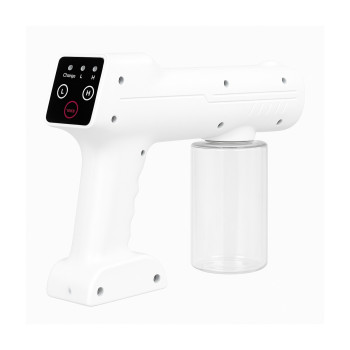
Water Master Spray Gun – Precision Watering for Indoor LED Growing
In stock · Shipped within 24 h
38,40 €

Product successfully added to your shopping cart
Ça pousse dans le bon sens

1 product
Spraying in indoor cultivation is much more than just watering your plants. With a good professional sprayer, you control foliar humidity, apply preventive treatments, and nourish your plants through their leaves with surgical precision. In a closed environment where every action counts, having the right spraying equipment makes all the difference between a struggling crop and one that thrives.
Frankly, the difference between a garden center sprayer and a true professional sprayer is immediately apparent. First, the fineness of the spray: a professional nozzle produces droplets of 50 to 100 microns, perfect for optimal foliar absorption. Then, the consistency of the flow: when you're treating 20 or 30 plants, you want the pressure to remain constant from start to finish.
Pro models also offer better chemical resistance. Your foliar fertilizers, your preventive solutions, sometimes they're tough on pH. A low-end sprayer will degrade quickly, while a professional model will handle it without a hitch. And then there's ergonomics: after 15 minutes of spraying, your wrist will thank you for choosing a balanced model with a comfortable trigger.
Capacity is the first criterion. For an 80x80cm grow tent with 4-6 plants, a 1-liter sprayer is more than enough. But if you're managing multiple tents or a larger space, go straight for 2-3 liters. You'll avoid constant trips to refill.
The nozzle makes all the difference. Adjustable nozzles allow you to adapt the spray pattern to your needs: fine for foliar spraying, wider for humidifying the ambient air. Some models offer interchangeable nozzles, which is practical when you alternate between different types of treatments. Pressure also matters: manual pump models give you more control, while continuous pressure versions make long sessions easier.
For indoor use, prioritize models with a long hose or a telescopic wand. This allows you to reach the center of your plants without contorting yourself, especially as they grow taller. And think about the materials: stainless steel or food-grade plastic resist acidic or basic products better.
For a confined space with multiple plants, opt for a 1.5 to 2-liter sprayer with a fine, angled wand. The wand allows you to reach the underside of the leaves without damaging branches, which is crucial when plants are close together. Choose a model with an adjustable nozzle to adapt the spray pattern to the foliage density. Continuous pressure sprayers avoid constant pumping, which is practical when you need to maneuver in a tight space.
Always spray with the lights off or at the beginning/end of the light cycle. Water droplets act like magnifying glasses under LEDs or HPS and can cause foliar burns. Wait at least 30 minutes after lights out before spraying, allowing the leaves to cool down. If you absolutely must treat during the cycle, lower the light intensity to 30-40% for 2-3 hours after spraying. Use room temperature water, never cold water on warm plants.
For foliar spraying, aim for droplets between 50 and 150 microns with a fine, adjustable nozzle. Too fine (less than 30 microns) and it evaporates before reaching the plant. Too coarse (more than 200 microns) and it runs off without penetrating. Most professional nozzles have gradual adjustment: a fine setting for young plants, medium for growing plants, wider for humidifying the ambient air. Always test on one leaf before treating the entire plant.
Rinse immediately after each use, especially with fertilizers or treatments. Fill with clean water, shake, and spray to clean the entire circuit. For a deep clean, use a solution of warm water and white vinegar (10%) once a week. Disassemble the nozzle and soak it for 30 minutes to dissolve limescale residues. Always store empty and open to prevent mold. Change the seals as soon as they harden, usually every 6-12 months depending on use.
Avoid spraying with the exhaust fan running, as it disperses the product and reduces its effectiveness. Turn off ventilation 15 minutes before and after spraying to allow time for the leaves to absorb. However, keep circulation fans running at low speed: this prevents humidity stagnation that promotes fungi. If your setup does not allow you to turn off the exhaust, reduce it to a minimum and spray in sections, starting from the back of the tent. Restart normal ventilation 30-45 minutes after treatment.
Help & advice
About Pulvérisation — click a question to see the answer.
To choose a professional sprayer, I advise you to consider several criteria. First, the tank capacity must match the size of your space and the frequency of use. Next, the quality of materials is essential to resist phytosanitary products and foliar fertilizers. Finally, the fineness of the spray is crucial for homogeneous application without excessively large droplets.
In practice, the main difference lies in how pressure is generated. A manual sprayer requires continuous action on a trigger to spray, which can be tiring for large areas. A pump sprayer, on the other hand, is manually pressurized once for several minutes of spraying, offering significantly greater user comfort for larger volumes. I often recommend the pump model for medium to large indoor grows.
A sprayer in indoor cultivation is a versatile tool. It is mainly used to regulate foliar humidity, which is crucial for certain growth phases. I also use it for applying preventive treatments against pests or diseases, as well as for foliar nutrition, by delivering nutrients directly through the leaves. It's a precise action that makes a real difference.
The size of the sprayer really depends on the area of your cultivation. For a small space, say less than a square meter, a 1 to 2-liter model is amply sufficient. For larger areas, between 2 and 5 square meters, I would lean more towards a 5-liter pre-pressurized sprayer. Beyond that, a backpack or battery-powered sprayer might be more comfortable, but it's less common indoors.
The ideal time to spray your indoor plants is generally early morning or late in the day, when the lights are less intense or off. This helps prevent the magnifying glass effect that could burn the leaves and ensures better absorption of products. I absolutely avoid spraying during intense light cycles.
What I often see as mistakes is spraying in full light, which can cause burns on the leaves. You should also avoid overdosing products, as this can stress the plant. Another mistake is not spraying the underside of the leaves, even though that's where stomata and pests are often found. Finally, make sure your solution is well mixed for homogeneous application.
That's an excellent question, as humidity is a key factor indoors. To spray without significantly increasing ambient humidity, I advise you to use a sprayer that produces a very fine mist. Spray just before the lights go out or during the dark period, and make sure you have good ventilation in place to help dissipate excess humidity quickly. Targeted and non-excessive spraying is also paramount.
For foliar application, I strongly recommend a nozzle that produces a very fine and homogeneous mist. This is crucial for uniformly covering the leaf surface without creating large drops that could run off or burn the plant. Some professional sprayers come with adjustable nozzles, which is ideal for adapting the fineness of the spray to your specific needs.
Cannot find your answer? 01 88 33 45 52 or by message.


