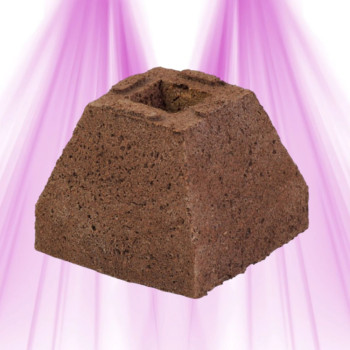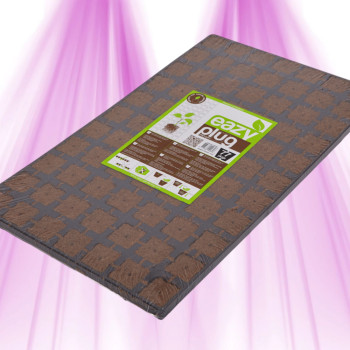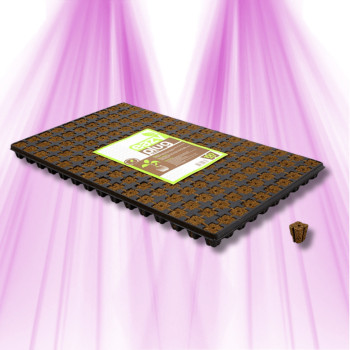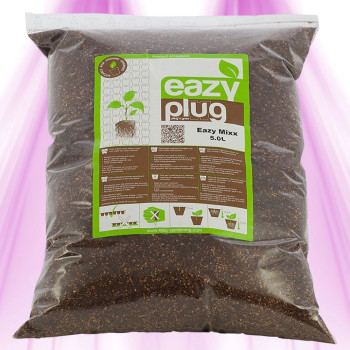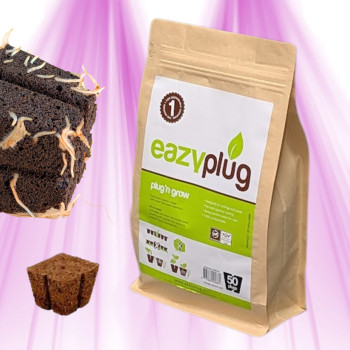


































































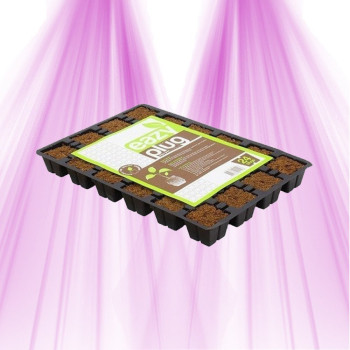







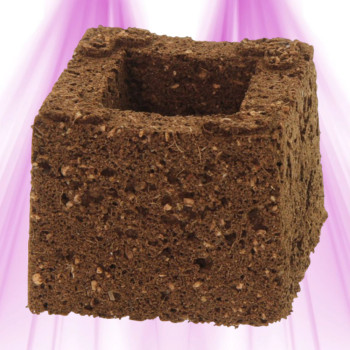
Eazy Plug - Coco Cube - Ideal for Germination and Seedling - 7.5x7.5x6cm
In stock · Shipped within 24 h
1,99 €

Product successfully added to your shopping cart
Ça pousse dans le bon sens

9 products
Cloning substrates and specialized substrates are the foundation of any successful indoor grow. Whether you're starting cuttings, preparing seedlings, or looking to improve the drainage of your mixes, these technical materials offer unique properties that classic soil cannot provide. Each substrate has its specific characteristics: water retention, aeration, neutral pH, rooting capacity.
In an indoor growing setup, mastering these substrates makes the difference between plants that merely survive and crops that truly thrive. Rock wool excels for hydroponics, perlite improves drainage, vermiculite retains moisture, and coco cubes offer a perfect balance for cloning.
Frankly, using adapted substrates completely changes the game. Rock wool, for example, maintains a 95/5% air/water ratio that promotes explosive root development. Its neutral pH (6.5-7) prevents nutrient lockouts often found with poorly balanced potting soils.
Perlite, those small white volcanic beads, improves drainage by 40% compared to standard potting soil. Mixed at 20-30% into your substrates, it prevents compaction and root asphyxiation. This is particularly crucial in small volume pots where every cubic centimeter counts.
For cloning, peat cubes and rock wool plugs maintain the constant humidity necessary for rooting. The success rate easily increases from 60% with artisanal methods to over 90% with these technical supports.
The choice depends on your growing method and your objectives. For pure hydroponics, opt for rock wool in 7.5x7.5cm cubes or slabs. Its fibrous structure retains just enough water without saturating the roots.
If you're growing in soil, vermiculite (2-3mm granulometry) improves the water retention of your mixes. Count on 10-15% of the total volume. Conversely, perlite (2-5mm grade) lightens heavy substrates and improves root oxygenation.
For cloning specifically, 3x3cm or 4x4cm peat cubes offer the best compromise. Their slightly acidic pH (5.5-6) stimulates rooting, and their structure gradually decomposes without shocking young roots during transplanting.
Coco fiber, often overlooked, has an excellent carbon/nitrogen ratio and a water retention capacity of 8-10 times its dry weight. Perfect for homemade mixes or as an amendment in your existing potting soils.
Absolutely, it's even crucial. Rock wool comes out of the factory with a pH often above 8, which blocks nutrient assimilation. Soak your cubes for 24 hours in a pH 5.5-6 solution before use. This pre-treatment stabilizes the pH and removes residual dust that can clog irrigation systems. Once rinsed, rock wool maintains a stable pH throughout the grow cycle.
These two expanded minerals have opposing but complementary roles. Perlite improves drainage and aeration thanks to its porous structure that does not retain water. It lightens heavy substrates and prevents compaction. Vermiculite, on the contrary, absorbs and retains water like a sponge while gradually releasing potassium and magnesium. In practice, mix 20% perlite to improve drainage, or 10-15% vermiculite to increase water retention.
It depends on the type of substrate. Rock wool degrades after 2-3 cycles and accumulates salts, so it's best to replace it. Perlite, on the other hand, is almost indestructible: a good rinse with clear water between each grow is enough, you can easily reuse it 5-6 times. Vermiculite compacts over time and loses its properties after a maximum of 2 cycles. Peat cubes are single-use as they decompose naturally.
It's even recommended to create custom mixes! A classic mix: 40% basic potting soil, 30% coco fiber, 20% perlite, and 10% vermiculite provides a balanced substrate for most crops. For cloning, try 50% blonde peat, 30% fine vermiculite, and 20% fine perlite. The important thing is to test the final pH of the mix and adjust if necessary. These homemade mixes often cost 30-40% less than ready-made substrates.
Sterilization eliminates fungi, bacteria, and pests that can ruin your crops. For small quantities, 15 minutes in the oven at 80°C is sufficient – be careful not to exceed this temperature, which would destroy the properties of some substrates. Boiling water also works: pour it over the substrate, mix, and let it cool. For large volumes, a pressure cooker remains the most effective method: 20 minutes at 120°C. Perlite and vermiculite tolerate these treatments well, unlike organic substrates which can lose their nutrients.
Help & advice
About Substrats divers/bouturage — click a question to see the answer.
To choose the best substrate, I advise you to first define your objectives: cuttings, seedlings, full growth cultivation, or drainage improvement. Each substrate has its strengths. For example, for seedlings and cuttings, I often prefer very fine and aerated substrates. If you're a beginner, a ready-to-use mix can be an excellent option to simplify things.
The difference is significant! Coco coir is an inert substrate, meaning it contains no nutrients by itself. It excels in its ability to retain water while ensuring excellent root aeration. Soil, or potting mix, is a living substrate that contains nutrients and microfauna. In practice, coco coir requires more precise management of nutrient inputs but offers total control over the root environment, which I particularly appreciate in intensive indoor cultivation. I've also written an article on peat alternatives that addresses this topic: Stop peat: discover the 4 best ecological substrates for an explosive indoor grow.
A rooting substrate is specifically designed to promote rapid and healthy rooting of your young shoots. It is generally very light, aerated, and retains just the right amount of moisture. I use it by filling small pots or rockwool cubes, then carefully inserting the cutting after optionally dipping it in a rooting gel. The goal is to create a stable and humid environment for the first roots, without excess water that could cause rot.
For excellent drainage and optimal aeration, I often turn to substrates like perlite, vermiculite, or coco coir. Perlite, with its porous structure, is fantastic for lightening a mix and improving airflow around the roots. Coco coir offers a good balance between water retention and aeration. I even recommend mixing them with potting soil if you want to create a perfectly balanced homemade substrate. This is a crucial point to avoid root asphyxiation, a mistake I unfortunately see too often.
The most common mistake, in my experience, is to underestimate the importance of drainage and aeration. A substrate that is too compact or retains too much water will suffocate the roots, leading to growth problems and diseases. I also often see beginners using classic garden soil, which is too heavy for potted cultivation. You should favor light and well-structured substrates, adapted to the constraints of indoor cultivation.
Rockwool and coco coir are both inert and popular substrates in hydroponics, but they have distinct characteristics. Rockwool is a mineral material, made from molten volcanic rock, offering excellent water retention and constant aeration. It is often used for starting seedlings and cuttings in cubes. Coco coir, on the other hand, is an organic product derived from coconut husks, with a more fibrous structure and natural buffering capacity. I find that coco coir is more forgiving for beginners because it tolerates watering mistakes better, while rockwool requires more precise management of nutrients and moisture.
To improve your substrate's water retention, I mainly recommend vermiculite or coco coir. Vermiculite is a mineral that acts like a sponge, absorbing water and gradually releasing it to the roots. Coco coir also has excellent water retention capacity while maintaining good aeration. I often incorporate them into mixes for plants that need more constant moisture, or to reduce watering frequency.
Cannot find your answer? 01 88 33 45 52 or by message.