








































































Stal plast
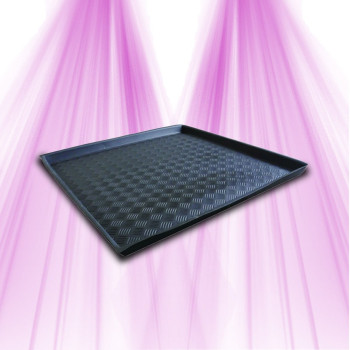
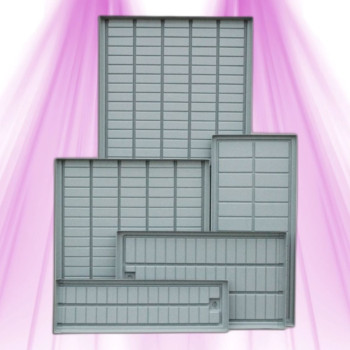
Stal Plast Grow Tray without Drainage - 10 Sizes
Available in several options
54,90 € or 3× 18,30 €

Product successfully added to your shopping cart
Ça pousse dans le bon sens

3 products
Help & advice
About Growing trays — click a question to see the answer.
As an expert, I can tell you that grow trays are versatile and essential tools for any indoor cultivation. They primarily serve to contain excess irrigation water, thereby protecting your surfaces and preventing damage. But that's not all! I also use them for repotting, transporting my plants, or even as a stable base for my pots.
Choosing a suitable tray primarily depends on your growing space. I recommend precisely measuring the available surface and choosing a tray that fits perfectly, without leaving too much wasted space. Also, consider the height of the edges: the higher they are, the more water they can hold, which is practical for abundant watering or during prolonged absences.
For size, I always advise choosing a tray slightly larger than the area occupied by your pots. This allows for efficient collection of runoff water. If you have a grow tent, opt for a tray that covers almost the entire base. For shelf cultivation, measure each level and choose trays that fit best, even if it means using several small ones rather than one large one.
That's an excellent question I often encounter! A grow tray is a simple water retention surface, usually flat or slightly sloped. A flood table, on the other hand, is a more sophisticated system designed specifically for hydroponics or ebb and flow irrigation. It is often equipped with fittings for nutrient solution inflow and outflow, allowing for an automatic flood and drain cycle. The tray is passive, the flood table is active.
For repotting, the grow tray is a valuable ally! I place it under my workspace and perform all operations (removing the plant, adding new substrate) directly over it. This allows me to collect all the falling soil, thus avoiding making a mess and wasting substrate. Once repotting is finished, I can easily empty the residues into a bag or reuse them if the substrate is still clean. If you are looking for alternatives to potting soil, I explain more in detail in this article.
The most common mistake I see is letting water stagnate for too long in the tray. This creates an environment conducive to the development of diseases and pests. I recommend emptying excess water after each watering. Another mistake is not cleaning your tray regularly, which can lead to the accumulation of mineral salts and organic residues. Finally, do not underestimate the solidity: a tray that is too thin can crack under the weight of the pots.
For indoor watering, I prefer trays with sufficiently high edges to contain all the drainage from my pots, even after a heavy watering. Color is also a criterion: a light-colored tray can help reflect light towards the bottom of the plants, while a black tray absorbs more heat. I often choose trays made of ABS plastic or polypropylene for their durability and ease of cleaning.
Yes, absolutely! Grow trays are very suitable for hydroponics, especially for table-top growing systems or drip systems where excess nutrient solution needs to be collected. They can serve as a base for your pots or inert substrate blocks, collecting the drain and returning it to the reservoir or to drainage. However, for more complex systems like NFT or deep water culture (DWC), specific tanks are generally preferable.
Regular cleaning is crucial to prevent pests and diseases. I clean my trays after each growing cycle, or more frequently if I see deposits. I use hot soapy water and a brush to scrub thoroughly, then rinse abundantly. For more thorough disinfection, a diluted solution of bleach or hydrogen peroxide can be used, always followed by a meticulous rinse. A clean tray is the first line of defense against many problems!
Cannot find your answer? 01 88 33 45 52 or by message.