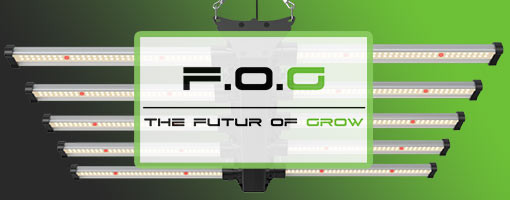
Discover the Future of Grow (FOG) Range on GrowLED
Introduction
The Future of Grow (FOG) range, available on GrowLED , is the ideal solution for growers looking for efficient and durable LED lighting. Designed to optimize plant growth, this range combines advanced technology and energy efficiency.
Why choose Future of Grow?
FOG products are distinguished by their high quality and innovative features:
- Energy efficiency : Reduction in electricity consumption.
- Customizable light spectrum : Adapted to different stages of plant growth.
- Durability : Robust materials for a long service life.
- Ease of use : Simple installation and use for all levels.
The flagship products of the range
BLACK SERIES 320W with dimmer - Future Of Grow - FOG
Optimal for medium-sized growing spaces, this lamp offers full spectrum and reduced consumption. Discover the BLACK SERIE 320W with dimmer
BLACK SERIES 400W with dimmer - Future Of Grow - FOG
Suitable for large areas, this lamp guarantees intense light penetration and effective cooling. Discover the BLACK SERIE 400W with dimmer
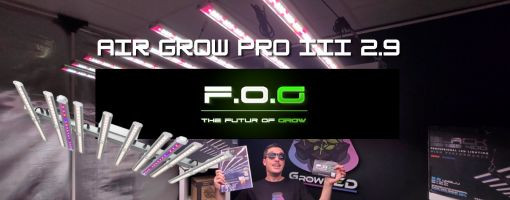
AIR GROW PRO III 2.95 Hyper Red + Dimmer 600W - FOG
Ideal for intensive crops, this full spectrum LED lamp promotes vigorous growth and abundant flowering. Discover the AIR GROW PRO III 2.95 Hyper Red + Dimmer
UVA / UVB / Infrared bars
These light bars complement installations by providing the wavelengths needed to maximize photosynthesis.
Advantages of FOG lamps
- Optimized growth : Light spectrum adjusted for better photosynthesis.
- Energy savings : Significant reduction in electricity costs.
- Respect for the environment : Less heat and ecological impact.
- Longevity : Extended lifespan of LEDs, reducing frequent replacements.
FOG Product FAQs
Q: Are FOG lamps suitable for all plants? A: Yes, they are suitable for a wide variety of plants, including vegetables, herbs, flowers and medicinal plants.
Q: How to install FOG lamps? A: Installation is simple with the included user manual and included accessories.
Q: What is the warranty on FOG products? A: FOG lamps are backed by a comprehensive warranty to ensure your peace of mind.
Q: Can the light spectrum of FOG lamps be adjusted? A: Yes, several models allow you to customize the spectrum according to the needs of the plants.
Conclusion
The Future of Grow (FOG) range is a solution of choice for optimizing plant growth using advanced, energy-efficient LED technology. Discover the entire range on GrowLED and improve your crop yields today.