



































































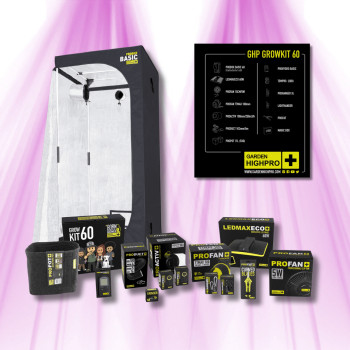
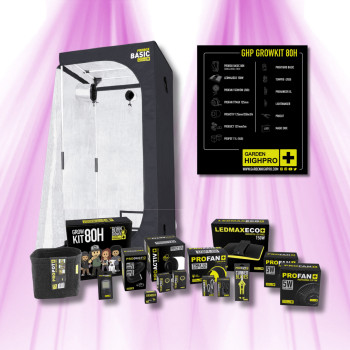

Multi-Lighting Pack - Bloomled
0 products
Items you may be interested in
Related posts
Help & advice
Frequently asked questions
About Multi-Lighting Pack - Bloomled — click a question to see the answer.
How do I install the BloomLED Multi-Lighting Pack?
The installation of the BloomLED Multi-Lighting Pack is designed to be simple and modular. Generally, I advise starting by defining the placement of each LED module based on the area to be lit and the growth phase. Then, simply suspend them at the correct height and connect them to the centralized power system. Each pack comes with detailed instructions, but the idea is to be able to easily adjust the configuration according to your needs.
What power should I choose for the BloomLED Multi-Lighting Pack based on my grow area?
To choose the appropriate power, I invite you to precisely evaluate the surface area of each grow zone you wish to equip. Generally, for optimal growth, I recommend a power of about 30 to 50 watts per square foot (or 0.09 m²) for LEDs. The BloomLED Multi-Lighting Pack is available in different configurations, allowing you to select the one that best matches the sum of your surface areas. Do not hesitate to contact me for more personalized advice if you have any doubts.
What are the advantages of the BloomLED Multi-Lighting Pack compared to HPS?
The advantages of the BloomLED Multi-Lighting Pack compared to HPS lamps are numerous. I often see my clients appreciate the much lower power consumption of LEDs, which translates into significant long-term savings. In addition, LEDs generate much less heat, simplifying temperature management in your grow space. Finally, the modularity of this pack offers a flexibility that HPS systems cannot match, allowing you to adapt the lighting to each phase and each zone.
What distance should be maintained between the BloomLED Multi-Lighting Pack and the plants?
The ideal distance between the BloomLED Multi-Lighting Pack and your plants will depend on the power of your modules and the growth phase. Generally, I advise starting with a distance of about 40 to 60 cm for young seedlings and vegetative growth, then gradually reducing it to 30 to 45 cm during flowering to maximize light intensity. It is crucial to observe your plants: if the leaves yellow or show signs of burning, raise the lighting slightly. The goal is to optimize exposure without stressing the plant.
What is the difference between the light spectra of the BloomLED Multi-Lighting Pack for growth and flowering?
The main difference lies in the spectral composition. For growth, I recommend a spectrum with a blue dominance, which promotes robust and compact vegetative development. For flowering, a spectrum rich in red and far-red light is preferred, as it stimulates the production of flowers and fruits. The BloomLED Multi-Lighting Pack is designed to allow you to choose or combine these spectra, thus optimizing light for each stage of your plants' life cycle. This is what I often see as a major asset for abundant harvests.
What is the BloomLED Multi-Lighting Pack ideal for?
The BloomLED Multi-Lighting Pack is ideal for indoor growers looking for a flexible and scalable lighting solution. If you have multiple grow tents, a grow space with dedicated areas for growth and flowering, or if you simply want to be able to easily adjust your lighting according to your needs, this pack is for you. I particularly recommend it for its ability to adapt to various configurations, making it a sustainable investment for any cultivation project.
Cannot find your answer? 01 88 33 45 52 or by message.


