






































































The packs
0 products
Items you may be interested in
Related posts
Help & advice
Frequently asked questions
About The packs — click a question to see the answer.
What is a smart home kit for indoor growing?
A smart home kit for indoor growing is a complete set of equipment that allows you to automate and remotely control the essential parameters of your growing space, such as temperature, humidity, ventilation, or lighting. In practice, it transforms your grow tent into an intelligent and autonomous environment, freeing you from constant manual adjustments.
What is the purpose of a grow shop smart home kit?
A grow shop smart home kit primarily serves to simplify and optimize the management of your grow. It allows you to maintain ideal environmental conditions consistently, which is crucial for your plants' growth. No more daily checks; your system handles everything, and you can often even control it from your smartphone.
How to choose a grow shop smart home kit?
To choose your smart home kit, I advise you to consider the size of your grow tent, the parameters you wish to automate (temperature, humidity, CO2, etc.), and your budget. It's also important to check the compatibility of sensors and controllers with your existing equipment. Don't hesitate to watch explanatory videos like the one on Garden High Pro kits to get an idea.
How to install a grow shop smart home kit?
Installing a smart home kit is generally quite intuitive. I recommend starting by positioning the sensors in strategic locations within your grow tent for accurate measurement. Then, connect the various devices (extractor, fan, lamp) to the central controller. Most systems come with detailed installation guides to walk you through step by step.
What is the difference between Garden High Pro smart home kits?
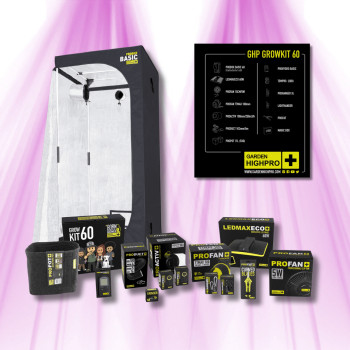
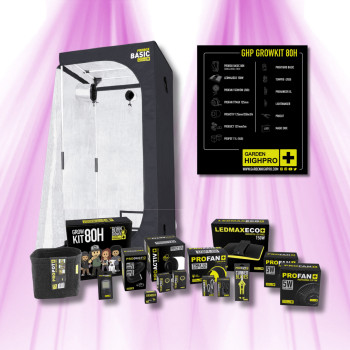
Garden High Pro smart home kits often differ in the size of the included grow tent, the power of the LED lighting, and the specific functionalities of the controllers. Some kits will be more basic, focusing on temperature and humidity, while others will offer more advanced control of ventilation, CO2, or even irrigation. I invite you to consult the detailed product sheets for each kit to fully understand their specificities, or to watch our video dedicated to complete Garden High Pro kits.
How do I know if a smart home kit is suitable for my grow tent?
To know if a kit is suitable, you must first check the dimensions of the grow tent provided in the kit or the compatibility of the controller with your existing tent. I also advise looking at the proposed LED lighting power and ventilation capacity to ensure they match your plants' needs and the size of the space. A good kit must be in harmony with your growing environment.
Which grow shop smart home kit to choose for beginners?
For a beginner, I recommend a smart home kit that offers easy handling and automation of basic functions like temperature and humidity. Kits with intuitive controllers and pre-calibrated sensors are ideal. The goal is to allow you to focus on your plants' growth without being overwhelmed by overly complex settings. Secret Jardin kits, for example, are often a good starting point, like those presented in this article.
How to automate temperature and humidity with a grow shop kit?
Temperature and humidity automation is achieved using the dedicated sensors and the intelligent controller included in the kit. You simply set the desired value ranges on the controller. The system will then activate or deactivate extractors, intake fans, or humidifiers to maintain these conditions. This is what I see most often, and it's an essential feature for the stability of your growing environment.
Cannot find your answer? 01 88 33 45 52 or by message.


