


































































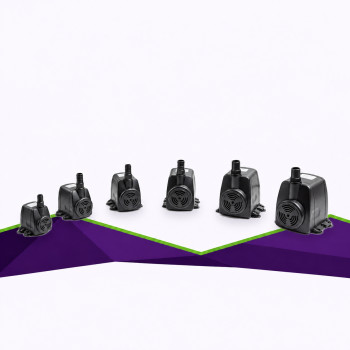
Water Master
Water Master submersible water pump – 400 to 1,800 L/h
In stock · Shipped within 24 h
18,90 €

Product successfully added to your shopping cart
Ça pousse dans le bon sens

6 products
A high-performance water pump is the cornerstone of any indoor growing irrigation system. Whether it's for supplying an NFT system, drip irrigation, or aeroponics, it ensures the constant circulation of nutrient solution to your plants. Without it, maintaining the oxygenation and nutrient supply necessary for optimal growth would be impossible.
The main difference between a standard pump and a specialized growing pump is its resistance to nutrient solutions. Fertilizers can be corrosive, and a standard pump will quickly clog or deteriorate. Models like the NEWJET 3500 Water Pump are specifically designed to withstand these conditions. With a flow rate of 3500 l/h, it's perfectly suited for medium-sized hydro-aeroponic systems.
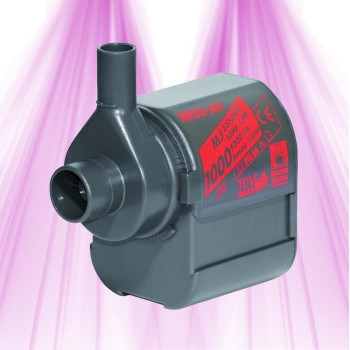
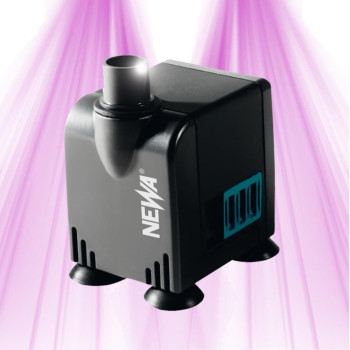
Noise level is crucial indoors. Frankly, nobody wants to hear a constant motor hum in their grow room. Quality submersible pumps generally operate below 35 dB, which is quieter than a computer fan. The Maxi Jet 1000 - Multi-purpose submersible pump (1000l/h) - NEWA excels in this regard: silent and versatile, it can operate submerged or externally depending on your needs.
The flow rate is calculated based on your setup. For a 4-plant NFT system, aim for a minimum of 800 to 1200 l/h. For drip irrigation, 500 l/h might suffice, but it's better to overestimate to compensate for pressure losses in the pipes. The head height also matters: if your reservoir is 1 meter below your grow trays, check that the pump can lift the water to that height without losing flow.
Electricity consumption varies greatly between models. A 1000 l/h pump generally consumes between 15 and 25 watts. Over a 3-month continuous growing cycle, this represents a noticeable difference in your electricity bill. Submersible pumps are generally more efficient than external pumps for medium flow rates.
Also consider ease of maintenance. Pumps with removable rotors are much easier to clean. This is important because even with filters, fertilizer residues always accumulate.
For a 4-plant NFT system, aim for a pump with 1000 to 1500 l/h minimum. The flow rate should allow for a complete renewal of the nutrient solution every 15-20 minutes in the channels. Allow approximately 250-300 l/h per plant in NFT to ensure optimal circulation. An undersized pump causes stagnant zones where roots lack oxygen, while excessive flow can stress young plants.
Installation begins with good filtration: place a fine mesh filter (200 microns) at the pump outlet to retain undissolved fertilizer particles. Position the pump at the bottom of the reservoir but not directly on the bottom to avoid sucking up sediment. Use self-regulating drippers that maintain a constant flow even if pressure varies. Provide a purge system at the end of the line to evacuate air bubbles that can block the drippers.
A submersible pump operates submerged in the nutrient solution reservoir, which makes it quieter and eliminates priming issues. It cools naturally in the water but can slightly warm the solution. An external pump is placed next to the reservoir and draws water through a suction hose. It is easier to access for maintenance but generates more noise and requires initial priming. In indoor hydroponics, submersible pumps are generally preferred for their discretion.
Regular maintenance begins with monthly cleaning of the rotor and volute with clear water to remove fertilizer deposits. Every 3 months, completely disassemble the pump and soak the parts in a 5% citric acid solution for 2 hours to dissolve limescale. Check the condition of the seals and replace them if necessary. Between growing cycles, run the pump for 10 minutes in clear water to prevent residues from drying and blocking the mechanism. Store it in water if it will be off for more than a week.
Quality submersible pumps generally generate less than 35 dB, a level comparable to a whisper. The noise mainly comes from vibrations transmitted to the tent structure. To further reduce the noise level, place the pump on a rubber anti-vibration mat and avoid it touching the reservoir walls. External pumps are noisier (45-55 dB) but can be moved outside the tent. With intermittent operation using a timer, even a slightly audible pump becomes acceptable.
Available in 2 models
Available in 2 models
Available in 2 models
Help & advice
About Water pump — click a question to see the answer.
In indoor cultivation, the water pump is the heart of your irrigation system. It ensures the circulation of the nutrient solution from the reservoir to your plants, whether for a hydroponic, aeroponic, or drip system. Without it, your plants would not receive the essential water and nutrients for their survival and growth.
To choose well, I advise you to consider several key factors. First, think about the necessary flow rate based on the number of plants and the type of system. Then, the head height is crucial if your reservoir is below your plants. Finally, the type of pump (submersible or external) will depend on your setup. I explain the different irrigation systems in more detail in this article.
Power is mainly expressed by flow rate (liters/hour) and head height (meters). For a small hydroponic system with few plants, a pump of 200 to 500 L/h may suffice. For larger installations or systems requiring high pressure like aeroponics, you will need more power, sometimes exceeding 2000 L/h. It is always better to choose a slightly oversized pump to have a margin.
The main difference is their location. A submersible pump is immersed directly in your nutrient solution reservoir. It is generally quieter and simpler to install. An external pump, as its name suggests, is placed outside the reservoir. It is often more powerful and easier to access for maintenance, but can be noisier and requires watertight connections.
Installation is generally simple. If it's a submersible pump, simply place it at the bottom of your reservoir, ensuring it is stable and that the water inlet is not obstructed. Then connect the discharge hose to your irrigation system. For an external pump, you will need to connect it to the reservoir's inlet and outlet with appropriate hoses and fittings, ensuring watertightness to prevent leaks.
Maintenance is essential for the longevity of your pump. I recommend cleaning it regularly, at least once a month, to remove nutrient deposits and algae that can clog the filter or rotor. Unplug it, disassemble it if possible, and clean the parts with a soft brush and clear water. Also check the condition of the seals and hoses to prevent leaks.
The first mistake to avoid is running the pump dry, as this can damage it irreparably. Always ensure it is submerged or that the reservoir is full for external pumps. Also, avoid overloading or undersizing it relative to your needs. Finally, a lack of maintenance can lead to unexpected breakdowns and harm the health of your plants.
Cannot find your answer? 01 88 33 45 52 or by message.