





































































Secret Jardin
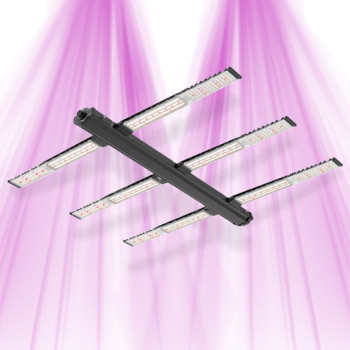
Cosmorrow Ultraviolet LED bar 20W - 50cm
Available in 2 models
In stock · Shipped within 24 h
29,89 €

Product successfully added to your shopping cart
Ça pousse dans le bon sens

86 products
Watts (W) are a unit of measurement for electrical power. When it comes to LED lights for growing plants indoors, wattage is a very important thing to consider because it determines the amount of light emitted by the lighting. The more wattage the lighting has, the more light it will be able to produce, which can be beneficial for plant growth.
It is important to choose LED lighting that suits your needs based on the size and quantity of plants you want to grow. For a small growing area, low wattage lighting may be sufficient. For a larger growing area, you will need more wattage lighting to cover the entire growing area.
It is also important to consider the distance between plants and lighting. The closer the lighting is to the plants, the more powerful it will be in watts. On the other hand, if the lighting is far from the plants, you will need more wattage lighting to compensate for the loss of brightness due to the distance.
It is recommended to learn about the lighting needs of each plant species and choose lighting suited to those needs to ensure optimal growth. By taking into account the wattage, growing area, distance between plants and lighting, and the lighting needs of each plant species, you can select LED lighting to suit your needs and promote healthy growth. optimum performance of your indoor plants.
Available in 2 models
Available in 2 models
Available in 2 models
Available in 3 models
Available in 3 models
Available in 3 models
Available in 3 models
Available in 2 models
Available in 7 models
Help & advice
About LEDs Wattage — click a question to see the answer.
The choice of wattage is crucial and depends primarily on the surface area of your grow space and the types of plants you wish to cultivate. For a small area, such as a 60x60 cm grow tent, I often recommend a 100W to 150W LED light. For larger spaces, you'll need more power. For example, for one square meter, I generally advise between 200W and 400W of LED, or even more for very demanding plants. Feel free to consult our categories by wattage, such as our 200W LED lamps or 300W LED lamps to get an idea.
As a general rule, for effective horticultural LED lighting, I aim for a range of 200 to 400 watts per square meter (m²), for most crops. This can vary slightly depending on the specific needs of your plants and their life cycle stage. For example, for seedlings or cuttings, lower power is sufficient, while for flowering, it's often necessary to be at the higher end of this range. This is a good starting point for sizing your setup.
The main difference lies in efficiency, light spectrum, and heat management. LEDs are much more energy-efficient, producing less heat for the same amount of light useful to plants. They also allow for a more precise and adjustable light spectrum, which is a significant advantage for optimizing growth at each stage. HPS, while powerful, consume more and generate a lot of heat, often requiring more robust ventilation systems. I also explain how we can help you switch to LEDs by taking back your old HPS equipment in this blog post.
The wattage of a horticultural LED indicates the amount of electrical energy consumed by the device. In practice, it is directly related to the amount of light the lamp is capable of producing. The higher the wattage, the more photons the lamp can emit, which is essential for photosynthesis. However, it's important to note that efficiency (the number of photons per watt) varies greatly between models. It's not the only criterion, but it is a key indicator of a light's luminous capacity.
A common mistake is choosing too low a wattage for the surface area, which leads to stunted plants. Conversely, too high a wattage without a dimmer can stress young plants. I also often see mistakes in the distance between the LED and the plants: too close, it can burn; too far, the light is insufficient. It is crucial to understand your plants' needs and adjust accordingly. Also, do not neglect ventilation, even if LEDs generate less heat than HPS.
The ideal distance between your LED lighting and your plants depends heavily on the power of your lamp and the growth phase. For young sprouts or seedlings, I recommend a greater distance, often between 45 and 60 cm to avoid stress. In the vegetative phase, you can generally move the lamp closer to 30-45 cm. During flowering, when plants need more intensity, I often lower it to 20-30 cm, carefully monitoring for signs of stress. Each lamp is different, so always refer to the manufacturer's recommendations.
For autoflowering plants, which have a rapid life cycle and do not depend on photoperiod, I generally recommend LED lighting with sufficient wattage to ensure continuous and vigorous growth. For a 60x60 cm space, a 100W to 150W panel is often adequate. For one square meter, I would lean towards 200W to 300W. The important thing is to maintain a constant and high light intensity throughout their cycle, as they do not have a distinct vegetative phase to extend.
To know if the LED power is suitable, I advise you to observe your plants carefully. Yellowing leaves at the bottom or slow growth can indicate a lack of light. Conversely, leaves curling upwards or burnt tips can signal too much light or a lamp that is too close. Ideally, use a lux meter or a PPFD sensor to precisely measure the light intensity received by the plants. In the absence of these tools, observation remains your best indicator. Healthy growth and vibrant green leaves are good signs.
For a small indoor grow, for example in a 60x60 cm space or less, I recommend starting with LED lighting with a power between 50W and 150W. Our 0 to 100W LED lamps are perfect for this type of setup. The goal is to have sufficient light intensity without overheating the space or consuming unnecessary power. For beginners, this is an excellent way to get familiar with LED growing without a heavy investment.
Cannot find your answer? 01 88 33 45 52 or by message.