


































































Indoor and tropical plant humidity: what level to aim for and which humidifier to choose
Houseplants and tropical plants do not need the same humidity, and the air in a heated home is often too dry. Here is the level to aim for, how to measure it, and how to choose between ultrasonic, column and fogger.

Aim for 40 to 50% relative humidity for common houseplants. Tropical plants want more humid air, which you reach in steps while watching the leaves. In a heated home in winter, humidity often drops to 10 to 20%: an ultrasonic humidifier, a column unit or a submerged fogger raises it; a spray bottle does not. The right choice depends on the space, the noise you can live with and whether you want automatic control.
This guide starts from the plant, not the machine: which level to aim for, how to measure it, and how to pick and set the equipment. It applies to a living room full of green plants as much as to a grow tent.
What humidity level should you aim for?
Relative humidity is the share of water vapour the air holds compared with its maximum at the current temperature. It falls when the air warms up: a radiator running is enough to dry out a room. These are the reference points we use.
| Situation | Relative humidity | Source |
|---|---|---|
| Common houseplants | 40 to 50% | Iowa State University Extension |
| Tropical houseplants | higher than for common houseplants (their native habitat sits at 70 to 90%, a reference point rather than a target for a living room) | Colorado State University Extension |
| Heated home in winter | often 10 to 20% | Iowa State University Extension |
For tropical plants, raise the level in steps and watch: leaves that perk up and tips that stop browning are a good sign, while spots or mould on the substrate mean you should lower it and ventilate. Cuttings need very humid air under a lid that is not airtight, but only while they root, which takes 3 to 6 weeks for most houseplants: the method is covered in our guide to successful cuttings.
What about a grow tent?
Needs change with the growth stage. The table below follows AC Infinity's guide; temperature is air temperature.
| Stage | Relative humidity | Air temperature |
|---|---|---|
| Germination | 70 to 80% | 21 to 27 °C |
| Seedlings | 60 to 70% | 21 to 27 °C |
| Vegetative growth | 50 to 70% | 21 to 27 °C |
| Flowering | 40 to 60% | 21 to 27 °C |
Flowering has the lowest range in the table: air that is too humid around tightly packed flowers encourages mould. To manage humidity in the tent, including dehumidifying, see mastering grow tent humidity.
Ultrasonic, column or fogger: what is the difference?
All three work on the same principle: a ceramic membrane vibrates at high frequency and releases a cool mist of fine droplets. They differ in format and in how they are controlled.
| Type | How it works | Output stated on our product pages | Good to know |
|---|---|---|---|
| Ultrasonic humidifier with tank | Complete unit with a water tank and an adjustment control | 250 to 350 ml/h (Pure Factory 8 L), 150 to 300 ml/h (VDL Cool Mist 2.0) | The simplest: fill it, set it, plug it in |
| Column humidifier | Ultrasonic unit in a tall 60 cm housing | 340 ml/h (Clivex 6 L) | Tall, narrow shape that is easy to place |
| Submerged fogger (mist maker) | 20 mm ceramic cell placed in a tray of water | 90 ml/h per cell (1 head) | Fits tanks from 1 to 100 L, to be run with a humidistat |
Do not confuse an ultrasonic fogger with a hand sprayer. According to Iowa State, misting plants raises humidity for only a few minutes, whereas a humidifier is one of the most reliable ways to raise it.
How to choose and set your humidifier, step by step
- Measure first. Place a thermo-hygrometer at foliage height, away from radiators and windows, and read it morning and evening for three days. Without a reading you are correcting blind.
- Set the target. 40 to 50% for common plants, higher for tropical ones, following the table above.
- Pick the output. The units shown here state from 90 ml/h (one fogger cell) to 350 ml/h (the top of the Pure Factory 8 L range). Our product pages do not give a coverage area: for a corner with a few plants, a small output may be enough; for a room or a grow tent, prefer a slightly larger model with a control over one that is only just enough, then adjust it from the thermo-hygrometer readings.
- Work out the run time. Tank capacity divided by output. Example with the Clivex column: 6,000 ml ÷ 340 ml/h = about 17 h 40 min at full output, in theory. Its product page states a real run time of 8 to 12 h: plan your refills on that figure. Running non-stop at 340 ml/h, it evaporates 340 × 24 = 8,160 ml, more than 8 L of water a day.
- Work out the running cost. kWh per month = watts × hours per day × 30 ÷ 1,000, then multiply by €0.18/kWh (the rate we use for our examples). For the Pure Factory 8 L (32 W) running 24 hours a day: 32 × 24 × 30 ÷ 1,000 = 23.04 kWh, or €4.15 a month.
- Control it. A humidifier with no control can saturate the air, especially in a small room or a tent. Choose an adjustable model or pair it with a humidistat, then read the thermo-hygrometer again after 24 hours.
| Power (product page) | 12 h a day: kWh/month | 12 h a day: cost/month | 24 h a day: kWh/month | 24 h a day: cost/month |
|---|---|---|---|---|
| 25 W (VDL Cool Mist 2.0) | 9 kWh | €1.62 | 18 kWh | €3.24 |
| 32 W (Pure Factory 8 L) | 11.52 kWh | €2.07 | 23.04 kWh | €4.15 |
These costs assume the power on the product page, at full output for all the hours shown. A lower setting or a humidistat reduces them.
Water, upkeep and white dust
An ultrasonic unit also disperses the minerals dissolved in the water: with hard water a fine white dust settles on nearby leaves and furniture. Softer or filtered water limits it. Empty the tank before leaving the unit idle and rinse it regularly, as standing water quickly builds up deposits.
Which equipment to choose?
Here are five products from the shop, from the simplest to the most complete. Outputs come from the product pages; check them for dimensions and extras.
- Mist Maker ultrasonic fogger, 1 head: 20 mm cell, 90 ml/h, no built-in humidistat. The entry-level option, to place in a tray of water.
- VDL Cool Mist 2.0 ultrasonic humidifier: 150 to 300 ml/h, 25 W, dial control. Designed for a grow tent or an indoor greenhouse.
- Clivex 6 L ultrasonic column humidifier: 340 ml/h, 60 cm column, 6 L tank.
- Pure Factory air humidifier, 8 L: 250 to 350 ml/h, 32 W, stated below 36 dB, compatible with a humidistat. For a living space where noise matters.
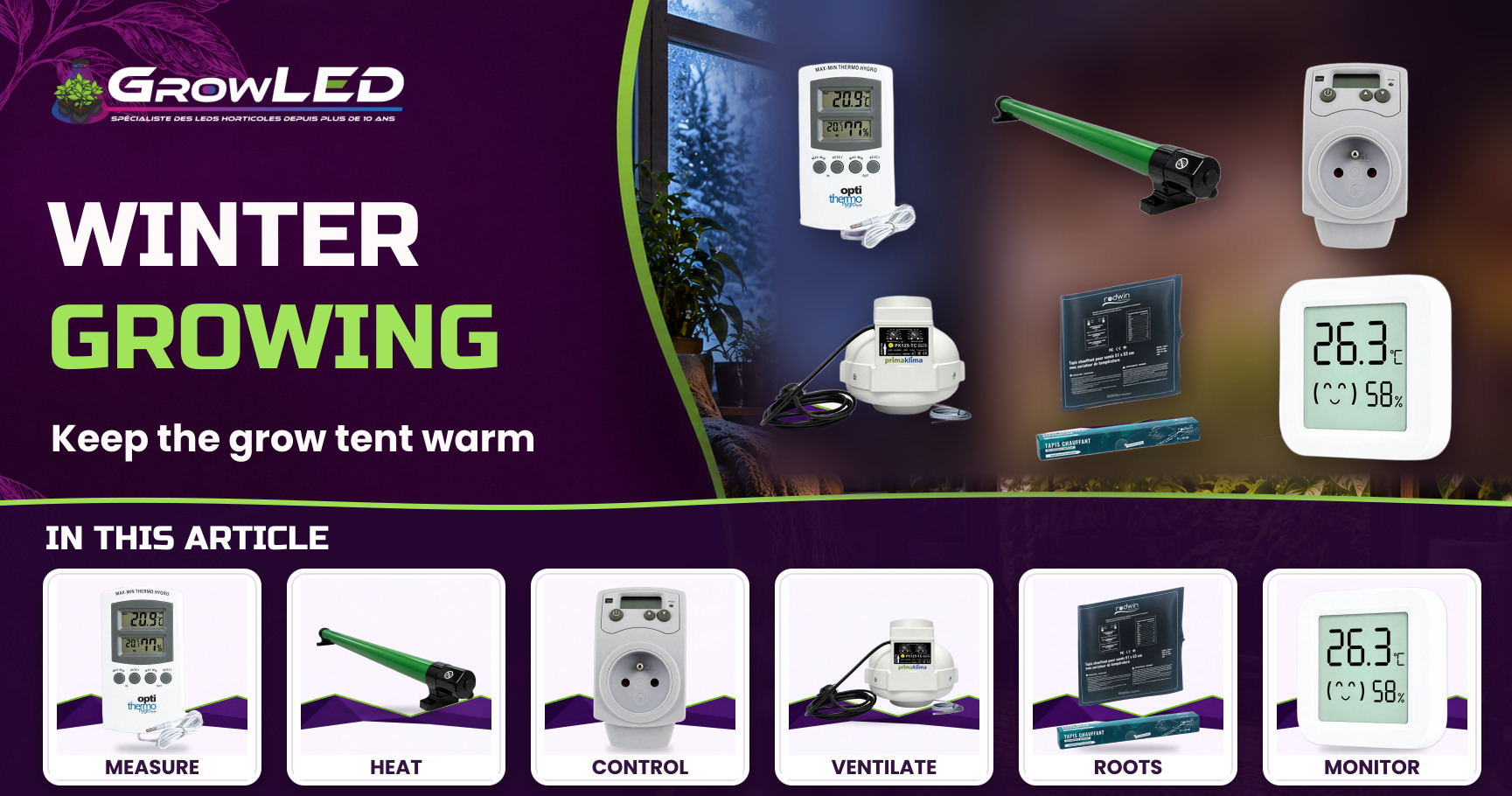
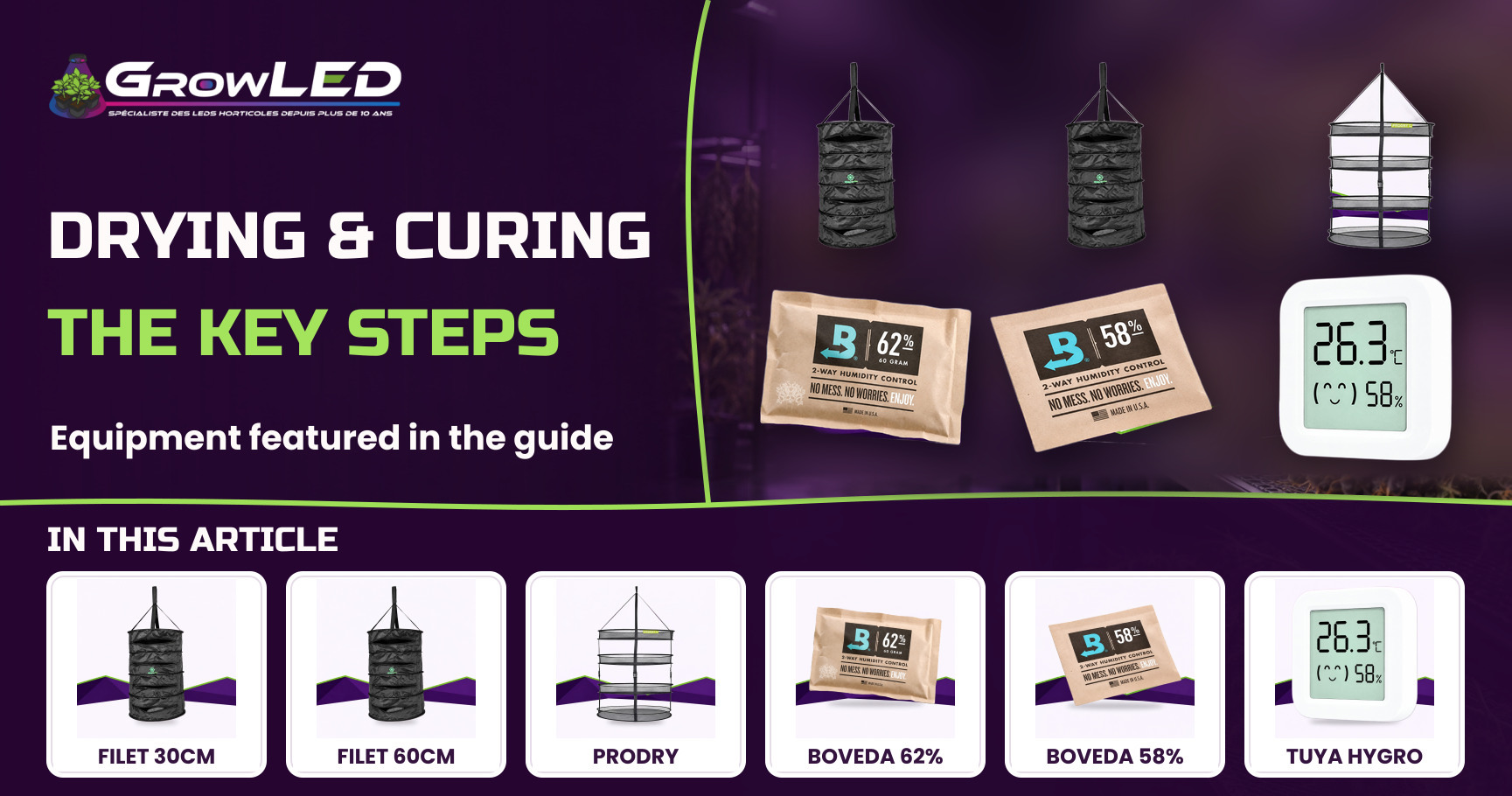
- Bluetooth thermometer and hygrometer (Tuya): accuracy of ±5% relative humidity and ±1 °C, phone app. For measuring before you buy, then for setting up the unit.
To compare the whole range: the humidifiers for green plants category, the humidifiers category and the thermometers and hygrometers category. If your plants spend the winter under a lamp, also read winter lighting for plants.
Frequently asked questions
What humidity do houseplants need?
According to Iowa State, many houseplants prefer 40 to 50% relative humidity. Tropical plants like more humid air. Measure with a hygrometer rather than relying on feel.
Should you mist the leaves with a spray bottle?
Humidity stays higher for only a few minutes after misting (Iowa State). A humidifier is more effective and more consistent.
What is the difference between an ultrasonic humidifier and a mist maker?
Both work by ultrasound. The humidifier is a complete unit with a tank and a control; the mist maker is a cell you place in a tray of water and run with a humidistat.
How much does it cost to run a humidifier?
A 32 W unit running 24 hours a day uses 23.04 kWh a month, or €4.15 at €0.18/kWh (the rate we use for our examples). Running 12 hours a day halves that cost (€2.07); a lower setting also reduces it.
Can you over-humidify?
Yes. Air that is too humid encourages mould on substrate and leaves, especially in a poorly ventilated room or tent. Control it with a humidistat and ventilate.
Which water should go in an ultrasonic humidifier?
Soft or filtered water. Very hard water leaves white dust on leaves and scales up the membrane faster.
Humidifier or dehumidifier for a grow tent?
It depends on the reading: too dry calls for a humidifier, too humid for dehumidifying or more extraction. Our guide to tent humidity covers both cases.
Sources: Iowa State University Extension and Outreach, "How can I raise the relative humidity indoors for my houseplants?", updated 6 November 2026; Colorado State University Extension, PlantTalk Colorado no. 1317, "Houseplants: Temperature & Humidity"; AC Infinity, "VPD Chart: What It Is, How to Read It, and How to Use It"; Iowa State University Extension, "How to Propagate Houseplants by Stem Tip Cuttings"; GrowLED product pages.