


































































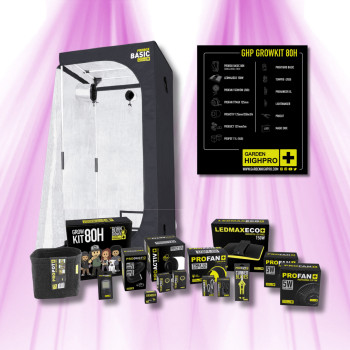

Looking for how to choose an industrial exhaust fan for your indoor growing? This article explains in detail how to calculate the required airflow and select the right motor. We'll also cover the overall installation to optimize your equipment simply and effectively.
Calculating the right airflow for your exhaust fan
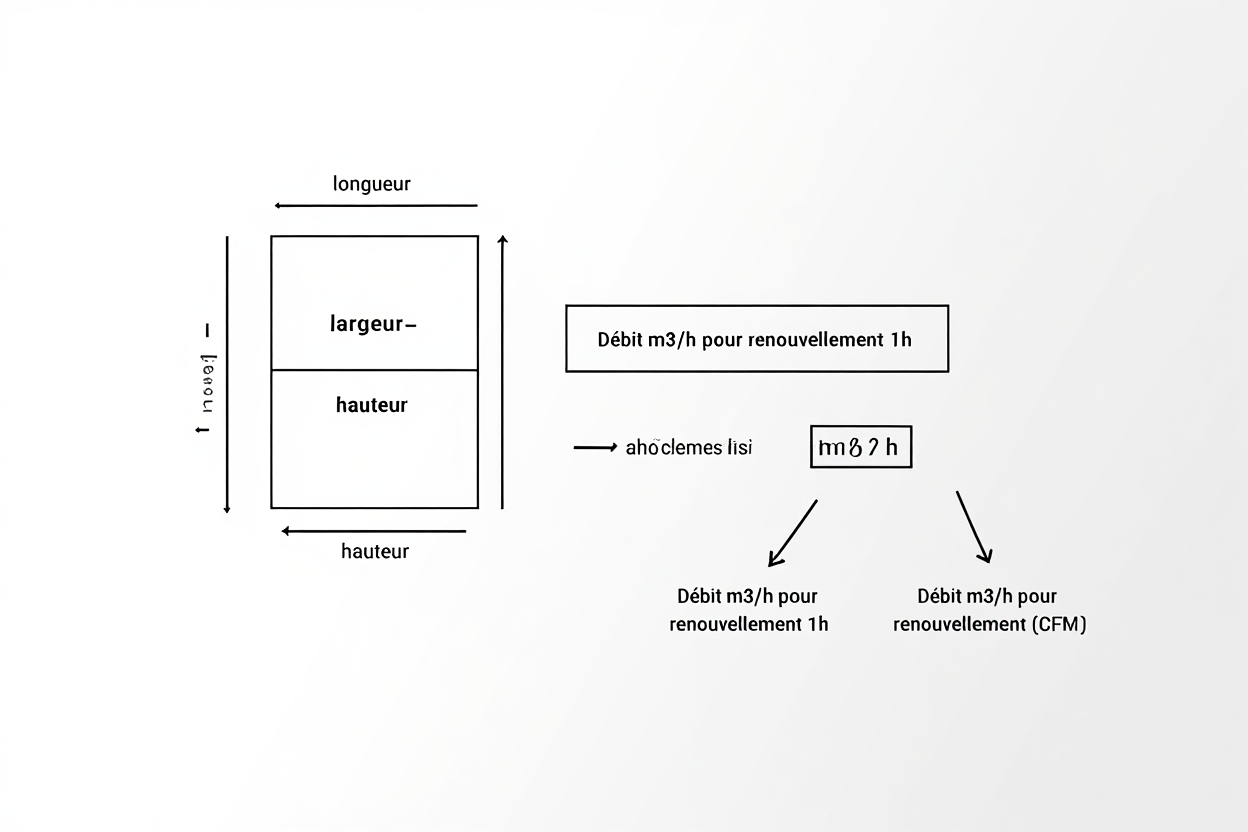
The first step in properly sizing your equipment is to calculate the volume of your room. Simply multiply its length by its width and height, in meters. You can then apply the basic formula to determine the hourly air exchange needed.

Basic formula and margins to apply
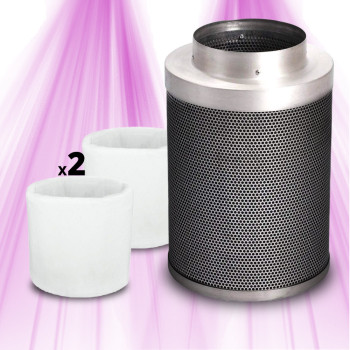
It's crucial to add safety margins to your initial calculation. If you use a carbon filter, plan for an extra 20 to 30% capacity. Add another 10% to compensate for airflow losses in the ducting.
- Simple formula: Multiply the volume (m3) by 60 to set the minimum required airflow.
- Margin for carbon filter: Add up to 30% to preserve the system's efficiency.
- Compensating for pressure losses: Plan for an extra 10% for bends that slow down the air.
- Concrete example: A 1 m3 tent needs around 200 to 260 m3/h with a filter.
For a larger grow tent, the need for an exhaust fan increases proportionally. Applying this safety margin helps avoid overheating and ensures an optimal climate. This way, your setup will run perfectly, even with high-power lighting.
What airflow depending on surface area and intensity of use?
The required airflow depends directly on your crops and the light intensity. For standard use, fully exchange the air at least once an hour. Add an extra margin if your lights give off a lot of heat.
- Small tents (2x2 m): Plan for between 1200 and 1500 m3/h to control the climate.
- Large rooms (6x6 m): Aim for at least 5000 m3/h to avoid heat stagnation.
- Intensive growing: With powerful lighting, a minimum of 300 m3/h per m2 is recommended.
It's essential to extract more heat when lighting is intense. A properly sized exhaust fan guarantees professional results and healthy plants. Your crops will then grow more vigorously.
Inline or centrifugal: which type to choose for your setup?
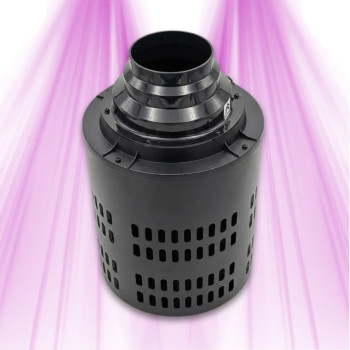
You may be torn between an inline model and a centrifugal model. The inline exhaust fan fits directly into the ducting, offering discretion and compactness. Conversely, the centrifugal model maintains excellent continuous airflow, even in the presence of obstacles.
A centrifugal model becomes the obvious choice from 1500 m3/h onward, especially if your ducting network has several bends. Unlike others, it keeps its efficiency even with a filter. What's more, favoring an EC-technology motor lets you achieve significant energy savings.
Motor power and protection suited to the environment
After discussing airflow, let's look at the motor, the true heart of the exhaust fan. Its power, given in watts, determines the maximum flow it can produce. Values generally range between 55 and 800 W. For an industrial exhaust fan model able to handle more than 10,000 m3/h, a minimum power of 300 W is needed, but build quality is just as decisive.

Industrial motor selection criteria
The selection of a motor for your industrial exhaust fan relies on a careful analysis of several key factors. First, favor copper windings with class F insulation, able to withstand temperatures up to 155 degrees C. In addition, using sealed ball bearings can improve the unit's lifespan by 30 to 40% under harsh conditions.
It's also essential to properly size the exhaust fan motor power by including a safety margin. A service factor of 1.5 will effectively prevent any overload, while a good ratio will guarantee excellent energy efficiency. For example, a unit handling 2,500 m3/h should not consume more than 270 W, which allows for energy savings while maintaining a high level of efficiency.
| Motor power (W) | Approx. airflow (m3/h) | Recommended use | EC vs AC savings |
| 55-110 W | 300-600 | Small tents, light workshops | 30-40% |
| 150-250 W | 800-1500 | Medium tents, standard spaces | 30-40% |
| 300-500 W | 2000-5000 | Large spaces, professional setups | 30-40% |
| 600 W+ | 5000-15000 | Complete industrial setups | 30-40% |
Choosing EC-technology motors greatly reduces the system's daily power consumption. This investment quickly pays for itself, especially for a continuous ventilation system running around the clock.
IP rating and materials based on site constraints
To guard against moisture and dust, the IP protection rating acts as a genuine shield. An IP65 rating is well suited to very damp spaces, while IP54 is enough for more standard workshops. However, an IP55 rating or higher can reduce bearing wear by 41% against steam and splashes.
Beyond this rating, the choice of materials remains fundamental for each specific installation. Stainless steel or coated aluminum are preferable for corrosive areas, and an epoxy coating will improve lifespan. Finally, a double-sealed motor shaft will prevent water infiltration, increasing resistance to condensation by 40%.
Energy efficiency and motor performance class
Now essential, the quest for the best efficiency ensures substantial savings over the long term. Motors offering high energy efficiency considerably reduce the electricity bill. At equivalent power, an EC model will consume 30 to 40% less than a conventional motor, generating notable annual savings.
Favor units equipped with a speed controller, which adjusts power based on ambient temperature. This flexibility makes it possible to lower the speed during periods of low activity and optimize every cycle. This way, choosing an exhaust fan becomes child's play once these concepts are mastered.
Automation, installation, and maintenance of the exhaust fan
Turn your ventilation system into a smart device. Thanks to exhaust fan automation, a simple unit becomes a true ecosystem. By equipping the unit with various sensors, you get an environment perfectly suited to your specific needs.
Trigger modes and automatic regulation systems
Do you want to activate your exhaust fan manually or automatically? The choice of a good manually triggered fan can work well for tests or experimental phases. However, automatic methods bring optimal stability to your environment while reducing your overall power consumption.
- Built-in thermostat: The unit automatically kicks in as soon as the temperature exceeds a certain threshold, maintaining a stable climate without human intervention.
- Hygrostat: Essential during flowering, it regulates humidity to prevent mold growth and triggers extraction autonomously.
- CO2/VOC sensors: They only trigger during a pollutant spike, which considerably optimizes the system's energy efficiency.
IoT sensors monitor vibration and temperature, reducing the risk of unexpected failure. Thermal protection automatically stops the motor in the event of critical overheating. Using speed controllers allows airflow to be adjusted, which reduces both energy consumption and noise.
Installation best practices to maximize efficiency
Successful industrial ventilation installation requires precision to guarantee maximum efficiency. Always position your unit up high, that is, where heat and moisture tend to accumulate. This installation strategy allows hot air to be captured quickly and extracted effectively.
Opt for a slightly larger duct diameter: this noticeably reduces your equipment's pressure losses. Limit the number of bends to avoid overworking the motor and plan for easy access to the filters to make regular maintenance easier.
Install suitable mounts to absorb most of the vibration generated by the machine. This measure protects the bearings over the long term and also helps reduce the overall noise level.
Preventive maintenance and safety certifications
Regular maintenance significantly extends your system's lifespan. Frequently clean the grilles, always check the noise level, and verify that the mounts are secure. Replace the activated carbon filter every year to maintain optimal performance.
Safety certifications guarantee your equipment's reliability day to day. A genuine industrial exhaust fan, made of stainless steel, ensures continuous operation and resists corrosion. By deciding to choose an industrial exhaust fan, you also benefit from responsive technical support.
For perfect results, integrate your industrial exhaust fan into an overall climate management setup. Beyond the sheer power of an industrial extraction fan, full mastery of the environment allows you to achieve excellent efficiency. Keeping these selection criteria in mind, you'll surely find the ideal solution.