





































































Want to grasp the nuances between 4000K and 6000K to improve your indoor growing? This guide clearly explains how these two color temperatures affect your setup and your plants' yield. Let's explore these differences without complication.
Understanding 4000K and 6000K Color Temperatures
Color temperature, expressed in Kelvin (K), precisely describes the hue of the light emitted by your LEDs. Mastering this parameter is essential for making the right lighting choice.

What Is CCT Color Temperature in Kelvin
Correlated color temperature (CCT) refers to the tone perceived by the eye. 4000K, a neutral white, offers soft, balanced brightness, perfect for pleasant everyday lighting.
6000K, meanwhile, produces an intense cool white that resembles natural daylight. While stimulating, its bluish tint can feel a bit harsh in a relaxing environment.
Light Spectrum Differences Between 4000K and 6000K
The emitted spectrum is decisive for your plants' growth. The 4000K color temperature offers a harmonious mix of blue and yellow, ensuring healthy development and authentic color rendering. It's a safe bet for reliable results.
- Spectral richness of 4000K: Its balanced spectrum effectively combines warm and cool wavelengths, a major asset for plant well-being.
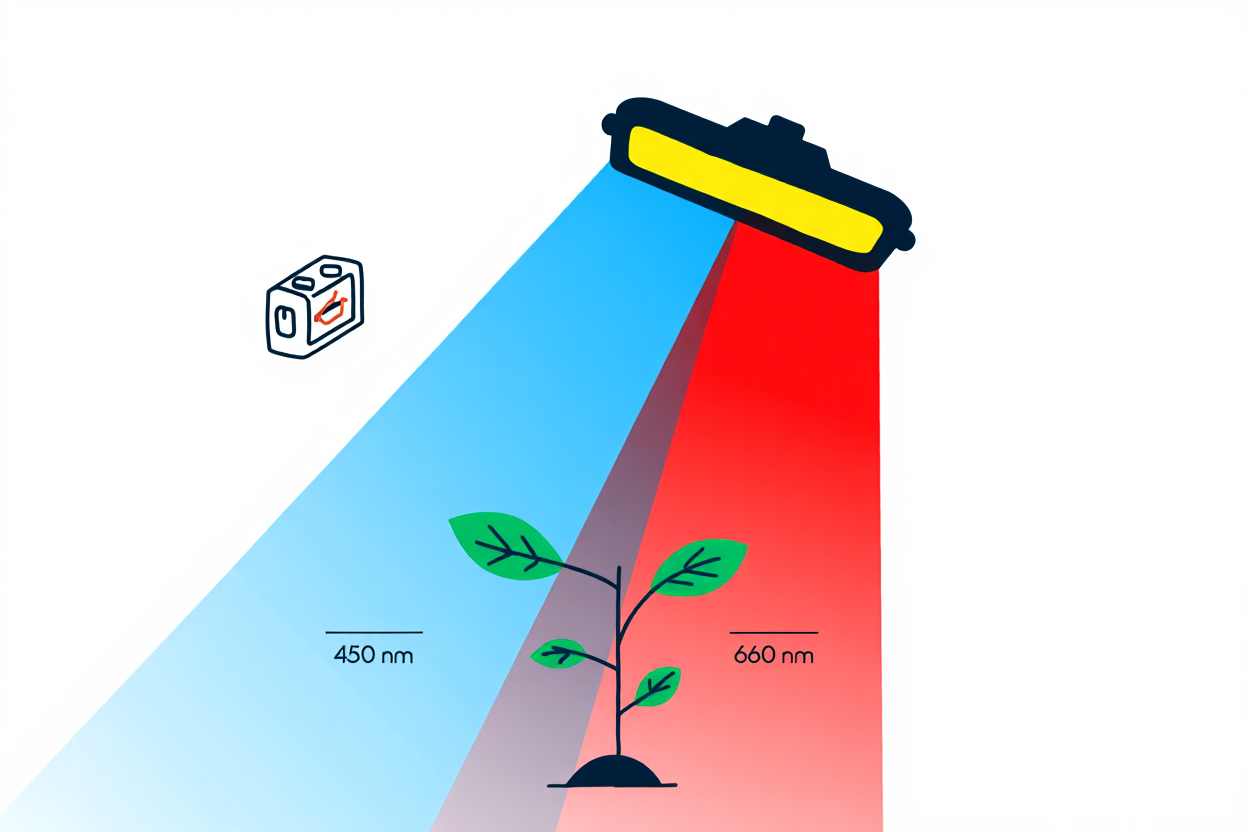
- Blue dominance of 6000K: Its peak in blue strongly activates photosynthesis, which is particularly beneficial during the vegetative stage.
- Color rendering at 4000K: 4000K color reproduces the natural tones of flowers, a real plus for visually diagnosing their health.
- Saturation of 6000K: It accentuates the greens and blues of the foliage, highlighting its texture and making it easier to spot deficiencies.
Careful: at equal power, 6000K often looks brighter to our eyes because of its blue light. This impression doesn't necessarily reflect greater photosynthetic power.
Impact of the K Factor on PPFD-to-Lux Conversion
This is a crucial technical point for setting up your space. The conversion factor changes significantly, from about 54 for 4000K to nearly 74 for 6000K.
Let's take a concrete example: to reach 800 PPFD, you'll need about 43,200 lux at 4000K color temperature, versus 59,200 lux at 6000K. So 6000K produces more lux for the same PPFD, which can let you raise your light slightly higher.
This difference directly affects your light intensity settings and installation height. 4000K vs 6000K lights aren't interchangeable, so you'll need to adjust your setup accordingly.
| Parameter | 4000K (neutral white) | 6000K (cool white) |
| K factor | ≈ 54 | ≈ 74 |
| Lux for 800 PPFD | 43,200 lux | 59,200 lux |
| Visual appearance | Slightly yellowish, warm | Very bluish, cool |
| Perceived brightness | Natural and balanced | Brighter to the eye |
| CRI (color rendering) | High, natural | High, but bluish tint |
Energy efficiency remains similar between the two if the LEDs are of comparable quality. The choice therefore comes down to the desired effect: visual ambiance and the specific biological impact on your plants.
Applications in Indoor Growing and LED Horticulture
In indoor growing, each color temperature fills a specific role that's crucial to master. Knowing which light spectrum to use at the right time is essential for maximizing your plants' potential. It's precisely by optimizing these settings that you'll get the most out of your setup.
Photosynthesis: Benefits of 6000K During the Vegetative Stage
The 6000K spectrum is very rich in blue light, which strongly stimulates photosynthesis during the vegetative stage. Your plants will therefore experience particularly vigorous foliage growth! Unlike 4000K, which offers a more balanced spectrum, this color temperature promotes abundant foliage development.
- Maximized chlorophyll production: the high proportion of blue in 6000K directly stimulates chlorophyll synthesis, giving plants a vivid green color.
- Sturdy, compact stems: plants develop a stocky structure with short internodes, ideal for tight spaces.
- Denser foliage: after just two weeks under 6000K light, you'll observe optimal foliage density to prepare for the next stages.
- Optimized hanging height: this color temperature often allows lights to be placed higher without losing photosynthetic efficiency.
Grows that require high vegetative density benefit considerably from using 6000K right from the start of growth. This way, you promote the rapid formation of dense, vigorous plant cover. It's an extremely effective solution for the first two weeks of growing!
Why Choose 4000K for Plant Flowering
At the start of flowering, using only 6000K can be counterproductive, since too much blue light could hinder flower development. This is where the 4000K spectrum proves its worth! Its natural spectral balance lets flowers bloom fully, without suffering unsuitable light stress.
4000K offers an ideal blend of red and blue, reducing plant stress during this sensitive phase. Your plants will flower more generously while ensuring a higher-quality harvest. What's more, the excellent color rendering under 4000K light makes it much easier to visually inspect your flowers' health.
Mixed Lighting Strategies to Optimize Growth
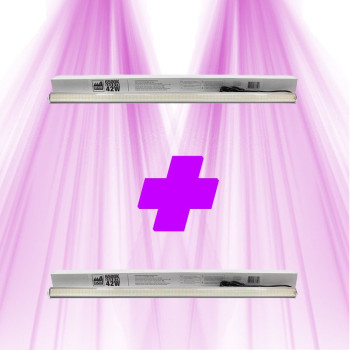
The most effective method often involves intelligently combining these two color temperatures. An effective strategy is to use 6000K during the vegetative stage, then gradually switch to 4000K ahead of flowering.
- Weeks 1-2: 6000K dominance: stimulate chlorophyll and build a compact, dense base with this spectrum.
- Weeks 3-5: gradual transition: gradually introduce 4000K alongside 6000K to let your plants adapt without any shock.
- Flowering: full switch to 4000K: use only 4000K to give flowers the ideal spectral balance for blooming.
- Mixed setups: zone separation: reserve 6000K for young seedlings and 4000K for flowering plants or ornamental plants.
This step-by-step approach lets you achieve professional results without needlessly complicating your grow. You're simply giving each stage exactly what it really needs. A method that's both strategic and scientific!
Practical Uses by Space and Activity
Beyond personal preferences, color temperature plays a key role in your home's atmosphere. Choosing the right color temperature can genuinely improve your everyday comfort and boost your productivity. Let's discover together how to adapt this lighting to every situation!

Residential Spaces: When to Choose 4000K
At home, 4000K creates an atmosphere that's both welcoming and practical, avoiding the sometimes overly yellow tone of 2700K. 4000K LED lights let you modernize a room without giving it a cold or clinical feel. It's often considered the ideal compromise for the home!
- Living room: this temperature offers an atmosphere conducive to relaxation, perfect for hosting guests without causing eye strain.
- Kitchen: a neutral white light is essential here to reveal the true colors of food while preparing meals.
- Bathroom: an essential choice for accurate lighting in front of the mirror, far from unflattering yellowish reflections.
Using 4000K in the kitchen and bathroom ensures notable everyday visual comfort. You'll quickly notice the difference in clarity every day!
Technical Work Areas: Benefits of 6000K
For garages or workshops where precision matters, 6000K stands out as your best ally. This cool white light noticeably improves visibility, helping you focus on the finest details. Much more effective than neutral white for meticulous work.
6000K lighting naturally boosts alertness, which is crucial when handling small parts or reviewing technical drawings. The strong blue component of this light makes it possible to spot subtle flaws that other temperatures might mask. Your analytical ability is greatly improved as a result!
Choosing cool white LED also reduces eye strain during long, uninterrupted work sessions. Installing 6000K lighting in a technical space boosts safety by limiting visual perception errors. It's a smart investment for any DIYer or professional. ️
Retail and Commerce: A Strategic Temperature Choice
In retail, cool white or neutral white directly influence customer perception and purchasing behavior. 4000K perfectly showcases textiles or natural products by creating a warm atmosphere that invites exploration. Conversely, 6000K highlights the modern feel of high-tech products by accentuating their shine. ️
Impact on Eye Health and Well-Being by Temperature
Color temperature directly affects your eye health and overall well-being. It's not just a matter of aesthetics, but a genuine physiological reaction that your body responds to. ️ Understanding this mechanism can greatly improve your quality of life.
Eye Strain: Comparing 4000K Versus 6000K
The choice of color temperature is a decisive factor in the onset of eye strain. From a scientific standpoint, 4000K light strains the eyes much less during prolonged use than the 6000K spectrum. The difference in visual comfort is significant.
- Fewer headaches: 4000K limits headaches often caused by glare or excessive eye strain.
- Reduced dry eyes: this softer 4000K light reduces irritation and the feeling of dryness after long hours of work.
- Less visual tension: the spectral balance of 4000K requires less accommodation effort from your eyes.
- Better comfort in front of screens: using 4000K light near your screens considerably reduces digital eye strain.
If you spend eight hours a day in front of a screen, choosing 4000K will effectively prevent your headaches. An essential choice for your visual comfort and well-being! ️
Circadian Rhythm and the Influence of Blue Light
Rich in blue light, 6000K helps regulate your circadian rhythm by stimulating alertness during the day. It's the perfect lighting to tell your body to stay alert and active. However, using it in the evening can seriously disrupt melatonin production.
Too intense an exposure to 6000K can cause mild anxiety or discomfort in sensitive people. This overly stimulating light generates unnecessary physiological stress at the end of the day. Not ideal for winding down!
- Evening hormonal disruption: 6000K inhibits the natural production of sleep hormones from early evening onward.
- Increased anxiety risk: the strong blue component can cause mild agitation or a feeling of unease.
- Delayed sleep onset: even a short exposure to 6000K in the evening can push back falling asleep by 30 to 60 minutes.
4000K stimulates serotonin without overtaxing your nervous system with overly aggressive blue light. It's the ideal balance for preserving your well-being and ensuring restorative sleep!
Usage Tips to Optimize Comfort and Productivity
Wisely alternating color temperatures based on the time of day radically transforms your daily life. Favor 4000K in the morning and evening, and reserve 6000K for peak activity during the day.
- Using dimmers: install adjustable fixtures to progressively fine-tune color temperature based on the time and type of activity.
- Separating spaces: dedicate areas to 4000K for relaxation and others to 6000K for intense work.
- Avoiding abrupt mixes: never combine 4000K and 6000K in the same space without a transition, at the risk of causing visual disorientation.
- Respecting your biological cycle: avoid 6000K after 7 p.m. to protect your natural sleep and support recovery.
This comprehensive approach optimizes your visual comfort, productivity, and health all at once. You achieve your professional goals while protecting your eyesight for the long term. A winning strategy on every level!