



































































Want to understand exactly what artificial light is and how it works? This article reveals its definition, its various sources, and what truly sets it apart from natural light. It's the ideal starting point for beginning your indoor growing journey with total peace of mind!
What exactly is artificial light
Artificial light is simply lighting produced by a device designed by humans. It results from converting electrical energy into radiation visible to the human eye. Unlike natural sunlight, you have full control over its intensity, color, and duration of use!

Definition and operating principle of light
The definition of artificial light rests on a simple principle: converting an electrical current into usable light. For your indoor growing, this lighting replaces the sun by supplying the energy essential to photosynthesis. An LED panel produces a specific spectrum (often blue at 450 nm and red at 660 nm) that you can adapt to your needs.
The real advantage lies in being able to program your lighting 24/7, without being at the mercy of the weather. It's very easy to set up an 18-hour light / 6-hour dark cycle using a timer. This is precisely the level of control every grower is after, whether beginner or experienced.
Fundamental differences from natural sunlight
Natural light constantly varies depending on the time of day, the season, or weather conditions. While it can reach 100,000 lux at noon, it drops sharply in winter or under cloudy skies. With artificial lighting, you get perfect stability: the same intensity and the same light spectrum every day, all year round.
- Light intensity: While natural sunlight varies enormously (from 100,000 lux at zenith to 300 lux under overcast skies), artificial LED lighting guarantees a constant intensity (600 µmol·m⁻²·s⁻¹), with no fluctuation at all.
- Light spectrum: The sun emits across the entire visible spectrum (380-780 nm), including UV and infrared, while grow lights target wavelengths (blue and red) specially optimized for photosynthesis.
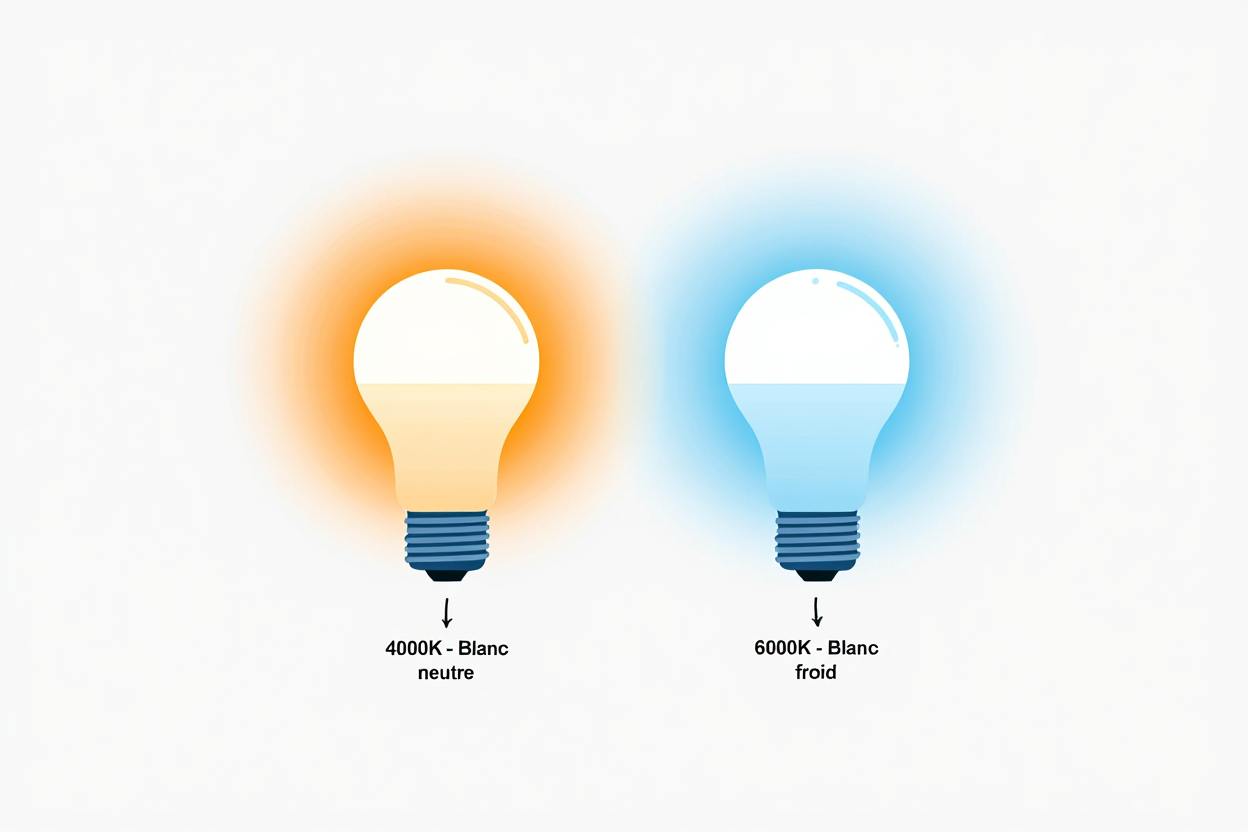
- Color temperature: Natural light sits around 5,500 K (neutral white), while LED grow lights adjust from 2,700 K (warm tone for flowering) to 6,500 K (cool tone for vegetative growth).
The definition of artificial light includes this remarkable versatility: you literally design your own custom "sun." At GrowLED, our systems give you this complete control, with fast 24-hour delivery and a premium warranty to support your project.
What are the different types of artificial light
There is a whole range of light sources capable of effectively lighting your indoor crops. Each technology has its own specific advantages, but also certain drawbacks worth knowing about. By analyzing their characteristics, you can choose the ideal solution based on your goals: saving electrical energy, optimizing yield, or controlling the spectrum. Let's explore these options together to make the perfect choice!

LED technologies and their efficiency in indoor horticulture
If you're looking for the most efficient artificial light sources on the market, LEDs naturally stand out! They offer exceptional efficiency, using up to 80% less energy than incandescent models, with a lifespan that can reach 50,000 hours. Their spectrum is fully adjustable, offering pure blue (450 nm) for growth, pure red (660 nm) for flowering, or a full mix depending on your needs. It's undeniably the flagship technology we recommend at GrowLED!
LED COB (Chip On Board) innovation pushes the efficiency of this lighting even further. This technology guarantees uniform emission, high intensity, targeted wavelengths, and an adjustable color temperature ranging from 2,700 K to 6,500 K. Your plants get exactly what they need at every stage, thanks to a truly custom-tailored fixture that boosts your harvests!
| Lamp type | Energy efficiency | Lifespan | Heat output | Spectrum |
| LED COB | Very high (80% less energy) | 25,000-50,000h | Very low | Full adjustable blue+red |
| HPS | Moderate | 10,000-15,000h | Very high | Red-rich only |
| MH | Moderate-Good | 10,000-15,000h | High | Blue-rich only |
| CFL | Medium | 8,000-10,000h | Low | Limited, blue-enriched |
A 600 W LED COB kit designed for 1 m² delivers around 600 µmol·m⁻²·s⁻¹ with an adjustable full spectrum, very low heat emission, and precise photoperiod management via a timer. We select premium brands like Lumatek, BloomLED, SANlight, and HLG to ensure consistent performance year after year. This isn't a gimmick - it's serious equipment for your success!
HPS and MH lamps for professional growing
HPS (High Pressure Sodium) and MH (metal halide) lighting types have dominated commercial growing for decades. Their success comes from remarkable raw power and a very attractive upfront cost. However, they are very energy-hungry and produce considerable heat!
The main role of the HPS lamp comes into play during flowering, since its red-rich spectrum actively stimulates flower and fruit formation. The setup does, however, require an effective ventilation and cooling system, which quickly adds to the electricity bill. MH lamps, meanwhile, are perfect for the vegetative stage thanks to their blue dominance, and the HPS+MH combo covers the entire cycle, although it does require a certain amount of technical expertise.
- HPS: flowering specialist: it emits a spectrum very rich in red, perfect for floral development, with good output despite higher consumption than modern LEDs.
- Intense heat emission: this equipment gives off a lot of heat, requiring robust ventilation with ducting and powerful exhaust fans, which raises operating costs.
- MH for vegetative growth: its blue-dominated spectrum encourages vigorous foliage and a compact structure, generating less heat than HPS but more than LED.
- Limited lifespan: HPS and MH bulbs last only 10,000 to 15,000 hours, versus 25,000 to 50,000 for LEDs, resulting in regular maintenance costs.
In reality, for starting out or optimizing your setup, LEDs generally offer a better return on investment. They reduce consumption and heat while offering greater precision. HPS/MH systems remain relevant for large commercial crops where raw power matters more than energy efficiency. The choice will depend on your budget and your ambitions!
Compact fluorescent lamps for starting out
It's entirely possible to get started without a major investment thanks to compact fluorescent lamps, commonly known as CFLs. These clever bulbs give off very little heat, are inexpensive to buy, and are perfectly suited to seedlings, cuttings, and small home crops. It's the ideal solution for testing your green thumb before investing in higher-performance equipment.
- Low heat output: they're perfect for delicate seedlings and small spaces, since they won't risk burning sensitive young shoots.
- Low entry cost: the setup is far more affordable than LED, HPS, or MH, letting beginners get started with total peace of mind.
- Less complete spectrum: the light is often blue-enriched for the vegetative stage, but remains less optimized than an LED COB for maximum results.
- Moderate lifespan: with 8,000 to 10,000 hours of operation, they need more frequent replacement compared to long-lasting LEDs.
CFLs remain an excellent option for micro-crops and one-off experiments. However, if you're aiming for professional-quality harvests, we strongly recommend switching to LED as soon as your budget allows. At GrowLED, you'll find high-performing entry-level LED models for a price barely higher than a good CFL setup!
How to optimize artificial lighting for your needs
You already have your lamp and your setup, but how do you go about actually getting fast growth? Achieving optimal lighting takes a few precise adjustments, particularly regarding intensity, exposure duration, and distance, which vary depending on the growth stage. Let's explore together how to turn your space into a high-tech laboratory.

Impact of artificial light on health and productivity
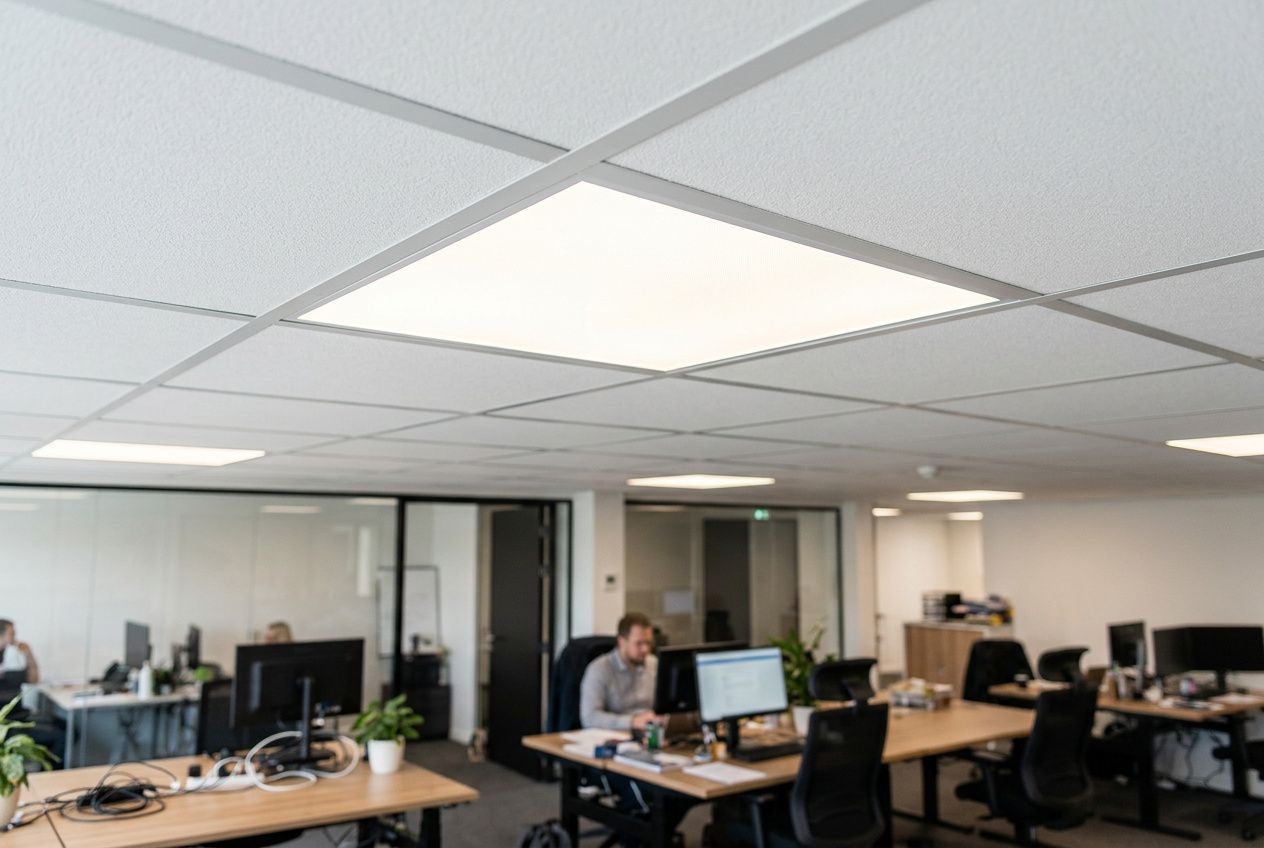
Before focusing on plants, let's look at the direct impact of artificial lighting on your own well-being and your work. A poorly configured lighting system can harm your eye health and reduce your efficiency. Prolonged exposure to blue light, for example, disrupts melatonin production, which can lead to fatigue and difficulty concentrating.
- Excessive blue light: It inhibits melatonin secretion and disrupts the circadian rhythm, especially in the evening.
- Limited spectrum: An incomplete spectrum often causes eye strain and reduces productivity in work areas.
- Insufficient intensity: Too low a brightness level creates a feeling of fatigue and slows down daily activities.
- Poorly managed glare: Excessive light contrast plays a negative role in eye comfort and affects performance.
The solution is to opt for full-spectrum fixtures, ensuring an ideal balance, especially in an office. A white light described as cool in the morning stimulates alertness, while a warm light in the evening promotes relaxation. For your plants, the principle is similar: adapting the color and temperature of the light is essential for spectacular results.
Optimal settings for indoor growing with LED
Now let's move on to the specific settings for ensuring vigorous growth in your plants thanks to artificial light. Position your LEDs at a distance of 30 to 60 cm to avoid any risk of burning while still delivering the necessary light energy. Watch your plants' reaction closely to gradually adjust the height of your lamp.
Exposure duration is just as crucial for preserving your plants' health. During the vegetative stage, favor 18 hours of light, then reduce to 12 hours to induce flowering. Using a programmable timer lets you automate these cycles for optimal lighting with no manual intervention.
Automation and smart control of your lighting
Dimmers are perfect for adjusting the power of your fixtures and reducing energy consumption based on need. Light sensors can also automatically adjust lighting based on ambient brightness. These technical solutions remain accessible, even for beginners.
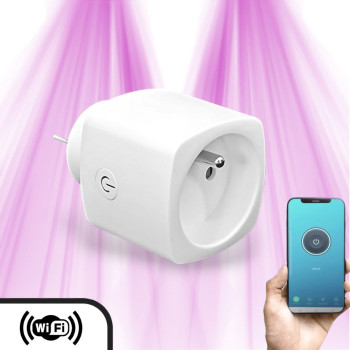
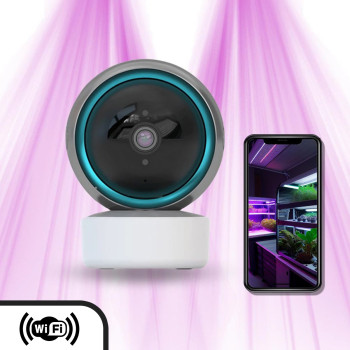
A good horticultural lighting system often includes a mobile app to control the photoperiod and color temperature. Thanks to automation, your plants follow a perfectly calibrated routine, even while you're away. With kits that include these smart features, you can optimize every aspect of your growing with total peace of mind.