














































































In indoor growing, everything starts with light. Behind your plants' explosive growth lies a fundamental chemical reaction: the photosynthesis formula — 6 CO2 + 6 H2O + light energy → C6H12O6 + 6 O2. Understanding this process means knowing why the spectrum of your LED grow light changes everything: blue for vegetative growth, red for flowering, full spectrum to maximize your daily DLI.
What Is the Chemical Formula of Photosynthesis
The simplified photosynthesis equation is written: 6 CO 2 + 6 H 2 O + light energy → C 6 H 12 O 6 + 6 O 2. In simple terms, six molecules of carbon dioxide combined with six molecules of water, under the effect of photons, produce one molecule of sugar (glucose) while releasing six molecules of pure oxygen
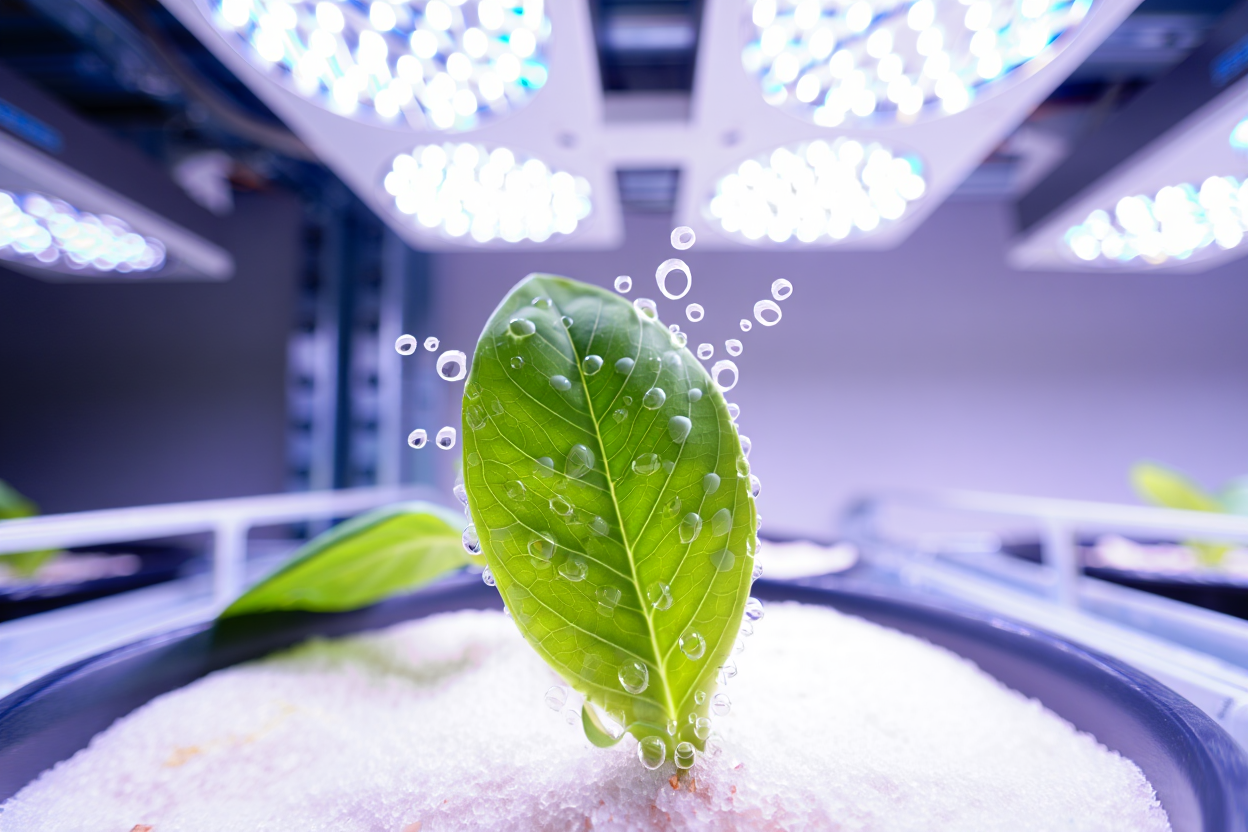
The Essential Reactants: CO 2, Water, and Light
Three main players orchestrate this vital reaction: the CO 2 absorbed through the stomata, water carried to the chloroplasts, and light that provides the triggering photon energy
- Carbon dioxide (CO 2) : this gas enters through the leaf pores and is the sole carbon source for making glucose. In indoor growing, an optimal concentration is between 400 and 800 ppm.
- Water (H 2 O) : drawn up by the roots, it undergoes photolysis in the chloroplasts, releasing electrons, protons, and precious O 2.
- Light : the photons captured by chlorophyll convert solar energy into chemical energy the plant can use.
- Chlorophyll : this magical plant pigment, housed in the chloroplasts, acts as a natural energy converter.
Our LED grow lights specifically target blue (~450 nm) and red (~660 nm) wavelengths that boost photosynthetic efficiency. The result? Increased CO 2 absorption, multiplied oxygen production, and optimized glucose synthesis
The End Products: Glucose and Oxygen
The chemical balance produces two treasures: glucose (C 6 H 12 O 6) - energy fuel stored as starch - and dioxygen (O 2). Did you know a mature plant can release up to 5 liters of O 2 per day? A real natural air purifier for your grow space!
Stoichiometric Meaning of the Equation
The balanced equation shows that 6 moles of CO 2 (264 g) and 6 moles of H 2 O (108 g) generate exactly 1 mole of glucose (180 g) and 6 moles of O 2 (192 g). This ratio guarantees perfect atom conservation.
The carbon in glucose comes entirely from atmospheric CO 2, while the hydrogen is supplied by water. The released oxygen gas mainly originates from the photolysis of water molecules - a mechanism demonstrated by historic isotope labeling experiments
| Reactant/Product | Molar Quantity | Mass (g) | Function |
| CO 2 | 6 mol | 264 g | Exclusive carbon source |
| H 2 O | 6 mol | 108 g | Source of hydrogen and electrons |
| Glucose (C 6 H 12 O 6) | 1 mol | 180 g | Plant energy reserve |
| O 2 | 6 mol | 192 g | Valorized byproduct (aerobic respiration) |
The Two Stages of the Photosynthetic Mechanism
Photosynthesis breaks down into two closely linked stages. The light-dependent stage converts photons into light energy stored as ATP and NADPH, while the light-independent stage (or Calvin cycle) uses these molecules to fix carbon dioxide (CO2) and produce glucose.
Light Reactions: ATP and NADPH Production
When light reaches the chloroplasts, photons excite the electrons of the photosynthetic pigments located in the thylakoids. This energy drives water photolysis, releasing electrons, protons, and also O2 (dioxygen) as a byproduct. This cascade of reactions results in the production of the precious ATP and NADPH molecules.
To boost these processes indoors, Advanced Nutrients' B-52 fertilizer supplies essential cofactors that strengthen thylakoid efficiency and optimize energy yield.
Calvin Cycle: Fixing CO2 into Glucose
Independent of light (hence its name light-independent stage), this second step uses the accumulated ATP and NADPH to convert atmospheric CO2. The key enzyme, rubisco, fixes carbon dioxide (CO2) onto a receptor molecule, triggering a complex series of biochemical reactions.
Thanks to this cycle, plants progressively synthesize simple three-carbon sugars, which then combine to form glucose. Note that this process can continue for a few minutes after light stops, as long as ATP and NADPH reserves remain available.
Where Does the Oxygen Produced by Plants Come From?
For a long time, scientists believed that carbon dioxide was the source of the released oxygen. But studies using isotopes revealed that the origin of the oxygen is actually in water, when it is broken down by green plants during photolysis.
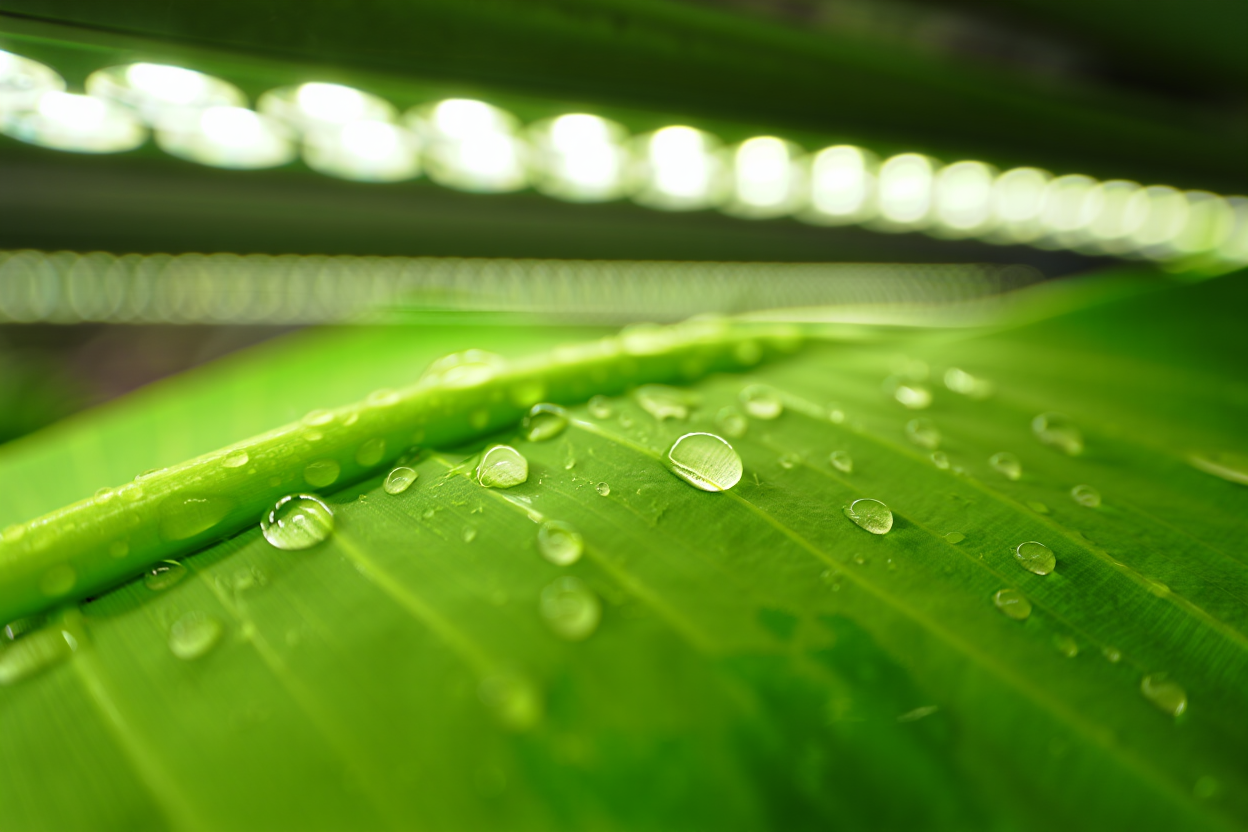
Water Photolysis: The Sole Source of Released O₂
The photosynthesis balance shows that the splitting of water molecules marks the start of the process: 2 H₂O → 4 H⁺ + 4 e⁻ + O₂. Under the effect of light energy, the chlorophyll contained in photosystem II splits the water molecules, enabling oxygen production. The electrons released this way feed the transport chain, while the protons create a gradient essential for ATP synthesis, and the oxygen (O₂) is released into the air.
In indoor grows, regular hydration is crucial for this reaction: an automatic watering system maintains the water supply, promotes O₂ release, and supports the whole metabolic cycle.
Experimental Evidence with Oxygen Isotopes
In the 1940s, researchers labeled water with oxygen-18 (¹⁸O) and did the same with CO₂. The O₂ gas produced contained exclusively the ¹⁸O isotope when only the water was labeled, proving that the photosynthesis reaction releases oxygen from water, not from carbon dioxide. This discovery revolutionized our understanding of the process.
In experiments on aquatic plants like Elodea, adding bicarbonate stimulates glucose production and speeds up gas release. Yet isotopic analyses consistently confirm that every oxygen bubble does indeed come from water. Meanwhile, iodine (lugol) tests reveal starch accumulation in the chloroplasts, thereby proving the conversion of light energy into chemical energy.
Link Between Photosynthesis and Cellular Respiration
Cellular respiration works as the reverse of photosynthesis: C₆H₁₂O₆ + 6 O₂ → 6 CO₂ + 6 H₂O + ATP. Plants break down glucose to recover the stored chemical energy, releasing carbon dioxide and water in the process.
During the day, photosynthesis dominates and enriches the air with oxygen; at night, respiration takes over, releasing CO₂. Understanding this cycle well helps you adjust ventilation to create an optimal environment for plant growth.
The Crucial Role of Light and Chlorophyll
Light energy and chlorophyll are the essential drivers of photosynthesis. Without them, photosynthetic organisms couldn't activate their chloroplasts. During the light-dependent stage, these elements capture photons to produce ATP and NADPH, then trigger carbon fixation, which generates glucose, sugars, and other organic compounds essential to plants' life cycle
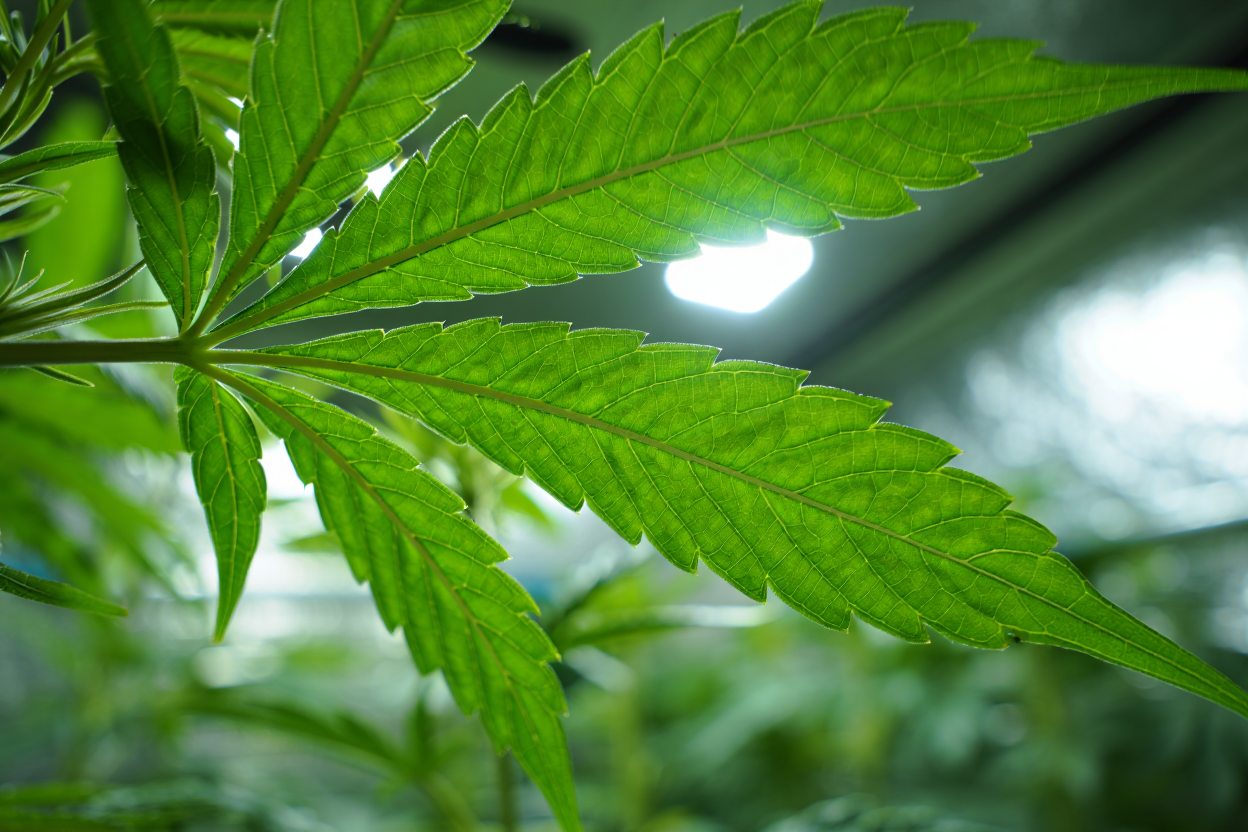
How Chlorophyll Captures Light Energy
Chlorophyll acts like an ultra-efficient antenna: it mainly absorbs blue (≈ 450 nm) and red (≈ 660 nm) wavelengths, while reflecting the green that gives plants their characteristic color. Each absorbed photon excites an electron, triggering a chain reaction that converts light energy into chemical energy the plant can use
- Optimal absorption spectrum : chlorophylls a and b cover complementary spectral ranges to maximize light capture.
- Energy transformation : the absorbed energy enables water splitting, releases oxygen, and efficiently produces ATP and NADPH.
- Strategic positioning : embedded in the chloroplast membranes, chlorophyll forms extremely efficient light-harvesting complexes.
Without chlorophyll, even powerful LED light remains ineffective: photosynthesis stops, forcing plants to draw on their reserves. This underscores its essential role in producing vital organic molecules
The more chlorophyll-rich a leaf is, the more glucose it generates, boosting the plant's vigor. Dark green foliage therefore indicates excellent photosynthetic capacity and strong potential for organic compound production in indoor growing!
Importance of Iron for Chlorophyll Synthesis
Iron plays a key role as an enzymatic cofactor. Its absence blocks chlorophyll production, causing chlorosis and lower yields. Even under optimal LED lighting, an iron deficiency limits the light-dependent stage, reduces ATP and NADPH synthesis, and slows carbon fixation.
- Enzymatic activation : iron activates key enzymes and takes part in electron transport systems.
- Deficiency symptoms : yellowing between the veins of young leaves and a drastic drop in photosynthetic efficiency.
- Essential bioavailability : iron must be chelated to be absorbed and then transported to the chloroplasts.
To quickly correct an iron deficiency, the Vita Race foliar spray delivers directly absorbable iron onto the leaves. Within 48 to 72 hours, chlorophyll rebuilds, the green color returns, and organic compound synthesis resumes vigorously
Optimization with Horticultural LED Lighting
Horticultural LEDs precisely target the red and blue wavelengths preferred by chlorophyll, unlike traditional lamps that are too rich in infrared. This custom spectrum boosts ATP production by about 30%, optimizing the Calvin cycle and the formation of organic molecules
Blue LEDs stimulate growth and chlorophyll production, while red ones promote flowering and sugar accumulation. Our systems intelligently combine these spectra to maximize yields at every stage of plant development
Light intensity should be adjusted progressively: 200-400 µmol/m²/s during vegetative growth, 600-1000 µmol/m²/s during flowering. LED light that's too weak reduces the light-dependent stage and limits NADPH, while too much stresses the plant. We help you find the right balance to make the most of light energy without compromising your crops' health
Essential Nutrients to Optimize Photosynthesis
For efficient photosynthesis, light, water, and CO₂ alone aren't enough. Certain minerals play a key role at every step of the process. Potassium and phosphorus are particularly important: the former regulates gas exchange, while the latter supplies the chemical energy essential to the Calvin cycle. A balanced supply improves both carbon fixation and O₂ production.
Potassium: CO₂ Regulation and ATP Production
In photosynthesis, potassium acts on two levels. First, it helps control stomatal opening, allowing leaves to absorb more carbon dioxide. Second, it takes part in making and transporting ATP in the chloroplasts, thereby supplying the energy needed for the light-dependent stage.
A sufficient potassium supply can increase photosynthetic efficiency by 15%. However, too much potassium can block the absorption of other minerals like calcium or magnesium, disrupting the proper functioning of the cycle.
Phosphorus: Energy for the Calvin Cycle
Phosphorus ATP is essential to plant metabolism. It enables the conversion of ADP into ATP in the chloroplasts, thereby fueling the reactions of the light-independent stage. Without enough phosphorus, carbon fixation slows down, even if the light-dependent stage functions normally.
- Energy role : Phosphate bonds in ATP store energy (~30.5 kJ/mol), essential for chemical reactions.
- Genetic function : Phosphorus is a component of DNA and RNA, needed to produce enzymes like rubisco.
- Deficiency : Leaves turn dark or purplish, growth stalls, and carbon fixation can drop by 40 to 60% due to lack of energy.
In indoor growing, phosphorus needs increase considerably during flowering, since resin production requires a lot of ATP. A good P supply promotes the conversion of CO₂ into sugar, while maintaining a stable release of O₂.
HESI Phosphor for the Flowering Stage
During this crucial period, use HESI Phosphor to boost your photosynthesis. Its blend of phosphorus and potassium photosynthesis stimulates ATP production, optimizes stomatal opening, and improves the conversion of CO₂ into sugars.
- Dosage : 25 ml per 10 L of water, from mid-flowering until 10 days before harvest to avoid salt buildup.
- Results : Better floral density and an increase of about 10% in sugars within 7 to 14 days.
- Storage : Keep away from light and in a dry place for maximum effectiveness.
Overdosing can cause nutritional imbalances: too much phosphorus impairs zinc and iron absorption, while excess potassium disrupts calcium. A measured supply ensures a harmonious photosynthetic cycle, from the light-dependent stage to the light-independent stage, for optimal harvests.
Which LED Lighting Should You Choose to Optimize Photosynthesis in Indoor Growing?
Now that you've mastered the photosynthesis formula, choosing your lighting becomes an informed technical decision. To maximize the photosynthetic efficiency of your crops, choose a lamp covering the full PAR spectrum (400-700 nm):
- Blue 430-450 nm: activates chlorophyll b, boosts vegetative growth and leaf density.
- Red 650-680 nm: optimizes chlorophyll a for flowering and sugar production.
- Full spectrum: reproduces sunlight for a perfect ATP/NADPH ratio at every stage.
The SpectraWILD LED bars from BloomLED are designed to precisely reproduce this balanced solar spectrum, simultaneously activating photosystems I and II. To go further, check out our complete guide to choosing your LED grow light and our article on the different spectrum colors.