



































































Looking for the best LED light for your indoor plants? There's much more than price and design that sets an LED grow light apart from a standard bulb. With its optimized light spectrum, excellent thermal management, PPFD output, and great durability, these grow lights truly revolutionize indoor plant growth. Ready to understand how a well-suited full spectrum can boost your plants' development and flowering? Let's see together how to choose the perfect solution!
Light Spectrum: Why Do LED Grow Lights Outperform?
What fundamentally sets a grow light apart from standard lighting is above all its light spectrum. While a standard bulb emits light designed for the human eye, an LED grow light precisely delivers the wavelengths the plant needs. The result? More efficient photosynthesis, faster development, and improved yields thanks to a full spectrum suited to each growing phase.
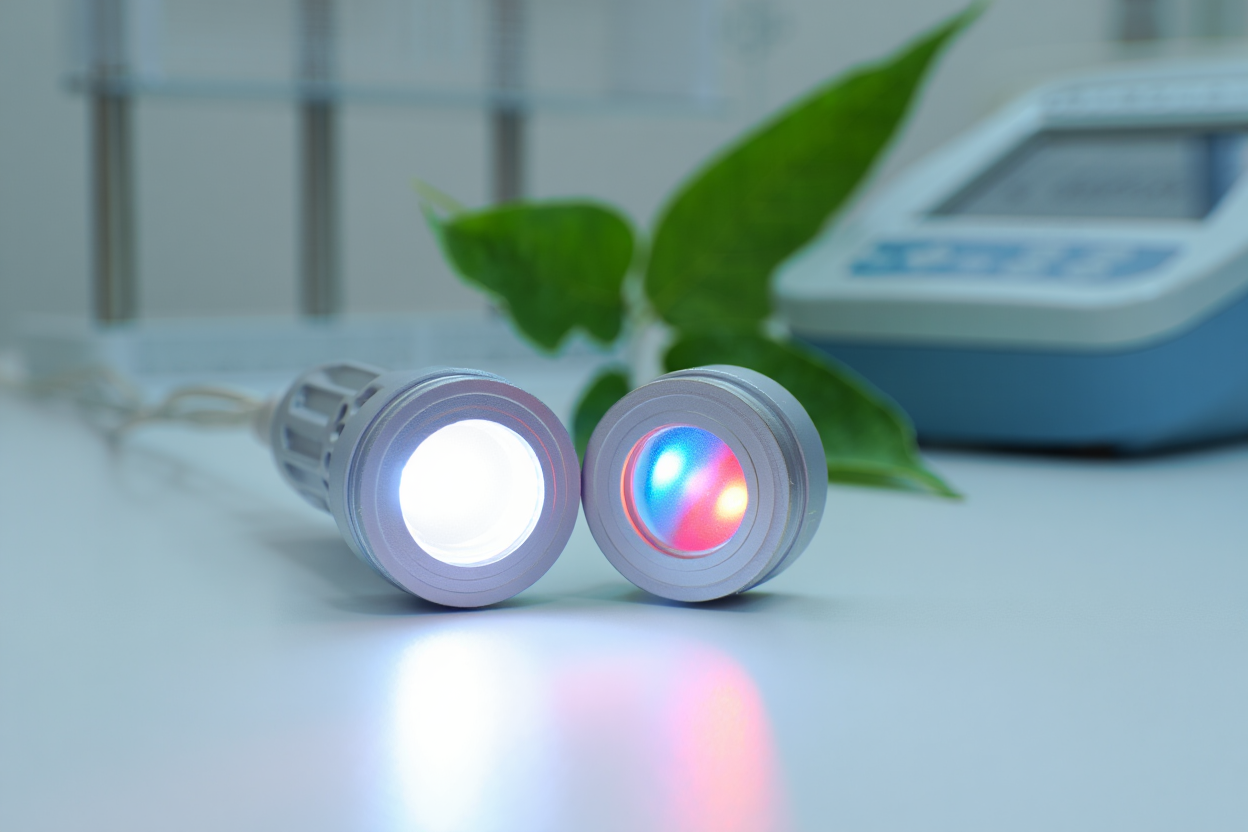
Targeted Wavelengths vs. General White Spectrum
An LED grow light specifically emits blue (400-500 nm) for vegetative growth and red (620-660 nm) for flowering, often supplemented with UV and infrared. Find out here how these LEDs reproduce chlorophyll's absorption peaks, where the plant actually converts light energy. By comparison, a household white LED contains only about 15% of these crucial wavelengths.
The best Full Spectrum models combine different white color temperatures, 660 nm red, UV, and IR to mimic natural light - which improves aromas, flavors, and floral density. With the right spectrum, your plants grow faster, flower more abundantly, and give better yields without changing your setup.
- For vegetative growth : 70% blue / 30% red gives dense, compact foliage
- For flowering : 80% red / 20% blue maximizes flower production
- Concrete results : under full spectrum, herbs and tomatoes grow 25% faster than under a standard white LED
Unlike standard white diodes, LED grow lights feature specific chips (450nm, 660nm...) perfectly suited to each stage of plant development. A real asset for growing like a pro indoors!
UV and Infrared: The Invisible Assets of Grow Lights
UV stimulates plants' active compounds while infrared improves cellular respiration. Absent from standard fixtures, these wavelengths strengthen natural defenses, intensify flavors, and optimize nutrient absorption. In short, you reproduce the benefits of natural light in your indoor space.
Concrete example: a 240W grow light delivers a light intensity (PPFD) up to 16 times higher than an ordinary household bulb. This is why your plants stagnate under standard lighting but thrive under grow light lighting.
Adjustable Spectrum for Every Indoor Growing Phase
Recent LED grow light models offer an adjustable spectrum via a mobile app: more blue for vegetative growth, more red for flowering. This flexibility - impossible with a white LED - lets you perfectly adapt the lighting to each stage of development.
Some growers go even further by modulating the spectrum throughout the day: blue-dominant in the morning to boost photosynthesis, more red in the evening to prepare for flowering. Controllable from your smartphone, this smart management of light and heat makes professional results accessible, even for beginners.
Energy Efficiency: Comparing the Real Performance of Lights
LED grow lights offer far greater energy efficiency than older HPS lamps. It's not simply about comparing watts or lumens - these units correspond to human vision, not the actual photosynthesis and growth needs of plants in indoor growing.
The real performance indicator for grow lighting is photon efficacy (µmol/J), which measures the amount of light actually usable by plants. By this measure, modern models show a considerable advantage, while producing less heat than a traditional lamp of the same wattage.
PPFD vs. Lumens: Measuring What Really Matters
PPFD (Photosynthetic Photon Flux Density), expressed in µmol·m⁻²·s⁻¹, precisely measures the photons active for photosynthesis, and thus the yield potential. A 200W LED grow light delivers about 800 µmol·m⁻²·s⁻¹ at 30 cm, where a similar standard bulb tops out at 300 µmol·m⁻²·s⁻¹.
This difference explains why a plant like basil can triple in volume under suitable lighting. You thus get better growth while significantly reducing your energy consumption.
- Photon efficacy : Up to 4 µmol/J for LED grow lights versus less than 1 µmol/J for consumer models - the light is used four times better for growth.
- Optimized DLI : A 100W LED grow light produces about 15 mol/m²/day, versus 5 mol for standard lighting.
- PAR meter precision : Measuring PPFD lets you determine the ideal installation height, information rarely provided by manufacturers.
- High-performance COB modules : Horticultural COBs reach 2.5 µmol/J, versus only 0.8 µmol/J for an ordinary white LED.
With technologies such as SMD, High-Power, or COB LEDs approaching 100 lumens/W, modern grow lighting offers twice the efficiency of older models. Their specialized spectrum maximizes the red and blue wavelengths essential to photosynthesis, while limiting energy waste as heat. The result: a well-sized setup easily replaces three HPS lamps of equivalent wattage.
| LED Type | Efficacy (µmol/J) | PPFD at 30 cm (µmol·m⁻²·s⁻¹) | DLI for 100 W (mol/m²/day) |
| Full Spectrum LED grow light | 4.0–4.5 | 800–900 | 15–18 |
| Standard white LED | 0.8–1.2 | 280–350 | 5–7 |
| Horticultural COB LED | 2.5–3.0 | 650–750 | 12–15 |
| Standard Dip LED | 0.5–0.8 | 150–220 | 3–5 |
Reduced Power Consumption for Optimal Lighting
Thanks to their exceptional energy efficiency, LED grow lights need 30 to 40% less power to achieve the same results. Over a full growing season, this saving can represent a 60 to 70% reduction on your electricity bill, allowing you to quickly pay off the initial investment.
In practice, a 100W LED grow light produces the same usable light as three 100W household lamps. You thus make substantial energy savings while giving your plants optimal growing conditions to improve yield.
Thermal Management and Distance: Optimizing Your Indoor Setup
LED grow lights offer a major advantage thanks to their excellent thermal management, far superior to traditional lighting. This feature allows the lights to be placed closer to the plants, increasing light intensity without risk of burning or heat stress. The result? More efficient photosynthesis, faster growth, and improved yields for your indoor crops.
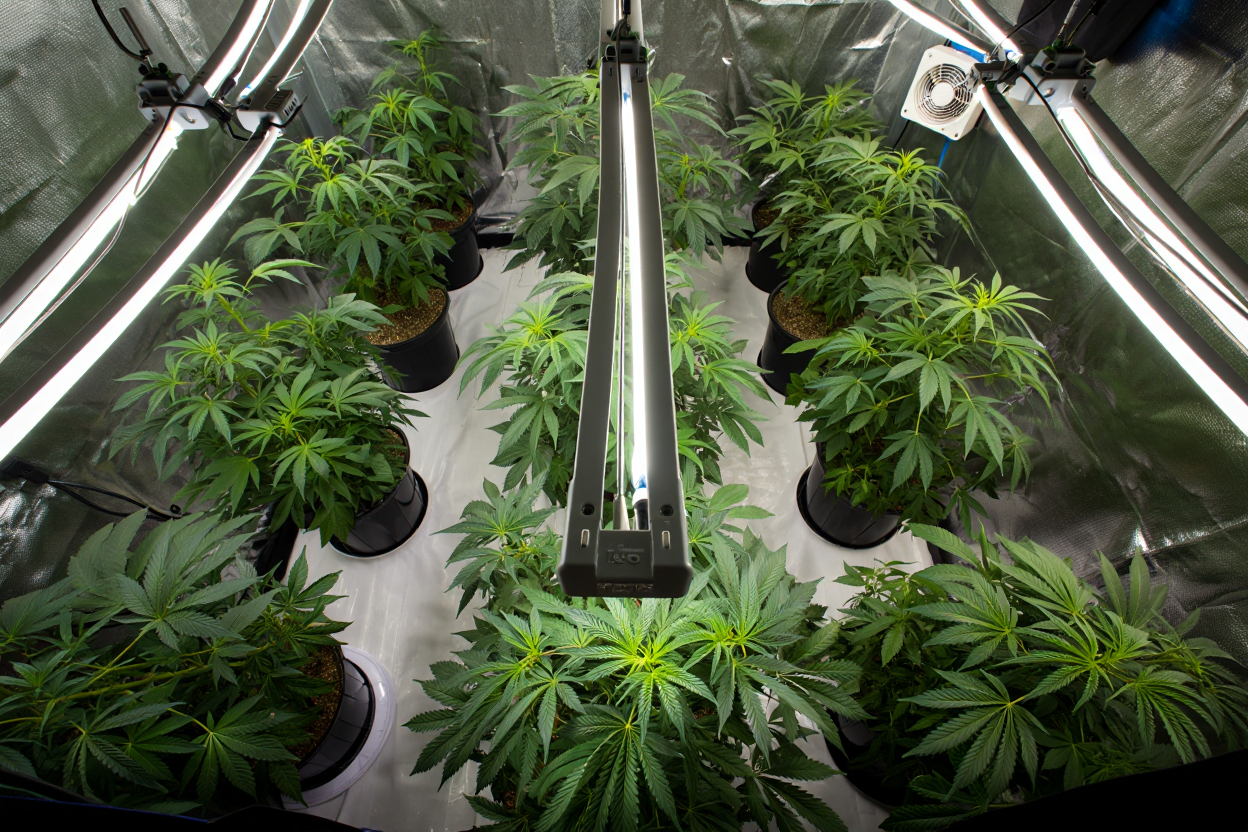
Reduced Heat for Closer Placement to Plants
With less than 10% of their power converted to heat, LED grow lights stay below 30°C. By comparison, a 600W HPS lamp during flowering needs 60-80 cm of distance, whereas a good LED grow light can be placed between 50-70 cm - some high-end models even allow moving as close as 5-10 cm!
600W grow panels use only 100W extra for cooling, versus 250W for standard LEDs. This 60% saving on ventilation reduces both your electricity bill and ambient noise. Thanks to their quality aluminum heat sinks, their lifespan reaches 60,000 hours, versus 10,000-20,000 hours for household lighting.
600W HPS Flowering Distance vs. LED Grow Light
The thermal superiority of LEDs changes everything: where a 600W HPS must be placed far from the plants, an LED grow light of the same wattage can be installed at 50-70 cm. This proximity allows better light distribution over 1 to 3 m² without shaded areas, optimizing every part of your indoor growing space.
- Ideal positioning : 30-50 cm above the plants, with a 100 CFM exhaust fan to keep the temperature below 35°C
- Energy savings : 40-50% reduction in ventilation needs
- Efficient cooling : solid aluminum heat sinks regulate temperature perfectly
- Quiet operation : no noisy fans thanks to passive cooling
The low heat output allows for optimal proximity, significantly increasing the PPFD received by the plants. This boosts photosynthesis and speeds up growth, without heat stress even during the flowering phase. In a 60×60 cm space, two 50W SMD panels can run without an additional fan.
Minimal Ventilation Thanks to High-Performance Heat Sinks
Passive cooling systems (thick fins, heat pipes...) maintain a stable light spectrum for 18 hours straight, guaranteeing constant output. Conversely, household LEDs see their efficiency drop quickly with heat, compromising photosynthesis.
Maintenance is limited to simply dusting the heat sinks every 2-3 months. While consumer lamps build up heat in their housing, reducing their performance, LED grow lights offer a durable solution: less maintenance, more flowering, and reliable lighting for your indoor crops.
LED Technologies: Choosing the Right Type for Your Plants
LED grow lights come in different technologies: SMD, COB, High-Power, Dip, and COB Filament. Each type has unique characteristics in terms of light output, beam angle, and thermal management - all decisive criteria for optimizing your crops' vegetative growth, flowering, and yields. Understanding these differences well will let you choose the LED technology best suited to your grow space, budget, and goals.
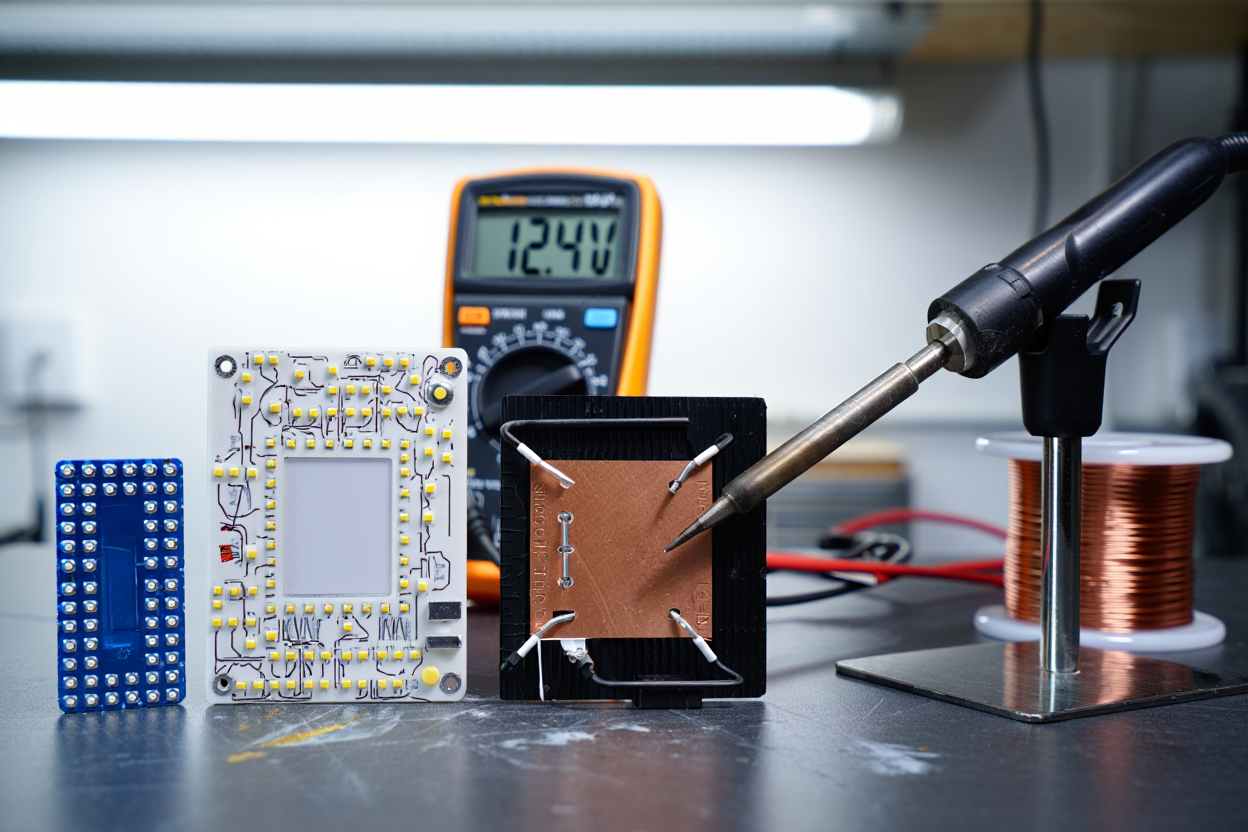
SMD, COB, and High-Power: Which Technology to Choose?
SMD (Surface Mounted Device) LEDs stand out for their compactness and energy efficiency, often achieving more than 80 lm/W with a beam angle of about 140°. Their low heat output makes thermal management easier and lets them effectively light nearly one square meter - ideal for grow cabinets or multi-tier setups. To replace a 250W sodium lamp with LED, a 100 to 150W SMD panel cuts consumption by 40 to 60% while maintaining excellent light intensity.
- High-Power LEDs : With their narrow beam angle (~45°), they offer perfect intensity for the flowering phase, though they require a suitable cooling system.
- High-density COB LEDs : These modules bring together multiple chips to reach more than 100 lm/W with an 80° angle, an excellent compromise between power and coverage.
- COB Filament LEDs : Their 360° beam ensures uniform lighting over small areas without creating shaded spots.
Dip LEDs, an older technology, have poor efficacy (less than 30 lm/W) and too narrow a beam angle (about 30°), making them poorly suited to horticulture. For example, three 100W SMD panels arranged in a triangle cover the same area as a 150W COB - it's up to you to choose based on your grow space configuration. Their low heat output simplifies ventilation and improves climate stability in your setup.
Replacing a 250W Sodium Lamp with a Modern LED Grow Light
Replacing a sodium lamp with a modern LED grow light is a real revolution: up to 90% of the energy is now converted into light usable by the plant instead of being lost as heat. Specialized LED types (SMD, COB) feature high-end chips (Cree, Osram, or Samsung) perfectly suited to the different growth phases, offering a precisely calibrated light spectrum.
A horticultural COB module brings together several closely-spaced diodes to create a uniform, particularly powerful light source. Some models even offer spectra adjustable via PWM or DMX: more blue light during the vegetative phase, more red during flowering, which significantly improves yields.
The difference is striking: compare, for example, a Mars Hydro TS 1000 (600W equivalent) using 4000 diodes with an active cooling system, and a simple 12V household LED strip. The former, with its wide 140° beam angle, uniformly covers one square meter without shadows, thereby reducing the number of light sources needed, energy consumption, and the overall heat of the setup.
Durability and Yield: Investing in Grow Lights
Choosing a quality LED grow light is a wise choice for any grower. With their impressive longevity, optimized full spectrum, and resistance to humid conditions, these grow lighting systems offer an excellent return on investment. Far more than a simple energy saving, they provide the ideal light power to maximize your indoor crops' yield.
Extended Lifespan of Certified LED Grow Lights
High-end LED grow lights easily reach 60,000 hours of operation, while basic models lose up to 30% of their intensity after only 10,000 to 20,000 hours. Thanks to high-performance thermal design, a professional LED grow light maintains more than 90% of its efficiency even after several years of intensive use.
Let's now compare 600W HPS lamp power consumption (about 660W with ballast) to an equivalent LED panel (about 300W). LED technology saves up to 55% of the energy consumed, while considerably reducing the heat given off. There's also no need to regularly replace bulbs as with HPS, which further improves the durability of your setup.
- Optimal protection : IP66-IP68 rating against humidity and dust for reliable grow lighting.
- Light stability : less than 10% loss after 7 years of use, ensuring constant PPFD.
- Efficient cooling : passive or active systems to avoid any heat stress on the plants.
- Simplified maintenance : occasional cleaning alone is enough to maintain performance.
While the initial investment is higher, the savings made on energy consumption and maintenance generally allow the cost to be paid off in under two years. After that, every vegetative growth and flowering cycle benefits from optimal lighting at no extra cost, maximizing the economic and environmental benefits.
600W HPS Lamp Consumption vs. Equivalent LED Panel
The comparison leaves no doubt: a 240-300W LED grow light offers the same light intensity (measured in PPFD) as a 600W HPS, while cutting consumption in half. Over a year of use (12h/day), this represents about €200 in savings, not counting savings on bulb replacement.
High-end models feature smart dimming systems that let you adjust intensity as needed: 50% during the vegetative growth phase, 100% during flowering. This feature further optimizes the power consumed, cutting the energy bill by 30% without compromising the plants' development.
Growing Results: Superior Yield and Quality
Numerous studies show an average 30% increase in harvests thanks to the full spectrum of LED grow lights. For basil, for example, up to 180 leaves/m² are observed versus 130 under standard white lighting. This improvement comes from more efficient photosynthesis and increased production of aromatic compounds.
- Uniform distribution : elimination of shaded areas for uniform vegetative growth across all plants.
- Automatic adaptation : spectrum changes according to the development stage.
- Improved quality : increase in terpenes, flavonoids, and other beneficial compounds.
- Natural resistance : UV-enriched spectrum to stimulate plant defenses.
The best models effectively cover up to 3m² of growing space. Discover the benefits of the full spectrum of LED grow lights and optimize your setup for maximum yield, low energy consumption, and excellent durability.