


































































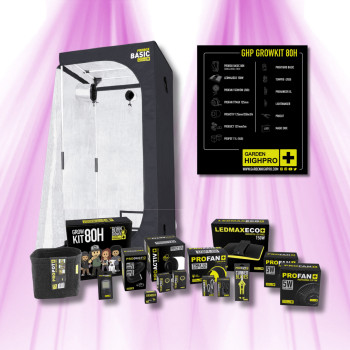

Want to grow your plants all year round, even without a sunny outdoor space? LED grow lights turn any indoor corner into a truly productive garden: vigorous seedlings, optimal vegetative growth, and abundant flowering thanks to perfectly suited lighting. This guide explains how to choose the right light intensity, schedule your lighting hours for each growth stage, and easily set up your system for professional results.
How an LED grow light works for growing indoors
LED grow lights have transformed indoor gardening by precisely reproducing the light spectrum needed for photosynthesis and healthy plant development. Unlike older, power-hungry models, these lights use very few watts, produce little heat, and provide all the wavelengths essential from germination to flowering. To dive deeper into the subject, check out our complete guide: Optimize your growing under a grow light with LEDs.
The light spectrum suited to each growth stage
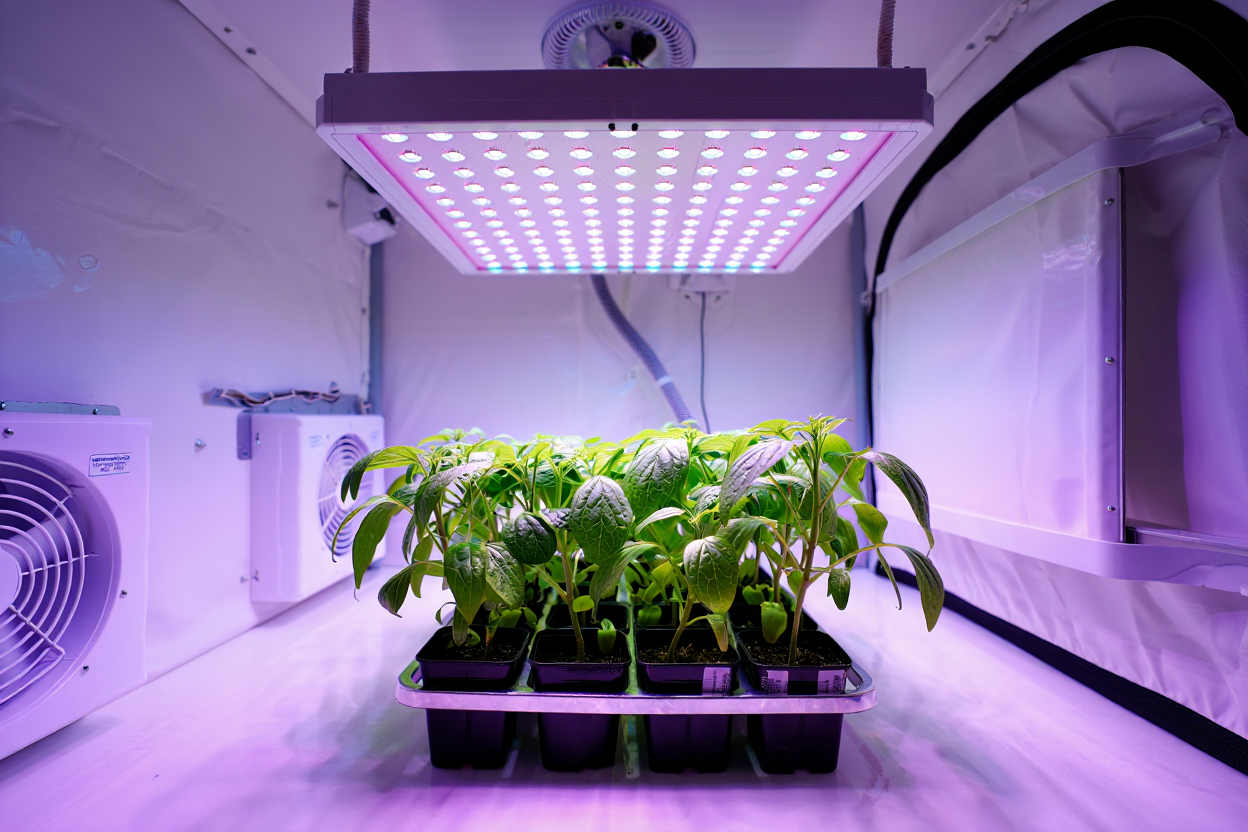
Using an effective LED grow light relies on understanding the light spectrum, since each color directly influences vegetative growth and flowering. Blue (400-500 nm) promotes leaf development and prevents legginess, while red (620-660 nm) stimulates flowering and improves yields.
- Blue spectrum for the vegetative stage: speeds up photosynthesis and strengthens stems right from the start
- Red spectrum for flowering: activates flower production and thickens fruit
- Full spectrum for mixed grows: covers all needs when several plants share the same space
- Adjustable intensity: start with 100-150 µmol/m²/s for seedlings, then gradually increase up to 600-800 µmol/m²/s for mature plants
For young shoots, moderate intensity prevents yellowing and encourages good root development. Generally schedule 18 hours of light and 6 hours of darkness during the vegetative stage, then switch to 12/12 for flowering — this night cycle is essential to plant metabolism.
Power and intensity based on the type of plant grown
Each plant species needs a light power suited to its natural environment. Mediterranean herbs like basil or thyme prefer 20-30 watts/m² with a cool spectrum (4000-7000 K) simulating sunlight. Orchids and shade-loving tropical plants are happy with 10-20 watts/m² placed 25 cm away to avoid any heat stress.
Demanding fruiting plants (tomatoes, strawberries, peppers) need 30-50 watts/m² with a full spectrum during fruiting to fully develop their flavors. As for seedlings and cuttings, they thrive with just 3-5 watts spread over a wide area for compact, damage-free growth. Thanks to the latest innovations in grow lighting, indoor gardening now reaches impressive levels of precision and productivity.
Which LED grow light should you choose for your plants
Finding the right LED grow light among the wide range available can be confusing. At GrowLED, we make your choice easier by focusing on four key criteria: power suited to your growing area, an optimal full spectrum for your plants, equipment durability, and the reputation of high-end manufacturers.
Essential criteria for selecting your LED lighting
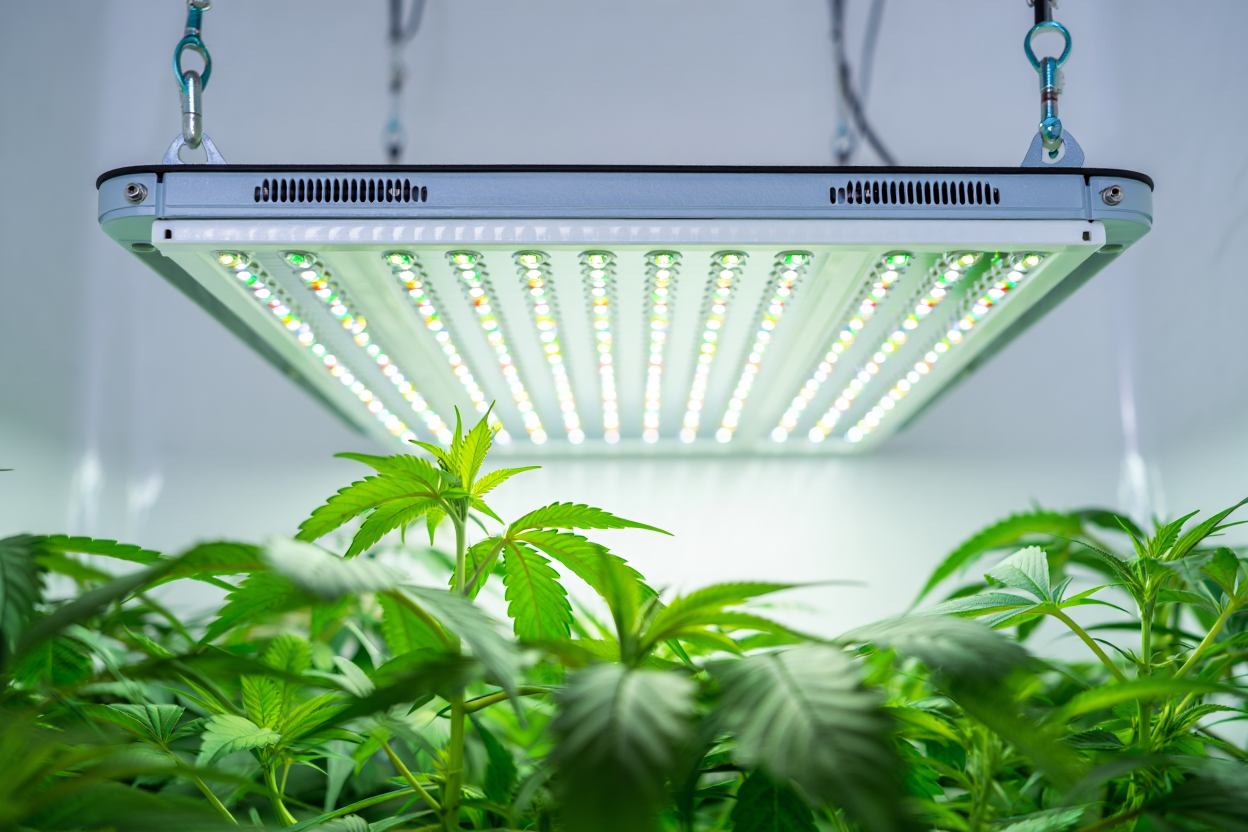
First, precisely determine the size of your indoor space to calculate the power needed: around 300 watts for 1 m² and 600 watts for 1.5 m² guarantee the ideal light intensity. Discover our specialized lighting systems for intensive growing. A full spectrum is perfect for every growth stage, while a targeted blue/red combination optimizes each specific stage.
- Dimmable function: adjust intensity from 10% to 100% to match plant growth without replacing your equipment.
- Efficiency in µmol/J: the higher this figure, the better the light converts electricity into usable light, lowering your consumption.
- Passive heat dissipation: COB or CREE LEDs release heat without a fan, keeping a stable environment.
Choose grow lights with a warranty of at least 5 years and an advertised lifespan of 50,000 to 100,000 hours to avoid premature degradation. At GrowLED, we offer Lumatek, Pure Factory, and BloomLED, brands well known for their reliability and consistent performance.
Modular systems offer excellent flexibility: start with a 200-watt LED panel, then add complementary modules as your needs evolve, without having to replace all your equipment.
Power and energy efficiency of grow lights
Successful indoor growing depends largely on having the right power: plan for 30-35 watts of LED grow lighting per square foot (0.33 m²) to get the optimal intensity. Today's LED lights use 40% to 60% less energy than HPS models while turning every watt into visible growth.
Concrete example: a 200-watt LED grow light used 18 hours a day costs about €0.02 per hour, or €15 a month, all while generating very little heat and often avoiding the costly use of air conditioning.
| Growing area | Recommended LED power | Target PPFD intensity | Estimated monthly consumption |
| 0.5 m² (seedlings, herbs) | 100-150 W | 200-400 µmol·m⁻²·s⁻¹ | €8-12 |
| 1 m² (standard growing) | 250-350 W | 400-600 µmol·m⁻²·s⁻¹ | €18-25 |
| 1.5 m² (intensive growing) | 500-650 W | 600-900 µmol·m⁻²·s⁻¹ | €35-45 |
Light efficiency (in µmol/J) measures real performance: the best lights reach 2.7-3.0 µmol/J, producing shorter internodes and yields 20% to 30% higher compared with models at 1.5 µmol/J.
The best brands available at GrowLED
A European leader since 2009, GrowLED selects only manufacturers who have proven their excellence. Lumatek stands out with its patented spectrums and stable ballasts, allowing precise control via a mobile app.
BloomLED and CannaLED combine competitive prices with solid performance through their full-spectrum panels, perfect for getting started with indoor growing. SANlight, a premium Austrian brand, offers modular bars reaching a record 3.1 µmol/J.
HLG (Horticulture Lighting Group) innovates with its quantum boards fitted with Samsung LM301 diodes, ensuring even light distribution. Every LED grow light purchased comes with an extended warranty, fast delivery in France, and expert technical support.
Installing and adjusting your LED grow light
A properly installed LED grow light is the key to successful indoor growing. The right distance, suitable ventilation, and a well-set lighting schedule create a stable environment where your plants get optimal photosynthesis, just like under real sunlight.
Positioning and optimal distance for the light
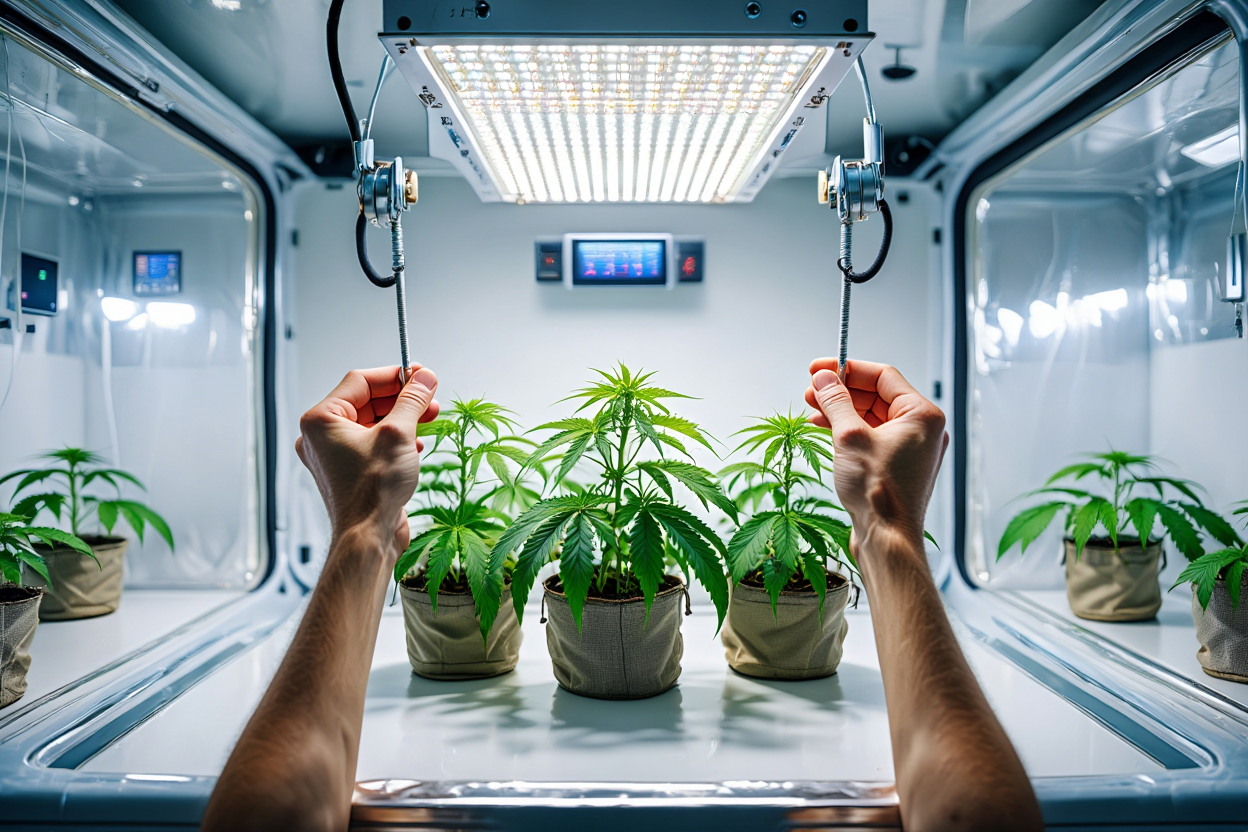
The way LED grow lights work requires a precise distance:
- For seedlings: 20-30 cm
- For mature plants: 30-50 cm (depending on their vigor)
Too close, and the leaves risk burning from the heat; too far, and your plants will stretch out looking for light, harming their vegetative growth.
Start with the light 5-10 cm above the potting soil for seedlings, then raise it gradually by 2 cm per week. An adjustable mount (tripod, rail) makes adjustments easier without touching the bulb, even though an LED grow light runs cooler than an HPS.
Environmental control and necessary ventilation
An optimal setup requires:
- Ventilation: minimum 1 CFM per watt of LED
- Temperature: kept between 22-26°C with a thermostat-controlled exhaust fan
Our tips for mastering your indoor space:
- Connected hygrometer: monitors humidity (45-65%) in real time
- Reflectors: Mylar or aluminum to redirect 95% of the light
- Secure electrical setup: surge-protected power strip kept away from damp areas
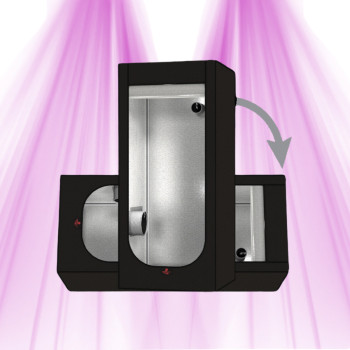
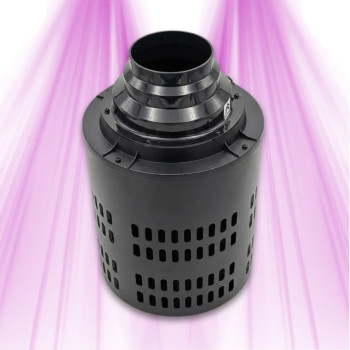
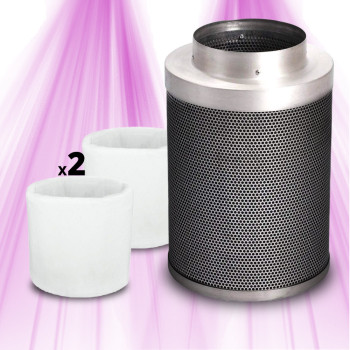
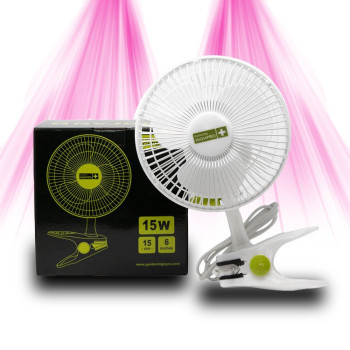
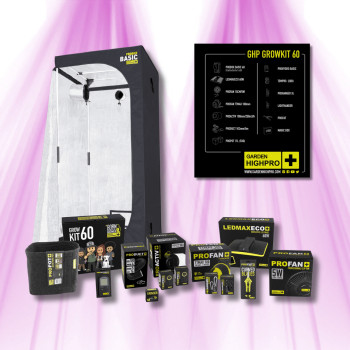
Even though LED gives off less heat, good air circulation remains crucial: it strengthens stems, prevents mold, and improves photosynthesis by bringing in fresh CO₂. Ready-to-assemble kits often include an exhaust fan and mounts to make installation easier.
Growing successful seedlings under LED grow lights
Turning your home into a true nursery is possible all year round thanks to growing seedlings under artificial light. A well-chosen grow light, combined with the right light intensity and a few simple techniques, lets you get vigorous seedlings before transplanting them into your vegetable patch or your grow tent.
Equipment and growing medium needed to get started
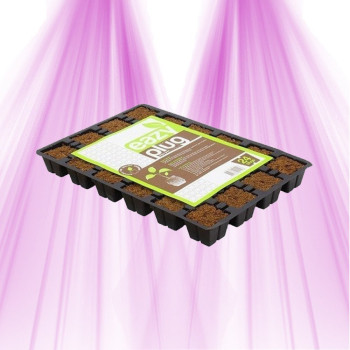
To succeed at growing seedlings indoors, start by getting small perforated containers and a light growing medium made of pre-moistened potting soil and sand. Tip: add a few clay pebbles to the bottom of the pots to improve drainage. Our complete guide will give you all the details for every step. Choose a 20-watt full-spectrum LED grow light, able to light an area of about 30 × 30 cm. Position it 15-20 cm above the seedlings to get the right intensity without risking burning the young shoots.
Planting steps and care for young plants
Before starting your germination under LED, thoroughly clean your containers with soapy water, then rinse and let them dry. Then fill them with growing medium and place your seeds: about 5 mm deep for small seeds, 2 cm for larger ones. Water by misting so you don't disturb the seedlings. Keep a constant temperature of 20°C for steady growth.
- Humidity phase (first 2-3 days): Keep the seedlings covered to maintain high humidity, but ventilate daily to prevent disease.
- Gradual acclimation: Start by removing the cover for 4 hours a day to toughen up the young stems.
- Controlled watering: Only water when the growing medium is dry on the first few millimeters, without following a strict schedule.
When the first true leaves appear, remove the cover for good to prevent the seedlings from stretching out. This crucial step prepares your young plants for a successful transplant into your grow tent or garden, while continuing to give them optimal light intensity thanks to grow lights.
Optimizing lighting for germination
During the germination stage, favor light rich in blue spectrum (400-500 nm) to encourage compact seedling development. Gradually introduce red spectrum (620-660 nm) once 4 to 6 true leaves have appeared. Schedule your lighting periods for 16 to 18 hours a day, followed by 6 to 8 hours of darkness to stimulate growth.
Start with an intensity of 100 to 150 µmol m⁻² s⁻¹, then gradually increase up to 300-400 µmol m⁻² s⁻¹ as growth progresses. Full-spectrum LED grow lights thus provide all the energy needed for successful indoor seedling growing, ensuring even germination and robust seedlings ready for their next stage of development.