








































































Expert LED horticole depuis 2009 +50 000 commandes livrées Note boutique 4,7/5 · 1 766 avis King-Avis SAV horticole français
Catalog
Microscopes & Plant Inspection
1 product
Look early, before an outbreak spreads
Inspection optics serve scouting: spotting a focus of mites or thrips on a few leaves rather than across a whole bay, then documenting what was seen. A microscope does not diagnose, it allows observation. That distinction determines the useful magnification and the instrument to buy.
Three instruments for three uses
- Counting loupe, ten to twenty times. The tool for walking the bay, hand-held, on a leaf in place. Most early detections are made with this, not with a microscope.
- Stereomicroscope, ten to forty times. Three-dimensional vision and a long working distance: the instrument for the observation bench, to examine a live sample.
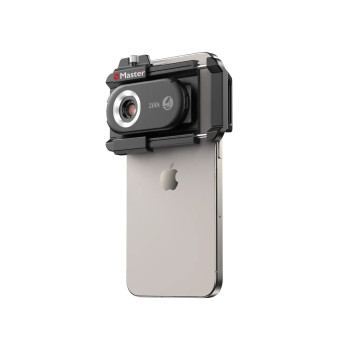
- Digital microscope. Its main value is the time-stamped capture: filing an image in the batch record, comparing two dates. In exchange, high-magnification models have very short working distances and very shallow depth of field.
Working distance before magnification
High magnification is not a better scouting tool: beyond a certain ratio, the field becomes so narrow and the depth of field so shallow that the sample has to be immobilised, which is impossible on a leaf in place. The criteria that count are working distance, depth of field and the quality of the ring illumination.
What observation will not tell you
Fungal and viral diseases cannot be identified reliably by eye, even with optics: observation points the way, laboratory analysis decides, and species identification goes beyond routine scouting. What optics bring is the dating of an outbreak, the tracking of a population between two walks and, combined with sticky cards, the conversion of an impression into an action threshold.
The microscopes and loupes in the catalogue cover occasional needs. Since observation is only useful when related to a course of action, it works alongside site hygiene and protection, and the blog explains how to recognise spider mites, thrips and aphids. This section belongs to commercial grow room equipment.
Showing 1-1 of 1 1/1
Satisfait ou remboursé
14 jours
Retour 14 jours
Frais de retour à votre charge
SAV expert FR
Conseil horticole
Paiement en 3, 4 ou 10 fois
Sans frais par CB


