













































































Have you ever wondered why water is so essential to plant life? This simple question hides one of the most fascinating biological mechanisms, one that makes water an absolutely indispensable element for their existence. Let's look together at how this vital liquid enables photosynthesis, transports nutrients, and ensures the sturdiness of your plants. This knowledge is fundamental to succeeding with your indoor garden.
How water fuels photosynthesis in plants
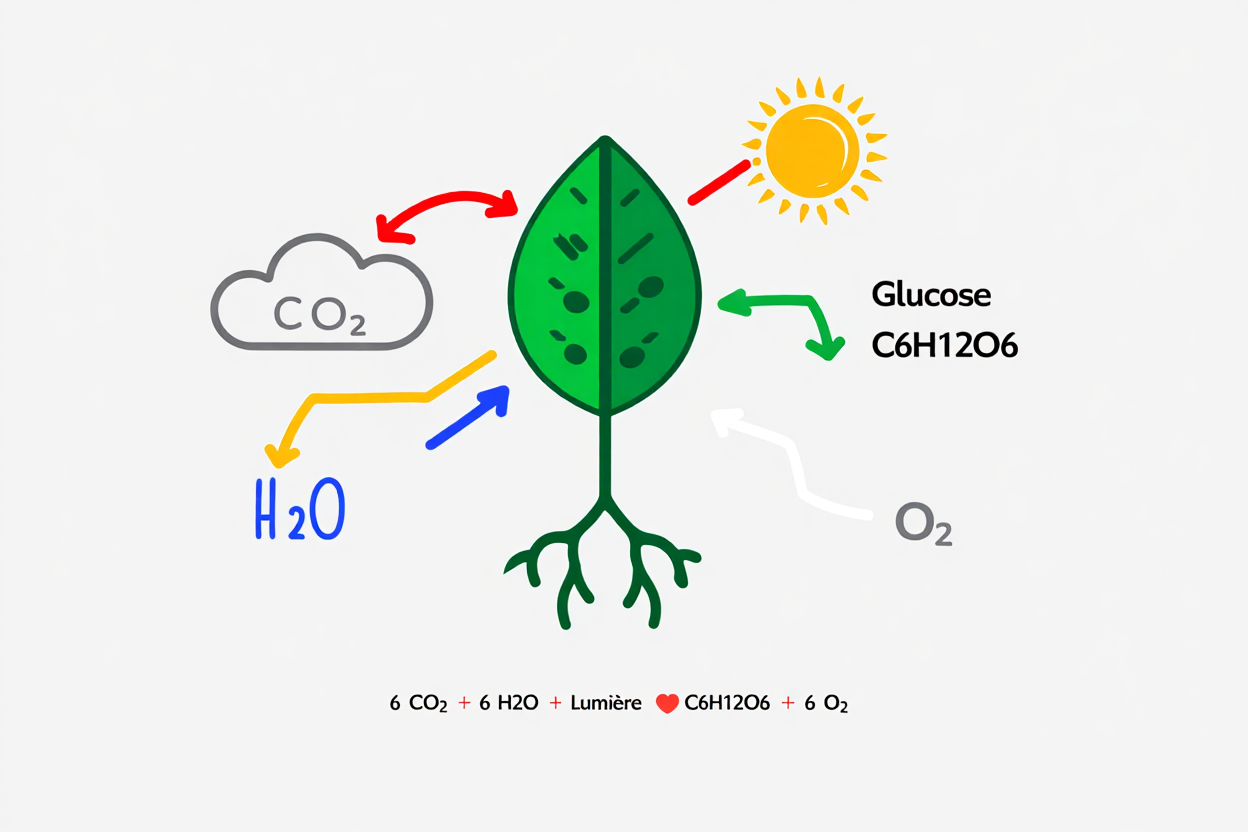
For your plants, water doesn't just quench their thirst: it's at the very heart of photosynthesis, the process that converts light into energy. Without a regular water supply, the plant can't produce the glucose it needs for its growth. Understanding how it works will let you fine-tune your watering and get better harvests.

Water photolysis and cellular energy production
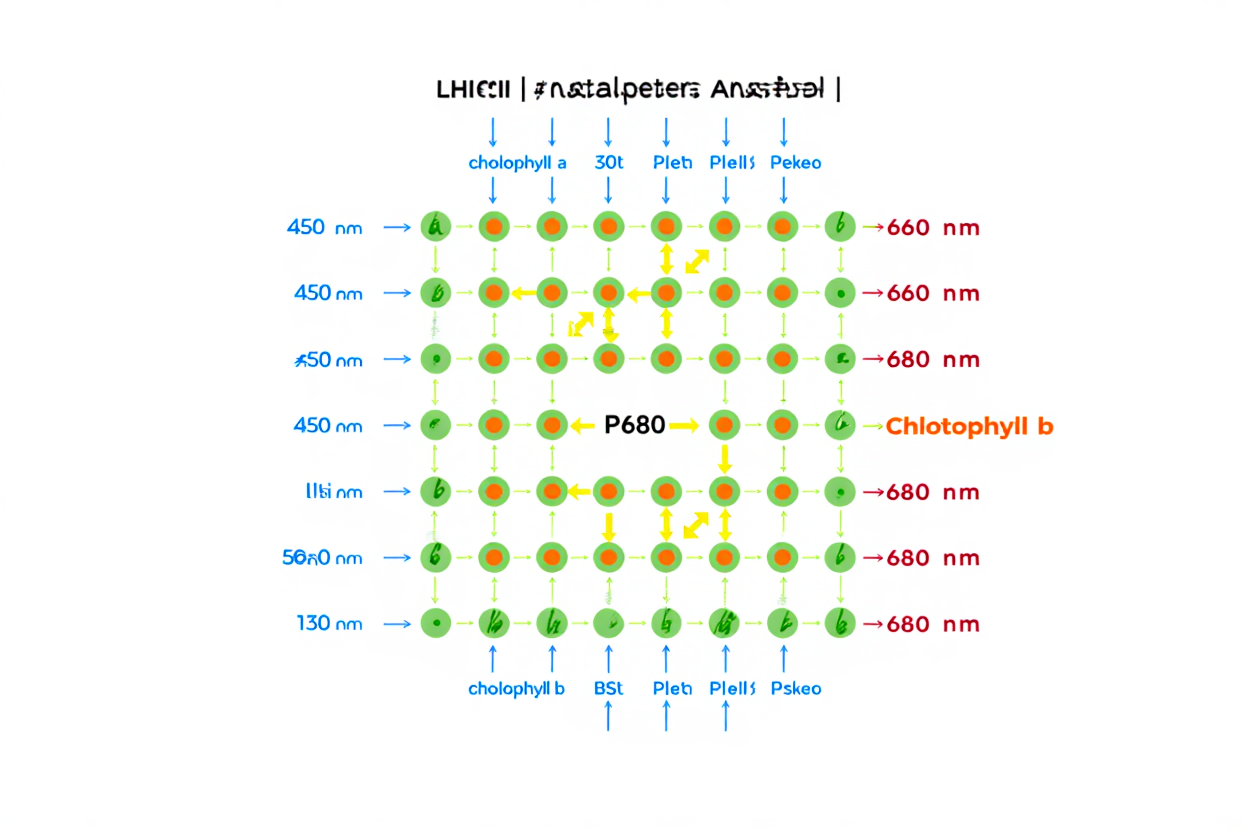
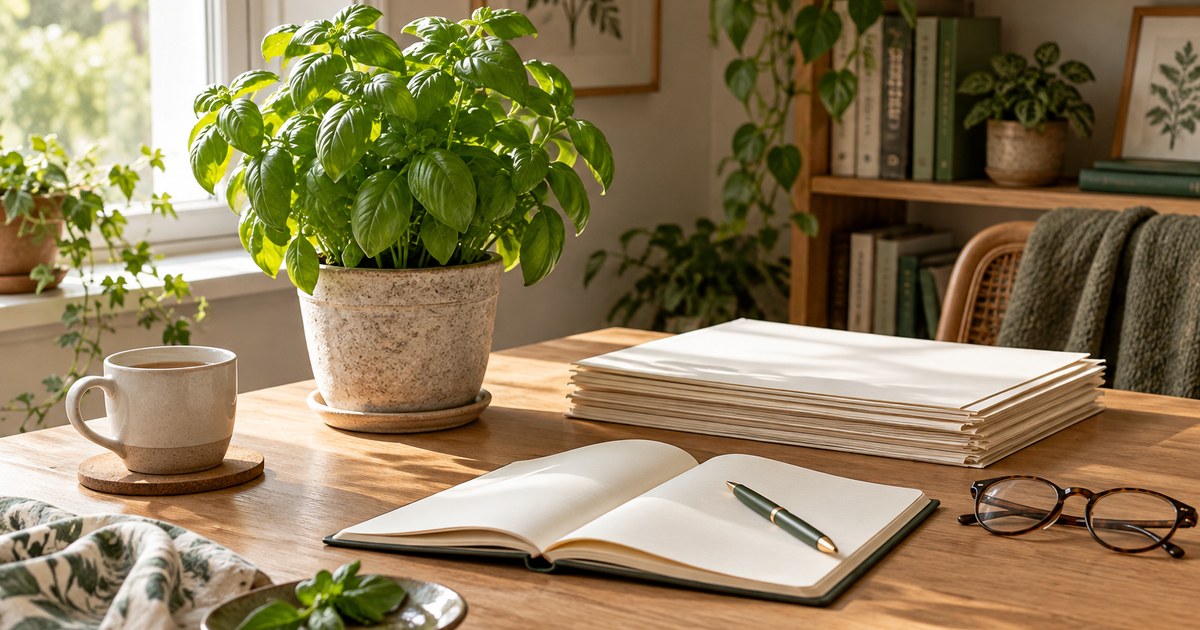
Here's the secret: under the effect of light, molecules of water split apart (this is photolysis) at Photosystem II, releasing electrons and protons that fuel energy production. This reaction generates ATP and NADPH, key energy molecules for glucose synthesis. If your plants lack water, this process stops, causing yellowing and wilting – a classic sight in a thirsty basil plant.
Stomatal regulation and CO₂ entry
The stomata, those tiny openings on the leaves, open or close depending on water availability, controlling the entry of CO₂. Suitable humidity promotes their opening, improving the absorption of essential carbon.
Conversely, a water deficit causes them to close, which slows down photosynthesis and glucose production. The plant absorbs less CO₂, breathes poorly and grows slowly – a weakening that's visible to the naked eye.
The right level of humidity in the soil also supports the continuous production of chlorophyll, the green pigment that captures light. Water also acts as a solvent to move minerals (nitrogen, potassium…) toward the reaction sites; without it, even under good lighting, growth stalls.
How plants adapt to water stress
Some species, such as C4 plants (like corn), handle drought better by limiting the closing of their stomata. Their unique metabolism lets them keep up photosynthetic activity even with little water, a marvel of genetic adaptation! During heat waves, stomatal closure reduces water loss, but can cause leaves to drop or turn yellow.
In indoor growing, under powerful LEDs, this stress sets in quickly if irrigation is insufficient. A properly watered basil plant quickly regains its turgor and kickstarts its photosynthesis again, whereas a plant deprived of water for a long time will produce less glucose and keep yellowed foliage.
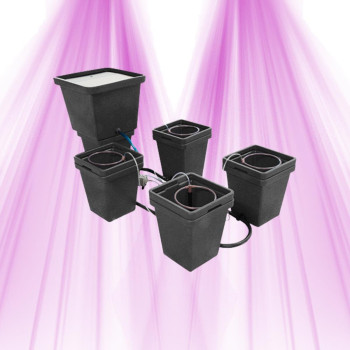
Water dissolves the minerals present in the soil and carries them to the roots: it's your plants' real feeding system! Without this water circulation loaded with nutrients, even the best fertilizer would remain stuck and useless. You'll discover how to optimize your watering with a watering system capable of keeping this transport perfectly regulated.
Transporting essential nutrients through water
Water acts as an essential carrier, delivering all the nutrients from the soil into the plant's cells. Without this constant flow, your plants would suffer severe deficiencies, even in rich soil. This process shows just how much water is essential for plant development, far beyond simple hydration.

Mineral dissolution and root absorption
Water dissolves the mineral salts in the soil and forms a nutrient solution that the roots absorb through osmosis. This is the fundamental mechanism that lets plants access the nutrients they need to survive. Without water, nitrogen, phosphorus, potassium and trace elements would remain inaccessible and unusable.
- Root osmosis: roots absorb this nutrient solution thanks to the difference in concentration between the sap and the soil to drop or turn yellow.
- Ion availability: soil that's too dry limits ion absorption and can cause deficiencies, such as yellowing leaves. Too much water, on the other hand, leaches out nutrients.
- Even diffusion: a good level of humidity in the soil ensures an even distribution of nutrients and avoids air pockets that would block their absorption.
Here's a concrete example: if you notice yellowing on your potted tomatoes, nine times out of ten, it's a substrate moisture problem limiting nitrogen uptake, even after applying fertilizer. Properly rehydrate your potting soil, and the color should come back within a few days!
Circulation in the xylem and root pressure
The xylem acts as your plant's circulatory system: these tiny vessels carry water enriched with minerals from the roots. The hydrostatic pressure generated by this flow then drives the nutrients upward through the tissues. This allows for optimal distribution throughout the whole plant.
- Root pressure: the sap builds up in the roots, creating pressure that pushes water upward. This is known as the plant's « weeping ».
- Cohesion-tension theory: water lost through transpiration generates tension that literally « pulls » the column of water up to the leaves to drop or turn yellow.
- Continuous upward transport: the constant movement in the xylem ensures an uninterrupted nutrient supply, which supports even growth growth.
- Soil matric potential: fine-pored soils retain water better, making it easier to continuously absorb nutrients and reducing water stress.
In indoor growing, some plants sometimes show uneven deficiencies: some leaves turn yellow while others stay green. This is often caused by inconsistent watering that disrupts water circulation. A regular water supply keeps sap flow steady and plants uniformly healthy.
Some amendments, like water-retention products, gradually release stored humidity, promoting a slow, steady release of soluble fertilizers. This technique also limits nutrient leaching, especially in light substrates like coco fiber. It's a particularly useful strategy for container growing.
Picture your plant without water: it literally goes soft and collapses, losing all its natural form. Each cell, normally full of water, provides an essential structural rigidity known as turgor. This biological phenomenon explains why a lack of watering quickly turns a vigorous plant into a limp mass. With a Hydrocrystal water-retaining gel, you guarantee this vital stability, even during intensive growing.
Cell turgor and plant structure
Your plants' cells are mostly made up of water, creating an internal pressure essential to their rigidity. Without this constant hydraulic charge, the plant would go limp, like a wrung-out sponge. Turgor acts as your crop's true living framework, supporting the whole organism. Understanding this mechanism helps effectively prevent wilting caused by drought.

Turgor pressure and rigidity of plant tissues
Water absorption creates turgor pressure that keeps cell walls firm and solid. This lets stems and leaves stand up straight to capture as much light as possible. This turgor is the driving force behind cell expansion, the foundation of healthy plant growth. Without this internal pressure, your plants don't grow and the fruit stays stunted.
A loss of water causes turgor to collapse, leading to visible wilting and stopping stem elongation. Worse still, the plant becomes vulnerable to pathogens that take advantage of these weakened tissues to attack it. A tomato lacking turgor turns soft, losing all its commercial value and offering an unpleasant texture.
Effects of water deficit on growth
Prolonged water shortage considerably slows your plants' overall development. Cell expansion stalls, buds stagnate and fruit stops growing. This growth delay is measurable: you risk losing a large part of your yield if your crops suffer repeatedly!
Turgor directly controls the opening of the stomata, those tiny pores essential to plant respiration. A dehydrated plant closes its stomata to save water, which limits photosynthesis and the production of new matter. It's a vicious circle: less water means less growth, leaving the plant almost paralyzed.
Maintaining a reserve of humidity in the soil or substrate helps preserve turgor during heat waves. This keeps your plants rigid and resilient, letting them continue their productive cycle without interruption. The difference is obvious between a well-watered rose bush and one suffering from drought.
Maintaining the quality of fruits and vegetables
For fruit, the amount of water available directly determines final texture and taste quality. A tomato with low turgor becomes soft and mushy, while a well-hydrated melon stays firm, crisp and juicy. Consumers look for firm produce, which depends entirely on a good level of hydration right up to harvest.
Water is also essential for carrying sugars via the sap to fruit as it develops. Without this constant flow, your harvests will be smaller and lack flavor. Arugula grown with humidity steady humidity produces tender, tasty leaves, unlike the bitter, fibrous leaves of a thirsty plant.
| Plant type | Water need (L·m⁻²·day⁻¹) | Symptoms of water deficit | Impact on texture/quality |
| Basil | 0.5 | Soft leaves, yellowing | Bitter taste, fibrous texture |
| Tomato | 3-4 | Soft fruit, cracking, blossom end rot | Mushy flesh, lack of firmness |
| Melon | 4-5 | Slowed growth, wrinkled leaves | Dry flesh, lack of juiciness |
| Corn | 6 | Midday wilting, reduced ears | Small kernels, insufficient starch |
Every plant species has its own water needs: basil is less demanding than tomato, which itself uses less water than corn. For optimal watering, adjust the frequency and volume to your crop while monitoring ambient humidity and the temperature of your space. An indoor watering setup that works well can genuinely boost your yields.
Optimizing watering based on plant needs
Why is it so critical to understand that plants need water to survive? Simply because water water is essential for photosynthesis, for transporting nutrients, and for maintaining cell turgor. However, watering alone isn't enough; it needs to be done thoughtfully to meet your crops' actual water needs and adjust your irrigation system accordingly.
Water needs vary by species and growth stage
Water needs vary widely, ranging from 0.5 L per m² for basil up to 6 L for corn. You absolutely need to adjust the volume and frequency of watering based on the size of your plants, your substrate (potting soil, coco or perlite) and their growth stage. While young plants use little water, fruit production can require up to 200 liters of water to generate a single kilo of dry matter.
- High temperature and intense light: These conditions increase transpiration in plants by up to 30%. This means a crop under intense LED lighting will have much higher needs than a plant in a cool greenhouse.
- Relative humidity and airflow: A simple draft can double a lettuce's water loss, radically changing your irrigation needs.
- Substrate type: Standard potting soil retains humidity better than a coco-based substrate. The availability of water in the soil therefore varies considerably for the same amount of water applied.
Adopt a smart watering program, watering generously during flowering but cutting back at the seedling stage to protect young roots. Watch how your plants look rather than following a rigid schedule, since they'll always show you their needs. When the soil is dry over the first 5 centimeters, that's generally the perfect time to water.
Efficient and precise irrigation techniques
Using a drip system reduces water consumption by 30 to 50% compared to surface watering, because it targets the root zone rootsdirectly. By delivering precisely 2 to 3 liters, you avoid water loss through evaporation and make sure every drop benefits your plants. It's an extremely effective method for saving both water and fertilizer.
Scheduling your watering sessions in the evening or on cloudy days reduces water loss by nearly 20% for crops like tomato. The absorbed water then stays available all night for transporting sap, unlike watering in full heat, which evaporates too quickly. What's more, self-regulating drippers ensure a constant flow, providing the even distribution that's essential in indoor growing.
Accessories like punches and fittings let you direct the nutrient solution precisely toward the roots in hydroponics. A single, substantial dose, suited to your soil type, will encourage deeper rooting far more effectively than multiple small applications. The latter increase surface evaporation and limit root system expansion, which is counterproductive for growing vigorous plants.