







































































Have you ever tried placing a plant in an indoor space with no light? This plant experiment without light reveals fascinating phenomena that show just how vital light is for plants. By observing what happens, you'll understand why photosynthesis stops, how stretching (etiolation) shows up, and why leaves lose their green color when they suffer from a lack of light.
We'll also compare a plant placed in a dark environment with another one benefiting from LED grow light. This comparison will let you see directly how light influences plants' energy needs and growth. Ready to start this captivating experiment?
What happens to a plant deprived of light
When a plant is deprived of light, its basic functioning breaks down. All its vital processes slow down, proving that light is absolutely essential for its growth. Knowing these mechanisms will help you avoid overly dark conditions and take better care of your indoor plants.

Immediate stop of photosynthesis and depletion of reserves
Without light, photosynthesis stops dead: the chloroplasts can no longer capture energy and glucose production ceases. The plant is then forced to draw on its starch reserves, which severely limits its growth and weakens it quickly.
- No more energy production: without new glucose, the plant badly lacks fuel
- Reserves in free fall: starch runs out quickly, almost stopping growth after one week
- Metabolism slows to a crawl: cell division and nutrient transport operate at a minimum
- Survival above all: the plant concentrates its last resources in an attempt to find light
Just one week in the dark can cause irreversible damage. It's therefore crucial to act fast and restore light to your plant if you want to save it.
Chlorophyll breakdown and the onset of chlorosis
Deprived of light, chlorophyll breaks down quickly: more than half disappears within two weeks. Leaves turn yellow, then brown - this is what's called chlorosis, the first visible sign that photosynthesis has been compromised by the lack of light.
Since the plant can no longer produce new chlorophyll, its leaves become pale and fragile. Even if you restore light later, they won't necessarily regain their original function. This symptom is a clear warning sign: your dark indoor space is truly hostile to plants.
Changes in gas exchange and oxygen consumption
In the dark, the stomata (the tiny pores on the leaves) partially close. Water evaporation decreases and CO₂ and O₂ exchange becomes scarce. The substrate stays too moist, encouraging mold and root diseases to appear.
The plant's respiration, meanwhile, intensifies. It consumes oxygen without being able to renew it through photosynthesis. The plant then becomes essentially a consumer of O₂ and a producer of CO₂ - a well-known phenomenon that can be observed in the classic candle-under-a-jar experiment.
Visible reactions of a plant in a dark environment
When a plant badly lacks light, its appearance changes quickly, revealing its essential need for light. Observing these changes lets you identify a lack of light in a dark room and step in before the damage becomes irreversible.

Stretching: desperate growth toward absent light
The stretching (etiolation) shows up as stems that elongate abnormally in an attempt to capture even the slightest bit of light. This phenomenon results from a hormonal imbalance (auxin) that excessively stimulates growth on the darkest side of the plant.
- Excessively elongated stems: with stretched internodes, sometimes tripling in length
- Very fragile structure: weak, almost translucent stems that break easily
- Small, discolored leaves: limited development with a pale, even yellowish green
- Rapid onset: first visible signs within just a few days in a dark room
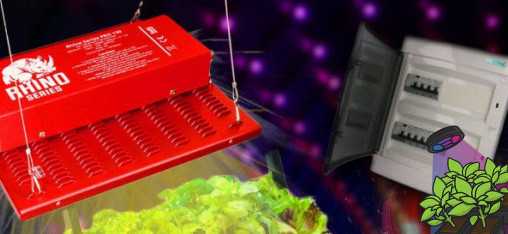
This unchecked growth exhausts the plant and compromises its development. Lighting such as the Ti PRO 840W UV+IR LED panel recreates a full solar spectrum, essential for avoiding stretching and encouraging healthy growth, even in a room without windows.
Why plants release CO₂ in the dark
When light is lacking, photosynthesis stops while respiration continues. The plant then produces more CO₂ than it absorbs, which gradually disrupts its energy balance - especially in a dark, confined space.
The solution? A suitable LED grow light that stimulates photosynthesis, restores gas exchange, and lets the leaves regain health and vitality for optimal plant growth.
Comparative experiment: plant in darkness versus LED grow light
Nothing beats a hands-on experiment to understand just how crucial light is for plant growth. Here is a protocol comparing two identical plants exposed to radically different lighting conditions. You'll observe, day after day, how a plant deprived of light reacts compared to one benefiting from optimal LED grow light.
Controlled experiment protocol over 14 days
For this experiment with a plant without light, select two young basil or tomato plants from the same batch to guarantee identical genetics. Place the first in a completely dark cupboard (PPFD = 0 µmol·m⁻²·s⁻¹) and set up the second under a Grizzly 1000W 3.0 LED grow light at a distance of 30 cm, with a 12-hour/day cycle at 70% intensity. By varying only the light, you'll be able to clearly observe its influence on growth, foliage, and biomass.
- Daily measurements: stem height to the nearest millimeter, new leaf emergence, color assessment on a chlorosis scale.
- Structural observations: stem thickness measured with calipers, bending resistance, daily photos to track stretching or vigor.
- Final weighing: fresh weight measured right after harvest, then dry weight after 48h at 60°C.
With simple equipment (a tape measure, a kitchen scale, a smartphone), you can easily reproduce this experiment at home. The goal is to concretely quantify how the presence or absence of light influences photosynthesis, growth, and the sturdiness of a green plant.
| Measured parameter | Plant in darkness | Plant under Grizzly 1000W LED |
| Daily growth | 2-3 mm/day | 2-3 cm/week |
| Stem length | 2-3 times longer | Normal length |
| Stem thickness | 50% thinner | Sturdy thickness |
| Leaf color | Yellowish brown | Dark green |
| Leaf size | -30% to -40% | Normal size |
| Final dry biomass | -70% to -80% | ×3 to ×5 |
After 14 days, the plant kept in darkness shows marked stretching: fragile, elongated stems, discolored leaves, and reduced biomass. In contrast, the lit plant shows sturdy leaves in an intense green, and a solid structure. This experiment confirms that light is a vital need for any indoor plant without direct natural light.
LED solutions to replace natural light
Today's LED grow lights make it possible to grow in an indoor space without natural light. The Grizzly 1000W 3.0 LED bar produces 400-900 µmol·m⁻²·s⁻¹ with a full spectrum enriched in 660 nm red, ideal for vegetative stage and flowering, even in a dark room.
- Balanced spectrum: 4000K supplemented with infrared and deep red for optimal photosynthesis.
- Flexible installation: adjustable hanging between 30-50 cm with an intensity dimmer.
- Passive cooling: an airy design that avoids noisy fans.
For even greater performance, the Ti PRO 840W UV+IR LED panel integrates ultraviolet and infrared, boosting terpene production and improving stomatal regulation. This high-end artificial light outperforms simple blue-red LEDs.
Plant species tolerant of low-light environments
No plant can live without light, but some species tolerate low light and thrive under indirect light. For these plants, a simple refurbished SpectraModule LED is enough to cover 60 × 60 cm without natural light.
- Sansevieria: survives with just 50-100 µmol·m⁻²·s⁻¹ and monthly watering.
- Zamioculcas zamiifolia: its rhizomes store water, allowing slow but steady growth in relative darkness.
- Pothos and ivy: perfect for beginners, they adapt to dimmed light.
- Boston fern and Calathea: enjoy humidity and dim light.
Philodendron and ficus also tolerate moderate exposure but need a minimum of 100 µmol·m⁻²·s⁻¹ to keep their foliage dense. With a well-draining substrate (70% potting soil, 30% perlite) and spaced-out watering, these plants can live happily in an indoor space without direct light, thanks to suitable LED lighting.