














































































Did you know plants can make their own food without any fast food? The definition of photosynthesis reveals this extraordinary phenomenon: a natural process that converts solar energy into chemical energy to produce organic matter. Let's take a look together at how it works and, more importantly, how to optimize this mechanism with the right lighting. Discover how LEDs optimize photosynthesis for your plants and get exceptional harvests.
What is photosynthesis: a simple definition
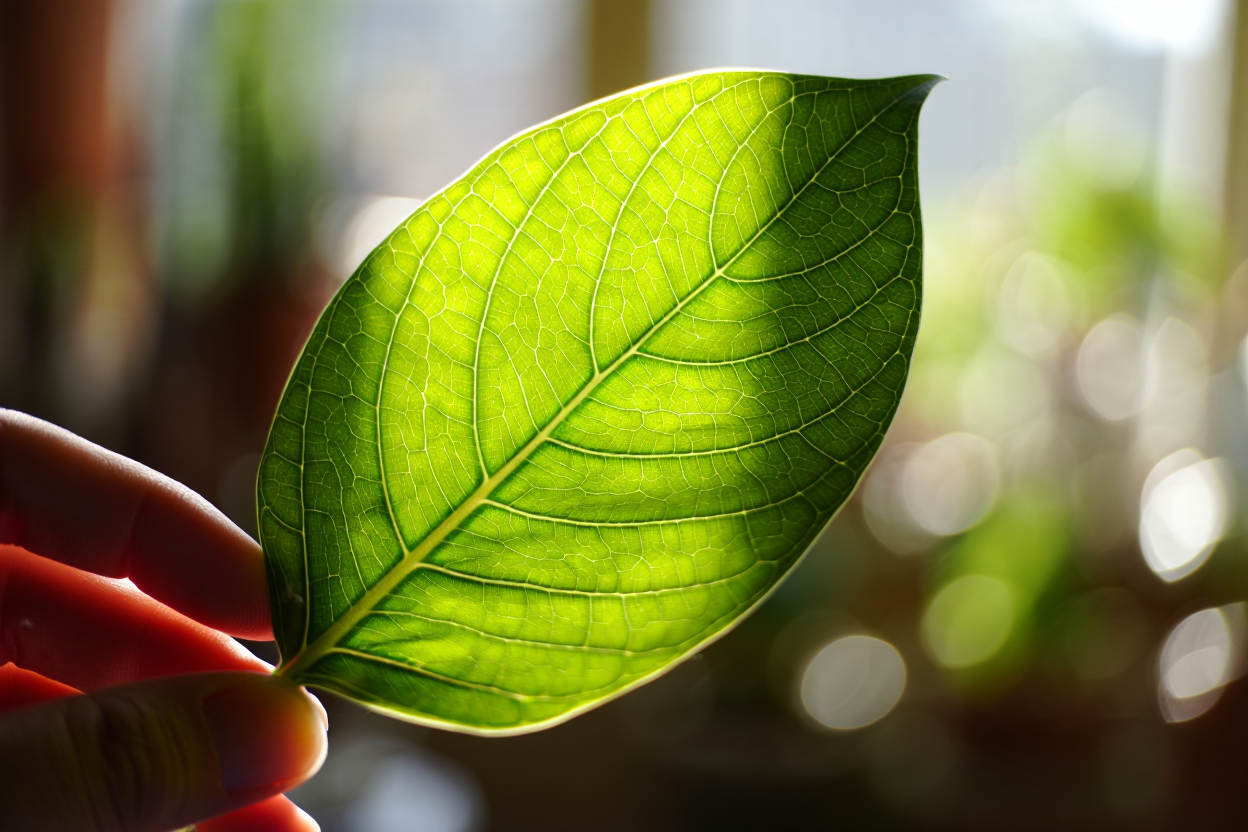
Here's the definition of photosynthesis in simple terms: thanks to their leaves, green plants turn light into sugar. At the heart of every chloroplast, chlorophyll captures light energy and combines water absorbed by the roots with the carbon dioxide in the air. This reaction produces glucose and releases oxygen into the atmosphere - which is what lets us breathe!
The process of transforming light energy
It all comes down to this magical reaction: 6 CO₂ + 6 H₂O + light → C₆H₁₂O₆ + 6 O₂. Light energy excites electrons in the chlorophyll, generating energetic molecules (ATP and NADPH). These molecules then produce the glucose plants need to grow.
- Light capture: chlorophyll mainly absorbs blue and red light, which is why leaves appear green to us.
- Energy conversion: solar energy becomes ATP and NADPH.
- Glucose production: this sugar forms the basis of every new plant cell.
As soon as a leaf is exposed to light, this transformation kicks in immediately. Glucose feeds the plant while oxygen is released, purifying the air we breathe.
The five ingredients plants can't do without
For photosynthesis to work, five elements are essential: light, water, carbon dioxide, minerals, and chlorophyll. Missing even one blocks the entire process! Here's the role each one plays:
- Light: the engine of photosynthesis, from the sun or LED grow lights.
- Water: transports nutrients and supplies hydrogen.
- Carbon dioxide (CO₂): supplies the carbon needed, captured by the leaves.
- Minerals: essential for the enzymes that drive the reactions.
- Chlorophyll: the green pigment that captures light energy.
Without good lighting, or if chlorophyll is deficient, plants turn yellow and stop developing. That's why the right LED grow light can make all the difference in boosting photosynthesis and organic matter production.
The chemical equation explained simply for kids
Picture the plant as a little factory: it takes 6 bubbles of carbon dioxide + 6 drops of water + some light, and makes 1 candy of glucose + 6 bubbles of oxygen! Photosynthesis is this everyday miracle that feeds plants and gives us clean air.
For example, a single leaf can transform impressive amounts of CO₂ and water into glucose every day, as long as it gets enough light. Plants are the undisputed champions of energy recycling on our planet!
How the photosynthesis cycle works
Photosynthesis takes place in two complementary stages, as inseparable as the two sides of the same coin: the light phase and the Calvin cycle. The first uses solar energy to split water into oxygen while producing ATP and NADPH. The second then uses these energetic compounds to convert carbon dioxide into glucose, even without light. Learn how to select the ideal light spectrum to maximize photosynthesis in your plants at every stage of their growth.
The two essential phases of the photosynthetic process
The Calvin cycle, which makes up the second phase, takes place in the stroma of the chloroplasts and absolutely requires the ATP and NADPH generated during the light phase. This step involves the enzyme Rubisco, which fixes the carbon dioxide in the air to first form 3-phosphoglycerate, then carbohydrates such as glucose, essential to plant metabolism. Without the energy previously supplied by light, this cycle could not function properly.
- Light phase: Chlorophyll in the thylakoids absorbs light, splits water (releasing oxygen), and produces ATP and NADPH.
- Photosystem II: Captures light around 680 nm, breaks down water, and releases the oxygen we breathe.
- Photosystem I: Absorbs wavelengths close to 700 nm and produces NADPH, crucial for making glucose.
- Calvin cycle: Uses the stored energy to fix CO₂ and synthesize carbohydrates in the chloroplasts.
These two phases work in perfect symbiosis: the first supplies the energy and reducing compounds, while the second uses them to build sugars. Just as you can't build a house without materials or a plan, these processes are inseparable in oxygenic photosynthesis.
| Phase | Location | Requirements | Products |
| Light phase | Thylakoid membranes | Light + H₂O | ATP + NADPH + O₂ |
| Calvin cycle | Chloroplast stroma | ATP + NADPH + CO₂ | Glucose (C₆H₁₂O₆) |
The role of wavelengths in the energy produced
The efficiency of the light phase depends heavily on the available wavelengths: each color in the spectrum triggers specific reactions in the photosystems. Blue light (400-500 nm) particularly stimulates chlorophyll production, promotes compact growth, and boosts ATP synthesis, the cell's true fuel.
By contrast, red light (600-700 nm) optimizes overall energy conversion and plays a decisive role in flowering. This spectrum improves photon capture, increases NADPH production, and supplies the Calvin cycle with the energy needed to build more carbohydrates.
A well-tuned LED grow light reproduces these blue and red bands in proportions suited to each phase. Cyanobacteria, algae, and land plants all apply the same principles: their oxygenic photosynthesis converts light, water, and carbon dioxide from the air into energy stored as glucose. With GrowLED solutions, you give your plants exactly what they need for optimal growth.
Why photosynthesis is vital for plants
Photosynthesis is much more than a simple chemical reaction - it's the essential engine of all life on Earth. Without this magical process, green plants could no longer feed themselves, organic matter would run short for animals, and oxygen would gradually disappear from our air. To dig deeper into this topic, check out our article on the ideal light cycle, which will help you boost your indoor crops.
Oxygen and the carbon cycle in nature
Thanks to plant photosynthesis, nearly half of the oxygen we breathe is produced. At the same time, plants, algae, and phytoplankton capture billions of tons of carbon dioxide every year, playing a crucial role in climate regulation. This dual mechanism of oxygen production and carbon fixation keeps our planet in balance.
- Vital output: turning CO₂ into oxygen constantly renews our atmosphere
- Carbon sink: forests store CO₂ long-term in their organic matter
- Climate balance: this natural process limits the buildup of greenhouse gases
From vast forests to a simple houseplant, every plant takes part in this vital cycle. Even on your desk, a modest green plant purifies the air by absorbing CO₂ and releasing oxygen. The importance of photosynthesis thus reveals itself at every scale.
By converting solar energy into carbohydrates, this process provides the energy base for the entire food chain. Did you know a single mature tree can absorb up to 20 kg of CO₂ per year and produce enough oxygen for two people? This perfectly illustrates why plants are the lungs of our planet.
The fundamental role in the world's food chain
Plants and algae, true energy factories, turn light into food for all living things. Every living being, from herbivores to carnivores, ultimately depends on this synthesis of organic matter. Without it, no life would be possible.
- First link: plants capture light energy to create nutritive substances
- Agriculture: our crops (wheat, rice, etc.) depend entirely on photosynthetic efficiency
- Global challenge: optimizing this process is crucial for feeding the growing population
Every bite we eat comes, directly or indirectly, from the energy captured by plants through photosynthesis. Improving this natural mechanism is therefore a major challenge for humanity's food future.
Optimizing photosynthesis in indoor growing with LED lighting
For indoor growing, modern LEDs let you perfectly fine-tune the light spectrum, stimulating efficient photosynthesis while saving energy. Lighting that combines blue and red can increase growth by 30% while cutting your electricity bill.
Professional brands like Lumatek or HLG offer lights that emit precisely the optimal wavelengths (400-500 nm and 600-700 nm). By favoring blue during the vegetative stage and red during flowering, you turn your grow space into a true high-performance laboratory, where every drop of light is used efficiently by your plants.