












































































This presentation on photosynthesis explains how plants convert the sun's light energy into the chemical energy essential to their growth. You'll discover how each leaf captures photons to kick off the synthesis of organic matter — key knowledge for optimizing your indoor growing without getting lost in overly complex concepts.
What Is Photosynthesis and Its Energy Role
Photosynthesis definition: plants convert carbon dioxide and water into glucose and oxygen using light energy. This process underpins almost every ecosystem, since it supplies both the base energy and the dioxygen essential to life on Earth, whether airborne, terrestrial, or aquatic.

Definition and Overall Equation of Photosynthesis
The most common photosynthesis equation is: 6 CO₂ + 6 H₂O + sunlight → C₆H₁₂O₆ + 6 O₂. In other words, plants absorb light and carry out carbon fixation to produce sugar. This synthesis generates more energy every year than all human activities combined and is the main driver of global biodiversity.
- Energy base of food chains: all organic matter comes, directly or indirectly, from the glucose produced by photosynthesis.
- Atmospheric oxygen production: over 95% of the dioxygen we breathe comes from the photosynthesis of plants and phytoplankton.
- Planetary carbon fixation: plants capture more than a hundred billion tonnes of carbon dioxide every year, helping to regulate the climate.
- Remarkable efficiency: even with an efficiency rate of around 3%, photosynthesis captures more energy than our best photovoltaic panels.
In indoor growing, using well-calibrated LED lighting means giving your plants ideal light conditions to maximize this energy conversion, resulting in better yields and optimal health.
Ecological Importance and Atmospheric Oxygen Production
Without the photosynthesis equation, the atmosphere would contain less than 1% oxygen; thanks to it, we enjoy an atmosphere made up of 21% dioxygen. Tropical forests carry out massive carbon fixation, absorbing several billion tonnes of carbon dioxide and helping stabilize the global climate.
- Vital oxygen: photosynthesis produces all the dioxygen needed for aerobic organisms to survive.
- Climate regulation: plant carbon sinks ease warming by absorbing excess CO₂.
- Food biomass: around 100 billion tonnes of organic matter are renewed every year to feed the entire biosphere.
Understanding these mechanisms lets you optimize your indoor growing while contributing, on your own scale, to a more sustainable approach to agriculture.
Classification of Autotrophic and Heterotrophic Organisms
Autotrophic organisms, such as plants, produce their own food through photosynthesis or chemosynthesis; heterotrophs, meanwhile, feed on this organic matter. Your plants are true biological factories, self-sufficient as long as they have water, mineral salts, and sunlight (or artificial light).
In a tomato or lettuce plant, every green leaf handles the synthesis of glucose, while the roots, which stay heterotrophic, absorb water and nutrients. This internal cooperation enables a continuous production of chemical energy, proof that a simple plant is already a miniature ecosystem of remarkable efficiency.
Light isn't just an energy source: it regulates growth, triggers flowering, and determines the amount of sugar produced. Suitable LED grow lights offer a blue spectrum around 450 nm for the vegetative stage and a red spectrum from 620 to 780 nm for flowering — exactly what plants use for efficient photosynthesis. Discover how to choose the right light spectrum to maximize photosynthesis and turn your indoor growing into a genuine high-tech lab.
Cellular Organization and Light Energy Capture
Photosynthesis takes place in the chloroplasts, small green factories housed in every leaf and packed with water. These organelles convert light energy into glucose using thylakoids stacked into grana, an enzyme-rich stroma, and an army of photosynthetic pigments able to intercept every photon. Without this architecture, no synthesis of organic matter or storage of energy would be possible.
Chloroplast Structure and Pigment Location
Each chloroplast has a double membrane enveloping the thylakoids, thin stacked discs where sunlight releases energetic electrons. The stroma, an internal fluid, hosts the Calvin cycle, which fixes CO₂ and makes glucose, a sugar essential for growth. It's in the palisade mesophyll that green plants concentrate most of their chloroplasts to maximize energy capture.
The more uniform light, water, and CO₂ a leaf receives, the more ATP, glucose, and new tissue it produces — hence the crucial importance of well-distributed lighting in indoor growing. Plants then use their full photosynthetic potential to convert light energy into usable biomass.
Absorption Spectrum and Main Photosynthetic Pigments
Photosynthetic pigments are molecules capable of absorbing photons and transferring energy to electrons within the thylakoids. Chlorophyll a favors blue (~440 nm) and red (~680 nm), while chlorophyll b, carotenoids, and xanthophylls broaden the absorption window. In some deep-water algae, phycoerythrins even capture green light from 500 to 600 nm to carry out photosynthesis.
Photosynthetically Active Radiation (PAR) covers 400-700 nm; beyond that, light influences morphology but doesn't directly fuel glucose synthesis. That's why LED grow lights target this spectrum precisely, optimizing the energy spent and photosynthetic output.
- Chlorophyll a: the main pigment absorbing blue (~440 nm) and red (~680 nm), responsible for most of photosynthesis.
- Chlorophyll b: an accessory pigment capturing blue (~470 nm) and red (~650 nm), then transferring its energy to chlorophyll a.
- Carotenoids and xanthophylls: orange and yellow pigments absorbing blue and green light, while protecting the leaf from oxidative stress.
- Full spectrum: light that mimics the sun promotes greater synthesis of chlorophyll and growth up to 30% higher in tomato plants.
In indoor growing, matching the spectrum to the growth stage lets plants make the most of light energy at maximum efficiency. A spectrum rich in blue strengthens vegetative structure, while a boosted red input triggers flowering and abundant fruit formation.
Optimizing the Light Spectrum for Indoor Growing
To maximize results, adjust intensity and color throughout the cycle. During the vegetative stage, give more blue light for compact leaves and a robust root system. During flowering, shift to a dominant red; the plant then uses this energy to speed up sugar synthesis and boost yields without compromising quality.
The light phase of photosynthesis is the essential stage where light energy is converted into chemical energy, in the form of ATP and NADPH. These molecules are then essential for the Calvin cycle to run properly. The Lazerlite 720W by Pure Light, with its array of white and red LED bars, emits a full light spectrum ideal for optimizing this crucial phase in indoor growing. Discover how suitable lighting boosts photosynthesis in indoor growing thanks to its remarkable efficiency of 2.7 µmol/J and even coverage over a 120 × 120 cm area.
Light Phase: Converting Light into ATP and NADPH
This fast phase, which happens within milliseconds per photon, takes place inside the thylakoids. Each particle of light (quantum) excites electrons, triggering a chain reaction that results in the synthesis of ATP and NADPH. This precious supply of chemical energy then fuels the Calvin cycle to turn CO₂ into glucose.
Water Photolysis and Release of Molecular Oxygen
The process starts with the photolysis of water: photosystem II, a complex rich in chlorophyll pigment, uses light to split water molecules into protons, electrons, and dioxygen. Light energy is captured to strip away the electrons, releasing oxygen into the air and creating an initial proton gradient. For example, under a flux of 1000 µmol m⁻² s⁻¹, a lettuce leaf can release approximately 30 µmol of oxygen per gram per hour.
- Photosystem II: it absorbs light at a wavelength of around 680 nm, excites electrons, and initiates oxygen release from water.
- Oxygen release: the dioxygen produced diffuses out of the leaf through the stomata, helping to enrich the atmosphere.
- Proton gradient: the buildup of H⁺ ions in the lumen of the thylakoids forms a kind of internal energy "battery."
- Efficiency: a healthy plant shows net photosynthesis when it receives an optimal light supply.
In this way, plants convert water and light energy into oxygen and chemical energy, highlighting the fundamental ecological role of this light phase.
Electron Transport Chain and ATP Synthesis
The electrons from photolysis then travel through a series of complexes (plastoquinone, cytochrome b₆f complex, plastocyanin), releasing energy with each transfer. This flow powers a proton pump that boosts the gradient within the thylakoids. The ATP synthase enzyme then uses this gradient to phosphorylate ADP into ATP, while photosystem I re-energizes the electrons and enables the reduction of NADP⁺ into NADPH.
| Component | Role | Product |
| Photosystem II | Splitting of water, electron excitation | O₂, H⁺, electrons |
| Transport chain | Electron transfer, H⁺ pumping | Electrochemical gradient |
| ATP synthase | ATP synthesis from the gradient | ATP |
| Photosystem I | Re-energizes the electrons | NADPH |
Without the continuous production of ATP and NADPH, the Calvin cycle couldn't fix CO₂ or produce any sugar at all, which shows just how essential high-performance lighting is.
Optimizing Light Intensity in Indoor Growing
For seedlings, aim for an intensity of 200-400 µmol m⁻² s⁻¹ to avoid any light stress. During the vegetative stage, gradually increase up to 400-800 µmol m⁻² s⁻¹. During flowering, go up to 800-1200 µmol m⁻² s⁻¹ to maximize the efficiency of the light phase. The Lazerlite 720W, with a PPF of around 1980 µmol s⁻¹, guarantees a PPFD above 800 µmol m⁻² s⁻¹ at 60 cm height over 1.2 m².
- Compensation point: net photosynthesis drops to zero around 10-20 µmol m⁻² s⁻¹; the plant then stops producing glucose.
- Saturation point: beyond 400-600 µmol m⁻² s⁻¹, increasing light no longer improves photosynthesis if the CO₂ concentration stays at a standard level.
- Practical adjustment: measure the PPFD at canopy level and adjust your light's height or intensity to protect the health of the leaves.
Watch your plants closely: burnt, yellowing, or stretching leaves are signs of imbalance. Fine-tuning your lighting is key to keeping photolysis, oxygen release, and energy production at their maximum level.
Now that you've mastered the light phase and its precious stores of ATP and NADPH, let's see how the plant uses this fuel to make actual sugar: the Calvin cycle. This dark phase takes place in the stroma of the chloroplast, where the great synthesis of organic matter crucial to plant life begins.
Calvin Cycle and Glucose Production
The Calvin cycle works like a biochemical assembly line: it captures the CO₂ present in the air and turns it into solid glucose, the basic building block of all organic matter. While the light phase is extremely fast, this step takes several seconds and consumes huge amounts of ATP and NADPH, converting an inert gas into chemical energy that's directly usable by plants.

CO₂ Fixation by Rubisco
The first step, carbon fixation, uses the enzyme Rubisco to bind atmospheric CO₂ to a molecule of RuBP, creating two molecules of 3-phosphoglycerate. This reaction marks the irreversible entry of inorganic carbon into the photosynthetic machinery, a fundamental step for any future synthesis.
- Rubisco: This enzyme is responsible for the carbon fixation of 100 to 200 million tonnes of CO₂ every year, highlighting its major ecological importance.
- Photorespiration: When it accidentally fixes oxygen (O₂) instead of CO₂, the enzyme wastes water and ATP, reducing photosynthetic efficiency by around 25% under hot, dry conditions.
- Enzymatic slowness: Rubisco only processes 3 to 10 molecules of CO₂ per second, which explains why it's present in massive quantities in the chloroplasts.
- Indirect light dependence: Although active during the dark phase in the stroma, Rubisco depends entirely on the ATP and NADPH produced on the thylakoids during the light phase.
Thanks to this initial carbon fixation, carbon becomes a stable compound that the plant can then turn into sugar, amino acids, or lipids, forming the foundations of all organic matter.
Reduction Steps and RuBP Regeneration
3-phosphoglycerate is then reduced to glyceraldehyde-3-phosphate (G3P) using ATP and NADPH. This is the exact moment when chemical energy is literally turned into sugar. After six turns of this cycle, ten molecules of G3P are used to regenerate six molecules of RuBP, while a single molecule of G3P leaves the cycle to help make glucose and other reserves.
Without RuBP regeneration, no new carbon fixation is possible; and without the ATP and NADPH produced during the light phase, the reduction process stops. The two phases of photosynthesis are therefore inseparable: light and CO₂ must be supplied simultaneously to optimize photosynthetic efficiency.
Producing a single molecule of glucose requires twelve molecules of ATP and eight of NADPH. For example, under optimal indoor growing conditions (25 °C, 800 ppm CO₂, and intense lighting), a wheat plant can fix nearly 30 µmol of CO₂ per square meter per second, demonstrating the remarkable efficiency of this biochemical engine.
Alternative C₄ and CAM Photosynthetic Strategies
Some plants have developed alternative metabolic pathways, called C₄ and CAM, to get around the limitations of the classic Calvin cycle and boost their photosynthetic efficiency. C₄ plants, such as corn or sugarcane, operate in two distinct cellular steps: CO₂ is first fixed by PEP-carboxylase in the mesophyll, then concentrated around Rubisco in the bundle sheath, which almost completely minimizes photorespiration.
- C₄ advantage: A gain of up to 50% in photosynthetic efficiency, with better tolerance to heat, high light intensity, and water stress.
- Energy cost: Each fixed molecule of CO₂ requires two more ATP than in a C₃ plant, but the efficiency gain largely offsets this extra energy expense.
- CAM strategy: The stomata open at night to capture and store CO₂ as malic acid. The Calvin cycle then takes place during the day, with the stomata closed, allowing considerable water savings in arid environments.
CAM-type plants, such as cacti, agaves, and pineapples, therefore shift photosynthesis in time: they capture CO₂ at night and turn it into sugars during the day, preserving precious water. In indoor growing, respecting these specific biological rhythms and adjusting your LED lighting accordingly is essential to ensure optimal growth suited to each species' physiology.
Now, let's tackle the crucial point: how do you turn this scientific data into abundant, visible harvests? The key lies in optimizing every photosynthetic parameter. Light, reflection, CO₂, and temperature turn your indoor growing setup into a real biomass factory Optimize your plants' photosynthesis indoors with Diamond Mylar, which improves photon distribution and eliminates almost all shadowed areas.
Optimizing Photosynthetic Efficiency When Growing
Understanding photosynthesis is essential, but pushing it to its maximum for your plants matters even more Photosynthetic efficiency depends on light intensity, spectrum, CO₂, leaf temperature, and mineral nutrition. Mastering these levers unlocks an energy potential that only photosynthesis can offer.
Limiting Factors and Light Saturation Points
At low intensity, photosynthesis is limited by the available photons; each extra photon proportionally increases the production of oxygen and sugar As light increases, other factors become limiting: insufficient CO₂ around the leaf, saturated Calvin cycle enzymes, too high a leaf temperature, or insufficient stomatal humidity.
- Compensation point: the light level at which gross photosynthesis equals respiration, making the net gain zero, usually between 10-20 µmol m⁻² s⁻¹ for a healthy leaf.
- Photosynthetic curve: a linear progression up to 400-600 µmol m⁻² s⁻¹ under ambient CO₂, then a plateau without further enrichment.
- Quantum yield Φ: the efficiency of converting photons into oxygen or sugar, ranging from 0.08 to 0.12 depending on the spectrum and physiological state.
Experienced growers therefore don't just increase wattage; they enrich CO₂, regulate temperature, and adjust the LED spectrum to maintain high photosynthetic efficiency.
For example, doubling the light from 400 to 800 µmol m⁻² s⁻¹ only gives a 40 to 60% gain if CO₂ and temperature are holding back synthesis. On the other hand, combining 800 µmol m⁻² s⁻¹, a targeted spectrum, enriched CO₂, and a temperature of 25-28 °C unlocks almost exponential growth
Improving Light Reflection with Diamond Mylar
A high-performance LED often loses 50% of its light on the walls — a monumental waste In indoor growing, Diamond Mylar film offers up to 95% reflection: the diamond side faces the light to bounce back raw light, and the white side faces the plants to spread photons evenly.
This simple setup increases overall photosynthesis by 10 to 15% compared to matte surfaces, generating up to 25% extra biomass over a full cycle. Lower leaves then receive enough light energy to stay photosynthetically active, permanently getting rid of shaded areas.
Modern Ecological and Biotechnological Applications
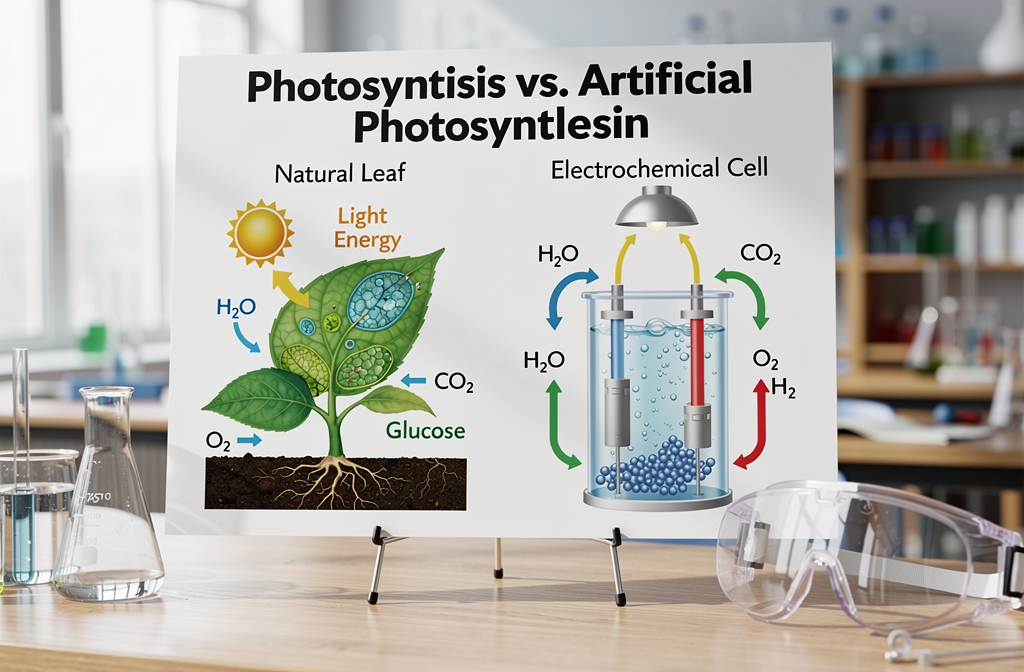
Beyond the home garden, photosynthesis supports planetary-scale strategies: hybrid artificial leaves that capture atmospheric CO₂ and turn it into clean fuels, or algae photobioreactors developing an extremely efficient synthesis to produce proteins and biofuels.
- Algae photobioreactors: genetically optimized microalgae for record photosynthetic efficiency, supplying biofuels, nutrients, and proteins on a minimal surface area.
- Urban agroforestry: plantings of C₄ species with high photosynthetic efficiency, capturing CO₂ and cooling overheated cities.
- Genetic optimization: improving Rubisco, limiting photorespiration, or increasing photosynthetic surface area can boost harvests by 20 to 40% without additional inputs.
By growing at home, you're already taking part in this sustainable transition Every efficient indoor growing setup saves on long-distance transport, and every photon your plants convert into sugar and oxygen is a step toward a greener agriculture of the future.