

















































































Want to understand the photosynthesis equation for Year 9? We'll break down the simplified chemical formula and explain the reactants and products. With concrete examples, you'll easily master this essential reaction studied in secondary school.
What is the photosynthesis equation for Year 9
Photosynthesis is a vital reaction that every green plant carries out daily! This fascinating phenomenon transforms air and water into food essential for its survival. In Year 9, you learn a simplified version of the photosynthesis equation that sums up this extraordinary mechanism.

Simplified chemical formula and required reactants
Here is the photosynthesis equation commonly seen in secondary school: 6 CO₂ + 6 H₂O → C₆H₁₂O₆ + 6 O₂. The ingredients used by the plant are called reactants, such as the carbon dioxide drawn from the air. The water absorbed by the roots is the other element needed to trigger this transformation.
- Carbon dioxide (CO₂): enters through the stomata, tiny openings located on the underside of the leaves. The surrounding air is its main source.
- Water (H₂O): travels up from the roots to the leaves' chloroplasts via the xylem vessels. This journey is essential for delivering the resources needed.
- The "6" coefficients: ensure the chemical balance of the reaction. They indicate that six molecules of carbon dioxide and six of water are needed to make one molecule of glucose.
Note that these numbers in front of each molecule aren't random: they guarantee the conservation of atoms, such as carbon atoms, on both sides of the equation. That's the fundamental principle of chemical balance!
Products of the reaction and their role
The products formed are on the right of the arrow: photosynthesis generates two key elements. Glucose (C₆H₁₂O₆) is the organic matter that the plant uses as a direct energy source. Oxygen (O₂), for its part, is released into the air, forming the oxygen we breathe.
This sugar isn't only used as immediate energy: the plant converts it into cellulose to build its stems and leaves. Thanks to this, plants produce their own organic matter and can grow. Without this vital biological process, plant life wouldn't exist!
Difference between photosynthesis and cellular respiration
But how does cellular respiration differ from photosynthesis? It's actually the reverse process, whose equation is written: C₆H₁₂O₆ + 6 O₂ → 6 CO₂ + 6 H₂O + energy. You can see that the reactants and products are simply reversed compared to the previous reaction.
Photosynthesis captures light energy to store it as glucose. Respiration, on the other hand, releases this stored energy so the plant can live and thrive. These two interdependent mechanisms form the carbon cycle, essential to life on Earth.
| Aspect | Photosynthesis | Cellular respiration |
| Simplified equation | 6 CO₂ + 6 H₂O → C₆H₁₂O₆ + 6 O₂ | C₆H₁₂O₆ + 6 O₂ → 6 CO₂ + 6 H₂O + energy |
| Reaction site | Chloroplasts (in the leaves) | Mitochondria (in all cells) |
| Reactants | CO₂ + H₂O + light | Glucose + O₂ |
| Products | Glucose + O₂ | CO₂ + H₂O + usable energy |
| Main role | Create and store energy | Release energy for use |
How the photosynthesis mechanism works
Now that you've grasped the overall equation, let's dive into the fascinating details of this mechanism. Photosynthesis doesn't happen in a single step - it involves two distinct, essential phases. Let's discover together how every plant acts as a true living laboratory.

The two phases of photosynthesis explained
The Year 8 Science definition of photosynthesis often focuses on the conversion of light energy into chemical energy, but the phenomenon is actually more complex. There are two main steps: the photochemical phase, which requires light, and a chemical phase, also called the Calvin cycle, which uses the products formed in the first step.
- Photochemical phase (or light phase): it takes place in the thylakoids, inside the chloroplasts. Light energy excites the chlorophyll molecules, releasing electrons and triggering the breakdown of water. This photolysis generates oxygen, as well as energy-carrying molecules such as ATP and NADPH.
- Calvin cycle (chemical phase or dark phase): this step takes place in the stroma of the chloroplasts. The ATP and NADPH produced earlier fuel a series of reactions that fix carbon dioxide and convert it into glucose. This phase doesn't need direct light, but uses the stored energy.
- The overall balance: the photosynthesis equation sums up these two steps in a single formula, illustrating this fundamental transformation.
These two phases work in perfect synergy. The photochemical phase supplies the essential energy that the chemical phase uses to synthesize sugars. Without one, the other couldn't function.
Origin of the oxygen released by plants
Here's an essential piece of information: the oxygen released by plants doesn't come from carbon dioxide, but exclusively from the breakdown of water molecules. Experiments with isotopes have confirmed these conditions: by tracking the atoms, it's been shown that water is the sole source of this gas.
During the photochemical phase, water molecules are split apart, releasing oxygen and protons. This oxidation allows electrons to be transferred to produce energy.
Essential conditions for the photosynthetic reaction
For photosynthesis to run efficiently, certain environmental conditions must be met. It's a sensitive process, like a recipe that requires precise ingredients.
- Chlorophyll pigments: the chloroplasts contain chlorophyll and other light-capturing pigments. These compounds are essential for triggering photosynthesis.
- Suitable light: sufficient light intensity, particularly in the blue and red wavelengths, is needed. This is why LED grow lights favor these spectra.
- Favorable temperature: a temperature between 15°C and 30°C optimizes enzyme activity. Outside this range, the reactions - especially those of the Calvin cycle - slow down.
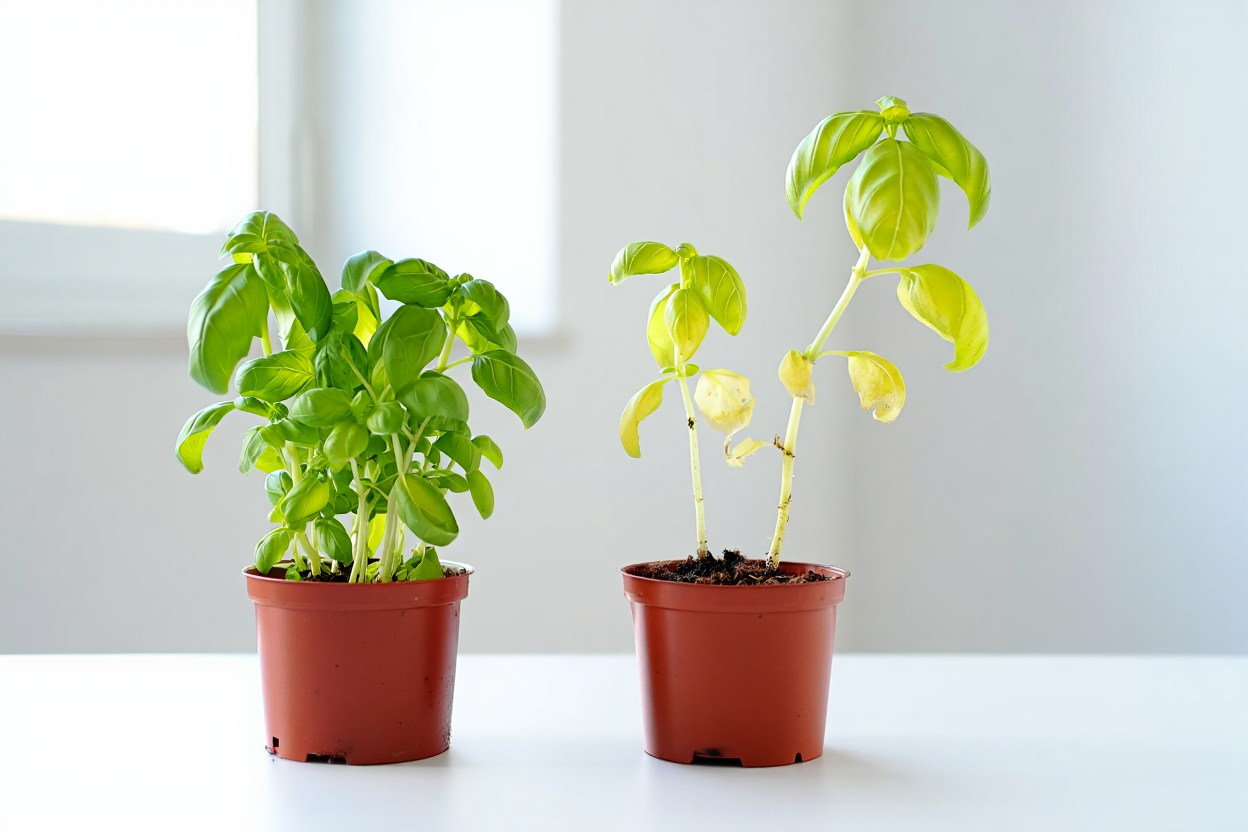
Water must be supplied by the roots, and carbon is absorbed as carbon dioxide by the leaves. If one of these elements is missing, glucose production slows down or stops. That's why a plant can't survive without water or light.
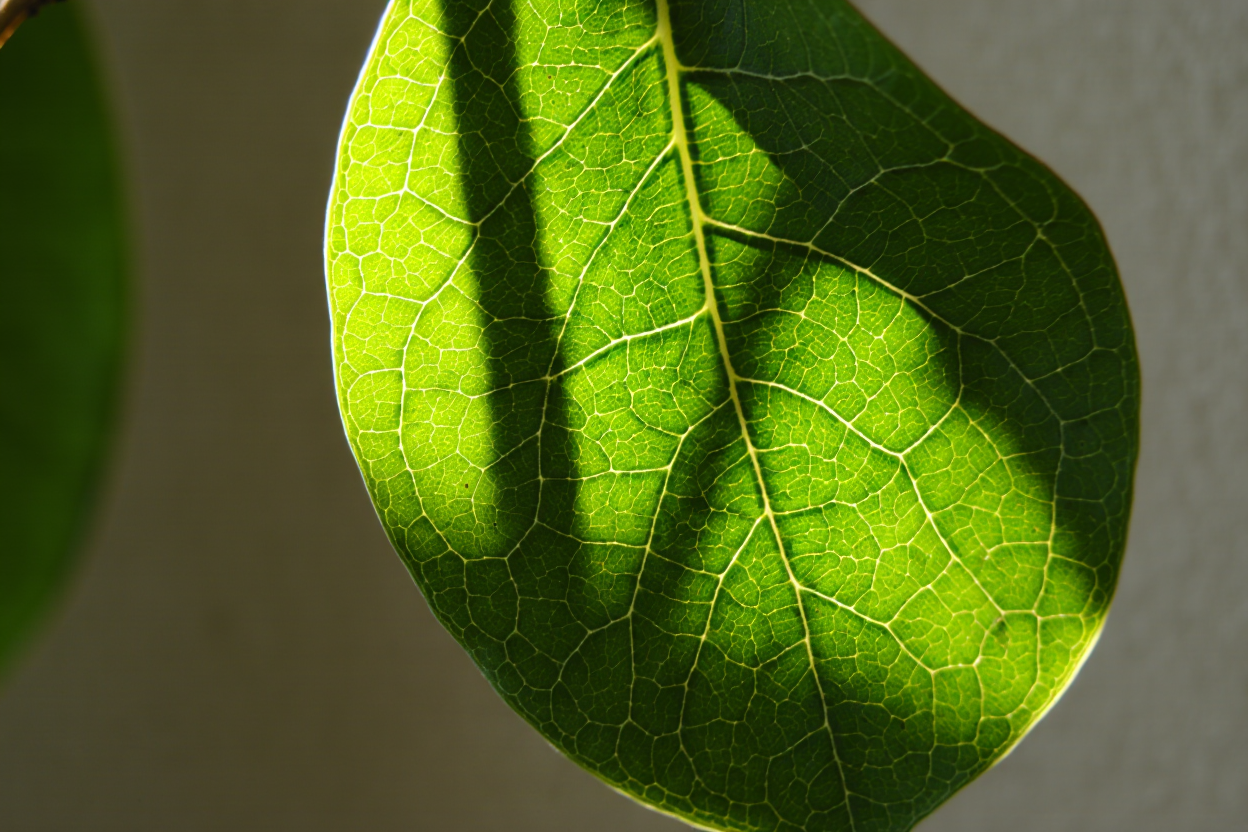
Chlorophyll-containing cells work like mini-factories inside the leaves. Each chloroplast houses millions of molecules capable of capturing solar energy. This remarkable organization of chlorophyll-bearing structures lies at the heart of plant life.
Experiments and hands-on classroom applications
Now let's get hands-on to better grasp this biological phenomenon! How can you actually observe photosynthesis in action? We'll look at how teachers check your understanding of the concept. Explore simple experiments you can do in class or at home to watch this process unfold before your eyes.
Photosynthesis observation protocols for Year 9
The most common experiments let you directly observe oxygen production by a plant. The classic method involves submerging a sprig of Elodea, an aquatic plant, under an intense light source and counting the bubbles that form. The more powerful the light, the higher the number of bubbles, which shows that light actively stimulates the reaction.
- Simple experiment with Elodea: Place a sprig of Elodea in a test tube filled with water and expose it to a light source. Count the O₂ bubbles for five minutes, turn off the light, then compare: the difference in production is immediately visible.
- Sealed jar with a plant: Enclose a living plant with a little water in a sealed jar and place it in the light. Over the following days, the O₂ concentration rises while the CO₂ concentration falls - a change that sensors can measure.
- Comparing red and blue light: Use colored filters or LEDs to observe how the plant reacts depending on the wavelength. It's fascinating to see how the color of the light directly influences productivity and growing conditions.
- Iodine test to detect glucose: After a period of intense photosynthesis, crush a leaf and test it with iodine. The appearance of a blue-black color indicates that the glucose has turned into starch, proving the buildup of organic matter.
These various experiments make the concept of photosynthesis far more tangible. It's no longer just an abstract photosynthesis equation, since you see the results and measure the changes yourself. It's precisely this hands-on approach that makes science come alive and feel exciting!
Calculation exercises and cycle modeling
Classroom applications go beyond simple observation. It's also essential to understand the calculations behind the photosynthesis equation. You might be asked: "If a plant absorbs 88 grams of CO₂, how much glucose does it produce?"
To solve this problem, you need to use the molar masses of the various elements. Knowing that 6 moles of carbon dioxide (CO₂) produce one mole of glucose, the calculation becomes straightforward. Once you master these ratios, figuring out the amount of organic matter produced becomes child's play!
Another interesting exercise is modeling the carbon cycle by linking photosynthesis to cellular respiration. Plants absorb CO₂ and release oxygen, while animals do the opposite. These two cycles balance each other perfectly, creating a permanent chemical dance essential to life on Earth!
Optimizing photosynthesis with suitable grow lighting
Now let's get practical with GrowLED's expertise! Understanding the photosynthesis equation is one thing, but knowing how to optimize it with the right lighting is another. To grow a plant indoors, you need to artificially recreate the ideal light conditions that nature provides.
LED grow lights are specifically calibrated to emit the red and blue spectra that plants absorb most efficiently. This maximizes photosynthesis efficiency to boost the production of organic matter and glucose. Instead of wasting energy on useless colors, these LEDs target exactly what works. The result is a more abundant, vigorous harvest, confirming the winning equation for your indoor growing!