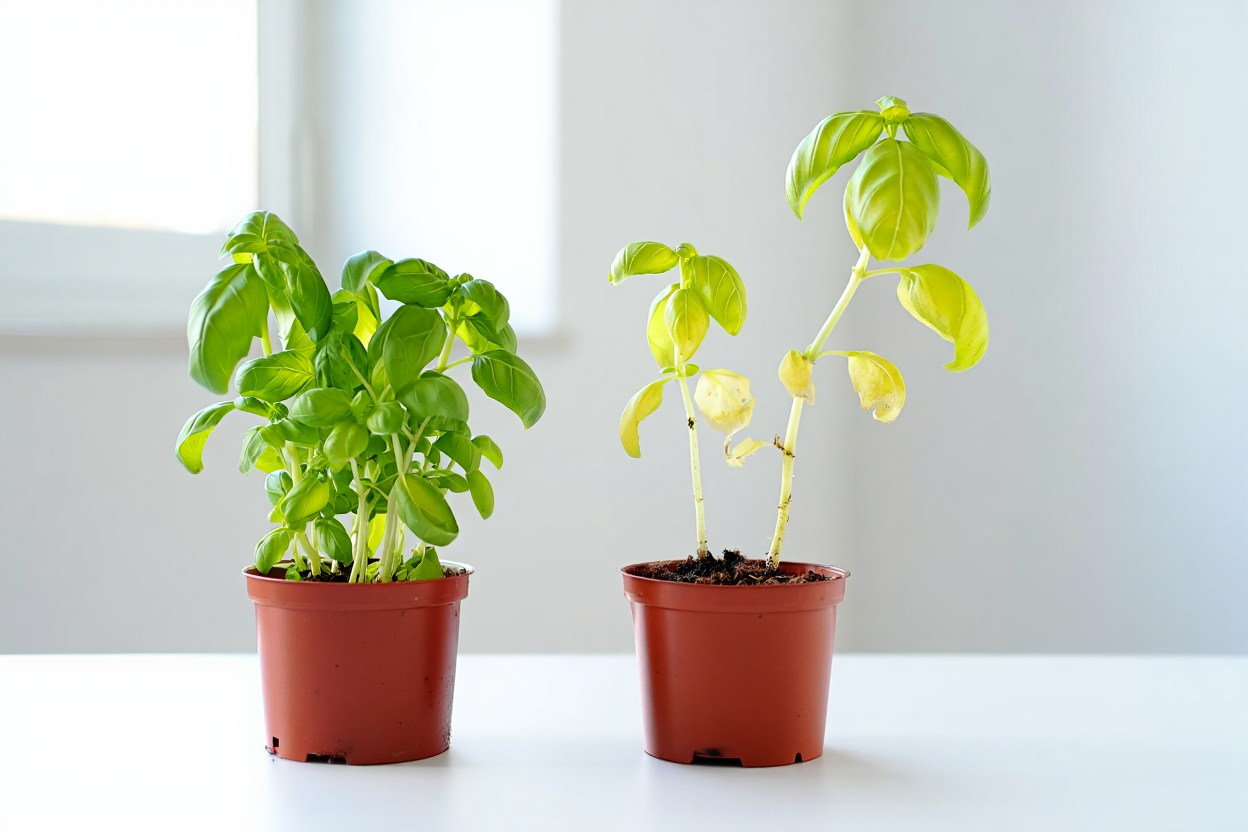




















































































Have you ever wondered how a plant turns light into food? This natural marvel relies on chloroplasts, true energy factories that play an essential role in the life of plants. Let's see how these microstructures use chlorophyll to capture carbon dioxide and produce the oxygen we breathe.
How the chloroplast works in photosynthesis
Chloroplasts are at the heart of how a plant cell functions. True stars of plant biology, they originated from a fascinating endosymbiosis dating back 1.5 billion years. Their essential role? Turning light into sugar through the magic of photosynthesis.
Structure and organization of the plant chloroplast
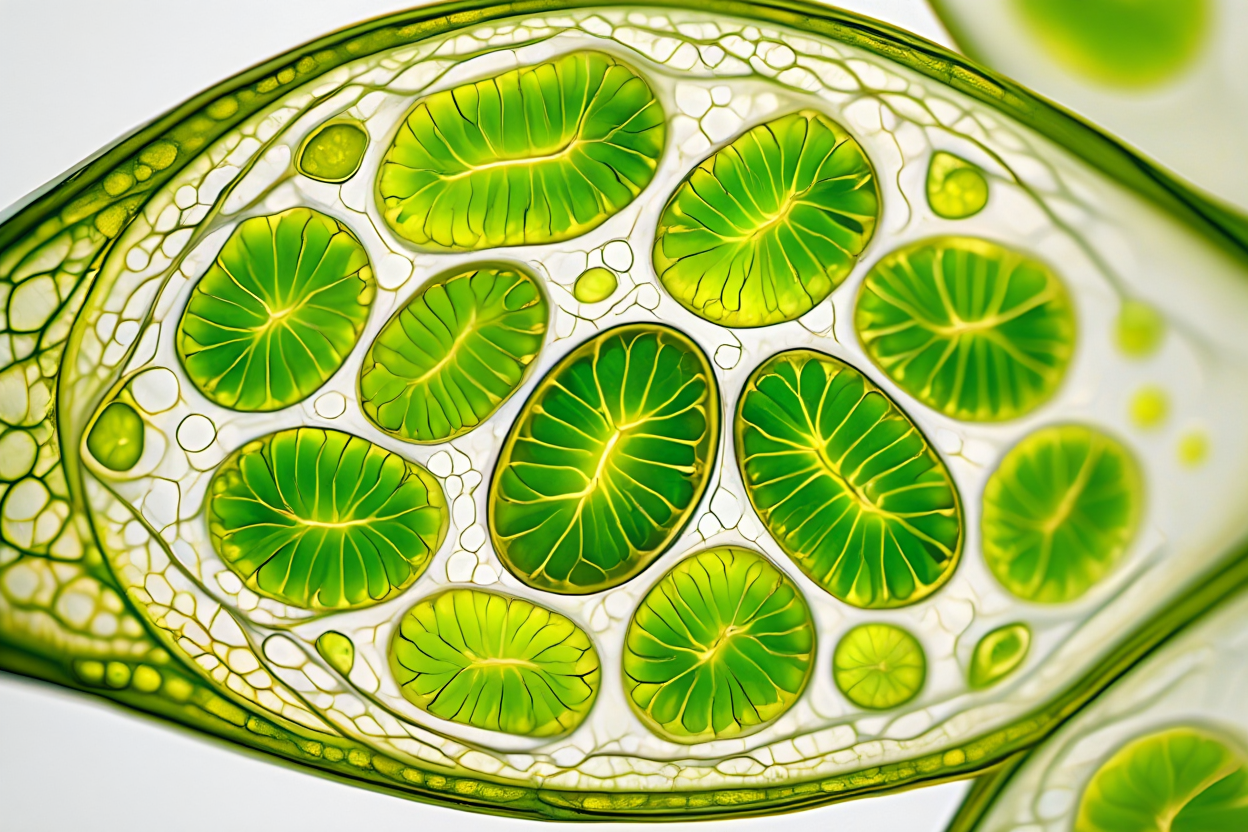
The chloroplast is a well-organized cell organelle, with its protective double envelope and its gelatinous stroma. Inside, stacked thylakoids form ultra-efficient stacks for capturing light. A true miniature biochemical factory!
- Membranes: two layers that protect the precious chloroplast genome
- Thylakoids: where the light phase takes place, packed with light-capturing pigments
- Stroma: the "cytoplasm" of the chloroplast, home to the Calvin cycle
Every plant cell hosts dozens of chloroplasts working in synergy. The chloroplast's proteins come from a collaboration between its own DNA and the plant's nuclear genome.
Light phase: producing ATP and NADPH
This is where the conversion of light energy into chemical energy begins. Pigments capture photons like microscopic solar panels. In this crucial step, ATP and NADPH, the cell's "batteries," are produced.
Water splits, releasing the precious oxygen we breathe, while electrons race through the protein complexes in a wild chase. The result? A true microscopic power plant that powers the entire functioning of a plant cell.
Calvin cycle: turning CO₂ into glucose
In the stroma, the famous Calvin cycle takes center stage. It uses the reducing power of NADPH and the energy of ATP to fix atmospheric carbon. The superstar of this step? RuBisCO, the most abundant enzyme on Earth!
Every CO₂ molecule requires a significant energy investment, but it's worth it: this is how the sugars that feed the plant — and, indirectly, the entire food chain — are born. A true feat of bioenergetic alchemy!
Limiting factors in photosynthesis and light optimization
Chloroplast performance depends on a delicate balance between light, CO₂, and temperature. Too little light? ATP production drops. Too much CO₂? The plant can't keep up. This is the whole art of plant physiology.
| Environmental factor | Optimal range | Impact on the chloroplast | Consequence if limiting |
| Light intensity | 200-800 µmol·m⁻²·s⁻¹ | Activates photosystems II and I | ATP/NADPH drop (-70 %) |
| CO₂ concentration | 400-1200 ppm | Substrate for RuBisCO | Calvin cycle slowed (-50 %) |
| Temperature | 20-30 °C | Optimal enzymatic activity | Protein denaturation >35 °C |
| Water availability | Water potential -0.5 to -1.5 MPa | Photolysis and electron transport | Stomatal closure, CO₂ fixation stops |