











































































Have you ever wondered how your favorite plants turn sunlight into vital energy? This magical process, called photophosphorylation, captures light energy through chlorophyll to produce ATP molecules, the true fuel of plant life. Let's explore where this phenomenon takes place in the chloroplast, how each photosystem contributes to producing ATP and NADPH, and how to choose the right LED lighting to boost indoor growth.
Photophosphorylation and essential mechanisms
At the heart of photosynthesis, photophosphorylation combines ADP with a phosphate (Pi) to create ATP, using light energy captured by chlorophyll. These reactions take place in the thylakoid membranes, where pigments and carriers establish an electrochemical gradient that powers ATP synthase. Unlike cellular respiration, here it's light that directly drives ATP production.
Where and how photophosphorylation takes place
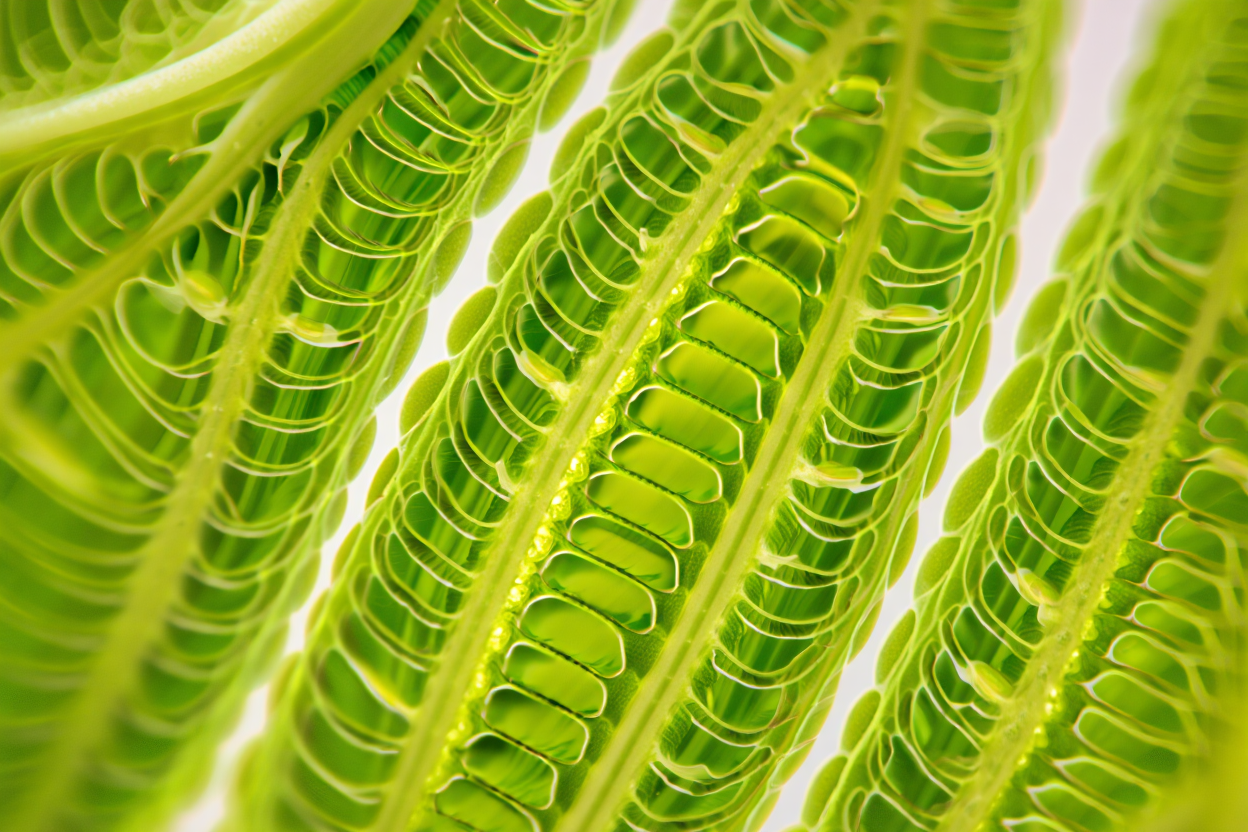
The thylakoids form a complex network where photosystems II and I operate: each has a special chlorophyll (P680 or P700) that launches excited electrons. In plants, these membranes are organized into stacks called grana to maximize light capture. In this miniature factory, every element - from the electron donor to ATP synthase - plays a precise role in optimal energy production.
- Key location : all the action is concentrated in the thylakoid membrane, the true nerve center.
- Main players : chlorophylls P680 and P700, the first to capture and transmit light energy.
- Carriers : the cytochrome b₆f complex acts as a proton pump between the two photosystems.
- Architecture : PSII is located in the stacked grana, while PSI and the synthase prefer the areas close to the stroma.
This clever system converts light into usable energy: the accumulated protons create a gradient, and their return drives ATP synthase, which produces about 1 ATP for every 3 protons. Understanding this organization helps you choose LED lighting suited to your plant's specific needs.
Cyclic and non-cyclic pathways in brief
The famous Z-scheme illustrates non-cyclic photophosphorylation: water splits at PSII, releasing oxygen and protons, while electrons pass through plastoquinone, cytochrome, and plastocyanin before reducing NADP+ to NADPH at PSI. Each step depends on the absorption of a specific photon.
The cyclic version, centered on PSI, recycles electrons to maximize ATP production without creating NADPH or oxygen. The plant preferentially activates this pathway when it mainly needs energy, for example under strong light.
For your indoor growing, our LED grow lights offer a full spectrum that lets the plant intelligently switch between the two pathways according to its energy needs.
The role of ATP and ATP/NADPH balancing
The ATP produced during the light phase directly fuels CO₂ fixation in the Calvin cycle. For every CO₂ molecule converted, the plant consumes about 3 ATP and 2 NADPH - a balance that's crucial to its metabolism.
When light becomes intense, the plant boosts ATP production via the cyclic pathway to maintain this balance. Studies show that doubling light intensity can give some crops up to 15% more biomass. That's why good LED lighting, without overheating, becomes a valuable ally for boosting photosynthesis and growth.
Non-cyclic and cyclic photophosphorylation
Here's the key mechanism that lets your plants generate their ATP production. Non-cyclic photophosphorylation has both photosystems working together in an electron transport chain that starts with water photolysis and ends with the reduction of NADP⁺. Its alternative, cyclic electron transport, acts as a regulator: it specifically boosts ATP synthesis without consuming NADPH, thereby maintaining a perfect energy balance.
From water photolysis to NADPH
It all starts with photolysis in photosystem II : the water molecule splits (2 H₂O → O₂ + 4 H⁺ + 4 e⁻), releasing the excited electrons that replace those lost by P680. This reaction produces our vital oxygen while creating a proton gradient used to convert ADP into ATP. A manganese-calcium complex stabilizes this particularly energetic oxidation process.
- PSII activation : under the effect of a photon, P680 emits an electron toward pheophytin, becoming the most powerful oxidant in living things.
- Journey via plastoquinone : this molecule captures 2 electrons and 2 protons from the stroma, turns into PQH₂, then joins the cytochrome b₆f complex.
- Key role of cytochrome b₆f : it carries the electrons to plastocyanin while pumping protons into the lumen, amplifying the gradient.
- Second excitation at PSI : P700, stimulated by light, passes the electrons to ferredoxin via plastocyanin.
Ferredoxin-NADP⁺ reductase then uses these electrons to produce NADPH, essential to the Calvin cycle. This non-cyclic process thus generates three vital products: ATP via photophosphorylation, NADPH as a reducing agent, and oxygen. In indoor growing, balanced (red/blue) lighting optimizes this mechanism.
Why activate the cyclic pathway
In cyclic photophosphorylation, electrons excited by PSI loop back toward plastoquinone and cytochrome b₆f before returning to PSI. This internal loop intensifies proton pumping without producing NADPH or oxygen, finely adjusting the ATP/NADPH ratio. Plants activate this mode under intense light energy, during stress, or in C₄/CAM species.
In some algae, up to 70% of electrons take this cyclic transport route in cases of excess light, avoiding a dangerous buildup of NADPH. Our 300W LEDs offer an ideal PPFD to intelligently modulate both pathways.
What absorbs photons, and what's produced
Pigments like chlorophyll a (blue 430nm/red 660-680nm) and its partners capture light energy with remarkable efficiency. All this energy feeds the P680/P700 centers, triggering electron transport and photophosphorylation.
Theoretically, two photons (one per photosystem) generate about 1 ATP and 0.5 NADPH in non-cyclic mode. A wheat leaf can produce 30 µmol ATP/m²/s under moderate lighting. Even at maximum light flux, every O₂ molecule released corresponds to 8 ATP and 2 NADPH, showing just how efficient plants are.
In indoor growing, red 660nm stimulates PSII, blue 450nm activates PSI, and infrared 730nm helps coordinate them. A full spectrum lets the plant dynamically adjust its cyclic and non-cyclic photophosphorylation pathways.
Photophosphorylation and optimizing your grow
Now that you've got the fundamentals down, let's put them to practical use and turn your grow space into a true energy-efficiency lab. Photophosphorylation goes beyond simple theory: it's the essential lever that directly regulates ATP production, vegetative development, and the flowering of your plants. By adjusting light, light spectrum, and microclimate, you actively control the electrochemical gradient and efficiently promote the conversion of ADP into ATP, even if you're just starting out growing.
Energy balance and yield
Photophosphorylation relies on the same chemiosmotic principle as oxidative phosphorylation: a flow of protons powers the rotating ATP synthase to generate energy. The major difference lies in the energy source: light captured by the photosystems replaces the oxidation of organic substrates. This similarity demonstrates the universality of the mechanism while highlighting the remarkable adaptation of chloroplasts, which directly harness solar energy to produce NADPH through reduction.
- ATP/NADPH ratio : The Calvin cycle needs about 3 ATP and 2 NADPH to fix each CO₂ molecule. The plant intelligently adjusts the cyclic and non-cyclic pathways to maintain this optimal ratio.
- Energy yield : Three protons passing through ATP synthase are enough to phosphorylate ADP, creating an energy-rich phosphate bond.
- Intensive production : A properly lit wheat field can generate up to 20 g of ATP·cm⁻²·h⁻¹, fueling intense carbohydrate synthesis.
- C₄ adaptation : C₄ plants rely more heavily on the cyclic pathway to produce the extra ATP their CO₂-concentrating mechanism requires.
In indoor growing, raising light intensity from 200 to 400 µmol·m⁻²·s⁻¹ frequently doubles photophosphorylation and increases biomass by about 15 %. The gain levels off between 1,000 and 1,500 µmol·m⁻²·s⁻¹, a threshold beyond which excess light causes oxidative stress if the cyclic pathway doesn't dissipate the surplus energy. Understanding these limits lets you maximize ATP production without overconsuming electricity.
Light spectrum and thylakoid organization
Within the thylakoids, non-cyclic photophosphorylation benefits from a precise spatial organization: photosystem II dominates the stacked grana, while photosystem I and ATP synthase sit in the lamellae exposed to the stroma. This architecture creates micro-domains that optimize water photolysis, the reduction of NADP⁺, and electron flow.
Red (630-680 nm) mainly excites chlorophyll P680 in photosystem II, triggering photolysis and the non-cyclic flow. Blue (400-500 nm) stimulates photosystem I, promotes reduction, and can activate the cyclic pathway under high light intensity. A full spectrum combining these ranges lets the plant naturally balance its two photophosphorylation pathways.
Indoor tips for more ATP
Choose full-spectrum LED lighting covering blue 450 nm, red 660 nm, and infrared 730 nm to smooth out transitions between photosystems. Our LED grow lights boost ATP production thanks to their low heat output, which preserves the integrity of the thylakoid membranes, and their remarkable efficiency of 2.6 µmol/J.
Adjust light intensity: 200-400 µmol·m⁻²·s⁻¹ during the vegetative stage, 600-900 µmol·m⁻²·s⁻¹ during flowering. A dimmer allows a gradual ramp-up in intensity, letting the photosystem machinery adapt harmoniously. Keep the temperature between 22 and 26 °C to protect the electrochemical gradient, ventilate properly to replenish CO₂, and keep in mind: without a carbon substrate, photophosphorylation, NADPH, and ATP won't be enough on their own. By combining the right temperature, suitable light, and efficient airflow, you'll get vigorous plants, bursting with health and delivering an exceptional yield.