











































































Want to bring natural light into your home? A natural light bulb faithfully recreates daylight, offering a full spectrum that preserves your visual comfort and supports your well-being. Here's the essential info to choose wisely: technical features, benefits, and practical tips for optimal lighting.
What Is a Daylight Bulb?
This bulb reproduces the solar light spectrum with a color temperature between 5000K and 6500K, emitting white light comparable to daylight. Our range of SpectraBULB LED bulbs combines performance and energy savings, consuming 70% less than a standard lamp.
Technical Features of the Natural Light Spectrum
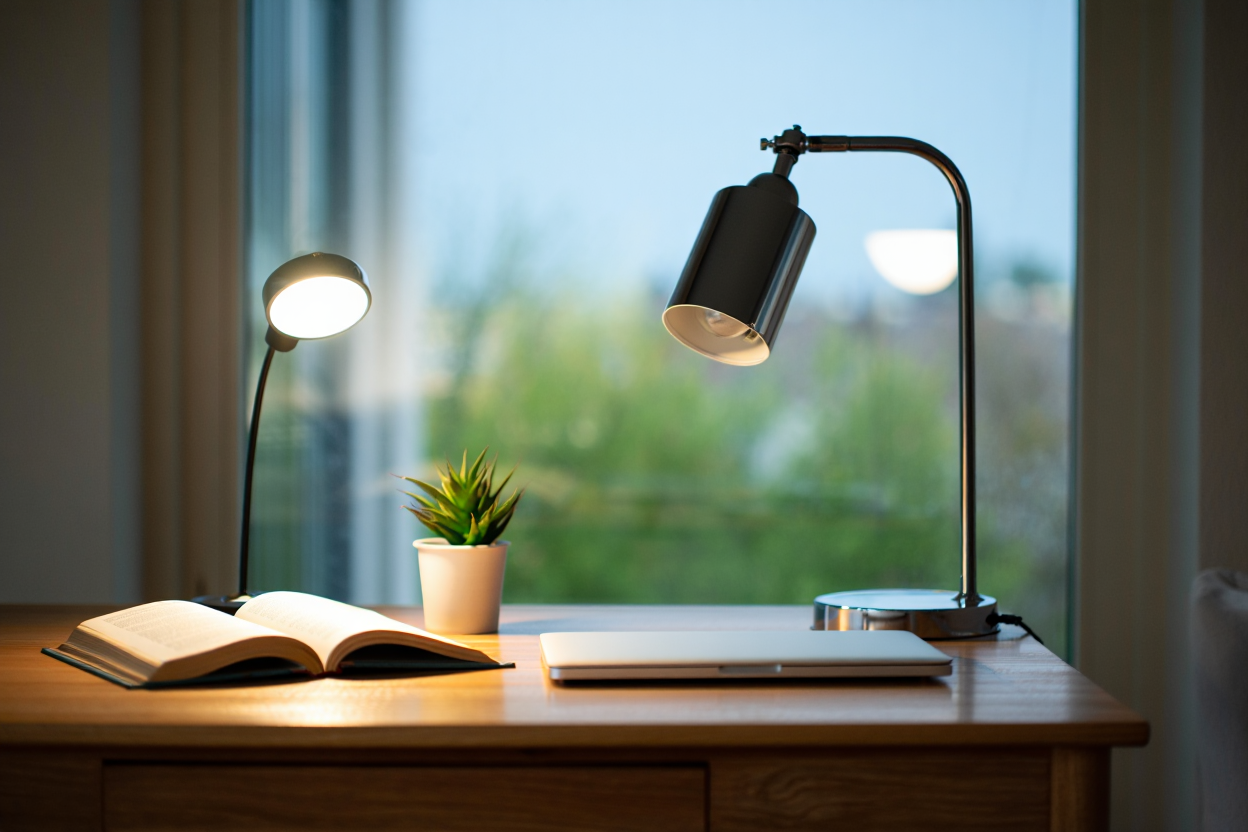
A 6500K daylight bulb offers a balanced spectrum including all visible wavelengths. Its slightly bluish white light evokes solar noon, with excellent color rendering and uniform intensity.
- Full spectrum : perfect color rendering, just like outdoors
- High-performance LED : light stability and no flicker
- Even lighting : diffusion without cast shadows
Unlike standard LEDs, which are often lacking in red, SpectraBULB bulbs with their EVG+ technology offer optimal natural brightness.
Color Temperature and CRI: Essential Criteria
For effective full-spectrum light therapy bulbs, aim for a CRI close to 100. Pair it with a suitable temperature to get pleasant daylight. Be wary of products that don't specify these characteristics.
| Color Temperature | CRI | Rendering Quality | Recommended Use |
| 5000-5500 K | 95-98 | Excellent - reference natural light in Europe | Offices, creative studios, light therapy |
| 6000-6500 K | 90-95 | Very good - midday light | Workspaces, indoor growing, reading |
| 4000-4500 K | 85-90 | Good - neutral white | Kitchens, bathrooms, passageways |
| 6500 K | < 80 | Poor - incomplete spectrum | To avoid for extended use |
LED Technologies Reproducing Sunlight
The latest LEDs use blue chips coated with phosphors to generate a full light spectrum. SpectraBULB bulbs maintain their performance for more than 25,000 hours, or over 10 years of use. Their low heat output suits sensitive environments.
With their compact format, these natural light LED bulbs favorably replace power-hungry models, combining lighting quality with energy savings.
Health Benefits of Natural Light Bulbs
Every day, light that perfectly reproduces the sun's spectrum instantly boosts your well-being, your focus, and the quality of your sleep. By perfectly syncing your biological clock, this natural lighting optimizes your circadian rhythm, increases your productivity, and eliminates energy slumps. Discover our SpectraBULB bulb with EVG+ spectrum, which creates lighting that benefits both you and your plants, with constant brightness and no overheating.

Impact on Well-Being and Circadian Rhythm
A full-spectrum bulb naturally follows your day by reproducing the changes in sunlight, limiting melatonin in the morning before promoting it in the evening. Under bright white light at 6500 K, your brain stays alert, while softer light at 3000 K in the evening effectively prepares your body for sleep. This smart adjustment maintains your daily productivity while avoiding sudden energy drops.
Our SpectraBULB X30 bulb spreads perfectly even light intensity over a 20 m² space, avoiding shaded areas that needlessly tire your eyes. The result? Optimal visual comfort that prevents muscle tension, enhances the feeling of space, and durably strengthens your well-being.
Light Therapy: Fighting Seasonal Depression
Light therapy is based on daily exposure to a lamp producing intense, full-spectrum white light, thereby compensating for the lack of natural light in winter. Twenty minutes of morning exposure are enough to rebalance serotonin, ease seasonal disorders, and significantly improve your mood within a few weeks.
Smart circadian lighting systems automatically adjust color temperature and intensity to faithfully reproduce the sun's path: energizing at 6500 K in the morning, soothing at 3000 K in the evening. Our LED bulbs fit perfectly into these setups, offering dynamic lighting that supports your emotional well-being throughout the day.
Visual Comfort and Reduced Eye Strain
Excellent color rendering (CRI > 90) combined with stable light eliminates flicker that's harmful to the nervous system. This natural light reduces eye strain, improves detail perception, and ensures lasting visual comfort, whether for reading, working, or creating.
- No glare : the perfect diffusion of LED lighting avoids annoying reflections on screens and reflective surfaces.
- Continuous light : no perceptible flicker, unlike fluorescent tubes that flicker at 50 Hz.
- Enhanced detail : the full spectrum makes it easy to make out small text and subtle shades.
- Relaxed pupils : no more constantly adjusting between light and dark areas in a properly lit space.
Install a SpectraBULB X20 bulb 30 cm from your workspace to get about 450 lux, the ideal intensity for extended activities. This bulb provides uniform lighting equivalent to a standard 60W bulb, removes annoying shadows, and maintains your focus without eye strain.
How to Choose and Install a Natural Light Lamp?
Choosing and installing a daylight lamp requires special attention to technical features to achieve effective, pleasant lighting. By selecting the right base, a suitable wattage, and positioning it correctly, you create an ideal lighting atmosphere instead of a disappointing one. Apply our practical tips: your daylight lighting setup will succeed on the first try, with no waste.
Selection Criteria: Wattage, Base, and Dimensions
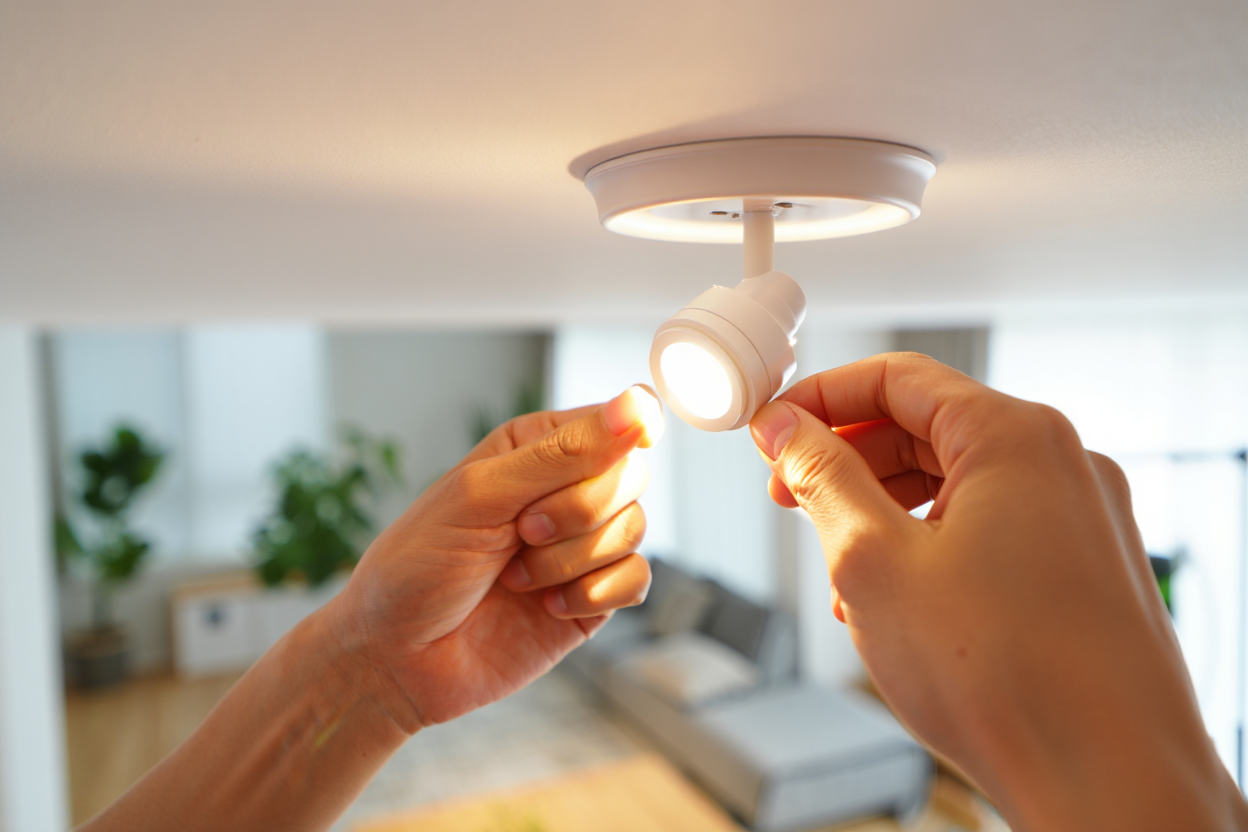
Start by checking the base's compatibility with your current fixture to avoid improvised adapters. E27 bases fit standard fixtures, GU10 fits recessed spotlights, and E40 fits powerful industrial lighting. Our GreenVisuaLED GU10 LED bulb, with its compact dimensions (50 × 60 mm), installs easily while offering a balanced full spectrum.
A 20-30W natural light LED bulb is generally equivalent to a standard 60W bulb - but always check the lumens (plan for 1,500-2,000 lm for a workspace). For optimal daylight lighting, plan for about 300-400 lm/m² in a room (i.e., 6,000-8,000 lm for 20 m²). Also watch the size: a bulb that's too big can stick out of a lampshade and spoil the look.
- Suitable wattage : 300-400 lm/m² for light similar to sunlight.
- Compact format : our 5W or 7W GU10 bulbs offer perfect intensity between 10 and 30 cm.
- Water resistance : choose IP65 for humid areas to protect your bulb.
- Dimming : check for the "dimmable" label if you want to be able to adjust brightness.
SpectraBULB daylight bulbs meet the standards while offering an excellent CRI >95, guaranteeing natural light that renders colors perfectly. Check out our comparison guide to find the ideal model for your space.
Optimal Positioning for Even Diffusion
Install the bulb between 1.5 m and 2 m high for even light distribution, with no shaded areas or glare. This height reproduces the natural angle of sunlight and ensures lasting visual comfort, essential for focus. Avoid low positions (<1 m) that create lighting that's too direct and tiring.
Favor several distributed light sources over a single bright point: three 7W GU10 bulbs spaced 1.5 m apart perfectly mimic the soft light of a large window. This setup eliminates tiring contrasts and stabilizes your circadian cycle, which benefits your sleep.
For plant lighting, position our SpectraBULB X55 bulbs 20-30 cm from the foliage to get the required intensity (≥200 µmol/m²/s) without risk of burning. A white reflector or a diffuser lets you optimize the full spectrum while softening the artificial light in the adjacent living space.
Accessories and Scheduling to Maximize Benefits
A timer is essential: set it from 7am to 7pm to sync your lighting with the natural cycle, boosting both your plants and your energy. This regularity improves melatonin production, and thus the quality of your sleep, while boosting your daytime focus.
Accessories noticeably change the diffusion: a white reflector increases perceived intensity by about 35%, while a diffuser softens the artificial light for an effect close to a filtered window. Regular cleaning preserves the efficiency and lifespan of your daylight bulbs.