




































































Have you ever wondered what happens when you go away for the weekend or on holiday without switching off all the lights? Good news: with an LED lamp, leaving a light on for a full week has very little impact on your consumption. Let me show you everything about LED bulb power consumption, its real cost, and why it's far more economical than a traditional bulb.
Power consumption of an LED bulb left on for a week
LEDs have revolutionized the way we consume electricity. Even if you forget to switch off the light for several days, a simple 10W LED bulb won't break the bank - far from it! Here are the exact numbers you need to know.

Electricity cost of a household LED over 7 days
Let's take the example of a standard LED bulb:
- 10 watts ➝ 0.24 kWh/day ➝ 1.68 kWh/week ➝ about €0.30
- 12 watts ➝ 0.29 kWh/day ➝ 2 kWh/week ➝ about €0.36
- From 5 to 15 watts ➝ between €0.15 and €0.45 for 7 days
Suffice to say, if you forgot to switch off the garage light with an LED, it weighs less on your electricity bill than leaving your smartphone charger plugged in!
LED versus traditional bulbs comparison
The real shock comes when you compare it with older technologies:
| Bulb type | Power | 7-day consumption | Cost |
| LED | 10-12W | 1.7-2 kWh | €0.30-€0.36 |
| Incandescent | 60W | 10 kWh | €1.50 |
A traditional bulb consumes 5 to 6 times more for the same amount of light! Over a year, the savings with LEDs are massive, even if you sometimes leave a bulb on by accident.
Power consumption of LED grow lights in continuous use
For indoor growing, the math is even more striking. A 30W LED grow light left on 24/7 consumes about 5 kWh per week (about €1), compared to €12-15 for a 250W HPS lamp! Check out our LED grow bulbs specially designed to limit energy consumption while optimizing your plants' growth.
What's the takeaway? Even if you forget, an LED bulb generates a negligible weekly energy cost compared to older models. So relax - you can afford to go away for a few days without switching everything off, even though cutting the power when possible is obviously still ideal!
Risks of leaving an LED light on for 7 days
The question often comes up: is it risky to leave a light on for a whole week? Good news - an LED bulb designed for continuous use generally poses no danger if it's properly installed with good ventilation, ensuring genuine continuous lighting safety.

Do LEDs pose a fire hazard
When an LED stays on for several days, it gives off very little heat. The real LED fire risks usually come from faulty wiring or a poorly installed switch. While an LED operates safely between 60-80°C, a traditional bulb can climb above 150°C, putting its immediate surroundings at risk.
Loose electrical connections, damaged connectors, or a cracked fixture can cause electrical arcs capable of igniting nearby materials. Regular inspection helps avoid any potential problem and lets you resolve issues quickly.
Critical conditions and risky setups
To ensure a long lifespan, LEDs shouldn't operate in environments above 30°C - beyond that, their thermal protection shuts them off automatically. Good air circulation is essential even when the LED stays on permanently.
- Damp environments: choose sealed fixtures (IP65) to avoid moisture issues.
- Insufficient ventilation: a clogged heat sink considerably reduces the lifespan of LEDs.
- Old electrical installations: check your electrical network before using an LED bulb continuously.
Keep 20 cm of distance from flammable materials, check connections regularly: these simple measures prevent most incidents. Note that a poorly installed switch is often riskier than a light left on continuously.
Safety precautions for grow lighting
Adding a thermostat that automatically cuts power above 26°C ensures maximum continuous lighting safety. The Lazerlite 720W perfectly integrates these principles thanks to its passive cooling system and built-in protections.
Ensure a minimum airflow of 5 m³/h per 100W, use suitable power supplies and certified connectors: these good practices are often enough to avoid problems. If you notice a suspicious smell, cut the power immediately to identify and resolve the issue quickly.
Best practices for extended LED lighting
Now that you know a light left on permanently is safe and economical, let's see how to optimize your setup. The goal? Reduce consumption and maximize the lifespan of your equipment. Whether you're growing indoor plants or simply want to better manage your lighting, these tips will come in handy.
Home automation and lighting automation solutions
Home automation truly revolutionizes LED management! With an automatic shutoff system or a presence detector, there's no more risk of an LED bulb staying on by accident. Once you understand the importance of light for plants, it's easy to adopt these connected solutions that maintain precise cycles without any effort on your part.
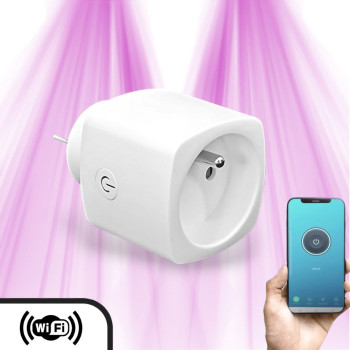
- Wi-Fi/Zigbee bulbs: remote control from your smartphone - ideal for switching off when you're away.
- Programmable outlets: set your lighting hours (e.g. 7am-11pm) so the LEDs stay on regardless of the switch only when needed.
- Motion detectors: automatic shutoff when no one's in the room.
- Complete home automation systems: centralize everything (lighting, heating, ventilation) for optimal management.
These settings prevent waste while ensuring the amount of light needed for plant photosynthesis and respiration. A quick daily glance and a few visual reminders eliminate almost any risk of forgetting. The result? You fully enjoy your LED lighting without worrying about your LED bulbs staying on needlessly for days.
Optimal light cycles for indoor growing
To meet the importance of light for plants, plan for 18h light/6h darkness during the vegetative stage, then 12h/12h during flowering. A simple programmable outlet is enough. The G-MAX grow tent, with its 210D Mylar film, reflects light perfectly for consistent germination even over long periods.
Keep 40-60cm between the lamps and young plants (20-40cm during flowering) to avoid burning them despite the light staying on continuously. A model like the Lazerlite 720W covers 120×120cm with a full spectrum. Just remember to respect the lighting cycles and plan for 1-2h of downtime per week to prevent premature wear of the components.
Maintenance and lifespan of LED grow lights
An LED rated for 50,000h will last 6 years if left on 24/7, versus 14 years at 10h/day. Every hour counts toward the total lifespan! Past that point, brightness drops to 70%: the lamp still works, but not as well.
Regularly check your ballast: odd noises or flickering can signal premature wear. Also remember to clean the heat sinks for good ventilation. That way, even if your LED stays on for a long time, it will keep its performance. The best choice? Models designed for intensive use, switched off only when truly necessary.