




































































Wondering how much a 100W LED bulb actually consumes? The good news is that it only consumes 10 to 15W, which represents up to 90% savings compared to old incandescent bulbs. In this article, we'll break down the power consumption of a 100W LED bulb to help you calculate your savings, estimate your annual costs, and easily reduce your electricity bill. Whether it's for your home or your grow space, you'll quickly see that LED technology is highly cost-effective.
Actual Consumption of a 100W-Equivalent LED Bulb
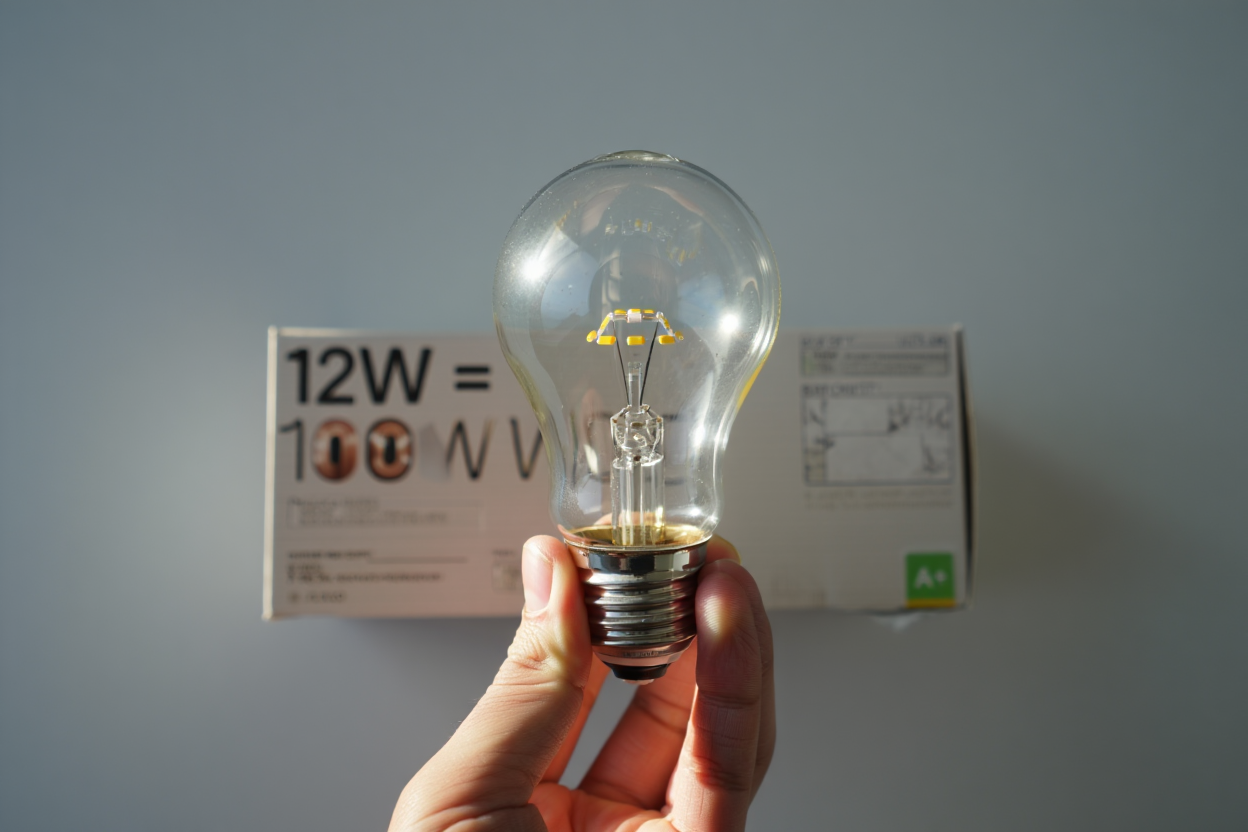
When packaging says "100W equivalent", it's not about the power consumed but simply about a brightness level similar to a standard 100W bulb. In reality, an LED bulb consumes only 10 to 15W, a major difference that directly impacts your power consumption. That's why replacing your old bulbs with LEDs instantly reduces your energy consumption.
Power Consumed: Only 10-15W for Equivalent Lighting
A 12W LED bulb produces about 1,200 lumens, equivalent to a 100W incandescent bulb, which demonstrates its excellent light efficiency. LED technology can replace 7 to 10W of traditional lighting with just 1W, while keeping power consumption very low. As a result, your lighting's annual consumption is considerably reduced.
- Remarkable efficiency : recent LEDs offer 100 to 150 lumens per watt versus only 12 for standard bulbs.
- Actual power : a 100W E27 LED actually consumes 10 to 15W (information often in fine print on the packaging).
- Reduced heat : only 10% of the energy is converted to heat versus 90% for traditional bulbs.
High-end chips like the Samsung LM301H or OSRAM Chip-on-Board achieve exceptional performance, ideal for grow spaces where they provide optimal lighting with minimal energy consumption.
Calculating Annual Bulb Consumption Based on Usage
To calculate your annual consumption: Power (W) × Hours of use × 365 ÷ 1000 = kWh/year. For example:
- A 12W LED used 5h/day = 21.9 kWh/year
- A 100W incandescent bulb under the same conditions = 182.5 kWh/year
That's 88% savings with LED!
The longer you use your bulbs, the greater the savings. Extended lighting periods considerably widen the consumption gap between the two technologies.
| Daily Usage Duration | LED 12W (kWh/year) | Incandescent 100W (kWh/year) | Savings (%) |
| 4h/day | 17.5 | 146 | 88% |
| 5h/day | 21.9 | 182.5 | 88% |
| 12h/day | 52.6 | 438 | 88% |
| 24h/day | 105 | 876 | 88% |
For a grow space with 10 lamps used 5h/day, switching to LED saves about €284/year (at €0.18/kWh) while significantly reducing the heat produced.
Energy Savings Compared to Traditional Incandescent Bulbs
The 88% savings don't just mean a lighter bill - they also mean a smaller carbon footprint. Every kWh not consumed means less CO₂ emitted into the atmosphere.
To make your calculations easier, the GrowLED calculator lets you easily estimate your power consumption and ventilation needs. Just enter your LEDs' actual wattage, the price per kWh, and your usage time to get precise estimates.
With their low heat output and long lifespan, LEDs are an optimal solution for durably reducing your energy consumption while improving your lighting comfort.
Usage Cost and Practical Calculations for Your LED Lighting
Now that we've seen an LED bulb's consumption, let's move on to concrete figures to assess the real cost of your lighting. This detailed calculation, expressed in kWh and euros, will help you avoid unpleasant surprises on your bill and optimize every lamp installed. You'll see that low consumption combined with excellent efficiency guarantees a quick return on investment.
How Much Does an LED Cost per Hour and per Day of Use
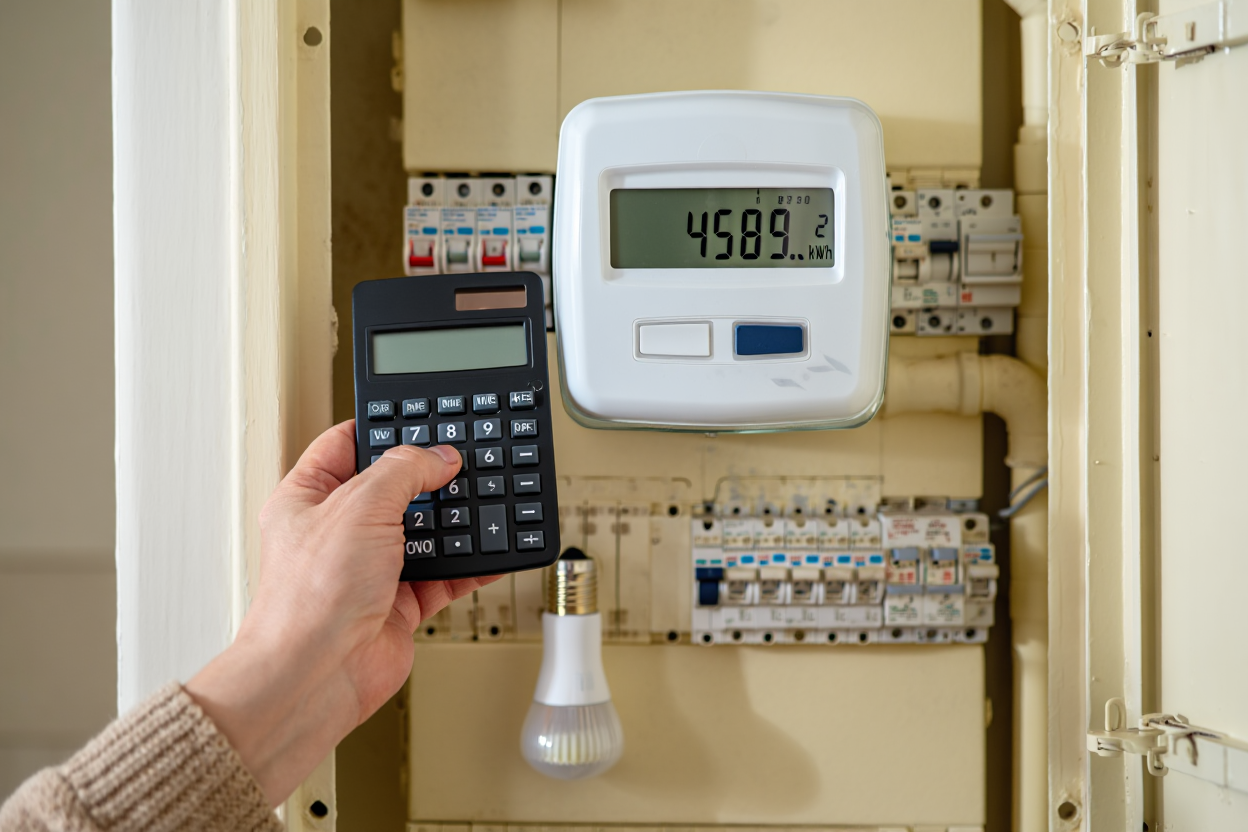
Let's take the example of a 12W LED bulb used six hours a day: it consumes 72 Wh, or 2.16 kWh per month. At an equivalent brightness, a 100W halogen or incandescent bulb reaches 18 kWh monthly - almost eight times more! The hourly cost of a 12W LED is about €0.002, versus more than €0.015 for the 100W bulb. This is simply explained: a halogen bulb's hourly consumption is 0.1 kWh, while an equivalent LED consumes only 0.012 kWh.
- Daily cost, 12W LED (6h) : €0.012 versus €0.09 for a 100W incandescent bulb.
- Monthly cost, 12W LED (6h/day) : €0.32 versus €2.70.
- Example for 10h of use : 100W bulb = €0.15; 12W LED = €0.018.
For intensive use of twelve hours daily, the 12W LED consumes 52.6 kWh/year, for a cost of €7.90 at a rate of €0.15/kWh. The same use with a 100W halogen bulb shoots up to 438 kWh/year for €65.70. Each LED lamp therefore saves you €57.80 per year - which is why replacing your old bulbs is so worthwhile.
Calculator Tool: Easily Estimate Your Monthly Consumption
The 100W LED grow lights offered by GrowLED provide remarkable efficiency of 2.6 to 2.7 µmol/J and cover an area of 60 × 60 cm. Thanks to their high-efficiency MeanWell power supply, they perfectly control their power consumption. Discover the performance of a 100W horticultural LED bulb and keep control of your LED electricity cost at every growing stage.
Our calculator simplifies all your calculations: just enter the price per kWh, your lamp's actual wattage, and its daily usage time. The tool instantly gives you the daily, monthly, and annual consumption, along with their euro equivalent. For example: a 12W LED on for sixteen hours a day consumes 0.192 kWh/day, or 5.76 kWh/month, letting you easily compare different lighting setups based on your needs.
Payback Period and Cumulative Savings Over Several Years
A quality LED bulb generally pays for itself in under a year thanks to its low consumption and its lifespan exceeding 15,000 hours. This longevity reduces frequent replacements, limits waste, and also lowers the environmental impact linked to manufacturing and transport.
- Annual savings per lamp : replacing a 100W incandescent bulb with a 15W LED saves ≈ 124 kWh, or €18.60.
- Over five years : about €93 in savings per lamp, even with a high-end model.
- For a home fitted with 15 lamps : 1,860 kWh saved annually, or €279 less on the bill.
- Ecological benefit : every kWh saved avoids emitting 0.5 kg of CO₂, thereby reducing an average household's annual emissions by about 0.3 tonnes.
These savings add up quickly, especially for indoor setups using several grow lights. The average consumption of a full setup drops significantly, freeing up capacity on your power contract while reducing the heat given off. The result: a lighter bill, better comfort, and limited environmental impact, thanks to LEDs' exceptional performance!
Light Output and Performance of 100W LED Bulbs
LED bulbs don't just lower your electricity bill. Their light output is far higher than that of old filament bulbs. With just 12 watts, a modern LED bulb produces enough lumens per watt to effectively replace a standard 100-watt bulb, thanks to highly efficient electronic components.
Lumens per Watt: Why LEDs Are More Efficient
Current models offer between 80 and 150 lumens per watt (lm/W), a real revolution in energy efficiency. As an example, a 12-watt E27 LED bulb provides about 1,200 lumens, while a 100-watt incandescent bulb produces barely 1,300-1,500 lumens. That's why a power eight times lower is enough to get the same amount of light.
- Replacement ratio : 1 watt LED = 7 to 10 watts of incandescence for the same brightness.
- Practical case : To get 800 lumens (60W standard equivalent), an 8-10 watt LED is enough.
- Guaranteed savings : The higher the lumens/watt ratio, the more you reduce your energy consumption.
By replacing five old 100W bulbs with 12W LEDs, you go from 500 watts to just 60 watts of total power. Your annual power consumption is considerably reduced, while maintaining optimal lighting in every room.
Chip and Driver Technologies to Maximize Efficiency
High-end components like Samsung LM301H or Osram ChipOn chips achieve record performance (2.6 µmol/J), converting every watt consumed into light rather than heat. This results in an exceptional LED light output and a stable color temperature regardless of intensity.
- MeanWell power supplies : efficiency >95% to minimize energy losses.
- Smart dimming : reducing light intensity cuts consumption in half (5-7 watts).
- Optimal cooling : maintains performance without extra consumption.
- Light spectra : warm white (2700K) or neutral (4000K) with no impact on your meter.
Today's LED technology combines all these advantages to optimize your setups. To precisely calculate your consumption, multiply your bulb's actual wattage by its daily usage time, then convert to monthly kWh. You'll then clearly see your future consumption displayed.
Comparison: LED vs. Halogen, CFL, and Incandescent
Compared to a 100W halogen bulb (15-20 lm/W) or a compact fluorescent (70 lm/W max), today's LEDs (150 lm/W) save up to 90% of energy. Less heat generated also means less need for ventilation.
While old incandescent bulbs turn 90% of electricity into wasted heat, LEDs lose only 10%. Their lifespan (15,000-50,000 hours) far outclasses halogen (2,000-4,000h). Replacing your lighting with high-performance LEDs therefore optimizes light output, reduces electricity consumption, and extends the lifespan of your installations.