



































































Want to know the real power consumption of your bulb when it runs non-stop, 24 hours a day? Whether it's for your indoor growing setup or to better manage your electricity bill, calculating the power consumption of a bulb running continuously is essential. With the right method and concrete examples, you'll discover how to easily estimate the kWh consumed, compare different models, and cut your energy costs.
How to calculate a bulb's power consumption over 24 hours
Figuring out a bulb's energy consumption when it runs day and night is child's play, thanks to a simple formula. You just need two pieces of information: your bulb's wattage and the duration of use (here, 24 hours). This calculation lets you properly size your setup, anticipate costs, and avoid electrical issues.
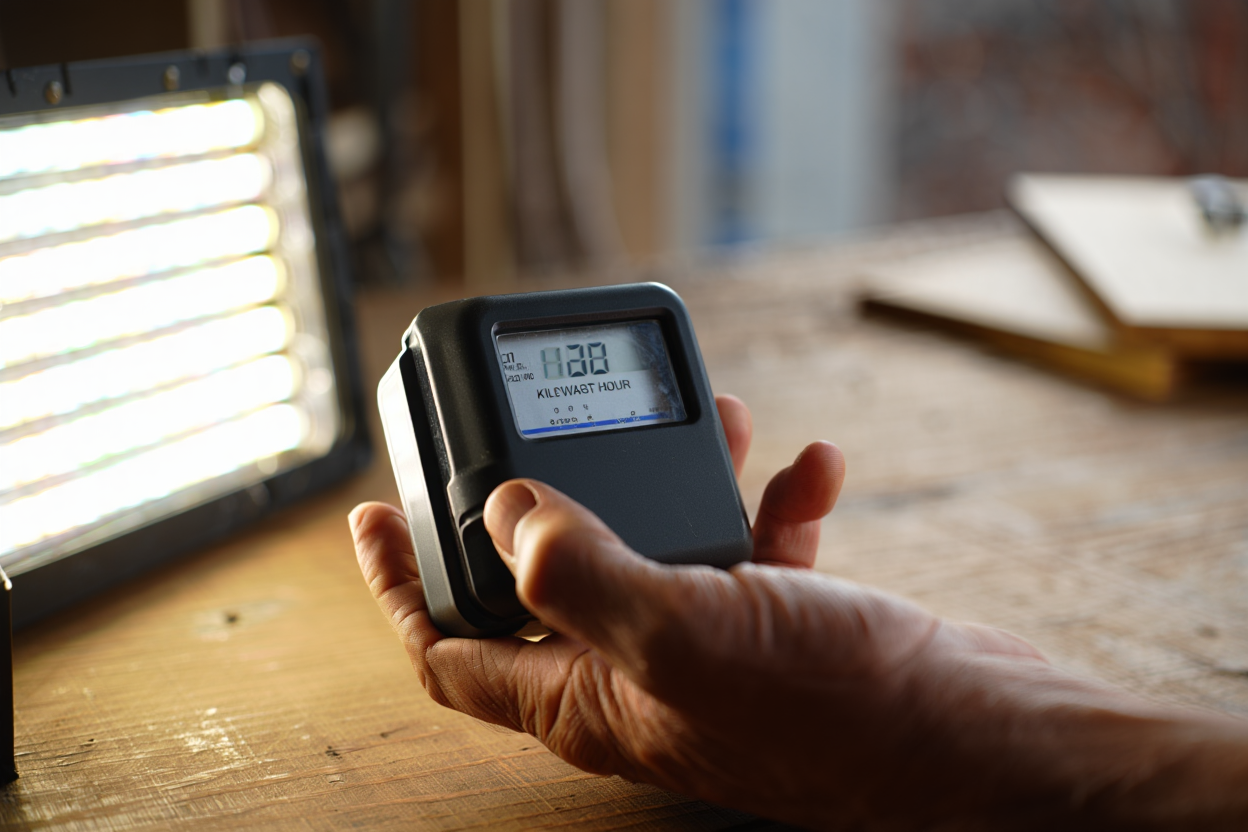
The basic formula for figuring out kWh
Here's the magic equation: Consumption (kWh) = Power (W) ÷ 1,000 × Duration (h). First convert watts to kilowatts, then multiply by the number of hours of use. This universal method applies to all types of bulbs: LED, halogen, compact fluorescent, or grow lights.
- Step 1: Convert watts to kW (divide by 1,000) to use the standard billing unit.
- Step 2: Multiply this value by 24 hours to get your daily consumption in kWh.
- Tip: This formula works no matter the wattage, whether it's a small 20W bulb or a large 680W panel.
- Budget: To estimate the cost, simply multiply your kWh by your supplier's price per kilowatt-hour.
Calculating your setup's power consumption before use lets you optimize it to be both economical and perfectly suited to your needs.
Calculation examples by wattage
Let's look at a few concrete examples:
- A standard 100W bulb running 24 hours consumes (100 × 24) ÷ 1,000 = 2.4 kWh per day, or 72 kWh over a month.
- A 15W LED consumes only 0.36 kWh/day, nearly 7 times less energy.
Our 20W SpectraBULB X20 LED, specially designed for growing, consumes only 0.48 kWh over 24 hours for a 30×30 cm area. Discover how to cut your electricity bill with the LED grow light and see the impact on your consumption right away.
For a 680W LED grow panel:
- Running at 100%: 16.32 kWh/day
- Set to 50%: only 8.16 kWh/day
By adjusting the light intensity, you can significantly reduce your energy consumption while still maintaining excellent growing results.
Converting watts to kilowatts for the calculation
This conversion is crucial because electricity is always billed in kilowatt-hours (kWh). The method is simple:
- 100 W = 0.1 kW
- 20 W = 0.02 kW
- 680 W = 0.68 kW
Once you've done this conversion, simply multiply by the number of hours of use to get your actual consumption.
This technique lets you:
- Easily compare different types of bulbs
- Calculate the total power consumption of your setup
- Optimize your lighting schedule
- Control your energy costs without sacrificing your results
LED bulb power consumption and comparison by type
Now that we've covered the basic formula, let's look at the actual figures for each type of bulb. LED, compact fluorescent, halogen, and incandescent bulbs don't have anywhere near the same power consumption for comparable brightness. Leaving a bulb on permanently quickly turns these differences into kWh saved... or money wasted.
LED grow lights vastly outperform other technologies, especially with continuous use. Take the Pure LED Pro V2.0 680W panel as an example: at full power, it consumes 0.68 kWh per hour; but thanks to its built-in dimmer, this consumption drops to 0.34 kWh in 50% mode, or even less depending on the growth stage. This flexibility lets you adjust consumption over 24 hours, optimize your electricity cost, and provide precise lighting from seedling to harvest. Optimize your LED bulb's 24-hour power consumption
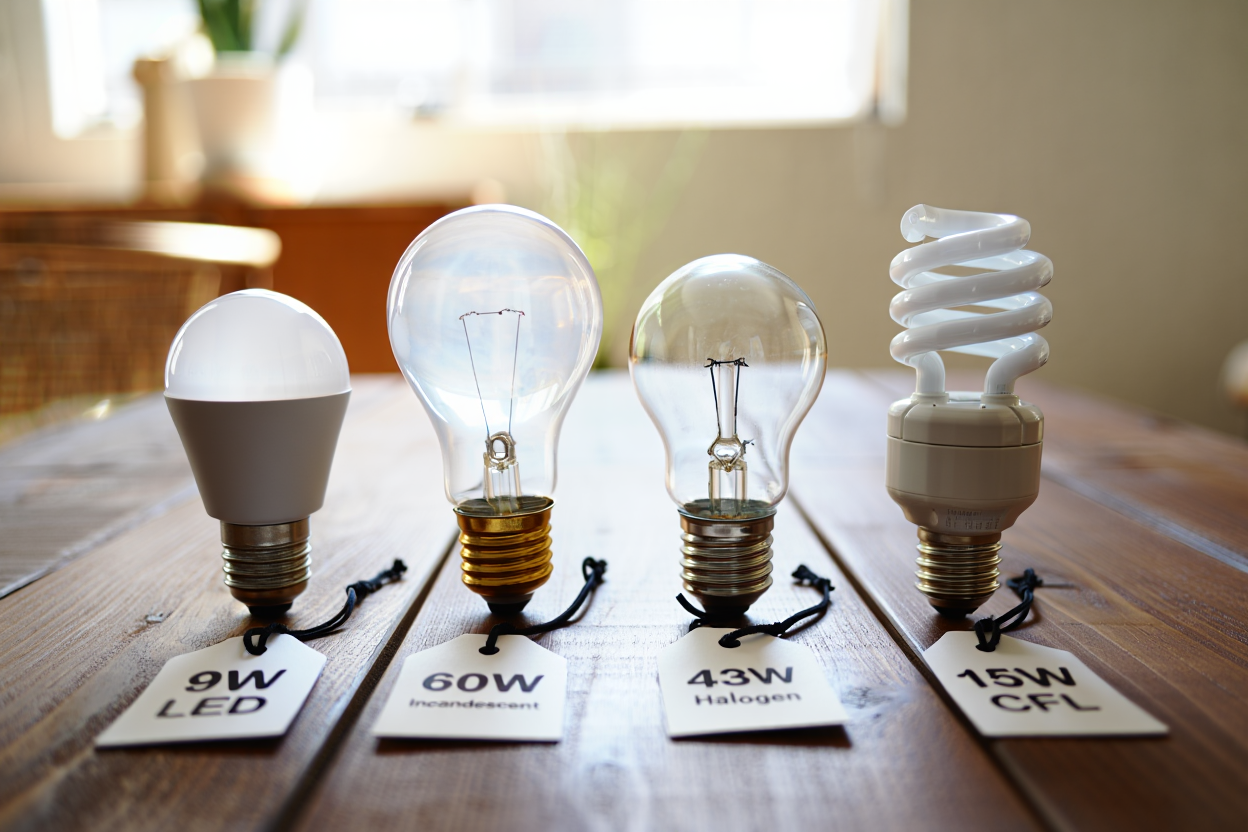
Annual power consumption of LED bulbs by wattage
Even running continuously, the annual power consumption of an LED bulb stays very reasonable. A 5W LED consumes 0.12 kWh per day, or about 43.8 kWh per year; a 10W model reaches 0.24 kWh/day (≈87.6 kWh/year); while a 15W one climbs to 0.36 kWh/day (≈131.4 kWh/year). By contrast, a 100W incandescent bulb climbs to 876 kWh over the same period — nearly seven times more than an LED of equivalent wattage.
GrowLED offers LED grow lights such as BloomLED, CannaLED, SANlight, and HLG, which combine low power consumption with an optimized light spectrum. Even running 24 hours a day, these lights keep the power consumption of an LED bulb within acceptable limits, while offering a lifespan of up to 25,000 hours — nearly three years of continuous operation.
- 5W LED: 0.12 kWh/day → ≈43.8 kWh/year → less than €7 per year at €0.15/kWh.
- 10W LED: 0.24 kWh/day → ≈87.6 kWh/year → about €13 per year.
- 15W LED: 0.36 kWh/day → ≈131.4 kWh/year → less than €20 per year.
- 20W LED (SpectraBULB X20): 0.48 kWh/day → ≈175 kWh/year → ideal for a small growing area.
These figures show that it's possible to grow all year round with LEDs without blowing your budget. Fewer replacements, less waste, and stable output: a winning trio for growers looking to reduce their consumption.
| Bulb type | Power (W) | Consumption/day (kWh) | Consumption/year (kWh) |
| LED | 5 W | 0.12 | ≈43.8 |
| LED | 10 W | 0.24 | ≈87.6 |
| LED | 15 W | 0.36 | ≈131.4 |
| CFL | 11 W | 0.264 | ≈96.4 |
| Halogen | 50 W | 1.20 | ≈438 |
| Incandescent | 60 W | 1.44 | ≈525 |
| Incandescent | 100 W | 2.40 | ≈876 |
Power consumption of a 600W grow light running continuously
The power consumption of a 600W light significantly impacts your bill, especially when running continuously. At 600W, consumption reaches 14.4 kWh per day, or 432 kWh per month, or 5,256 kWh per year. HID systems (HPS/MH) also require more complex management of the heat they give off.
GrowLED offers much more efficient high-power LED solutions. The Pure LED Pro V2.0, set to 50% (340W), consumes only 8.16 kWh/day while still delivering a full spectrum. Over a year, the difference compared with a fixed HID represents more than 2,000 kWh saved — several hundred euros depending on the price per kWh.
To precisely estimate your average consumption, use our calculator: enter the power in watts, the daily duration of use, and the price per kWh. You'll instantly get your daily, monthly, and annual consumption, making it easier to choose the most economical equipment.
Impact of dimming on daily consumption
Dimming considerably changes power consumption. The Pure LED Pro V2.0 (680W) offers five levels: 0%, 25% (~170W), 50% (~340W), 75% (~510W), and 100% (680W). At 25%, consumption drops to just 4.08 kWh/day; at full power, it reaches 16.32 kWh.
Adapting the light intensity to each stage (germination, vegetative stage, flowering) helps reduce consumption without compromising your results. A cycle of 12 hours at 75% followed by 12 hours at 25% stabilizes consumption at around 8.16 kWh/day — half what a fixed 680W light would use.
- Germination: 25% power, ≈4 kWh/day to protect young seedlings.
- Vegetative stage: 50-75% power, consumption between 8 and 12 kWh/day.
- Flowering: 100% power, the maximum acceptable consumption during this crucial stage.
By combining a dimmer with a timer, you can save precise lighting schedules and fine-tune your calculation. The result: healthy plants, controlled power consumption, and durable equipment built to last.
Cost and optimization of continuous power consumption
Knowing how to calculate power consumption in kWh is great, but knowing its equivalent in euros helps you take real action. In this section, we'll explain how to convert your kWh into an actual cost, how to optimize your bulbs running 24 hours a day without sacrificing performance, and the financial and environmental impact of switching to LED. To make your calculations easier, use our power consumption optimization tool, available around the clock, and discover savings that can be impressive.
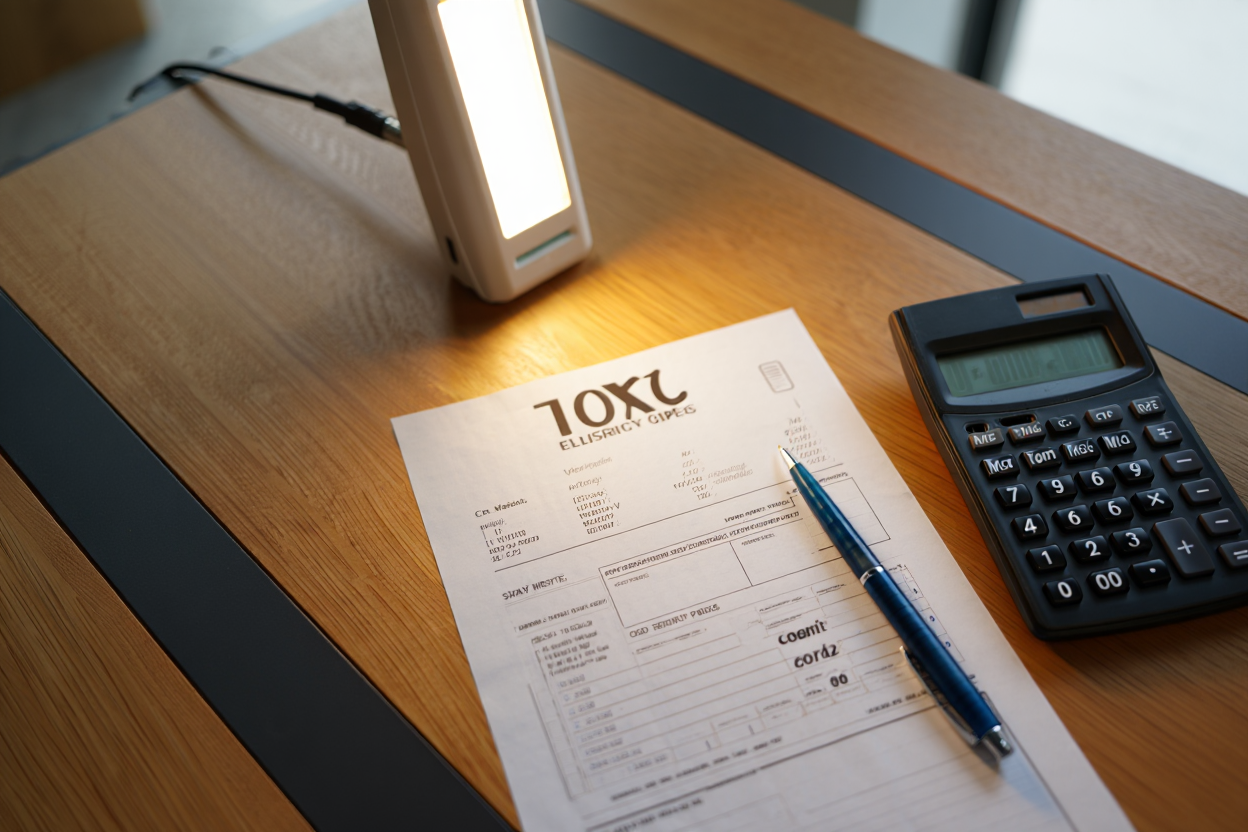
Calculating the electricity cost of a bulb running 24 hours
To find out the electricity cost of a bulb, simply multiply the number of kWh consumed by the price per kWh shown on your bill. Take the example of a bulb rated at 100W and switched on continuously: it consumes 2.4 kWh per day, which comes to about €0.36 per day (at €0.15/kWh), or nearly €131 over a year. With an equivalent 15W LED, consumption drops to just 0.36 kWh/day, cutting the cost to €0.054 per day, or less than €20 a year.
Before installing your lighting, always check local rates, which can significantly affect your bill. Then add up the wattage of the bulb or bulbs used and apply this calculation to estimate your expenses. Our online calculator instantly gives you daily, monthly, and annual costs for better budget management.
- Local rate: find out exactly the price per kWh of electricity based on peak/off-peak hours.
- Number of bulbs: add up the total wattage before calculating the consumption of your setup.
- Annual cost: multiply your daily consumption by 365 to see the impact on your yearly budget.
Even running continuously, an LED consumes 60 to 80% less than a standard bulb, enabling a real reduction in energy consumption and therefore in your bill. Over the long run, these savings add up, improving your energy savings while reducing your carbon footprint, with no compromise on the bulb wattage your plants need.
Strategies for reducing energy consumption
First tip: choose high-efficiency LED bulbs (5 to 15W) that offer the same brightness as traditional 40-60W models. Second tip: use timers to precisely match your lighting to your plants' needs, avoiding any unnecessary consumption. Finally, regularly monitor your spending to adjust your setup and keep reducing consumption.
- High-efficiency LED: choose models that offer the best light output per watt consumed.
- Intensity control: a dimmer lets you adjust the light and achieve real energy savings.
- Precise scheduling: set lighting cycles (12/12 or 18/6) to limit unnecessary power consumption.
- Solar power: combine your lighting with solar panels to push your consumption optimization even further.
Also remember to check the quality of the driver: a good driver limits losses and optimizes the electricity cost of your bulb. Regular maintenance of your fixtures keeps them efficient, letting you keep the same brightness without increasing the bulb's wattage. With the GrowLED calculator, compare different low-consumption scenarios before buying to choose the most economical solution.
Economic and environmental impact of continuous use
A compact fluorescent bulb, or better yet, a 5-7W LED used 24 hours a day generally costs less than €5 a year. Compared with the €131 of a standard 100W bulb, the difference is striking, proving the effectiveness of low consumption and the savings it can bring. A reduction in kWh consumed also translates into lower CO₂ emissions, reinforcing your environmental commitment.
With an average lifespan of 25,000 hours (nearly 3 years of continuous use), LED means fewer replacements and less waste. The slightly higher initial investment is generally paid back in under a year thanks to the savings on your bill and the consumption optimization. You end up with equipment that's durable, economical, and environmentally friendly.