







































































 TT MAX 125 mm · 2 speeds 4,9 (18) Awaiting stock: reserve yours 52,59 € incl. tax or 3× 17,53 € with alma
Climate control, the right air, from extraction to humidity
Temperature, humidity and odour control come down to three actions: extract, filter, circulate. Tell us your tent size and we will recommend the airflow and matching kit in the right diameter.
- Free pickup-point delivery from €89
- Pay in 3 or 4 instalments from €50 with Alma
- Out of stock? Reserve now for delivery on restock
- 4,7/5 · 1 766 verified reviews
— free pickup-point delivery from €89
Go straight to the category
Extracteurs 1 vitesse From 100 to 250 mm Quiet extractors Grow without the noise Ducting & clamps Flexible, insulated, every diameter Carbon filters Odour control in every size Circulation fans Air movement and circulation Humidifiers Raise the humidity Heaters Maintain the temperature at night Odour diffusers Neutralise without filtering Accessories Clamps, reducers, speed controllers Extracteur d'air 2 vitesses Deux débits au choix Extracteur d'air 3 vitesses Trois débits au choix Extracteur d'air avec gestion température Extraction pilotée par la température Systèmes de gestion climatique Contrôler température et humidité Thermomètre / Hygromètre Surveiller les conditions de culture Climatisation / Climatiseur Refroidir l’espace de culture CO2 diffusers Apporter du CO₂ Caissons pour insonoriser extracteur Réduire le bruit de l’extraction
Best sellers in this category
Swipe to view products →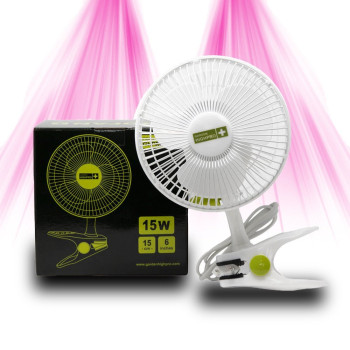 Garden High Pro clip fan (Ø 15 cm - 15W) - 2 speeds ★ 5,0 · 32 reviews · In stock 16,00 €
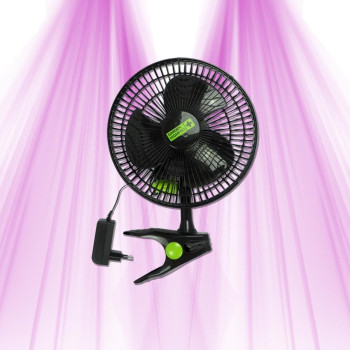 Clip fan - 5W - 15cm - Garden HighPro ★ 5,0 · 3 reviews · In stock 22,68 €
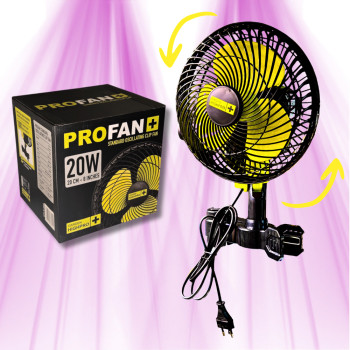 Oscillating Clip Fan - 20W - 20cm - Garden HighPro Awaiting stock 29,90 €
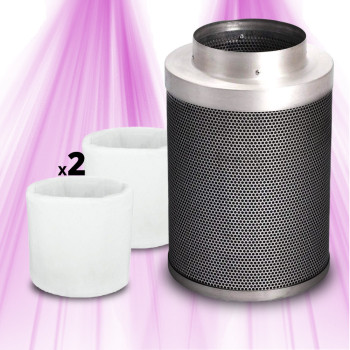 PF PRO carbon filter In stock 59,90 €
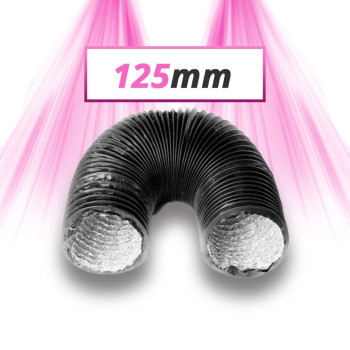 Combi aluminium/PVC ducting 5 m ★ 5,0 · 34 reviews · In stock 8,39 €
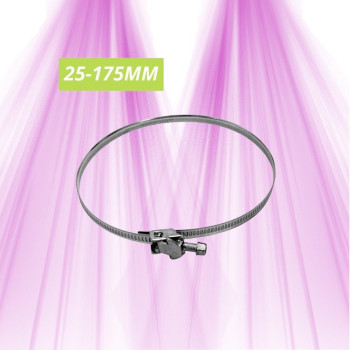 Hose clamp 25–175 mm ★ 5,0 · 80 reviews · In stock 3,19 €
The heart of climate control
The essential trio : extract, filter, circulate
Three actions handle 90% of a tent's climate: replace the air, trap odours and circulate. Our three best sellers, with the accessories needed to complete your extraction setup.
The 30-second guide
The “Your tent, your extraction” table gives nominal airflow guidelines. Your choice also depends on heat removal, humidity and incoming air. Filters, ducting and bends reduce actual airflow: allow a margin and check the assembled system's specifications.
Why extract air from the tent?
Plants consume CO2 and release heat and moisture. Without fresh air, the temperature rises and the air becomes depleted. The extractor removes stale air while fresh air enters through the vents: it is the tent's lungs.
Is a carbon filter essential?
For odour control during flowering, yes. It sits before the extractor and neutralises outgoing odours. Plan for it from the start: its resistance reduces actual airflow by an amount that depends on the filter and setup.
Do I need a fan as well as an extractor?
Yes, their jobs differ: the extractor replaces air, while the fan circulates it inside, strengthening stems and preventing hot spots and stagnant air around leaves.
The category's 3 stars
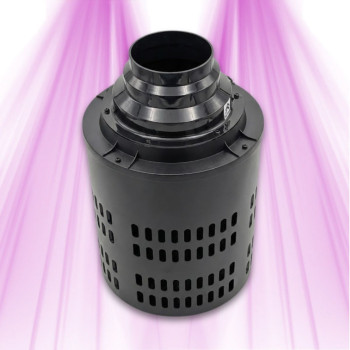
TT MAX 125 mm · 2 speeds 4,9 (18) Awaiting stock: reserve yours 52,59 € incl. tax or 3× 17,53 € with alma PF PRO carbon filter In stock 59,90 € incl. tax or 3× 19,97 € with alma  Cyclone 20 W oscillating clip fan Awaiting stock: reserve yours 29,90 € incl. tax
Complete your extraction setup
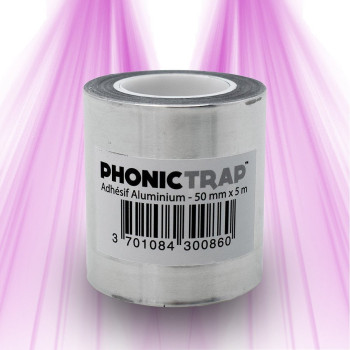

The complete extraction kit, by diameter
Prima Klima two-speed extractor, PF PRO carbon filter, Combi ducting and three clamps: everything for extraction and filtration in your tent's diameter. One click adds all four to your cart.


 ×3
Match the diameter to your extractor and tent outlet. Unsure? The “Your tent, your extraction” table shows you.
The whole climate category at a glance Our best-selling extraction, filtration and circulation equipment.
Seedlings, cuttings, vegetative growth
The humidity & misting
Humidity is the most underestimated climate factor: too low and young plants suffer; too high during flowering and mould threatens. Ultrasonic humidification, measurement and CO2.
The 30-second guide
The simple rule: 70–80% humidity for seedlings and cuttings, 60–70% during vegetative growth, 40–50% during flowering. A probe thermo-hygrometer measures it; a fogger or humidifier adjusts it.
What humidity should I aim for?
70–80% for seedlings and cuttings, 60–70% during vegetative growth and 40–50% during flowering. A thermo-hygrometer with a probe gives you a quick reading.
Fogger or humidifier?
Both use ultrasound. A Mist Maker fogger sits in a reservoir and scales up with the number of heads, making it suitable for larger spaces. The Clivex tower humidifier is standalone with an integrated 6 L tank.
What is VPD?
Vapour pressure deficit is the temperature/humidity relationship that controls plant transpiration. AC Infinity controllers measure it and manage extraction and humidification for you.
Humidity favourites
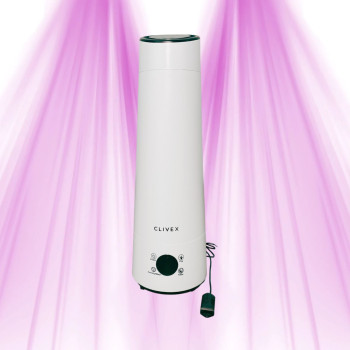 Clivex tower humidifier · 6 L In stock 41,90 € incl. tax
 Cool Mist 2.0 humidifier · 4 L In stock 29,90 € incl. tax
 Ultra Mist 4500 humidifier · 4.5 L 5,0 (5) Awaiting stock: reserve yours 88,40 € incl. tax or 3× 29,47 € with alma
Complete your humidifier setup


All humidifiers Measure first, adjust second.
Entry-level, mid-range, premium
Three levels of extraction, three ways to control the air
Three Ø 125 mm extractors: two manually selected speed models and one temperature-controlled model. Compare their nominal airflow and adjustment method for your tent, filter and heat load.
Entry-level
For simple control of a small extraction setup
- TT MAX Garden HighPro: two speeds, 220 / 280 m³/h
- Ø 125 mm connection, prewired extractor
- Speed selector on the housing
- Manual adjustment, without temperature probe
Avoid if you want automatic temperature control.
View two-speed models20Mid-range
For choosing between day and night settings
- Prima Klima Ø 125 mm: two speeds, 220 / 400 m³/h
- Higher maximum nominal airflow than the TT MAX 125
- With a filter, actual airflow depends on the setup
- Manual speed selection, without external controller
Avoid if you want the tent to adjust itself while you are away.
View two-speed models20Premium
For a tent that regulates itself
- Temperature probe: the motor speeds up when it gets warm
- Runs slowly the rest of the time, keeping noise down
- Power use matches actual demand rather than maximum output
- Maximum nominal airflow of 400 m³/h at Ø 125 mm
Avoid if your tent is in a cool garage with a stable temperature.
View temperature-controlled models26
Noise is a separate consideration: if silence matters most, quiet extractors are available at every level.
The climate catalogue
Your climate, your way
Three routes to the same catalogue: your needs, extractor type or brand.
Extract air the heart of climate control replace stale air The highlightTT MAX 125 mm · 2 speeds52,59 € 20 items of equipment→
The highlightTT MAX 125 mm · 2 speeds52,59 € 20 items of equipment→ Extract quietly adjoining room quiet motors  The highlightTT Silent M 125 mm189,00 € 19 items of equipment→
 Filter odours discreet flowering virgin activated carbon The highlightPF PRO carbon filter59,90 € 31 items of equipment→
The highlightPF PRO carbon filter59,90 € 31 items of equipment→ Circulate air strong stems no more stagnant air The highlightCyclone 20 W oscillating clip fan29,90 € 20 items of equipment→
The highlightCyclone 20 W oscillating clip fan29,90 € 20 items of equipment→ Humidify cuttings & vegetative growth foggers & more The highlightClivex tower humidifier · 6 L41,90 € 12 items of equipment→
The highlightClivex tower humidifier · 6 L41,90 € 12 items of equipment→ Heat smooth winter temperatures tubes, mats, fan heaters  The highlightSolux tube heaters49,90 € 15 items of equipment→
Cannot find what you need? or see the whole category at once →
1 speed24 items of equipment 2 speeds20 items of equipment 3 speeds3 items of equipment Quiet models19 items of equipment With temperature controller26 items of equipment Controller kits7 items of equipment Two-speed kits5 items of equipment Ducting31 items of equipment Soundproof boxes1 items of equipment Air conditioners2 items of equipment
The airflow rule
Your tent, your extraction
Nominal airflow guidelines to help you start choosing, with examples from our catalogue. Adjust them for tent height, heat, humidity and the air circuit.
| Your tent | Air volume (assumed height) | Indicative nominal airflow | Example extractor |
|---|---|---|---|
| 60 × 60 grow tent | ~0.6 m³ (height 1.6 m) | 150 – 200 m³/h | PROFAN Garden HighPro Ø 125 mm · 190 m³/h |
| 80 × 80 grow tent | ~1 m³ (height 1.6 m) | 220 – 300 m³/h | TT MAX Garden HighPro Ø 125 mm · 220 / 280 m³/h |
| 100 × 100 grow tent | ~2 m³ (height 2 m) | 350 – 460 m³/h | Prima Klima Ø 125 mm · 220 / 400 m³/h (high speed) |
| 120 × 120 grow tent | ~2.9 m³ (height 2 m) | 550 – 760 m³/h | Prima Klima Ø 150 mm · 390 / 760 m³/h (high speed) |
Nominal airflow: adjust these guidelines for tent height, heat and humidity. Filters, ducting and bends reduce actual airflow. Choose a filter of the same diameter whose rated airflow covers your extractor's output. Find your tent in the Grow tents category →
The equipment
The accessories for climate control
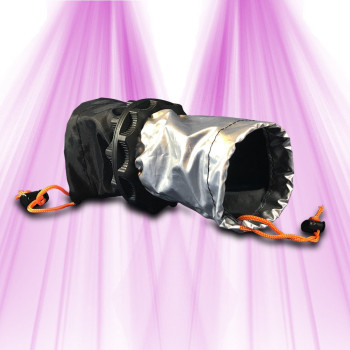
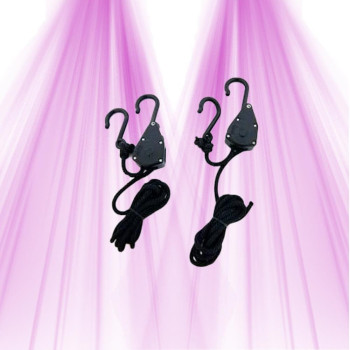
Clamps, ducting and hangers: small accessories that keep your extraction setup working over time.
Secure
Connect ducting

Missing something? All climate accessories →
Our partners
The brands we stand behind
Four brands we know inside out, with around fifty more growshop brands below.
Garden HighPro
Clip fans, ProActiv filters and PROFAN extractors: over 1100 climate items sold in two years, a reliable choice in this category.
The best seller Prima Klima
An extraction benchmark: lasting motors, precise temperature controllers, a growroom standard.
The benchmark Secret Jardin
Monkey Fan, ducting and flanges: tent accessories designed by your tent's manufacturer.
The ecosystem AC Infinity
Controller AI+, controlled filtration kits and Cloudforge humidifiers: automatic climate control from your phone.
The connected choice 



















































Expert advice
All guides Before you buy, understand
Temperature, odours and ventilation: climate guides from our blog.

Help & advice
Questions we are asked
About Climate management: click a question to see the answer.
What extractor airflow does my tent need?
The “Your tent, your extraction” table gives nominal airflow guidelines: 150–200 m³/h for 60 × 60 and 550–760 m³/h for 120 × 120. They are not calculated from volume alone: adjust for height, heat and humidity. Filters, ducting and bends reduce actual airflow; allow a margin and check the filter's permitted airflow.
How can I reduce extraction noise?
Three measures can be combined: a quiet extractor such as TT Silent, flexible sound-insulated ducting instead of rigid aluminium, and a soundproof box. Together, they make a real difference beside a bedroom.
Is a carbon filter really necessary?
Only when odours matter, which they do during flowering. It fits on the extractor inlet and is replaced every 6–12 months depending on usage.
What humidity do my plants need?
70–80% for seedlings and cuttings, 60–70% during vegetative growth, 40–50% during flowering. Too low and plants transpire excessively; too high during flowering and mould threatens. A fogger or humidifier helps regulate it.
Fogger or humidifier: what is the difference?
Both use ultrasound. A Mist Maker fogger sits in your reservoir and scales with the number of heads; a humidifier works independently with an integrated tank. AC Infinity controllers can manage both.
Can I pay in instalments?
Yes: 3 or 4 instalments on orders from €50, 10 instalments or payment deferred by 15 days from €100, with Alma.
Cannot find your answer? 01 88 33 45 52 or by message.
The whole climate category. Everything available to order.
In stock or available to reserve on restock, with a real person on the phone to help set your climate.
Browse the categoryStill need a tent? All grow tents are here →
Learn more about Climate management
Climate management is the set of means used to control and maintain climatic conditions in a given space, with the aim of promoting the growth and development of plants. It can be used in agriculture, gardening or horticulture.
The main elements of climate management are:
- Temperature: Temperature is a key factor for plant growth. It must be adapted to the specific needs of each plant and maintained at an optimal level.
- Humidity: Air humidity can influence plant growth, especially for tropical plants that need very humid air.
- Lighting: Lighting is also important for plant growth. Depending on the plant, certain wavelengths of light are more favorable than others.
- CO2: Carbon dioxide (CO2) is an essential gas for photosynthesis in plants. High concentrations of CO2 can improve plant growth.
Climate management can be achieved in different ways:
Using air conditioning equipment, such as air conditioners or heaters, to regulate air temperature and humidity.
By using lighting equipment, such as LED lamps or spotlights, to provide light adapted to the needs of the plants.
Using CO2 regulators to maintain high concentrations of CO2 in the air.
By using greenhouses, indoor gardens or indoor growing facilities, which allow climate conditions to be controlled more precisely.
It is important to ensure that climatic conditions are adapted to the specific needs of each plant to promote their growth and development. If in doubt, it is advisable to consult a professional or refer to the manufacturer's instructions.


