



































































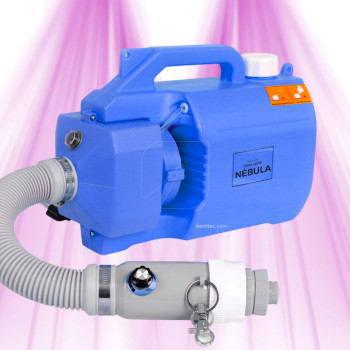
Nebula 5L Electric Sprayer - Water Master - Adjustable Mist for Precise…
Ships within 2 weeks
260,28 € or 3× 86,76 €

Product successfully added to your shopping cart
Ça pousse dans le bon sens

4 products
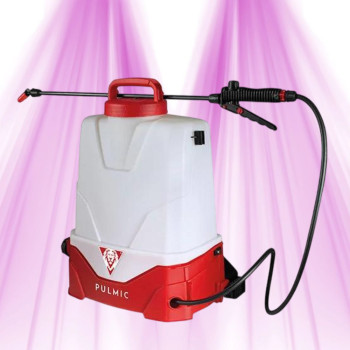
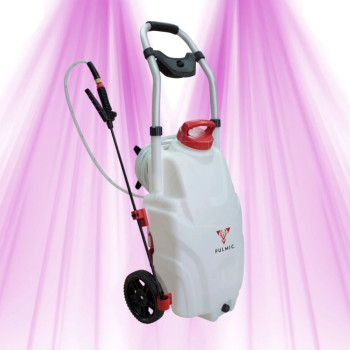
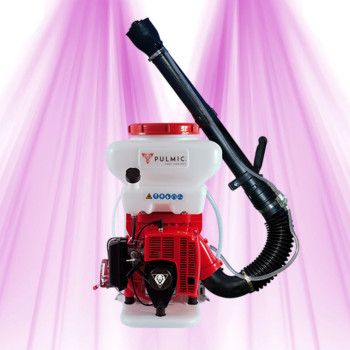
A professional battery sprayer is chosen on its flow, its pressure and its nozzle, not on the volume of its tank. Four battery-powered units are listed here, from 5 to 35 litres, knapsack or trolley-mounted, for foliar application in enclosed environments.
A professional thinks in spray volume per hectare, then in forward speed; tank capacity is only a refilling constraint.
Quoted runtimes are given at reduced flow with a new battery; in sustained use, having a second battery counts for more than the figure on the sheet. Fifteen litres means 15 kilograms carried on the back: beyond 20 litres, the wheeled version is a working condition, not a comfort.
The seals determine what the unit can take — FKM seals, known as Viton, withstand formulations that standard seals do not; have compatibility confirmed by the manufacturer before using any unusual product. Maintenance comes down to a few actions: filter and strainer kept clean, rinsing with clean water between products, management of the tank residue, and nozzle checks — a worn nozzle increases flow without warning and falsifies the dose.
Professional use of plant protection products requires an individual certificate of competence for the operator. Periodic inspection obligations do not cover every category of equipment: check the applicable regime with the competent authority. Dose and application conditions are a matter for the product label and for qualified advice. Supplied to order, lead time stated on the quotation.
This equipment forms part of the approach set out in site hygiene and protection: zoning and scouting come before the tool. An application temporarily raises the humidity of the room, a subject covered by industrial dehumidification. For non-professional use, the pest and disease treatments section remains the general catalogue's entry point, and our article on identifying pests sets out what to look for.
Help & advice
About Professional Sprayers — click a question to see the answer.
For indoor cannabis cultivation, I recommend choosing sprayers that offer a fine and homogeneous spray. Size is also important: for small areas, a 750 ml to 1-liter model may suffice, but for larger grows, a 2-liter or larger pressure sprayer will save you time and effort. Make sure the nozzle is adjustable to adapt the fineness of the spray to the products you are using.
In indoor cultivation, the best time to spray is generally just before the lights go out or during the dark period if you have a day/night cycle. This allows the leaves to dry quietly without the risk of burns due to the magnifying glass effect of water droplets under intense lighting. If you spray during the light period, make sure the humidity does not stagnate for too long.
The main difference lies in capacity and operating mode. A 750 ml sprayer is often a trigger model, ideal for spot applications or small areas. A 2-liter pressure sprayer, on the other hand, is equipped with a pump that pressurizes the liquid, allowing for continuous and less tiring spraying over larger areas. I find it particularly useful for regular treatments or denser crops.
To prevent mold, several precautions are essential. First, always spray with good ventilation to promote rapid drying of the foliage. Then, avoid overloading the leaves; a fine mist is preferable to runoff. Finally, as I mentioned, it's best to spray at the end of the light cycle so that the plants have time to dry in the dark, thus reducing stagnant humidity conducive to mold.
For foliar fertilizers, I recommend a sprayer that provides a very fine and uniform spray. The goal is to cover the foliar surface without creating large drops that could run off or burn the leaves. A pressure sprayer with an adjustable nozzle is often the most suitable, as it allows for this fine mist essential for good nutrient absorption through the leaf stomata.
Foliar spraying is a very useful technique in cannabis cultivation. It allows for rapid nutrient absorption via the leaves, which is ideal for quickly correcting deficiencies or giving the plant a boost. It's also an excellent way to apply preventive or curative treatments against pests and diseases, or growth stimulants. I often use it in addition to root feeding.
In principle, I advise against spraying directly under active LED lights, especially if they are powerful. Water droplets can create a magnifying glass effect and cause burns on the leaves. Furthermore, high ambient humidity under lighting can promote mold development. If you absolutely must spray during the light cycle, ensure you have very effective ventilation for ultra-fast drying.
Cannot find your answer? 01 88 33 45 52 or by message.