



































































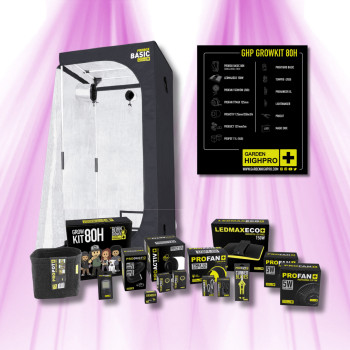


Germany Pack - Complete growing kit 80x80cm - TOP BUDGET 2025!
Ships within 2 weeks
595,39 € 661,54 € or 3× 198,46 €

Product successfully added to your shopping cart
Ça pousse dans le bon sens

8 products
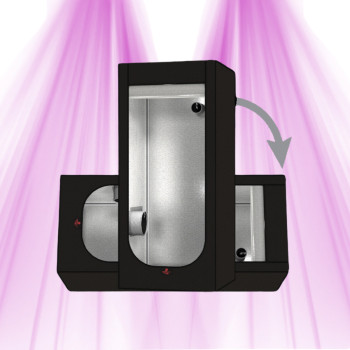
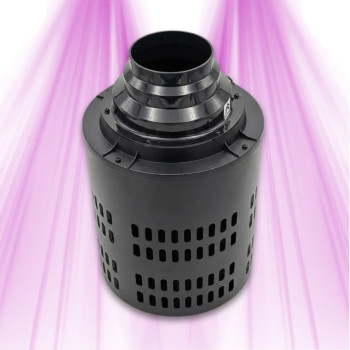
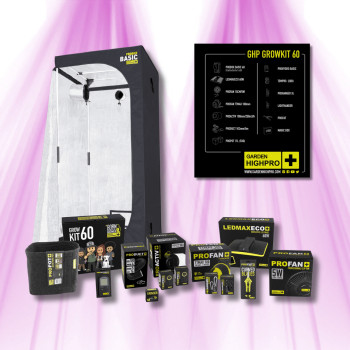
The complete 80cm x 80cm kits are the ideal format for beginners in indoor growing, offering a hassle-free start. Covering 0.6m², you'll have exactly what you need to cultivate 2 to 4 plants, depending on your technique. These kits include all essential equipment: grow tent, LED lighting, ventilation system, and carbon filter. Say goodbye to separate purchases and compatibility issues — everything is sized to work together seamlessly.
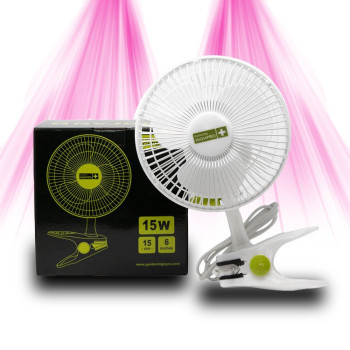
The 80x80cm size strikes a perfect balance between yield and discretion. With 0.6m² of floor space and typically 160cm in height, you can easily set up this system in a closet or a dedicated room. The included LED lighting typically draws between 100 and 150 real watts, which is precisely the recommended power for this surface area. The integrated ventilation moves between 150 and 250 m3/h, ensuring optimal air exchange without over-ventilating.
These kits eliminate beginner mistakes. No more calculating if your extractor is powerful enough or if your LED covers the entire surface. Manufacturers have already done the math for you. You also save time and often money compared to purchasing components separately. Compatibility between all elements is guaranteed, preventing unpleasant surprises during assembly.
First, check the actual power of the included LED. For 0.6m², aim for a minimum of 100 to 150 real watts. Avoid kits that only state "equivalent power" — that's often just marketing. The actual power consumption should be clearly displayed. For ventilation, a 150-200 m3/h extractor is more than sufficient for this tent size.
Also, check the quality of the tent: thick fabric (at least 600D), robust zippers, and a reflective interior. The structural poles must support the weight of the lighting without bending. Some kits include bonus accessories like yo-yo hangers, a thermometer-hygrometer, or pots — all additional savings.
Finally, consider scalability. A good kit allows you to easily upgrade certain components later. For example, replacing the LED with a more powerful model or adding a climate controller without having to buy everything new.
In soil, you can easily grow 4 plants in 7-11 liter pots in this area. The space is sufficient if you have some mastery of training or pruning. In hydro, it's even easier: 4 plants in DWC or an NFT system fit without a problem. The ventilation included in these kits effectively manages the extra humidity from hydroponics. However, avoid crowding more than 4 plants — you would lose quality and ease of maintenance.
With the typical 100-150W LEDs in these kits, maintain a minimum of 30-40cm between the lamp and the top of the plants. Too close, you risk light stress and leaf discoloration. Too far, you lose light intensity. Use your hand as a test: if you feel heat after 30 seconds, it's too close. Modern LEDs generate less heat than HPS, but they are still powerful. Adjust the height according to the phase: a little higher during vegetative growth, optimal during flowering.
Clearly yes for this surface area. A 150W real LED produces as much as a 250W HPS while consuming 40% less. On 0.6m², HPS generates too much heat and requires oversized ventilation. LEDs also offer a more complete spectrum and a lifespan 3 times longer. The only advantage of HPS remains the initial purchase price, but electricity savings quickly compensate. Plus, no separate ballast is needed with LEDs — one less component that can fail.
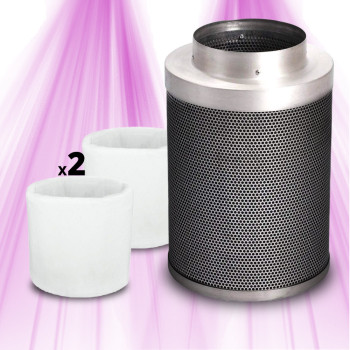
Assembly always follows the same principle: carbon filter at the top of the tent, connected to the extractor by ducting, then exhaust to the outside. Attach the filter to the upper bars with the provided straps. The extractor is generally placed outside the tent to reduce noise. Use the pre-cut sleeves of the tent to pass the ducts. Fresh air intake occurs through the lower vents, without an active fan for this size. The extractor's airflow naturally creates the necessary suction.
The carbon filter does not get cleaned — it gets replaced every 12-18 months depending on use. You can extend its life by regularly vacuuming dust from the external surface. For the LED, a simple dusting of the heat sinks every 3-6 months is sufficient. Use a dry brush or compressed air. Avoid water on electronic components. Also, check connections and cables for any signs of wear. Minimal but regular maintenance ensures consistent performance cycle after cycle.
Help & advice
About 80cm x 80cm - 0.6m² — click a question to see the answer.
For a 0.6m² space like an 80x80cm grow tent, I generally recommend an LED power of between 150W and 250W actual draw. This will depend on the lamp's efficiency and the type of cultivation you are aiming for. Higher wattage will be more suitable for flowering and optimal yields.
The main difference, and why I favor LED, is efficiency and heat management. LEDs consume less energy, generate less heat, and have a much longer lifespan than HPS. For a 0.6m² space, LEDs are easier to manage thermally and offer a light spectrum more suited to plants, which often results in better yields and higher quality harvests.
In an 80cm x 80cm grow tent, I would say you can comfortably cultivate 2 to 4 plants. If you opt for techniques like SCROG (Screen of Green) or SOG (Sea of Green), you might fit a few more, but for a beginner, 2 to 4 medium-sized plants is a good starting point to optimize space and light.
The ideal distance between your LED and your plants in an 80x80cm tent will depend on your lamp's power and the growth stage. Generally, I start with 40 to 60 cm for seedlings and young plants, then gradually reduce to 30-40 cm during vegetative growth and flowering. It's crucial to observe your plants: if the leaves yellow or curl, the light is too intense or too close.
For an 80x80cm grow tent, I recommend a full spectrum light. This is what I most often see with modern LEDs. This means your lamp will emit wavelengths suitable for all plant phases, from germination to flowering. Some prefer bluer spectra for vegetative growth and redder for flowering, but a good full spectrum works perfectly for an all-in-one kit.
Cannot find your answer? 01 88 33 45 52 or by message.


