











































































Pyramid Tramp Traps - Effective Pest Protection for Your Plants
- Quick, tool-free installation
- Adaptable to different types of pots
- Long-lasting adhesive layer
- Ideal for gardens and greenhouses
- Reduces pesticide use

Product presentation
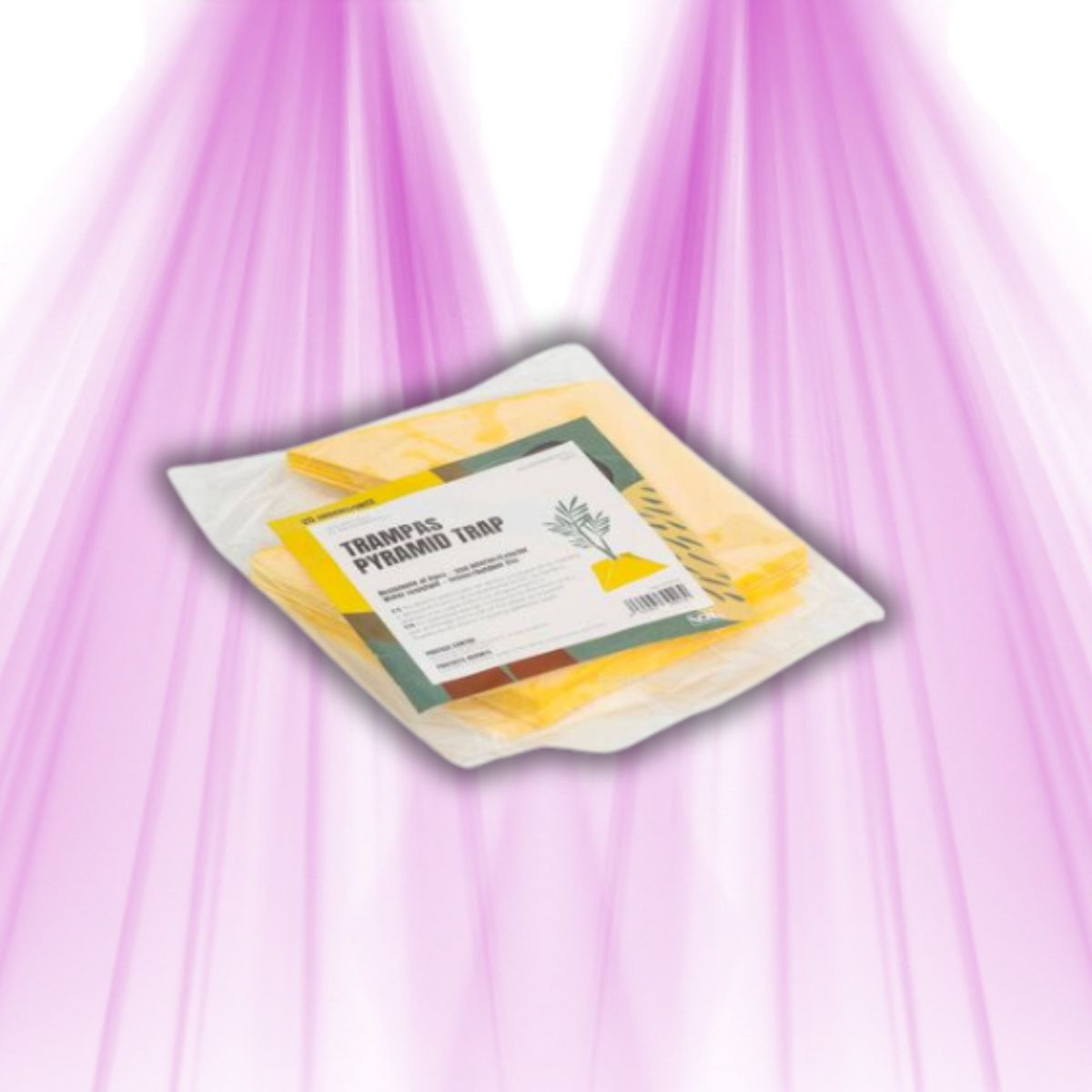
Pyramid Tramp Traps are the ideal solution for protecting your plants from a variety of pests. Thanks to their patented design, these traps fit perfectly into the base of your pots, surrounding the trunk of your plants to create an effective barrier against insects. Featuring a powerful adhesive layer, Pyramid Tramp traps catch and retain harmful insects, ensuring the health and optimal growth of your plants.
Technical characteristics
- Patented design: Fits the base of the pots and surrounds the trunk of the plant.
- Units per pack: 25 traps
- Dimensions: Ø30 cm
- Water resistance: Yes
- Use: Indoor/outdoor
- Environmentally friendly: Yes
Pest Protection
Pyramid Tramp traps provide effective protection against a wide range of insect pests, including:
- Fruit flies
- Mining
- Mites
- Aphids
- Flies on the ground
- White flies
- Olive flies
- Ceratitis Capitata
Key Benefits
- Adaptability: Patented design that adapts to various types of pots.
- Effectiveness: Powerful adhesive barrier against insects.
- Durability: Water resistant, suitable for indoor and outdoor use.
- Environmentally friendly: Environmentally safe materials.
- Ease of use: Simple and quick installation.
Opinion from an Expert Grower
"Since using Pyramid Tramp traps, I have noticed a clear reduction in pests in my greenhouse. Their installation is quick and their effectiveness is impressive. They are water resistant and can be used both indoors and outdoors. inside and out." - Opinion from an expert grower
Questions answers
Q: How many traps are included in a Pyramid Tramp package?
A: Each package contains 25 units of Pyramid Tramp traps.
Q: What types of insects can Pyramid Tramp Traps capture?
A: They protect against fruit flies, mines, mites, aphids, ground flies, whiteflies, olive flies and Ceratitis Capitata.
Q: Are Pyramid Tramp traps water resistant?
A: Yes, Pyramid Tramp traps are designed to be water resistant, making them suitable for indoor and outdoor use.
Q: Are Pyramid Tramp traps environmentally safe?
A: Yes, Pyramid Tramp traps are made with environmentally friendly materials.
Q: How big are Pyramid Tramp traps?
A: Each trap has a diameter of 30 cm, which can effectively cover the base of the pots and catch harmful insects.
Pyramid Tramp Traps are an innovative and effective solution for protecting your plants from a wide range of pests. Their patented design, ease of use and respect for the environment make them an essential choice for all growers concerned about the health of their plants.
Features detailed
| Functions | Autre |
|---|---|
| Surface de culture | 30 de diamètre |
| Compatibilité | Pots en terre cuite, plastique ou tissu de 15-30 cm de diamètre |
| Dosage recommandé | Un piège par tige principale de plante en pot de 15 cm de diamètre minimum |
| Densité du mylar | Pyramidale adaptable |
| Voie d'application | Adhésif |
| Utilisation (intérieur/extérieur) | Oui |
| Installation | sans outils |
| Nuisible ou maladie ciblé | Insectes rampants (pucerons, acariens) et volants |
| Delai de remplacement | 4-6 semaines |
| Type de protection | Insecticide |
| Mode d'action | Barrière physique |
Reviews customers
Soyez le premier à donner votre avis !
Partagez votre expérience avec ce produit.
Your questions
Can Pyramid Tramp traps be reused over multiple seasons or do they need to be replaced after each cultivation cycle?
Are Pyramid Tramp traps reusable after complete capture of insects or must they be systematically replaced to ensure optimal plant protection?
Pyramid Tramp traps are generally reusable after emptying and cleaning the captured insects. It is advisable to clean the trap well to maintain its effectiveness and protect your plants sustainably. They should only be replaced if the trap shows signs of wear or if the sticky surface is saturated. This method ensures optimal protection while being economical and environmentally friendly.
In an indoor environment with high humidity, do Pyramid Tramp traps remain effective without losing their adhesive power due to ambient humidity?
What maximum area can a 30 cm diameter Pyramid Tramp trap effectively protect for optimal performance against all pests?
Are pyramid tramp traps wide enough to effectively protect potted plants with a diameter of 30 cm or more?
For optimal protection of your potted plants, it's important that the area captured by the trap effectively surrounds the volume of the plant. Depending on the exact size of the traps, they may not be wide enough to ensure complete protection on pots of this diameter.
If you are looking for a solution suitable for potted crops, more compact traps or complementary systems, such as insect repellent diffusers or protective nets, could be considered to enhance defense against pests.
What is the average duration of adhesive effectiveness of pyramid traps in outdoor conditions before ideal replacement?
The average duration of adhesive effectiveness of pyramid traps in outdoor conditions varies depending on exposure to elements such as rain, wind, or sunlight. In general, it is recommended to inspect them regularly and plan for a replacement every 3 to 6 weeks to ensure optimal protection against harmful insects. Replacement should be more frequent if the trap loses its adhesion or gets dirty quickly.
What is the effective duration of the adhesive layer of pyramid traps before they lose effectiveness and need replacement?
The effective duration of the adhesive layer of pyramid traps mainly varies according to the conditions of use:
- In ideal conditions (moderate temperature, low humidity, little dust), it can last 1 to 3 months before losing effectiveness.
- In more challenging environments (heat, high dust, or significant infestation), this effectiveness can drop as early as 2 to 4 weeks.
It is advisable to replace your traps as soon as:
- The adhesive surface is saturated with insects or visibly dirty.
- The glue appears dry or less sticky to the touch.
- You observe a decline in trapping after 4 to 6 weeks in the case of high infestation.
To maintain their effectiveness, keep the area around the traps clean and regularly check their condition. This vigilance ensures optimal protection against plant pests!
Is it possible to use Tramp pyramid traps on pots smaller than 15 cm in diameter without loss of effectiveness?
To optimize their use in this case, it is important to:
- Secure the trap well and ensure it is stable near the base of the plant
- Choose a model that is more suitable for the smaller pot size if possible
- Combine the trap with other complementary solutions suited to the targeted pests
This approach ensures effective protection even on compact containers.
Is integration possible with a home automation system to alert in case of full or ineffective traps?
What advice do you have for optimizing the placement of Pyramid Tramp traps according to the size and type of pot used to ensure maximum protection against pests?
To optimize the effectiveness of Pyramid Tramp traps, adapt their installation to the size and type of pot:
- Large pots (diameter 30 cm or more): One trap is usually sufficient to cover the entire perimeter.
- Small pots: Carefully position the trap around the trunk, even if part of it protrudes, to ensure complete protection.
- Very large pots or bins: Cut or combine several traps to create a continuous barrier around the base.
- Pots of various shapes: The trap is flexible, but make sure to cover the entire perimeter where the trunk exits the pot.
- Hanging or pedestal pots: Ensure perfect adherence around the trunk, with no vulnerable gaps.
Set them up without tools, ensuring the adhesive surface makes good contact with the substrate. If multiple plants coexist in a large bin, place one trap per main trunk to prevent the spread of pests.
Pyramid Tramp are water-resistant, providing reliable protection even with frequent watering. Remember to regularly check the adhesive's condition to maintain optimal efficiency.
Do Pyramid Tramp traps also prevent pests from climbing up the plant's stem, or do they only capture those at ground level?
What is the ideal frequency to change the Pyramid Tramp trap to maintain optimal protection against pests without loss of effectiveness?
What advice would you give to optimize the positioning of Pyramid Tramp traps based on the different types of plants and pests present?
To optimize the effectiveness of Pyramid Tramp traps, position them directly around the base or trunk of your plants, whether in pots or in the ground. This position creates a natural barrier against crawling and flying insects such as aphids, mites or fruit flies.
Adjust the placement according to the type of plant:
- Potted plants: around the collar of the pot for maximum coverage.
- Plants in the ground: in contact with the soil, close to the base of the stem.
- Fruit and vegetable plants: particularly at the foot of the trunks to catch fruit flies targeting the fruit.
Ensure an even distribution of traps in your growing space, avoiding placing them too close to other attractive traps (at least 3 meters apart) to avoid any competition. This guarantees uniform coverage and effectively limits the progression of pests.
This simple yet targeted method will help you protect your plants while respecting their environment.
What is the adhesive effectiveness duration of Pyramid Tramp traps before replacement is necessary?
Is integration possible with home automation systems to monitor the real-time capture rate of pests?
The trap Pyramidenfalle – effective pest protection for your plants does not have connected sensors or integrated technology for real-time monitoring via a home automation system. To automatically track the rate of captured pests, a device equipped with sensors capable of transmitting this data to a smart home hub is required, which is not the case here.
If connected management and live monitoring are essential, specific sensor-equipped home automation solutions or traps specifically designed for such integration should be considered.
What is the ideal frequency for replacing Pyramid Tramp traps to maintain optimal pest protection?
On prolonged use, does the adhesive layer of the Pyramid Tramp traps remain effective without losing its capturing power despite external conditions such as rain or dust?
Are Pyramid Tramp traps suitable for pots less than 30 cm in diameter, or is a specific model needed for small containers?
What is the ideal frequency for replacing pyramid traps to maintain optimal pest protection without waste?
To maintain optimal protection with the Pyramid Trap, it is recommended to replace it every 3 to 4 weeks. This frequency ensures that the bait or adhesive surface remains effective, especially considering the degradation due to environmental conditions.
Additionally, a weekly inspection allows you to check for pest capture and anticipate a replacement if necessary. In case of heavy infestation, consider renewing the trap more frequently, every 2 to 3 weeks, to maximize protection.
This routine guarantees a perfect balance between effectiveness and economy, without waste.
What is the minimum and maximum compatible pot diameter for the 30 cm Pyramid Tramp trap?
The 30 cm Pyramid Tramp is designed to be placed on pots whose diameter is compatible with its base, approximately 30 cm. In practice, the pot should have a diameter equal to or slightly less than this dimension to ensure good stability of the trap.
No precise information indicates an official minimum or maximum diameter, but measuring the internal diameter at the base of the trap will allow you to adapt your pot accordingly. Therefore, prefer pots of approximately 25 to 30 cm in diameter for optimal use with this model.
What replacement frequency do you recommend to maintain optimal adhesion of Pyramid Tramp traps in wet outdoor conditions?
What are the feedbacks on the adhesive durability of Pyramid Tramp traps outdoors over a period of more than 4 weeks, especially under humid conditions?
What is the maximum area covered effectively by a Pyramid Tramp trap for a standard plant pot in terms of diameter and adhesive yield against fruit flies and aphids?
The Pyramid Tramp trap has a diameter of 30 cm and should be placed directly around the base or trunk of the potted plant for optimal effectiveness. This protects the entire immediate area around the pot, which perfectly corresponds to a standard pot in terms of diameter.
Its adhesive layer is long-lasting and water-resistant, ensuring good capture of fruit flies and aphids. However, in very humid environments, adhesion may decrease slightly. It is therefore recommended to clean the trap regularly and to replace it as soon as the sticky surface is saturated with insects or loses its effectiveness.
In summary, with a Pyramid Tramp trap positioned around a pot, you benefit from targeted protection over a diameter of approximately 30 cm, ideal for limiting the presence of pests without interfering with other traps.
What criteria would you advise for choosing the best Pyramid Tramp trap size according to the size and type of plant to optimize protection against pests without compromising growth?
To choose the ideal size of the pyramid trap based on your plant and maximize protection against pests without hindering its growth, several criteria are essential:
- Adjust the size of the trap to the height and span: for low or aromatic plants, a container of about 20 to 40 cm is sufficient. For larger plants, opt for more imposing or modular pyramid traps (for example, containers of 80 cm at the bottom, then smaller towards the top), to surround the plant without compressing it.
- Respect the natural shape of the plant: especially for shrubs and climbers, choose a trap that conforms to the infested area without suffocating it, ensuring good ventilation.
- Pay attention to depth: a trap of at least 20 cm deep allows the root system to develop properly.
- Ensure drainage and stability: favor drainage holes to limit humidity, and secure stacked traps with a stable fastening that does not hinder the plant.
By combining these elements, the protection of plants will be effective and their growth fully respected, creating the perfect balance between pest control and natural flourishing.
Viewed recently