





























































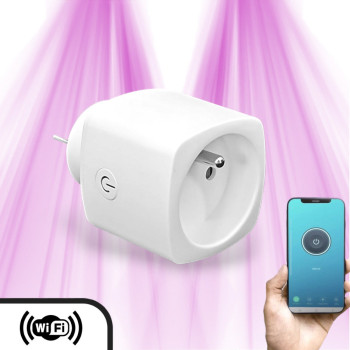





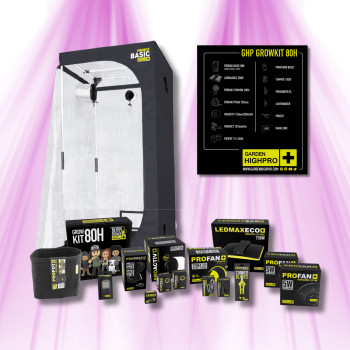

 GU10 LED bulb for houseplants 5,0 (2) In stock 13,90 € incl. tax
Equipment for houseplants and indoor greenery, some light, when your home lacks it
Has your monstera lost a leaf every month since November? The cause is almost never fertiliser: it is light, watering rhythm or dry heated air. 62 products address the four needs of a potted plant, without jargon or professional equipment.
- Free pickup-point delivery from €89
- White light, not purple, comfortable in a living room
- Out of stock? Reserve now for delivery on restock
- 4,7/5 · 1 766 verified reviews
— free pickup-point delivery from €89
Go straight to the category
Best sellers in this category
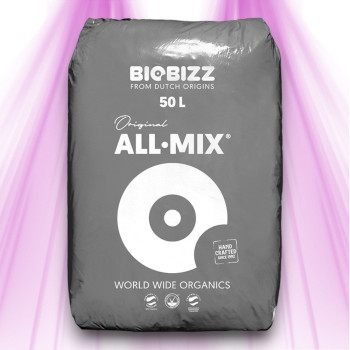
Swipe to view products → BioBizz Light-Mix 50 L – light potting soil ★ 5,0 · 26 reviews · In stock 29,90 € GU10 LED bulb for houseplants ★ 5,0 · 2 reviews · In stock 13,90 €
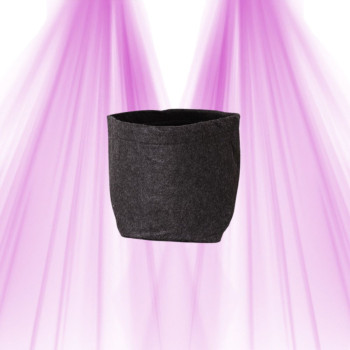 Fabric pot 7 L ★ 4,9 · 19 reviews · In stock 3,00 €
 Garden HighPro 15 L – fabric pot 23x23x28 cm ★ 5,0 · 21 reviews · In stock 4,29 €
 Garden HighPro 4 L – fabric pot 15x15x20 cm ★ 5,0 · 9 reviews · In stock 2,30 €
 Fabric pot 11 L ★ 4,8 · 17 reviews · In stock 3,00 €
The number-one winter need
Some light, when the room is too dark
A plant two metres from a window receives a fraction of the light available on the sill. In a north-facing room in December, almost nothing remains. A small lamp for twelve hours a day helps it through winter.
The 30-second guide
The simple rule: 12 hours of light a day, with the lamp 30 cm above the leaves. Allow 5–7 W for one plant, or a 60–90 cm bar for a shelf. A timer handles the rest: consistency matters more than power.
Does my plant really need a lamp?
A ten-second test: hold your hand 30 cm above a leaf in daytime. If there is no clear shadow, it is dark for the plant. With twelve hours of lamp light daily, new leaves return in three to six weeks and stop being tiny.
How long should it be on each day?
Twelve hours every day at the same times. A mechanical timer costing around €15 handles it. More is unnecessary: nights matter as much as days for houseplants, giving time to respire and recover.
Will it make my living room purple?
No. The pink beam in catalogue photos is added for presentation. These bulbs and bars emit warm or neutral white grow light. The room remains comfortable for everyday life and visitors. Pink and purple lights are for enclosed spaces.
Three ways to light a plant
GU10 LED bulb for houseplants 5,0 (2) In stock 13,90 € incl. tax  E27 LED bulb 13 W · TerraLED 5,0 (1) In stock 44,90 € incl. tax
 TM PRO LED bar · 30–120 cm In stock 94,90 € incl. tax or 3× 31,63 € with alma
What you need alongside


The kit that gets your plant through winter
Matching lamp, holder and timer for the three most common situations. Add everything to your cart in one click.
- 2 × GU10 bulb 7 W · warm white grow light2 × 17,90 €
- 24-hour mechanical timer11,00 €
The holder and timer work for all your plants, so you buy them once. The “Where your plant lives” table gives power by location.
All lights for houseplants Bulbs, bars, holders and timers.
The leading cause of houseplant losses
Some water, at the right rhythm rather than in large amounts
More houseplants drown than dry out. Roots need air as much as water: let the top few centimetres of soil dry between waterings or roots rot.
The 30-second guide
The simple rule: push a finger 3 cm into the soil. If still moist, do not water. Expect watering every 7–10 days in winter and every 3–5 days in summer, and empty the saucer twenty minutes later. For two weeks away, ceramic sensors take over without electricity.
How often should I water?
There is no fixed schedule: light, pot size and season decide. Check with your finger: dry 3 cm down means water; still moist means wait. In winter, a living-room plant often needs water only every ten days.
What if I go away for two weeks?
A ceramic sensor in the pot, connected to an inverted bottle or reservoir, releases water only as soil dries, without electricity or a pump. A full kit covers twelve plants with three metres of tubing; one sensor suits a single plant.
Yellow leaves: too much or too little water?
Soft yellow leaves, limp stems, wet soil and a stagnant smell mean overwatering: let dry and empty the saucer. Dry yellow leaves, brittle edges and soil shrinking from the pot mean the opposite. Lift the pot: light means thirsty; heavy does not.
Water correctly, even on holiday
 Blumat automatic watering · 12 plants 4,8 (8) In stock 62,91 € incl. tax or 3× 20,97 € with alma
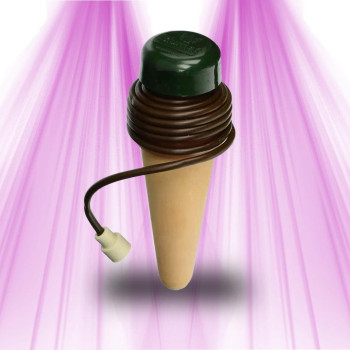 Blumat Classic · one ceramic sensor Awaiting stock: reserve yours 3,59 € incl. tax
 1 L trigger sprayer 5,0 (8) In stock 2,90 € incl. tax
For dosing or a single plant

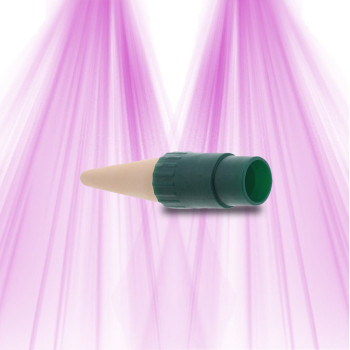
All watering solutions Blumat ceramic systems, without electricity or pumps.
Your plant's soil
The soil and pot: repot at the right time
Houseplants exhaust their soil after one to two years. The mix compacts, water runs through without being retained and roots circle the walls. Repotting simply restores air to the roots.
The 30-second guide
The simple rule: repot in spring, into a pot only 2–4 cm wider, never two sizes larger. Allow 1 L of soil per litre of pot volume and a saucer under every pot, emptied after watering. Fertilise every two weeks from April to September, not from October to March.
When should I repot?
When roots emerge through drainage holes, water runs straight through without wetting soil, or roughly every two years. Spring is best. A pot 2–4 cm wider is enough: too large stays wet and suffocates roots.
Which soil for a monstera or ficus?
Light potting soil, never heavy garden soil. Add one-third perlite or coco fibre for drainage. A 20 L bag covers three to four living-room plants; 50 L covers around ten.
Do plants need fertiliser all year?
No. Use liquid fertiliser in irrigation water every two weeks from April to September. None from October to March: growth slows, and unused nutrients accumulate and can burn roots.
The repotting trio
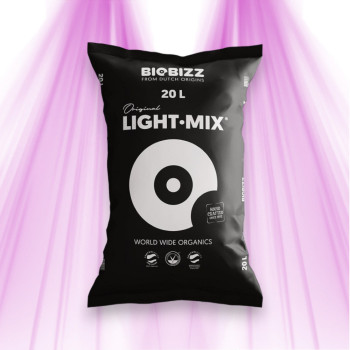 Light Biobizz Light-Mix soil 20 L 4,8 (22) In stock 22,90 € incl. tax Fabric pot 7 L 4,9 (19) In stock 3,00 € incl. tax
 Saucer 21 × 21 cm 5,0 (9) In stock 0,99 € incl. tax
For lighter soil and drainage


The repotting kit in the right volumes
Matching soil, pot and saucer. Sizes fit, so there is nothing to measure.

Fabric pots let roots breathe and prevent circling. Wash with hot water and reuse several times.
All soils, pots and saucers From a 1.5 L pot to a 50 L bag of soil.
Heating, the winter enemy
Some air that does not dry it out
Tropical plants come from humid undergrowth. A heated living room in January often falls below 35% humidity. This browns leaf tips long before watering or fertiliser becomes the issue.
The 30-second guide
The simple rule: aim for 50–60% humidity and 18–24 °C. Start with a thermo-hygrometer costing around €15. Below 40%, a 4 L humidifier serves a living room. Never put a plant directly above a radiator or in a front-door draught.
Why are leaf tips brown and dry?
Nine times out of ten, air is too dry. Below 40% humidity, leaves lose more water than roots supply. A room humidifier solves this more consistently than misting.
Does misting leaves help?
A little, briefly: humidity falls back within twenty minutes. It is pleasant for the plant and removes dust, but is not a treatment. Use a humidifier to maintain humidity and a hygrometer to measure it.
What winter temperature for a tropical plant?
18–24 °C, without dropping below 15 °C at night. Sudden changes are more dangerous than cool conditions: five minutes beside an open window can hurt 22 °C foliage more than a cool stable room. A thermostatic heater helps in an unheated conservatory.
Measure, humidify, circulate
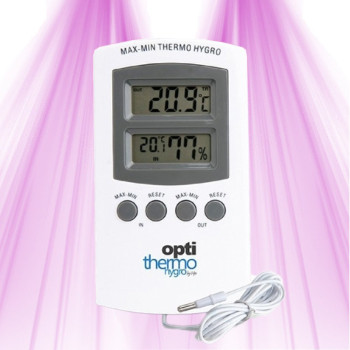 Optithermo thermo-hygrometer 4,8 (20) Awaiting stock: reserve yours 14,08 € incl. tax
 Cool Mist 2.0 humidifier · 4 L In stock 29,90 € incl. tax
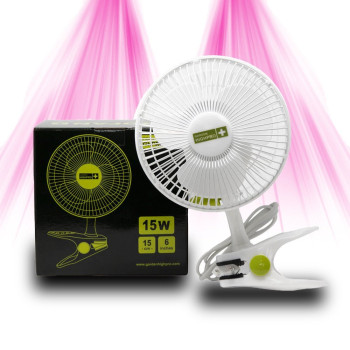
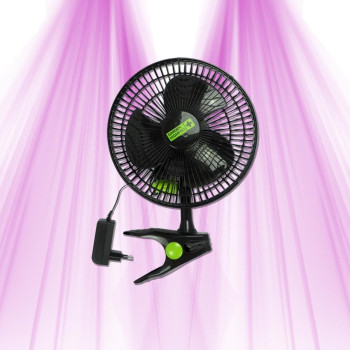 15 cm clip fan · 5 W 5,0 (3) In stock 22,68 € incl. tax
If the room is cold
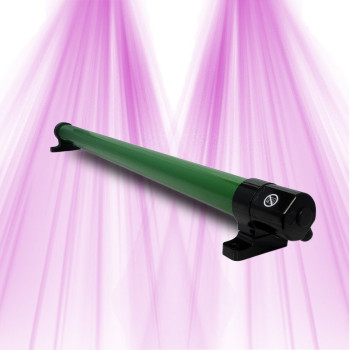
All indoor climate equipment Hygrometers, humidifiers, fans and heaters.
The comparison
Four needs, with nothing else to remember
A potted plant needs four things. Address them in order: light first, water next, soil in spring and air when heating starts. Nine problems out of ten are solved in the first two columns.
Light
For plants with tiny leaves or leaning towards windows
- Lack of light is the most common houseplant problem
- 5–7 W is enough for one plant, 30 cm above foliage
- Warm or neutral white keeps the room comfortable
- A timer is needed to avoid forgetting
Avoid if your plant is already on a south-facing sill: it does not need one.
View lighting17Soil and pot
For a plant not repotted for two years
- Light soils, fabric pots from 1.5–50 L, saucers
- A pot only 2–4 cm wider, in spring
- Fabric aerates roots and prevents circling
- Repot roughly every two years, not more often
Avoid if you have just repotted: leave the plant undisturbed for a year.
View soils and pots82Water
For overwatering, underwatering or time away
- Ceramic sensors release water as soil dries
- No electricity, pump or programming
- From an inverted bottle to a twelve-plant network
- A small category: six products from one brand
Avoid if you have one plant and are home every weekend: a finger check is enough.
View watering equipment6Air
For tropical foliage in heated homes
- A hygrometer first: measure before correcting
- A 4 L humidifier serves a living room
- A small fan prevents stagnant air and gnats
- The category includes larger conservatory equipment too
Avoid if your plants are cacti or succulents: dry air suits them.
View indoor climate equipment81Unsure where to start? The plant overwintering guide explains the autumn transition in ten minutes.
The category catalogue
Your plants, your way
Three routes to the same catalogue: your task, equipment type or brand.
Water even on holiday ceramic sensors The highlightBlumat automatic watering · 12 plants62,91 € 6 products→
The highlightBlumat automatic watering · 12 plants62,91 € 6 products→ Humidify against heated air humidifiers The highlightCool Mist 2.0 humidifier · 4 L29,90 € 8 products→
The highlightCool Mist 2.0 humidifier · 4 L29,90 € 8 products→ Measure before adjusting thermometers & hygrometers The highlightOptithermo thermo-hygrometer14,08 € 4 products→
The highlightOptithermo thermo-hygrometer14,08 € 4 products→ Feed April to September liquid fertilisers  The highlightOrganic growth fertiliser · HydroPassion18,44 € 9 products→
Cannot find what you need? or see the whole category at once →
The guideline you rarely find
Where your plant lives, what it needs
The right question is not “which lamp?” but “where is the plant?”. Read one line: find its location and see what to add.
| Where your plant lives | The light it receives | What to add | View |
|---|---|---|---|
| South-facing windowsill | Enough all year | Nothing, just monitor watering | View category |
| East- or west-facing window | Enough April to October | A 5–7 W bulb in winter | View category |
| North-facing window | Low, even in summer | A 7 W bulb at 30 cm, 12 h/day | View category |
| 2 m or more from a window | Almost nothing for the plant | A clamp lamp, 12 h/day | View category |
| Shelf or windowless room | None | A 60–90 cm bar above | View category |
These guidelines suit typical indoor foliage such as monstera, ficus, pothos and calathea. Flowering plants, cacti and succulents need more direct light. View houseplant lighting →
Small essentials
What to keep in the drawer
Prune, dose and monitor: three care tasks, six items lasting for years.
Prune

Measure doses

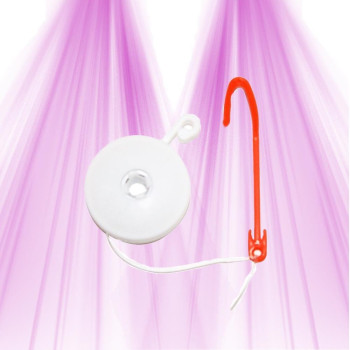
Missing something? All accessories and tools →
Our partners
The brands we stand behind
Four brands whose products we know inside out here, with the rest of the growshop catalogue below.
Garden HighPro
Fabric pots from 1.5–50 L and trimming scissors: twenty products, including the shop's best-selling pots.
The best seller Blumat
Ceramic sensors water without power or pumps: an inverted bottle for one plant, or twelve sensors for a whole living room.
Effortless watering Biobizz
Light-Mix in 20 L bags: the light soil we recommend for repotting houseplants without burning them.
Soil TerraLED
E27 bulbs and 30–120 cm moisture-resistant bars: white, never purple light suitable for living rooms.
Discreet light 



























Expert advice
All guides Before you buy, understand
Overwintering, choosing lights and understanding fabric pots: guides written for houseplants.
Help & advice
Questions we are asked
About Equipment for Green Plants: click a question to see the answer.
Does my houseplant really need a lamp?
If a hand 30 cm above a leaf casts no clear daytime shadow, the plant is in low light. Twelve lamp hours daily restart growth in three to six weeks. Plants on south-facing sills do not need extra light.
Will the lamp make my living room purple?
No. The pink beam in catalogue pictures is added for presentation: bulbs and bars in this category emit warm or neutral white grow light. The room stays comfortable. Pink and purple lights belong to other ranges for enclosed spaces.
How often should I water a houseplant?
When the top 3 cm are dry, not before. Usually every seven to ten days in winter, three to five in summer, more often in small pots. Empty the saucer after twenty minutes: stagnant water rots roots.
When should I repot, and in what soil?
In spring, roughly every two years, into a pot 2–4 cm wider. Use light soil with one-third perlite or coco fibre. Allow 1 L per litre of pot volume: a 20 L bag repots three to four living-room plants.
Leaf tips are brown and dry: what should I do?
Dry heated air is almost always the cause. Measure with a hygrometer: below 40%, a nearby 4 L humidifier helps. Move the plant away from radiators and trim dry tips, which will not turn green again.
Can I pay in instalments?
Yes: 3 or 4 instalments on orders from €50, 10 instalments or payment deferred by 15 days from €100, with Alma.
Cannot find your answer? 01 88 33 45 52 or by message.
Everything for houseplants in one place.
In stock or available to reserve on restock, with personal help on 01 88 33 45 52 if you are unsure where to start.
Browse the categoryWant to take your own cuttings? All seedling and propagation equipment →
Learn more about Equipment for Green Plants
Houseplant Equipment: Everything You Need for Successful Indoor Cultivation
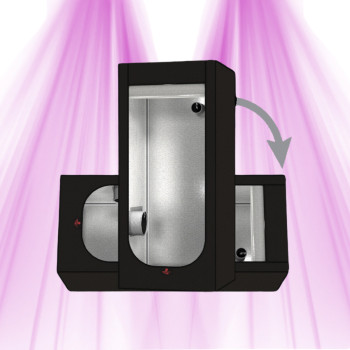
Houseplant equipment for indoor cultivation refers to all the gear that will transform your space into a true indoor garden. Lighting, ventilation, substrates, grow tents... each element plays a crucial role in providing your plants with optimal growing conditions. Whether you're starting with a few cuttings or setting up a complete installation, choosing the right equipment makes all the difference.
Why Choose Specialized Equipment for Your Houseplants
Indoor growing requires artificially recreating what nature provides freely outdoors. Horticultural LED lighting replaces the sun with precise spectra (380-780nm) adapted for photosynthesis. Unlike traditional bulbs, these lamps produce little heat and consume 50% less energy than an equivalent HPS. Ventilation becomes essential to renew the air and prevent stagnant humidity that promotes mold. A 100m3/h extractor is usually sufficient for a 60x60cm space, but it all depends on your setup.
Specialized substrates offer optimized drainage and water retention. Good indoor potting mix typically contains perlite (20-30%) for root aeration and peat for water retention. Hydroponics takes control even further by allowing precise nutrient dosing. Frankly, once you've experienced the precision of indoor growing, it's hard to go back.
How to Choose Your Houseplant Equipment Wisely
Lighting is sized according to the surface area: allow 30-50W/m² in LED for classic houseplants. For a 1m² space, a 40W lamp is more than enough. Pay attention to the spectrum: opt for a full spectrum (3000K-6500K) that covers all needs. Quantum LED panels offer better uniformity than COBs, especially over large areas.
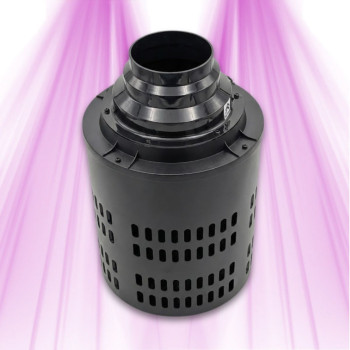
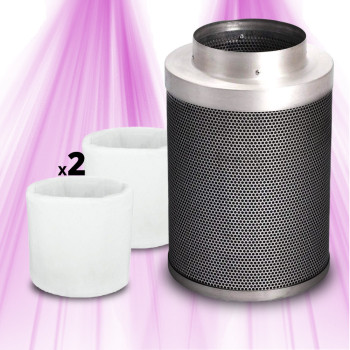
For ventilation, calculate the volume of your space (L x W x H) and multiply by 60 to get the minimum hourly flow rate. A centrifugal extractor will be quieter than an axial fan, crucial if you're growing in a living area. Don't forget the carbon filter if odors might be an issue. For substrate, start with a quality potting mix before venturing into hydroponics. It's simpler and more forgiving for beginners' mistakes.
Frequently Asked Questions
Which LED lamp should I choose for my houseplants in indoor cultivation, LED or HPS?
For houseplants, LED far outperforms HPS. It consumes 40-50% less electricity, produces much less heat (no need for additional cooling), and lasts 5 times longer. A full spectrum LED of 30-40W/m² is sufficient for most houseplants, whereas 60-80W/m² would be needed with HPS. The only drawback: a higher initial investment, but the savings on the electricity bill quickly compensate.
How do I install an extraction system with a carbon filter in my grow tent?
The extractor is placed at the top of the tent (hot air rises), connected to the carbon filter by a duct. The filter can be inside or outside depending on available space. Plan for a passive air intake at the bottom, on the opposite side, with a flow rate 20% higher than the extraction to create slight negative pressure. Use soundproof ducts if noise is an issue. The carbon filter should be changed every 12-18 months depending on usage.
Which substrate is best suited for starting with houseplants, potting mix or hydroponics?
For beginners, potting mix remains the simplest. Choose a specialized indoor mix with perlite (20-30%) and adjusted pH (6.0-6.5). It's more forgiving of watering and nutrient errors. Hydroponics offers faster growth and total control but requires more technique and monitoring. DWC (Deep Water Culture) systems are the most accessible for starting with hydro. Wait until you've mastered the basics in soil before moving to hydroponics.
How do I maintain and clean a clip fan to prevent mold?
Clean the blades every 2-3 weeks with a slightly damp cloth and mild soap. Disassemble the protective cover if possible to access crevices. Check that the motor isn't overheating (normal temperature to the touch). A dusty fan loses efficiency and can develop vibrations. Lubricate the bearings once a year with fine oil if recommended by the manufacturer. Good air circulation (0.5-1m/s) prevents stagnant areas prone to mold.
What wattage per m² for houseplant lighting indoors, LED vs. Sodium?
For LEDs, count 30-50W/m² for houseplants depending on the species and desired light intensity. Tropical plants typically require 40-50W/m², while shade plants are content with 25-35W/m². With sodium (HPS), 60-100W/m² is needed to achieve the same result, but with much more heat to dissipate. LED also offers better spectrum control: 6500K for growth, 3000K to promote flowering in certain species. The luminous efficacy of modern LEDs reaches 2.5-3µmol/J compared to 1.7µmol/J for HPS.


